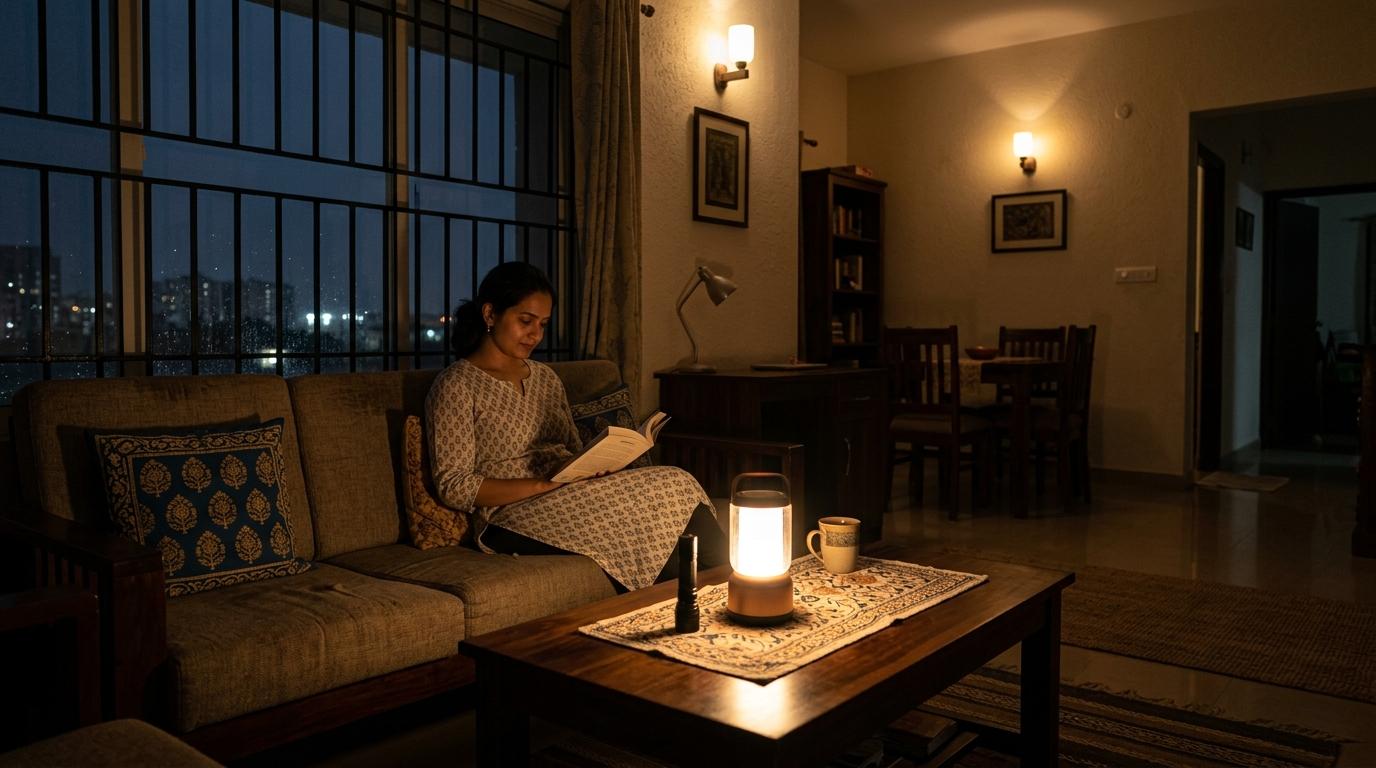
If you’re searching for the best emergency light for power cuts in India, don’t rely on just one light. A rechargeable inverter bulb works best for automatic safety lighting, an LED lantern is better for lighting one room, and a rechargeable torch is essential for moving around safely. A solar emergency light can help too, but only if your home gets enough sunlight.
Short Answer
#For most Indian homes, the smartest setup is:
- Rechargeable inverter bulb: best for bathroom, kitchen, passage or stair corner because it turns on automatically.
- LED lantern: best for a room where people sit, eat, study or work.
- Rechargeable torch: best for stairs, corridors, fuse boxes, parking areas and outdoor checks.
- Solar emergency lamp: useful for longer outages in sunny homes, but less dependable during cloudy monsoon days.
Who This Guide Is For
#This guide is for Indian homeowners, renters, hostel students, PG residents and apartment families who want backup lighting for short cuts, monsoon outages or evening load shedding without buying random lights based only on online claims.
Why One Emergency Light Is Usually Not Enough
#Power cuts in India are not all the same. Sometimes electricity goes for 15 minutes. Sometimes a local fault or monsoon outage takes hours to repair. In apartments, the lift may have backup but the flat may not. In hostels, a compact study light may matter more than a fixed bulb. In independent homes, someone may need to step outside to check the meter, gate, pump or MCB.
So the better question is not “Which is the single best emergency light?” It is “Which emergency lighting setup will actually work for my home?”
Quick Comparison
#Rechargeable inverter bulb
- Best for: automatic room light.
- Not ideal for: carrying around or lighting a large room for long hours.
- Main buying risk: weak battery or poor charging circuit.
LED lantern
- Best for: study, dining, living room and family use.
- Not ideal for: long-distance outdoor checks.
- Main buying risk: exaggerated brightness claims and harsh glare.
Rechargeable torch
- Best for: movement, stairs, gates, parking and fuse-box checks.
- Not ideal for: lighting a whole room comfortably.
- Main buying risk: weak battery, loose switch or flimsy body.
Solar emergency light
- Best for: longer outages where daytime sunlight is available.
- Not ideal for: homes without direct sun or heavy monsoon weeks.
- Main buying risk: slow charging, small panel or poor battery quality.
Rechargeable Inverter Bulb
#A rechargeable inverter bulb looks like a normal LED bulb but has a battery inside. When power is available, it charges. When power goes off, it continues glowing from the battery.
Who Should Buy It
#Buy one if you are:
- A renter who cannot change wiring.
- Living with elderly parents or small children.
- Looking for backup in a bathroom, kitchen, passage or stair corner.
- Someone who wants light the moment power fails.
- Living in a flat where short outages happen often.
Who Should Avoid Depending Only on It
#Do not depend only on inverter bulbs if you:
- Need portable light for study, cooking, balcony or bedroom use.
- Face very long power cuts regularly.
- Have poor-quality or loose bulb holders.
- Want one light that can move everywhere.
Many rechargeable bulbs become dim as the battery drains. Do not expect every model to give normal LED-bulb brightness for hours.
LED Lantern
#An LED lantern is usually the most practical emergency light when the family wants to sit in one room and continue normal routines. It spreads light better than a torch and can move wherever needed.
Who Should Buy It
#Buy one if you:
- Want light for one full room.
- Have children studying during evening power cuts.
- Work from home and need backup light near your laptop.
- Live in a hostel or PG.
- Want something portable but stable.
- Need light for eating, cooking or sitting together.
What to Check
#Look for:
- Stable base.
- Comfortable handle.
- Hanging hook if you need it.
- Low and high brightness modes.
- Diffused cover to reduce eye strain.
- Clear charging indicator.
- Battery protection features if mentioned.
Avoid very harsh exposed LED panels if the light will sit near children or be used for studying.
Rechargeable Torch
#A rechargeable torch is not meant to light up your whole room. It helps you move safely when the house, corridor or parking area is dark.
Who Should Buy It
#Buy one if you:
- Live in an apartment and may need stairs during outages.
- Have a parking area, terrace, gate or outdoor space.
- Need to check the meter box or MCB.
- Travel often.
- Want backup light near the bed.
- Live where streetlights also go off during power cuts.
What to Check
#Look for:
- Strong switch quality.
- Good grip.
- Wrist strap if possible.
- Charging indicator.
- Common charging cable.
- Low brightness mode for longer use.
- Strong body for daily handling.
Do not buy a torch only because it says “super bright”. For home power cuts, reliability matters more than dramatic beam claims.
Solar Emergency Light
#A solar emergency light can be useful, but it depends on sunlight, panel size, battery condition and where you place the panel.
Who Should Buy It
#Buy one if you:
- Face frequent or long power cuts.
- Have a sunny balcony, terrace, courtyard or window area.
- Want one extra backup option.
- Can place the panel properly during the day.
- Do not want to depend only on wall charging.
Who Should Avoid Depending Mainly on Solar
#Avoid relying mainly on solar if you:
- Live in a flat with no direct sunlight.
- Need reliable charging during heavy monsoon days.
- Cannot place the solar panel safely.
- Expect fast charging from a tiny panel.
If possible, choose a solar emergency light that also supports wall or USB charging.
What to Check Before Buying
#Battery
#Check:
- Battery type.
- Battery capacity, if clearly listed.
- Backup time on low and high brightness.
- Charging time.
- Whether the battery is sealed or replaceable.
- Battery warranty, if mentioned.
Be careful with products that promise very long backup but do not share clear battery details.
Brightness and Light Spread
#For inverter bulbs, you need enough light to enter rooms safely and do small tasks. For lanterns, wide light spread matters more than harsh brightness. For torches, a controlled beam is better than a wild glare. For solar lamps, brightness is useful only if charging is practical.
Charging Method
#Before buying, ask:
- Does it use USB-C, micro-USB, USB or a dedicated charger?
- Is the cable included?
- Can it charge from a power bank?
- Does it have a charging indicator?
- Does it mention overcharge protection or auto cut-off?
- How long does it take to charge fully?
A common charging cable is useful because it is easier to replace.
Portability and Placement
#For most homes, keep:
- One fixed or automatic light.
- One light that moves room to room.
- One torch in a known place near the bed or main door.
For elderly users, choose simple switches, good grip and no confusing modes.
Warranty and Seller Reliability
#Check:
- Warranty period.
- Whether seller information looks reliable.
- Return or replacement terms.
- Battery warranty if available.
- Service contact details.
Do not buy only because the listing image looks bright.
Electrical Safety Notes
#Emergency lights often stay on charging for long hours, so safety matters. Prefer products with clear instructions, decent build quality and listed safety features where available.
Stop using a rechargeable light if:
- The body swells.
- It heats unusually while charging.
- The charging cable sparks.
- The battery drains within minutes.
- There is a burning smell.
- The switch becomes loose or sticky.
Do not keep a damaged rechargeable light near bedding, curtains, paper or children.
Best Setup by User Type
#Indian Homeowners
#Use one LED lantern for the living room, one inverter bulb for bathroom or kitchen, and one rechargeable torch near the main door. Add a solar lamp only if long outages are common.
Renters
#Choose a rechargeable inverter bulb, a portable LED lantern and a small torch. This setup does not need wiring changes and can move with you.
Hostel Students
#Choose a compact LED lantern or rechargeable study light, plus a small torch for corridors or shared bathrooms.
Apartment Residents
#Use an inverter bulb for bathroom or passage, a lantern for the main room and a torch for stairs or parking. For broader outage preparation, read AllBlogs’ Monsoon Power Cut Checklist for Indian Apartments.
Elderly People Living Alone
#Choose an automatic inverter bulb in the bedroom or bathroom, a simple lantern with a large switch and a torch near the bed.
Mistakes to Avoid
#- Depending only on your phone flashlight.
- Buying only one powerful torch.
- Keeping emergency lights discharged.
- Charging lights near wet windows or damp floors.
- Using candles as the main backup.
- Trusting extreme claims like very high brightness, very long backup and very low cost together.
- Forgetting staircase and exit lighting.
- Leaving lights plugged in continuously without checking the manual.
Quick Buying Checklist
#Before buying an emergency light for power cuts in India, check:
- Type: bulb, lantern, torch or solar lamp.
- Battery type and capacity.
- Backup on low and high brightness.
- Charging method.
- Charging indicator.
- Overcharge protection or auto cut-off if mentioned.
- Portability.
- Switch quality.
- Build quality.
- Warranty and seller reliability.
- At least one light for movement, not only room lighting.
Final Takeaway
#For most Indian homes, the answer is not LED lantern vs rechargeable bulb. You usually need both, plus a torch. Choose a rechargeable inverter bulb for automatic safety lighting, an LED lantern for usable room light, and a rechargeable torch for movement. Add solar only when your home gets enough sunlight and longer outages are common.