Go to Gwangjang Market in Seoul, just skip the noon Saturday rush. Walk in around 10:15 AM on a weekday through Jongno 5-ga Exit 8 with small Korean won bills in your pocket, and you can eat crisp mung bean pancakes, handmade noodles, and warm twisted doughnuts without fighting a slow-moving crowd.
Most visitors run into trouble here for three simple reasons. Half the market shuts on Sundays while the food stalls stay open, central alley carts still favor cash, and past viral overcharging clips forced South Korea to bring in strict menu-board suspension laws. Know those three things upfront and the whole walk feels straightforward.
Here is how the market splits up, which subway exit drops you straight at the food, when the alleys calm down, what dishes fairly cost, and how to avoid padded bills.
How Gwangjang Market Is Split (And Why Hours Catch People Out)
#Gwangjang Market at 88 Changgyeonggung-ro in Jongno-gu was built for daily commerce, not social media. Korean merchants founded it on July 5, 1905 after Japanese colonial authorities took over Namdaemun Market, turning the old Bae O Gae morning market into Korea's first permanent daily trading hub. Early on people called it Dongdaemun Market; the Gwangjang name arrived in 1960 from a central hall standing between the Gwangkyo and Jangkyo bridges.
Today the site covers roughly 42,000 square meters with over 5,000 shops and around 65,000 daily visitors. Because it all sits under one interlocking roof, it looks like one unified market from the street. It isn't. Food carts, permanent textile stores, and upstairs vintage arcades run on completely separate schedules.
| Market Zone | Opening Hours | Sunday Status | Main Offerings |
|---|---|---|---|
| Central Food Alley | Daily 09:00 to 23:00 KST | Open daily | Bindaetteok, mayak gimbap, kalguksu, tteokbokki, sundae |
| General Market & Textiles | Mon to Sat 09:00 to 18:00 KST | Closed | Silk, hanbok fabric, bedding, dried seafood, cookware |
| Second-Floor Vintage (Guie Street) | Mon to Sat 10:00 to 19:00 KST | Closed | Secondhand jackets, vintage denim, retro clothes |
| Yukhoe Side Alley | Lunch to late evening | Mostly open | Seated raw beef tartare and bibimbap shops |
Don't take the 09:00 AM food-alley listing too literally. Official VisitSeoul and Korea Tourism Organization guides list 09:00 to 23:00 daily, yet plenty of carts spend the first hour hauling out broth pots and heating griddle oil. Arrive at 09:00 AM and half the famous benches are still prepping. Show up around 10:00 AM or 10:15 AM instead so everything is sizzling.
Sundays create the opposite surprise. People read that the food street runs year-round, come on Sunday afternoon expecting to browse silk fabrics or upstairs vintage racks after eating, and find metal shutters locked across the shopping lanes. If you want textiles or vintage clothes too, visit Monday through Saturday before 5:30 PM.
Which Subway Exit to Take (And Easy Nearby Stops)
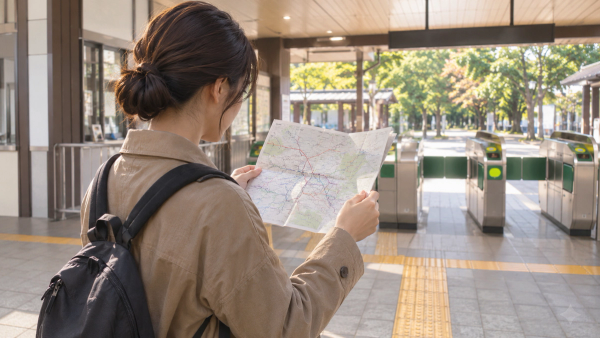
#Take Seoul Subway Line 1 to Jongno 5-ga Station and use Exit 8. Walk straight roughly 62 meters from the stairs and you land right by North Gate 2, steps from the twisted doughnut line and main food cross-aisles. Exit 7 sits immediately beside it and works just as well.
Coming on Line 2 or Line 5 from Myeongdong, Hongdae, or Dongdaemun? Skip transferring to Line 1. Get off at Euljiro 4-ga Station, take Exit 4, and walk straight north across Cheonggyecheon Stream for about eight minutes until the southern entrances appear on your right.
Skip driving. Streets around Jongno stay congested, and even official guides route cars to the paid Jongno 4-ga Jongmyo public lot rather than the market perimeter.
Because the market sits in historic central Seoul, pair it with nearby sights rather than treating eating as your only stop. Jongmyo Shrine, the craft and electronics arcades of Sewoon Shopping Center, and Dongdaemun Design Plaza sit close by on foot or one metro stop away. If you are still deciding how to split your Korea days beyond the capital, read our guide on comparing Seoul vs Busan for first-time Korea trips before locking down your schedule.
Quiet Hours vs Peak Crush: Best Times to Eat
#Most central stalls seat diners on low plastic stools packed tightly around cooking counters. Even a modest bump in foot traffic quickly turns the narrow cross-lanes into a slow shuffle.
- 10:00 AM to 11:15 AM on weekdays (Best morning window): Griddles are hot, noodle dough is fresh, and you have space to read menus before picking a bench.
- 11:45 AM to 2:00 PM daily (Skip if you can): Jongno office lunch crowds collide with tour buses. Famous noodle stalls hit 20-to-30-minute waits.
- 2:30 PM to 4:30 PM on weekdays (Best afternoon window): Lunch crowds thin out before dinner drinkers arrive, and upstairs fabric and vintage shops stay open Monday through Saturday.
- 6:00 PM to 9:00 PM (Loud and lively): Great if you want glowing lanterns, clinking makgeolli glasses, and peak evening buzz. Weekend nights pack out completely, and handmade noodle dough can sell out early.
Honest Prices, Overcharging Crackdowns, and How to Check Before Sitting
#Most vendors work fast, speak bluntly, and charge fair prices. Still, viral overcharging clips between late 2023 and late 2025 hurt the market's image badly enough that Seoul officials and national regulators stepped in.
First came a late-2023 travel video showing a vendor charging ₩15,000 for a surprisingly small plate of mixed jeon pancakes while pushing diners to order more. Seoul Metropolitan Government and Jongno District responded in early 2024 with rules requiring portion sizes or weights beside prices, sample dish displays, and undercover mystery shoppers.
Then in November 2025, a YouTube clip passed 16 million views after a stall listed sundae blood sausage at ₩8,000 on its board and billed ₩10,000 over unrequested extra meat. That blowup exposed an awkward split inside the market: roughly 200 permanent shops in the indoor Gwangjang Market building threatened a ₩300 million lawsuit against the ~250 outdoor traditional food stalls because tourists blame one name when a single cart pads a bill.
On September 1, 2026, South Korea's Ministry of Food and Drug Safety tightened the Food Sanitation Act enforcement decree directly after those controversies. Previously, failing to display prices or charging above the posted board only brought a mild warning on a first violation. Under the revised national rule, a first overcharging or missing-menu violation triggers an immediate 5-day business suspension, rising to 10 days on a second violation and 20 days on a third.
New laws help, yet checking upfront before food hits the pan is still your best defense. Stick to five quick habits:
- Choose stalls with printed menus showing prices and quantities. Walk past unmarked carts or handwritten prices missing portion details.
- Point and ask "Igeo eolmayeyo?" (How much is this?) before sitting. Confirm the won price out loud right away.
- Stop vague upgrades early. If a vendor asks about a "mixed plate" or extra meat on sundae or pancakes, ask the new price first or say no before they plate it.
- Check water and drink costs first. Never assume bottled water, soda, or rice wine comes free.
- Save Korea's 1330 Travel Hotline (+82-2-1330). If a vendor breaks posted menu pricing, English-speaking hotline operators log complaints directly.
What to Eat at Gwangjang Market (With Fair KRW Prices)
#Market portions are heavier and oilier than they look in short videos. Order a full pancake plus noodles at stop one and two people will feel done in twenty minutes. Split single plates across four stops instead, balancing crisp fried dishes with sharp, cold, or brothy bites.
| Dish | Fair KRW Price | Best Order Strategy | Main Dietary Flag |
|---|---|---|---|
| Chapssal Kkwabaegi | ₩1,000 to ₩1,500 | One warm twist each | Wheat, glutinous rice, frying oil |
| Mayak Gimbap | ₩3,000 to ₩5,000 | One shared box | Usually veg; check for stray ham or fish cake |
| Bindaetteok | ₩5,000 to ₩6,000 plain | Split one for 2 to 3 people | Often pork or shared pork griddles |
| Kalguksu | ₩6,000 to ₩9,000 | One bowl (add ₩1,000 mandu) | Anchovy and dried seafood broth |
| Sundae | ₩8,000 to ₩10,000 | Confirm listed weight first | Pork blood and casings |
| Yukhoe | ₩15,000 to ₩23,000 | Shared plate or solo bibimbap | Raw beef and raw egg yolk |
Bindaetteok (Crispy Mung Bean Pancakes)
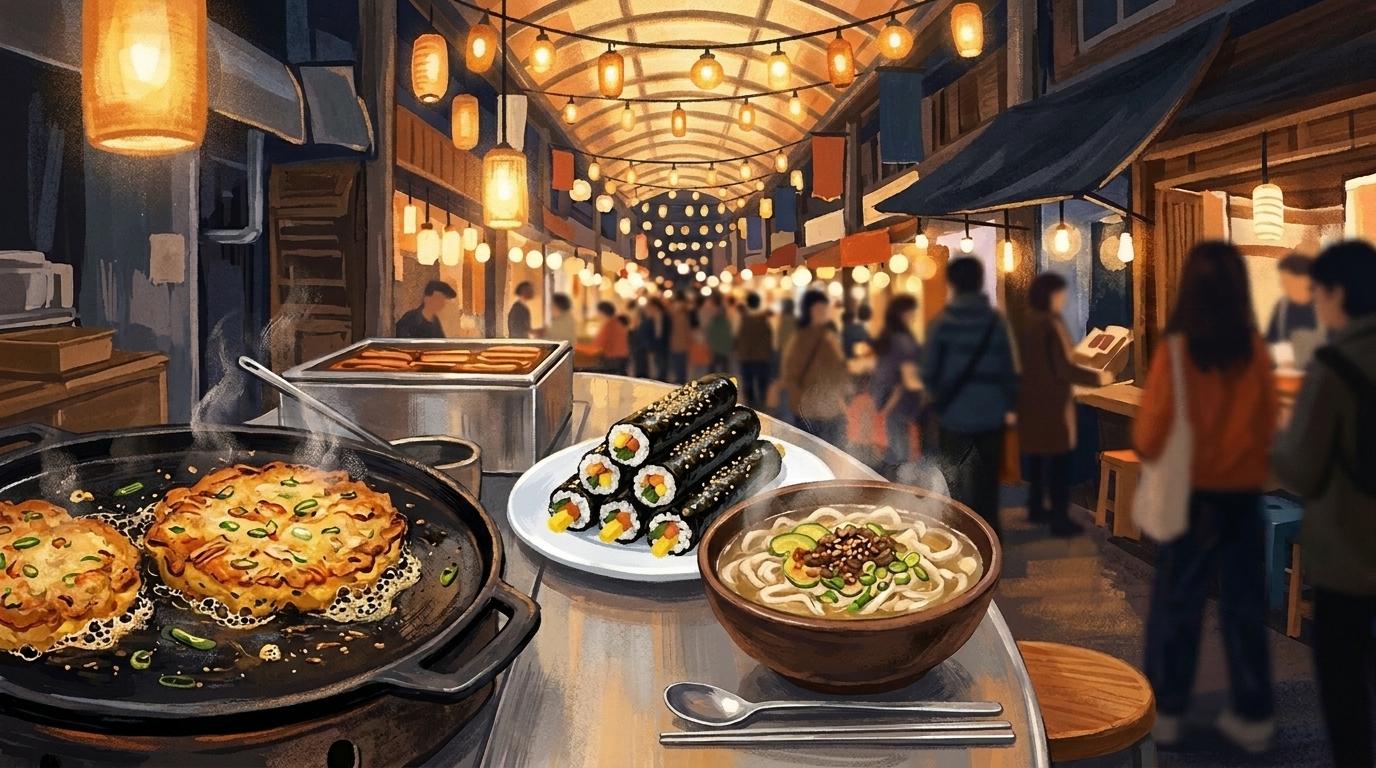
#Bindaetteok, often labeled nokdujeon, explains half the smoky smell drifting down the aisles. Vendors soak whole mung beans, grind them wet on stone mills behind the counter, fold in bean sprouts, scallions, kimchi, and often minced pork, then fry thick discs in generous oil on giant iron griddles.
A regular pancake costs ₩5,000 to ₩6,000, while assorted meat or seafood platters reach ₩10,000 to ₩15,000. Sunhui-ne Bindaetteok at 5 Jong-ro 32-gil draws the largest crowd, though surrounding griddles turn out crisp pancakes in the same tradition with far shorter waits.
Never pack bindaetteok to go. Steam inside a plastic bag ruins the crisp crust within ten minutes. Eat it hot at the bench, dunk every piece in the tangy soy-onion vinegar dip to cut the grease, and pair it with cold makgeolli if you drink.
Mayak Gimbap (Mini Seaweed Rolls)
#Don't overthink the translation. "Mayak" literally means drug, used here as playful Korean slang for food so simple and habit-forming you keep reaching back into the tray. Instead of big meal rolls stuffed with beef and egg, these bite-sized seaweed rolls hold seasoned white rice, crunchy pickled yellow radish (danmuji), and carrot brushed with sesame oil and seeds.
A small box runs ₩3,000 to ₩5,000 at stalls like Monyeo Gimbap. On their own the rolls taste clean and mild; the sharp yellow mustard-soy dipping sauce is what clears heavy frying oil off your tongue between heavier plates.
Kalguksu (Hand-Cut Knife Noodles) and Mandu
#When you want hot soup instead of grease, follow the steam rising from handmade noodle pots. Kalguksu means knife-cut noodles: vendors roll wheat dough flat by hand, fold it, slice uneven strips straight into boiling stock, and top the bowl with zucchini, seaweed, and optional kimchi or meat mandu dumplings.
Expect ₩6,000 to ₩9,000 per bowl, plus roughly ₩1,000 for dumplings. Cho Yonsoon's Gohyang Kalguksu stall shot to global fame after Netflix's Street Food: Asia in 2019. Her counter pulls 20-to-30-minute lunch lines and sometimes sells out of fresh dough before late evening, so visit earlier or pull up a stool at a neighboring hand-cut noodle stall with no wait.
Yukhoe (Korean Raw Beef Tartare) in Yukhoe Alley
#Duck off the busy snack intersection near Exit 8 into Yukhoe Alley and plastic stools give way to sit-down restaurants. Yukhoe is Korean raw beef tartare: chilled lean strips seasoned with sesame oil, soy, garlic, and sugar, piled over julienned Korean pear with pine nuts and a raw egg yolk.
A sharing plate runs ₩15,000 to ₩23,000 at established restaurants like Buchon Yukhoe (recognized in past Michelin Guide editions) or Changsin Yukhoe. Eating solo? Order yukhoe bibimbap for raw beef tossed over warm rice and greens in one bowl. Only order raw dishes if everyone at your table genuinely wants them, and skip chopped live octopus (sannakji) unless you chew carefully in small bites.
Tteokbokki, Sundae, and Eomuk Counter Staples
#Bright red pans of chewy rice cakes simmering in spicy gochujang line the center lanes. Ganggane Tteokbokki stands out for grating Korean radish straight into its chili sauce, adding subtle natural sweetness that softens the heat.
Right beside those red pans sit dark glossy coils of sundae (pork blood sausage with glass noodles) and fish cake skewers (eomuk) in hot broth. If you order sundae at ₩8,000 to ₩10,000, confirm whether the board covers straight sausage or an assorted liver-and-lung mix before they slice it.
Chapssal Kkwabaegi (Twisted Glutinous Rice Doughnuts)
#Near North Gate 2 at 2 Jong-ro 32-gil sits the market's famous doughnut stall. Blending glutinous rice flour into the dough creates a crisp outside and chewy pull inside before each warm spiral gets rolled in cinnamon sugar for ₩1,000 to ₩1,500.
Don't bail if 15 people stand ahead of you. Fresh twists drop into clean oil continuously, so the line clears in about five minutes, and eating one warm straight from the rack beats anything cooled down later.
Dietary Warnings: Vegetarian, Pork-Free, Halal, and Raw Food Checks
#Gwangjang Market looks plant-friendly because baskets of mung beans, greens, and carrots sit out front. Behind the counter, animal stocks and shared oil catch travelers out fast.
- Kalguksu broth is rarely vegetarian. Nearly every noodle stall builds its clear soup on dried anchovies, clams, and seafood or meat stock.
- Bindaetteok often contains or touches pork. Some recipes mix minced pork into the batter, and almost every big griddle cooks pork wanja patties alongside plain vegetable pancakes in the same pool of oil.
- Tteokbokki shares space with fish cakes. Vendors routinely splash broth from adjacent eomuk fish-cake pots into spicy rice-cake trays.
- Mayak gimbap and kkwabaegi are your safest cautious bites. Plain carrot-and-radish mini gimbap is usually meat-free, though confirm no stray ham or fish cake is rolled inside and check the dipping sauce. Twisted kkwabaegi has no meat, though strict vegans should check oil and dairy details.
- Yukhoe carries raw-meat food safety limits. Pregnant travelers, young children, older adults, and immunocompromised visitors should skip raw beef and raw egg yolk completely in favor of hot cooked food.
If keeping strictly vegetarian or halal is your priority across Seoul, treat Gwangjang Market as a short walk-through and rely on dedicated restaurants instead. Our guide to vegetarian food strategies and backup options in Seoul maps out safe Korean dishes and easy meal backups across the city.
Cash, Cards, T-Money, and Realistic Budget Planning
#Seoul feels almost cashless until you pull up a plastic market stool. Sit-down Yukhoe Alley restaurants and permanent indoor shops accept Visa and Mastercard easily, yet many central food carts prefer physical Korean won cash or local bank transfers, especially under ₩10,000.
Pack ₩20,000 to ₩30,000 per person in small notes (₩1,000, ₩5,000, and ₩10,000 bills). Handing a vendor a ₩50,000 note for a ₩1,500 doughnut during a rush slows everything down. Plan roughly ₩15,000 to ₩25,000 per person for a four-dish snack walk, and add ₩15,000 to ₩25,000 more if you sit down for yukhoe and makgeolli.
Keep one transit rule in mind too: subway machines and convenience stores don't reload T-money cards using foreign credit cards. You need physical KRW cash to top up transit cards, so set spare cash aside for your ride home or use a bank branch or Global ATM inside nearby convenience stores or stations before entering.
Crowd Comfort, Restrooms, Bags, and Nearby Walks
#A few simple habits save real hassle in tight lanes:
- Bring pocket tissues and wet wipes. Stall napkins tear quickly on greasy pancakes, and plastic counter stools rarely get wiped between quick seat changes.
- Zip bags in front during rush hours. Seoul is very safe overall, yet packed aisles near North Gate 2 turn open backpacks into careless risks.
- Locate main building restrooms early. Follow overhead WC signs inside the permanent market halls rather than expecting street carts to have toilets.
- Wear closed-toe shoes with grip. Broth spills, wash-down water, and cooking oil splatter make the narrow lanes slick.
Once you finish eating, skip jumping straight back down into crowded Line 1 if you feel overly full. Walk south for an easy flat stroll along Cheonggyecheon Stream toward Euljiro 4-ga, wander west toward quiet tree-lined Jongmyo Shrine, or walk east to Dongdaemun Design Plaza.