The pillow I ignored for years became my most-used travel thing
#For the longest time, I used to laugh at people carrying those U-shaped travel pillows at airports. Like, arre bhai, are you going to Dubai or going for physiotherapy? Then one overnight flight from Delhi to Bangkok changed my whole attitude. I slept sitting up with my head doing that embarrassing bobble-head movement, woke up with my neck stiff like I had done some wrong yoga pose, and spent the first half day of the trip rubbing Moov on my shoulder instead of exploring street food. Since then, I’ve tried foam travel pillows, inflatable pillows, wrap-style neck supports, even one weird scarf-looking thing my cousin ordered online and never used. So this is not some showroom brochure type buying guide. This is more like, what actually works when you’re an Indian traveller dealing with cramped economy seats, sleeper buses, 2AC berths, airport layovers, and bags that are already bursting with snacks, chargers, and one extra pair of chappals for no reason.
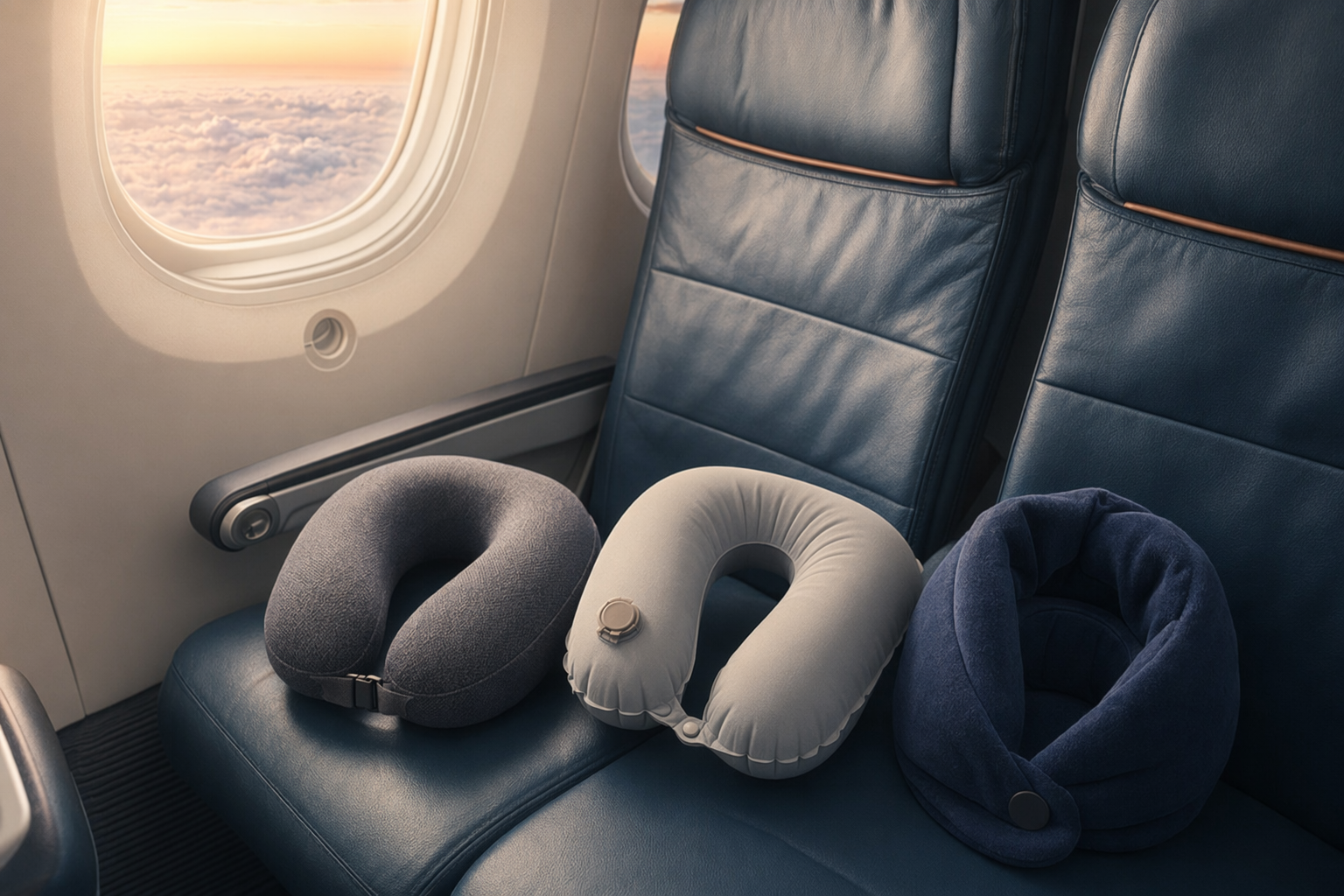
A travel pillow sounds like a small purchase, but honestly it can decide whether you arrive fresh or arrive looking like you fought with the seat. Foam vs inflatable vs wrap is the big confusion most people have. Foam feels comfy but bulky. Inflatable is light but sometimes annoying. Wrap pillows look stylish and compact, but they don’t suit everyone. And the “best” one depends so much on how you travel. Someone taking short domestic flights from Bengaluru to Kochi doesn’t need the same pillow as someone doing a 17-hour journey with one layover, or taking an overnight Volvo from Delhi to Manali where the driver thinks he is in Fast and Furious.
First, be honest about how you actually sleep while travelling
#Before buying anything, just think about your own travel sleeping style. I know that sounds slightly over-serious for a pillow, but trust me. Some people sleep with their head falling forward. Some tilt to one side and keep hitting the window. Some can sleep anywhere, even on the airport floor next to a crying child and a boarding announcement. Lucky people, honestly. Me, I need support under the chin and on the sides, otherwise I keep waking up every 20 minutes and then I become that grumpy person who says “I’m fine” but is clearly not fine.
On Indian routes, this matters even more because our travel is rarely one clean airport-to-hotel thing. You might take an auto to the metro, metro to airport, flight to Mumbai, then cab to Pune. Or train overnight, then bus, then shared taxi. In these mixed journeys, bulky comfort items become irritating very fast. I once carried a fat memory foam pillow on a trip to Spiti, and it was amazing on the bus till I had to strap it outside my backpack and it collected dust like it was doing field research. So yeah, comfort is important, but portability is not some small side point.
- If your head falls sideways a lot, foam or structured wrap pillows usually feel better.
- If your head falls forward, look for chin support, not just a basic U-shape.
- If you pack light, inflatable or wrap is easier than bulky memory foam.
- If you sweat easily, avoid thick covers without washable fabric. Indian summers are not kind.
Foam travel pillows: the most comfortable, but also the most demanding
#Foam travel pillows, especially memory foam ones, are the classic “I want proper comfort” option. They hug the neck nicely, they don’t make that plastic crinkly sound, and they feel less jugaadu compared to inflatable pillows. The better ones have a raised back or side support, and some come with a snap button or drawstring so your head doesn’t just slide out. In airport shops, they can be expensive, obviously, because airport shops sell everything like it was blessed by royalty. Online and in luggage markets in India, basic foam pillows are often around ₹700 to ₹2,500, while premium memory foam ones can go ₹2,500 to ₹6,000 or more depending on brand, cover, compactness, and all that fancy packaging.
My favourite foam pillow was one I bought before a long flight from Mumbai. Nothing glamorous. Dark grey, washable cover, clipped to my backpack like every other traveller in the boarding queue. On the plane it worked beautifully because I had a window seat and could lean into it. I actually slept through the meal service, which is rare because I am the kind of person who wakes up even if someone opens a packet of peanuts nearby. But on the way back, I had an aisle seat, and the same pillow felt too bulky. Every time someone passed, it got pushed, my shoulder got nudged, and I started hating it a little. Same pillow, different seat, different experience. That’s travel only, no?
Where foam pillows win
#Foam is best when comfort is your priority and you don’t mind carrying volume. For long-haul flights, long train journeys in chair car, and overnight buses where you’re sitting more than lying down, foam gives that proper cushion feeling. It also suits people who get neck pain easily, though if you have serious cervical issues, please don’t treat a travel pillow as medical advice. Ask a doctor or physio, especially before those long trips where you’ll be stuck sitting for hours.
Another small thing I love about foam pillows is the fabric. Many come with soft covers, and if the cover is removable and washable, that’s a big plus. After one humid Kolkata airport layover, I learnt this the hard way. Anything that touches your face and neck while travelling should be washable. Flights, trains, buses, hotel lobbies, chai stalls, everything mixes together. Not in a disgusting way, but also not exactly spa-level clean, you know.
Where foam pillows become a pain
#The main issue is size. Foam pillows don’t disappear into your bag. Some compress a bit, some come with a pouch, but they still take space. If you are travelling with only a personal item or underseat backpack, this becomes a real calculation. I’ve written before about how bag size can make or break a trip, and if you are confused about packing space, this guide on Underseat Bag vs Personal Item Backpack: Best Pick fits nicely with the pillow decision. Because a pillow is only useful if you can actually carry it without cursing it at every security check.
Inflatable travel pillows: light, cheap-ish, and surprisingly useful
#Inflatable pillows are the practical cousin. Not very glamorous. Sometimes they look like something from a medical camp. But when you’re packing light, they are genuinely useful. You blow air into them, use them, then deflate and fold them into a pouch. Simple. In Indian online stores, I’ve seen basic inflatable neck pillows around ₹300 to ₹800, and better ones with soft covers or improved valves around ₹800 to ₹1,500 or a bit more. If you travel once or twice a year, inflatable may be enough. No need to buy a ₹5,000 pillow if your main trip is one Goa flight and one wedding train journey.
But, and this is a big but, inflatable pillows are not all equal. Some feel like sleeping on a balloon. Some lose air slowly. Some have those sharp seams that irritate your skin. And blowing them up in a crowded boarding gate can feel awkward the first time. I used to pretend I was checking something on my phone while secretly inflating it. Very classy behaviour. Later I stopped caring because half the airport is doing weird things anyway, from repacking suitcases on the floor to eating thepla from foil.
Why I still carry an inflatable sometimes
#My inflatable pillow comes out when I’m doing multi-city trips or backpacking style travel. Like if I’m going Kochi to Bengaluru by flight, then overnight train, then local bus, I don’t want a foam pillow dangling outside. Inflatable takes almost no space, and that one point alone can beat comfort. It’s also good for trains if you want extra support against the window or if the berth pillow is too flat. Indian Railways pillows in AC coaches are usually okay, but not always enough, and if you’re in sleeper class or a day train, your own little pillow helps.
One trick: don’t fully inflate it. Most people make it rock hard, then complain it’s uncomfortable. Fill it around 70 to 80 percent, press it, adjust, and then close the valve. Softer air support feels more natural. Also choose one with a fabric cover if possible. Bare plastic or vinyl against your neck in summer is just… no. Especially if you are travelling in May, boarding a non-AC bus somewhere, or standing in a humid station waiting room with 200 other people and one slow fan.
Wrap-style travel pillows: modern, compact, and a bit love-it-or-hate-it
#Wrap pillows are the newer type many people are curious about. They don’t always look like pillows. Some look like padded scarves, some wrap around your neck and support the jaw, and some have a hidden plastic or firm inner support. The idea is that instead of bulky cushioning all around, they hold your neck in one stable position. Price-wise, basic wrap styles can start around ₹1,000 to ₹1,500, while branded or better-designed ones may go ₹2,500 to ₹4,500 or higher. Again, Indian pricing keeps changing with sales and imported brands, so use this as a rough range, not final gospel.
I tried a wrap pillow on a red-eye flight after a friend kept praising it like it had saved his life. First reaction: strange. It felt like wearing a soft neck brace, and I was very aware of it for the first 15 minutes. Then the cabin lights dimmed, everyone settled, and I realised my chin wasn’t falling forward. That was the big win. For people who wake up because their head drops forward suddenly, wrap pillows can be amazing. Not fluffy amazing, but practical amazing.
But they are not for everyone. If you dislike anything around your neck, you may feel trapped. If you sleep hot, some wrap pillows can feel sweaty. If your neck is shorter, the support might push your jaw weirdly. Try to buy from a place with return option if possible, because fit matters a lot. Unlike foam pillows, where “soft and supportive” works for many people, wrap pillows are very body-shape dependent.
Foam vs inflatable vs wrap: quick comparison from real travel use
#| Type | Best for | What I like | What annoys me | Typical India price range |
|---|---|---|---|---|
| Foam / memory foam | Long flights, buses, people wanting soft comfort | Most cushiony, stable side support, nicer fabric | Bulky, hard to pack, can feel warm | ₹700 to ₹6,000+ |
| Inflatable | Backpackers, light packers, occasional travellers | Tiny when deflated, budget-friendly, adjustable firmness | Can feel plasticky, may leak, less cozy | ₹300 to ₹1,500+ |
| Wrap style | Forward head drop, minimalist packing, aisle seats | Good chin support, compact, doesn’t stick out much | Fit can be weird, may feel tight or warm | ₹1,000 to ₹4,500+ |
If you want my plain answer, foam is the safest comfort pick, inflatable is the smartest packing pick, and wrap is the clever pick for people whose head keeps falling forward. But the wrong version of any one of these can be useless. A bad foam pillow is just a bulky neck ring. A bad inflatable pillow is a beach toy. A bad wrap pillow is basically a regret scarf.
Match the pillow to your journey, not just the product photos
#Product photos always show someone sleeping peacefully in a clean airplane seat with perfect lighting. Real life is different. Your co-passenger wants to go to the toilet. A child is kicking the seat. The cabin is too cold, then suddenly too warm. On buses, the road curves and your whole body shifts. On trains, someone’s phone is playing reels without earphones because apparently society has given up. So buy based on the journey you do most often.
For domestic flights in India
#For short domestic flights, I honestly don’t carry a big foam pillow unless it’s an early morning or late night flight. Delhi to Mumbai, Bengaluru to Hyderabad, Chennai to Pune, these are not usually long enough to justify big pillow drama. A wrap pillow or small inflatable makes more sense. Also, cabin baggage rules can be strict depending on airline and ticket type, so don’t assume your pillow will always be treated separately. Many travellers clip it outside the bag, but if your bag is already oversized, staff may ask you to adjust things. Better to keep it sensible.
For international flights and red-eyes
#For overnight flights, foam or wrap wins. This is where sleep quality matters because you may land and immediately start sightseeing, attend meetings, or meet relatives who expect you to be cheerful after 11 hours of travel. I prefer foam for window seats and wrap for aisle seats. Window gives you one side to lean on, so foam feels nice. Aisle seats have people moving around, so a wrap that stays close to your neck is less intrusive. Add an eye mask and something for sound, because pillow alone won’t save you if the cabin is noisy. I actually wrote a separate comparison on Earplugs vs Sleep Earbuds vs White Noise for Travel, because neck support is only one part of the whole sleep setup.
For trains and overnight buses
#For trains, inflatable pillows are underrated. They fit in your backpack and help when the provided pillow is too thin, or when you’re in a side berth and need a little extra neck support. For buses, foam is more comfortable if you have space, but wrap pillows are better if the bus seat is narrow. I took one overnight bus to McLeodganj where the turns were so sharp that my foam pillow kept shifting, while my friend’s wrap stayed in place. He slept. I stared into darkness and questioned my life choices.
Packability: the boring point that becomes very important at 5 am
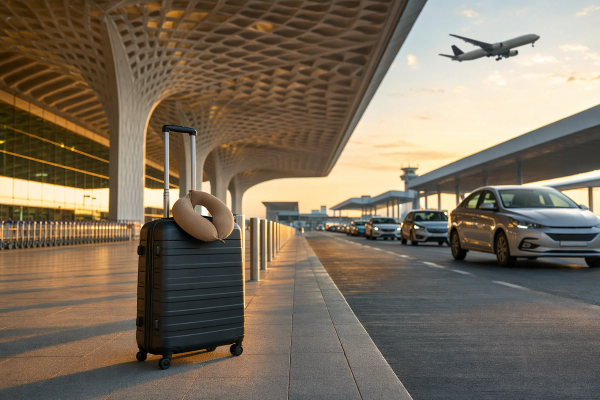
#When you’re fresh at home, you think, haan haan I’ll carry it, no problem. But at 5 am, dragging a suitcase through an airport entry queue, holding Aadhaar, ticket, phone, and coffee, even one extra dangling pillow can irritate you. Foam pillows often come with clips, which is helpful, but they still swing around. Inflatable pillows go inside any small pocket. Wrap pillows usually fold flatter than foam, though not always as tiny as inflatable.
If you travel with kids or parents, this matters double. Parents may appreciate a foam pillow because it feels supportive, but they may not want to carry it. Kids will use the pillow for 10 minutes, then you become the official pillow carrier. Couples also do this funny thing where one person says “we’ll share it”. No. You won’t. One travel pillow cannot serve two sleepy, irritated people on a night flight. Buy two cheaper ones if both of you care about sleep.
Material, cover, and hygiene: please don’t ignore this
#The best travel pillow is not just about shape. Material matters. A removable washable cover is almost non-negotiable for me now. Cotton-blend or soft polyester covers are common. Velour-type covers feel nice but can get warm. Mesh panels help a bit in humid weather. If you sweat a lot, avoid very thick memory foam with non-removable covers. It may feel luxurious in an AC store and then become sticky during actual travel.
Also smell it when you buy, especially foam. Some memory foam pillows have a chemical smell when new. Usually airing it out helps, but don’t open it for the first time inside the cab on the way to the airport. I did that once and regretted it. Give it a day or two at home. For inflatable pillows, check the valve. Inflate it, leave it overnight, see if it loses air. Better to discover leakage in your bedroom than somewhere over the Arabian Sea.
- Look for removable, washable covers if you travel often.
- Avoid rough seams near the jaw and ears.
- Choose darker colours if you’re taking trains and buses often. White travel accessories are brave, but foolish also.
- If you have sensitive skin, avoid cheap plasticky surfaces touching your neck directly.
When a pillow is not enough
#Sometimes we expect too much from a travel pillow. If you have a 9-hour layover, severe jet lag, or you’ve already been travelling since morning, a pillow can help but it won’t replace proper rest. In airports like Delhi, Mumbai, Bengaluru, and other major transit hubs, you may find lounges, nap rooms, transit hotels, or paid sleeping options depending on terminal and access. These cost more, of course, but for long layovers they can be worth it. If you are choosing between toughing it out on chairs or paying for rest, this piece on Airport Sleep Pod vs Lounge vs Transit Hotel is useful before you decide.
Safety-wise, don’t sleep so deeply in public areas that your bag is open or your phone is lying loose. Very basic, but we all get careless when tired. Use your backpack as a footrest, loop a strap around your arm, keep passport and wallet inside a zipped pocket. On trains also, chain your luggage if you’re sleeping overnight. A good pillow should help you rest, not make you forget the world completely.
My personal picks for different Indian traveller types
#If you’re a budget traveller or student doing mixed travel, get a decent inflatable with a soft cover. Don’t buy the absolute cheapest if it feels like plastic packaging. Spend a little more and check reviews for leaks. If you’re a frequent flyer, especially for work, buy a good wrap pillow or compact memory foam. You need something that doesn’t make you look like you’re carrying half your bedroom into the cabin. If you’re travelling with parents, memory foam is usually easiest for them to understand and use. No valves, no wrapping technique, no confusion.
- For window-seat sleepers: memory foam U-shape or side-support foam pillow.
- For aisle-seat sleepers: wrap pillow or compact foam that doesn’t stick out too much.
- For backpackers: inflatable pillow, preferably fabric-covered and not fully inflated.
- For hot weather trips: breathable cover, washable fabric, avoid thick non-removable covers.
- For long-haul flights: foam for comfort, wrap for forward head drop, plus eye mask and sound control.
Small buying mistakes I’ve made, so you can avoid them
#I once bought a travel pillow only because it looked premium. Big mistake. It was too high for my neck, pushed my head forward, and after 30 minutes I removed it and used it as a lower-back cushion. Not useless, but not the plan. Another time I bought an inflatable pillow from a random shop before boarding a bus from Jaipur. It deflated slowly through the night. By 3 am it was just a sad piece of fabric around my neck. So now I test pillows at home, even if I feel silly sitting on my sofa pretending to be in economy class.
Also don’t ignore your neck length and shoulder shape. People with shorter necks may find tall foam pillows uncomfortable. Broad-shouldered people may need firmer side support. If you wear headphones, check if the pillow pushes them awkwardly. If you wear earrings or have long hair tied in a bun, some pillow shapes become annoying. These small things sound too detailed, but during travel small annoyances become big very quickly.
Seasonal tips, because India travel is not one climate
#For summer travel, especially May-June flights, railway stations, and bus stands, choose breathable covers and avoid anything too thick around the neck. For monsoon trips, keep your pillow in a pouch, because damp fabric smells bad fast. For winter travel to North India or hill stations, foam pillows feel cosy and can double as a small cushion during cold bus rides. If you’re going for festivals, weddings, or peak holiday periods, expect crowded airports and trains, so compact gear becomes more valuable. During school holidays and long weekends, overhead bins fill quickly, and nobody wants to argue over bag space while holding a giant neck pillow.
Food and travel also connect here in a funny way. If you’re like me and eat chole bhature at the airport before a flight, maybe don’t tie a tight wrap pillow around your neck and try to sleep immediately. Not saying I made this mistake. Okay, I did. Keep your comfort setup simple, drink water, avoid too much caffeine if you actually want to sleep, and don’t wear a tight collar shirt with a thick neck pillow. Comfort is a full system, not just one product.
So, which travel pillow should you buy?
#If I had to choose only one for most Indian travellers, I’d say get a medium-firm memory foam pillow with a washable cover, but only if you don’t mind carrying it. It gives the most familiar comfort and works in flights, buses, and trains. If you are a minimalist packer, go inflatable. If your main issue is head falling forward, go wrap. Simple. But don’t buy only by Instagram ads or “best seller” tags. Look at size, weight, return policy, cover, neck height, and how you actually travel.
A travel pillow is not about looking like a pro traveller. It’s about reaching your destination without feeling like your neck has resigned.
My current setup is not fancy. For long international flights, I carry a compact foam pillow. For backpacking or train-heavy trips, I carry inflatable. For work trips with only one cabin bag, I sometimes take the wrap. Is that too many pillows? Maybe. But after enough bad sleep in transit, you stop judging yourself. You just do what works.
Final thoughts from one sleepy traveller to another
#Travel pillow buying looks simple until you actually start comparing foam vs inflatable vs wrap and realise each one solves a different problem. Foam is comfort, inflatable is convenience, wrap is control. The best one is the one you’ll carry without irritation and use without adjusting it every five minutes. If you can, test it at home, sit upright for 20 minutes, see where your head naturally falls, and then decide. Very unglamorous advice, but it works.
And honestly, good sleep changes the whole trip. You land with more patience, enjoy that first chai better, don’t snap at the cab driver for no reason, and maybe even have energy to explore instead of crashing in the hotel. So don’t treat the pillow as a silly add-on. Pick smart, pack smart, and may your next red-eye flight be less painful than mine was. For more practical travel stuff and real-world guides, I keep browsing AllBlogs.in when planning trips, especially when I want advice that doesn’t sound like a product manual.