Disclaimer: The information on allblogs is for education only and is not medical advice. Follow your clinician’s guidance for insulin, medication timing, glucose monitoring, and carbohydrate goals, especially before long travel days, time zone changes, or trips where meals may be delayed.
Travel can be wonderful. It can also be wildly unpredictable.
Your flight gets pushed back. The train café runs out of anything decent. A quick road trip turns into three hours of traffic and a gas station dinner. Then you finally get to the hotel and the only “snack” nearby is a vending machine full of candy bars.
If you live with diabetes, those moments can feel stressful fast.
The good news? You do not need a perfect travel food plan. You just need a realistic one. A few dependable snacks, some easy backup options, fast-acting glucose within reach, and a plan for what to buy or skip along the way can make travel feel much easier.
Here’s how to pack smarter, shop better, and avoid getting stuck with snacks that make your day harder.
Quick Answer: The Best Diabetes Travel Snack Plan
#If you are packing in a hurry, start here.
- Keep your important snacks and diabetes supplies with you. Do not put essential snacks, glucose, insulin, medications, meters, CGM supplies, or other diabetes items in checked luggage.
- Choose snacks with protein, fiber, and steady carbohydrates when you can. Nuts, seeds, whole grain crackers, roasted chickpeas, yogurt, cheese, eggs, vegetables, and fruit can all be useful travel options.
- Keep low blood sugar treatment separate from regular snacks. Glucose tablets, gels, juice, or another clinician-recommended option should be easy to grab quickly.
- Drink water regularly. Travel has a way of making people forget to hydrate.
- Think: pack, buy, skip. Pack reliable foods, buy fresh options when you find them, and skip sugary drinks, pastries, candy-heavy mixes, and foods that are hard to estimate when better options are available.
The Simple Pack, Buy, and Skip Rule
#Good diabetes travel snacks do not have to be fancy. They just need to be practical.
Before you leave, think about snacks in three groups:
- Pack: Foods that hold up well and can save you during delays.
- Buy: Fresh or refrigerated foods you can grab along the way.
- Skip: Options that are very sugary, not filling, or difficult to count.
This approach keeps things flexible. You are not trying to control every minute of the trip. You are just giving yourself better choices when travel gets messy.
What to Pack: Shelf-Stable Travel Snacks
#These are the snacks that can survive your bag, your car, your carry-on, and your patience.
Nuts and seeds
#Almonds, walnuts, pistachios, pumpkin seeds, sunflower seeds, and similar choices are easy to carry and do not need refrigeration. They offer protein and healthy fats, which can make them more satisfying than many packaged snacks.
One small tip: portion them before you leave. It is very easy to eat straight from a large bag during a long travel day without realizing how much you have had.
Roasted chickpeas
#Roasted chickpeas are crunchy, savory, and more filling than many chips or pretzels. They are a nice option when you want something snacky but not sweet.
Look for simpler flavors when possible, and check labels if you are counting carbohydrates closely.
Whole grain crackers
#Whole grain crackers are useful because they pair well with other foods. You can eat them with cheese, nut butter, hummus, hardboiled eggs, or deli turkey if you find those options on the road.
Crackers alone may not keep you full for long, so they usually work best as part of a snack instead of the whole thing.
Plain popcorn
#Plain popcorn can be a light, crunchy, whole grain snack. It is easy to pack and easy to share.
Try to avoid caramel-coated, candy-coated, or heavily sweetened popcorn if you are looking for a more predictable option.
Nut butter packets, if allowed
#Individual nut butter packets can be handy with crackers, apple slices, celery, or whole grain toast if you find it.
If you are flying, check current airport and airline rules before packing spreads, gels, or liquids in your carry-on. Rules can vary, and you do not want your backup snack tossed at security.
Fast-acting glucose
#This deserves its own category because it is not really a snack. It is your low blood sugar backup.
Pack glucose tablets, glucose gel, juice, or another treatment your clinician recommends for hypoglycemia. Keep it close. Not in the trunk. Not in checked luggage. Not buried under five sweaters in your suitcase.
When you need it, you need it quickly.
What to Buy: Fresh and Filling Options
#You will not always find great food while traveling, but sometimes airports, train stations, grocery stores, rest stops, and hotel markets have better choices than expected.
When you see fresh, simple options, grab them.
Non-starchy vegetables
#Good travel-friendly choices include:
- Carrot sticks
- Celery
- Bell pepper strips
- Cucumber slices
- Broccoli
- Snap peas
They are especially helpful when paired with something more filling, like hummus, cheese, yogurt dip, nuts, or eggs.
Lean protein options
#Protein can make a snack feel more like a mini-meal, which is useful when lunch turns into “we’ll eat after the next stop” and the next stop is two hours away.
Look for:
- Hardboiled eggs
- Plain Greek yogurt
- Low-fat string cheese
- Cottage cheese
- Turkey or other lean deli items, if stored safely
- Tuna or chicken packets, if they fit your plan
If something is supposed to be refrigerated, make sure it has actually stayed cold.
Fresh fruit
#Fruit can be a practical travel carbohydrate. It is usually easy to find and easy to carry.
Common options include:
- Apples
- Oranges
- Bananas
- Berries
- Grapes
- Pears
If you count carbohydrates or match insulin to carbohydrates, use the method and targets your clinician gave you.
Water and unsweetened drinks
#Water is the easiest choice most of the time. Unsweetened tea or plain sparkling water may also work if you like them.
Try to buy or refill water before boarding a plane, starting a long drive, or heading back to your hotel room for the night. It is never fun to realize at midnight that the only drink available is regular soda from a vending machine.
What to Skip: Sugary or Hard-to-Estimate Options
#You do not have to eat perfectly on vacation or while traveling for work. Nobody does.
But some snacks can make diabetes management harder because they are very sugary, not very filling, or difficult to estimate.
Sugary drinks
#Try not to rely on:
- Regular soda
- Sweetened iced tea
- Sweetened coffee drinks
- Juice blends
- Sugary energy drinks
- Sweet smoothies
Sugary drinks can raise blood sugar quickly and usually do not keep you full.
Refined snack foods
#Travel stops are full of easy options like:
- Pastries
- Oversized muffins
- Cookies
- Candy bars
- White-flour pretzels
- Sweet bakery items
- Donuts
They are convenient, but they may not be very predictable or satisfying. If you have better choices nearby, those are usually worth choosing.
Sweet snack mixes
#Some trail mixes look healthy at first glance but are closer to candy.
Watch for mixes with:
- Chocolate candies
- Yogurt-covered raisins
- Sweetened dried fruit
- Sugary clusters
- Candy-coated nuts
- Lots of added sweeteners
Plain nuts, seeds, or simpler mixes are usually easier to fit into a diabetes travel plan.
“Healthy-looking” snacks with lots of added sugar
#Granola bars, flavored yogurts, bottled smoothies, dried fruit packs, and protein bars can all look like smart travel snacks. Some are. Some are basically dessert in a wrapper.
When labels are available, check the carbohydrate, fiber, protein, and added sugar amounts. Then decide if the food fits your usual plan.
Flights: Airport Snacks for Diabetes
#Flying can be especially tricky because you are dealing with security rules, boarding times, delays, limited food service, and sometimes time zone changes.
The best mindset is simple: assume food may not show up when you expect it.
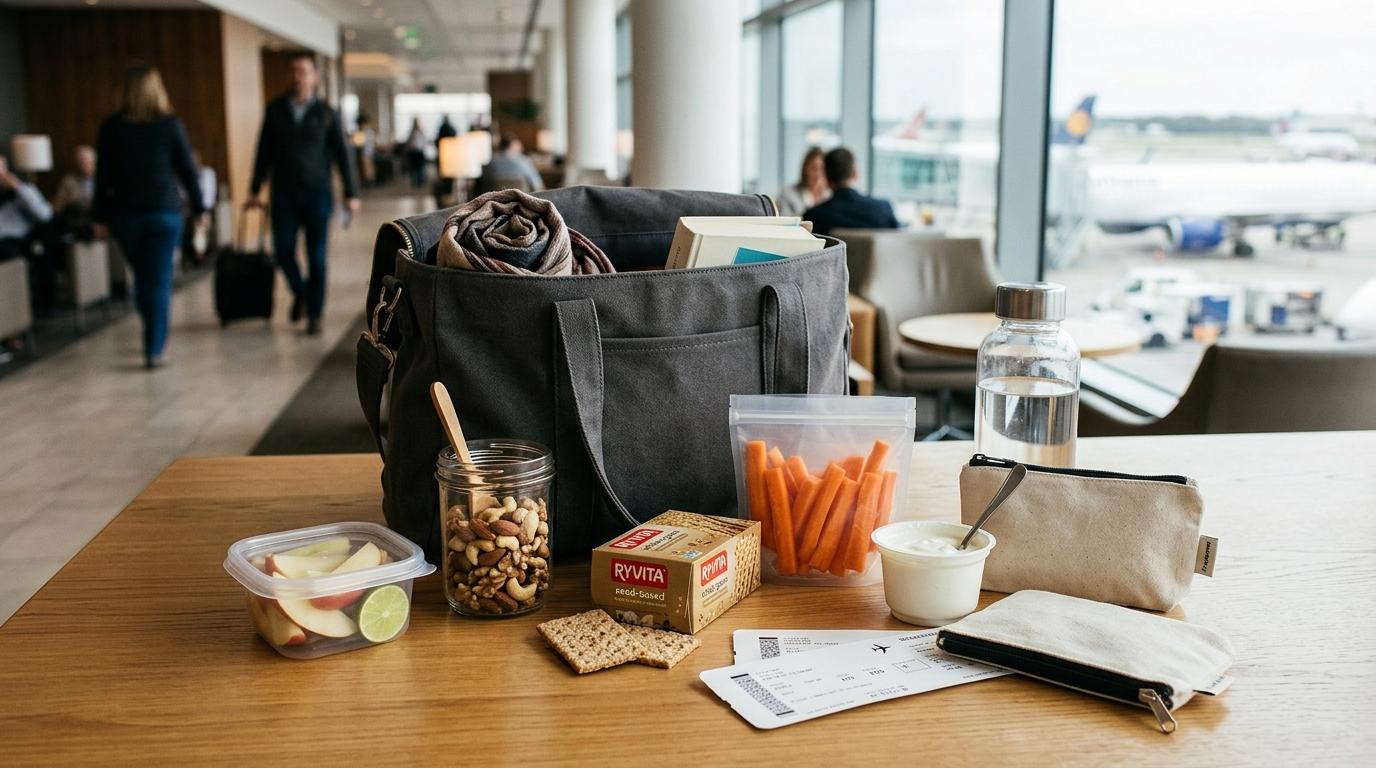
Keep essentials in your carry-on
#Keep these items with you:
- Regular snacks
- Fast-acting glucose
- Diabetes medications
- Insulin, if prescribed
- Glucose meter or CGM supplies
- Pump supplies, if used
- Any other diabetes supplies you may need
Do not put essential diabetes items in checked luggage. Bags can be lost, delayed, exposed to temperature changes, or impossible to access during the flight.
Buy food before boarding
#Good airport snacks for diabetes may include:
- Nuts
- Hardboiled eggs
- Cheese sticks
- Plain Greek yogurt
- Fresh fruit
- Cut vegetables
- Hummus cups
- Bottled water
Airport food is unpredictable. If you see something that works for you before boarding, it may be smarter to buy it instead of hoping the plane has something useful.
Be cautious with in-flight snacks
#In-flight snacks are often pretzels, cookies, chips, or crackers. They can help in a pinch, but they may not be enough if you are dealing with a long delay or missed meal.
If you use insulin or medications that can cause low blood sugar, talk with your clinician before your trip about delayed meals, time zone changes, and snack timing.
Trains: Train Snacks for Diabetes
#Train travel can feel a little easier than flying. You may have more space, easier access to your bag, and fewer food restrictions.
Still, the café car can be hit or miss.
Bring more food than you think you need
#A train café might have decent options. It might also have candy, chips, pastries, and sweet drinks.
Pack your own train snacks for diabetes so you are not depending on whatever is left.
Good options include:
- Whole grain crackers
- Nuts or seeds
- Roasted chickpeas
- Low-fat string cheese
- Hardboiled eggs, if kept cold
- Cut vegetables
- Hummus cups, if safely packed
- Fresh fruit
- Plain yogurt, if kept cold
Use an insulated bag for perishables
#If you bring yogurt, eggs, cheese, hummus, or deli foods, keep them properly chilled.
If you are not sure whether something stayed cold enough, it is better to skip it. A snack is not worth a food safety problem in the middle of a trip.
Road Trips: Road Trip Snacks for Diabetes
#Road trips give you the most control. You can pack a cooler, stop when needed, and choose grocery stores instead of relying only on gas stations.
The challenge is that long drives make it easy to graze, forget water, and reach for whatever is closest.
Pack a cooler
#Useful road trip snacks for diabetes may include:
- Cut vegetables
- Hummus
- Hardboiled eggs
- Plain Greek yogurt
- Low-fat string cheese
- Fresh fruit
- Turkey or other lean protein options, if safely stored
- Cottage cheese
- Water
Keep shelf-stable snacks in a separate bag so you have both fresh foods and backup options.
Stop at grocery stores when you can
#Gas stations sometimes have useful choices like nuts, cheese, fruit, and water. But many are mostly built around candy, chips, soda, and pastries.
When possible, stop at a grocery store or market and restock:
- Fresh produce
- Protein snacks
- Plain yogurt
- Nuts and seeds
- Water
- Whole grain crackers or wraps
A grocery stop also gives everyone a chance to stretch, use the restroom, and reset a little.
Keep snacks within reach
#Do not pack all the food in the trunk if someone may need it during the drive.
Keep low blood sugar treatment and a few snacks near the person who needs them. If you are the driver and you feel symptoms of low blood sugar, follow your clinician’s safety advice and do not try to push through just to stay on schedule.
Hotels: Snack Storage and Late-Night Backup
#Once you arrive, your hotel room becomes your temporary home base. Setting it up with a few snacks can save you from vending machine dinners or skipped breakfasts.
Ask about a fridge
#If your room does not have a mini-fridge, ask the front desk if one is available. This can help with perishable snacks and, if needed, medication storage.
Always follow storage instructions from your clinician or pharmacist for medications.
Restock early
#If you can, stop at a nearby market on your first day and buy:
- Water
- Fresh fruit
- Cut vegetables
- Yogurt
- Cheese
- Eggs
- Nuts or seeds
- Whole grain crackers
This gives you backup options for late arrivals, early tours, delayed room service, or mornings when breakfast is not ready yet.
Do not depend on vending machines
#Hotel vending machines are convenient, but they usually lean heavily on candy, chips, cookies, and sugary drinks.
Keeping a few better snacks in your room means you do not have to rely on whatever is behind the glass at 11 p.m.
Blood Sugar, Missed Meals, and Travel Delays
#One of the hardest parts of travel is timing.
You may eat breakfast earlier than usual, miss lunch because boarding starts, sit in traffic through dinner, or arrive after nearby restaurants have closed.
That is why backup snacks matter.
Plan for missed meals
#Pack enough food for a delay, not just for the perfect version of your schedule.
A helpful backup usually includes:
- A protein option
- A fiber-rich carbohydrate
- Water
- Fast-acting glucose for lows
For example, whole grain crackers with nuts, fruit with cheese, or roasted chickpeas with water may hold you over better than candy or pastries.
Set reminders
#Travel is distracting. It is easy to miss your normal cues for food, water, medication, or glucose checks.
Phone reminders can help you remember to:
- Check glucose, if that is part of your plan
- Eat around your usual times
- Take medication as prescribed
- Drink water
- Restock snacks before the next travel day
Simple reminders can make a long day feel less chaotic.
Follow your clinician’s plan
#If you use insulin or medications that can lower blood sugar, missed meals and extra activity can matter.
Before traveling, ask your clinician how to handle:
- Delayed meals
- Extra walking
- Long sitting periods
- Time zone changes
- Early departures
- Late arrivals
- Unplanned snacks
Do not guess about medication changes. Get a plan that fits your treatment.
Hydration and Low Blood Sugar Backup
#Snacks are important, but they are not the whole travel plan. Water and low blood sugar preparation matter too.
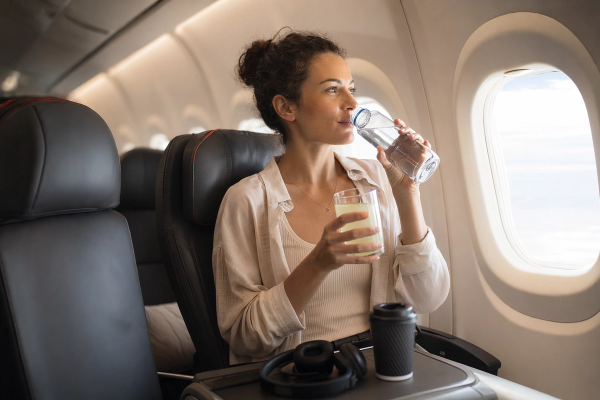
Keep water nearby
#It is easy to drink less while traveling because bathrooms are inconvenient, boarding feels rushed, or you do not want to stop the car again.
Still, hydration matters. Keep water with you when possible, and restock before flights, long drives, tours, and hotel nights.
Do not use regular snacks as your only low blood sugar plan
#A balanced snack is not the same as fast-acting glucose.
Nuts, cheese, vegetables, and whole grain crackers may help with hunger, but they may not treat low blood sugar quickly enough. Keep your clinician-recommended hypoglycemia treatment separate and easy to reach.
Make your backup easy to find
#Low blood sugar supplies should not be:
- In checked luggage
- In the trunk
- In an overhead bin you cannot reach
- At the bottom of a packed suitcase
- Left behind in the hotel room
Keep them in a pocket, purse, personal item, day bag, or front-seat bag.
Simple Snack Pairing Ideas for Travel
#Use these as flexible ideas, not strict rules. Your personal carbohydrate targets, medication plan, and clinician’s guidance come first.
- Apple with nuts
- Whole grain crackers with cheese
- Carrot sticks with hummus
- Roasted chickpeas with water
- Plain Greek yogurt with berries
- Celery with peanut butter
- Hardboiled egg with fruit
- Plain popcorn with a protein snack
- Nuts with a small piece of fruit
- Cut vegetables with string cheese
- Turkey slices with whole grain crackers
- Cucumber slices with cottage cheese
These diabetic travel snacks are practical because they are easy to pack, easy to buy, or easy to put together from common travel stops.
Final Packing Checklist
#Before you leave, make sure you have:
- Shelf-stable snacks for delays
- Fresh snacks in a cooler or insulated bag, if needed
- Fast-acting glucose
- Water or a plan to buy water
- Diabetes medications and supplies in your carry-on or personal bag
- A plan for missed meals
- Clinician guidance for insulin, medication, and carbohydrate targets
- A hotel snack plan if you arrive late
- Extra snacks for caregivers, children, or travel companions if they help manage care
Travel does not have to be perfect to be manageable. The goal is simply to avoid being caught with no good options.
Pack the basics. Buy fresh foods when you can. Skip sugary, hard-to-estimate choices when better options are available. And when your medical plan is involved, follow your clinician’s guidance.