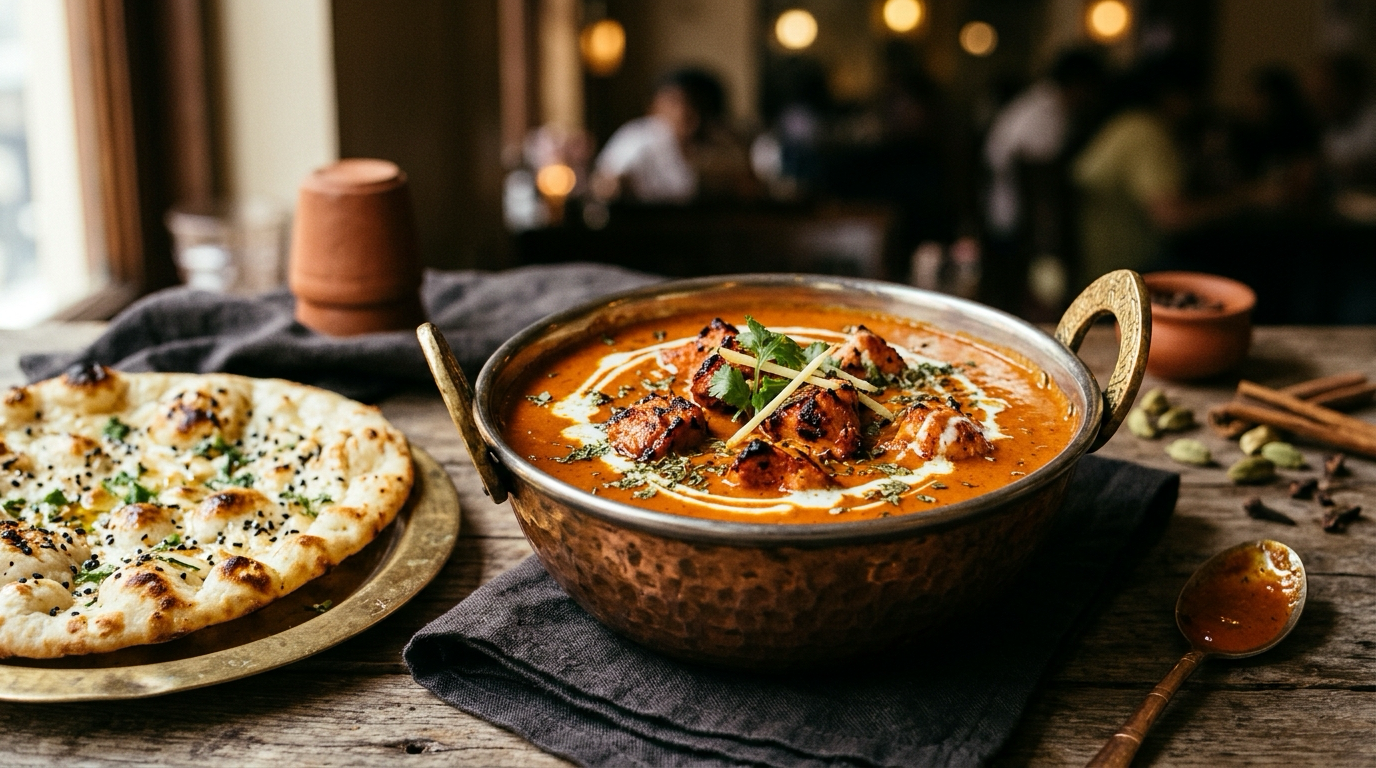
Almost every Indian restaurant in the world serves butter chicken, yet finding a truly exceptional one is surprisingly rare. 
Too often, takeout butter chicken arrives as a sickly-sweet, pastel orange soup. The sauce tastes like canned tomato puree mixed with sugar and a pint of heavy cream, drowning pale, boiled chunks of chicken breast that feel spongy and bland. 
True Delhi-style butter chicken—known traditionally as Murgh Makhani—is a completely different beast. 
It was invented in the 1950s by Kundan Lal Gujral at Moti Mahal restaurant in Daryaganj, Old Delhi. The cooks needed a way to salvage leftover tandoori chicken hanging on skewers before the meat dried out. Their brilliant solution was to simmer the charred, smoky chicken pieces in a rich, tangy gravy made of ripe tomatoes, butter, ginger, and cashew paste.
When made with classical discipline, authentic butter chicken is neither sweet nor heavy. It is a masterclass in balance: bright tomato acidity, deep tandoori smoke, gentle heat from Kashmiri chilies, rich butter silkiness, and the intoxicating, earthy perfume of crushed kasuri methi (dried fenugreek leaves).
Here is how to make the real Delhi classic at home, using an ordinary home oven broiler and everyday kitchen cookware.
The Four Non-Negotiable Pillars of Murgh Makhani
#To make butter chicken that rivals Old Delhi's finest restaurants, you have to leave modern shortcuts behind. The recipe relies on four pillars that cannot be skipped:
- Boneless chicken thighs, never breasts: Chicken breast meat dries out instantly under high-heat charring and turns stringy in the gravy. Chicken thighs contain intramuscular fat that stays juicy and tender through the broiler and the simmer.
- Intense surface charring before the sauce: You must never drop raw chicken directly into the makhani gravy. Authentic flavor comes from the Maillard reaction: the meat must be blistered with dark, smoky char marks first, creating the aroma of a charcoal tandoor.
- A strained tomato-cashew velvet base: The signature silk texture of makhani gravy does not come from dumping cups of cream into the pot. It comes from boiling fresh ripe plum tomatoes with raw cashews and whole spices, blending them smooth, and passing the puree through a fine-mesh sieve to remove every trace of tomato skin and seed grit.
- Toasted, hand-crushed kasuri methi: Dried fenugreek leaves are the aromatic soul of the dish. Added in the final sixty seconds of cooking, they release an unmistakable herbal, slightly maple-like aroma that defines North Indian restaurant dining.
Why the Chicken Must Be Charred First
#In the original Moti Mahal kitchen, the chicken used in Murgh Makhani was already tandoori chicken. It had been marinated in yogurt and spices, threaded onto long metal skewers, and lowered into a clay tandoor oven fired with burning wood and lump charcoal at over four hundred degrees Celsius (eight hundred degrees Fahrenheit).
That blistering heat does two essential things:
- It chars the outside of the chicken, caramelizing the yogurt and spices into smoky, savory crust bits.
- It seals the interior juices so the chicken remains tender when it meets the simmering sauce.
At home, you do not need a multi-thousand-dollar tandoor oven to get that smoky depth. An ordinary kitchen oven broiler set to its highest temperature works remarkably well. 
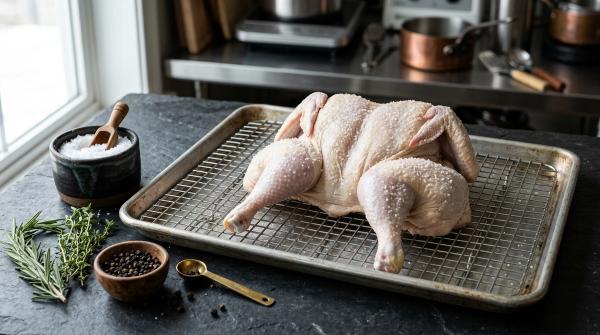
By placing the yogurt-marinated chicken chunks on a foil-lined baking sheet six inches below the glowing red broiler element, you can achieve genuine charred edges in ten to twelve minutes. Alternatively, searing the chicken in a smoking-hot cast-iron skillet over a high gas flame produces excellent dark blistering.
When you pull the charred chicken out of the oven, save every drop of liquid that pooled on the baking sheet. Those pan drippings are liquid gold, packed with rendered fat, toasted spices, and caramelized chicken juices that belong straight in the sauce.
The Secret to Velvet Makhani Gravy: Cashews and Straining
#The word makhani comes from makhan, the Hindi word for butter. Many home cooks assume that making a makhani sauce means simmering canned tomato sauce with cream and butter. That approach results in a flat, greasy sauce that lacks depth.
Authentic makhani gravy begins with whole, ripe red plum tomatoes (like Roma tomatoes). Ripe plum tomatoes offer meaty walls, low seed counts, and a balanced ratio of natural sugar to acidity. 
Here is the culinary sequence that creates restaurant-level gravy:
- Whole aromatic spices: Simmer the chopped tomatoes with green cardamom pods, black cardamom, cloves, and a cinnamon stick. These whole spices infuse warm, floral aromatics directly into the tomato juices.
- Raw cashews: Soaking whole raw cashews in warm water and simmering them directly with the tomatoes provides natural body, thickness, and a subtle nutty sweetness. When blended, cashews create a rich, creamy suspension that eliminates the need for excess dairy cream.
- Fine-mesh straining: This is the step ninety percent of home cooks skip, and it is the single reason homemade curries rarely match restaurant texture. After blending the cooked tomato-cashew mixture into a puree, you must pour it through a fine-mesh sieve back into your cooking pot.
- Discard the grit: Use the back of a ladle to press the puree firmly through the wire mesh. What stays in the sieve is a small pile of fibrous tomato skins and coarse cashew fragments. What passes into the pot is a pure, glowing orange-red silk liquid that coats the back of a spoon flawlessly.
How to Emulsify Cold Butter Without Splitting
#Once your strained tomato-cashew gravy has simmered and thickened, and your charred chicken chunks have cooked through in the sauce, you arrive at the most critical moment: adding the butter.
Butter is an emulsion of roughly eighty percent butterfat, sixteen percent water, and four percent milk proteins. If you dump melted butter or warm room-temperature butter into a furiously boiling curry, the fat will separate immediately, leaving you with an oily orange slick floating on top of your sauce.
French chefs call the proper technique monter au beurre, and Indian master chefs use the exact same physics:
- Take cold, unsalted butter straight from the refrigerator and cut it into half-inch cubes.
- Turn your stove flame down to the lowest setting, so the sauce is just barely trembling, not boiling.
- Drop in a couple of cold butter cubes at a time, whisking or stirring constantly in wide circular motions.
- As the cold butter slowly melts, the fat droplets disperse evenly into the hot tomato liquid, trapped by the natural cashew starches and milk solids.
- The sauce transforms before your eyes: its color lightens into a vibrant, glowing orange-coral, and its surface takes on a mirror-like, glossy sheen.
Only after the butter is fully emulsified should you stir in a few tablespoons of warm heavy cream to finish the texture.
Toasted Kasuri Methi: The Finishing Touch
#If your butter chicken tastes good but lacks that intoxicating restaurant aroma, you are missing toasted kasuri methi.
Kasuri methi refers to dried fenugreek leaves grown traditionally in the Kasur region. It has a complex flavor profile: slightly bitter, deeply herbal, with warm notes reminiscent of maple syrup and celery seed. 
Raw kasuri methi straight out of the box can taste slightly bitter and dusty. To unlock its volatile essential oils:
- Place the dried leaves in a small, dry skillet over low heat for twenty to thirty seconds.
- Gently toss the leaves until they become fragrant and crisp to the touch. Do not let them turn black.
- Pour the warm leaves into the palm of your hand, cup your hands together, and rub your palms firmly.
- The brittle leaves will shatter into a fine, fragrant green powder.
- Sprinkle this powder across the surface of the finished curry, stir once, turn off the heat, and immediately cover the pot for three minutes.
Trapping the steam allows the fenugreek oils to permeate the entire pot, giving the butter chicken its signature Old Delhi finish.
What to Serve with Authentic Butter Chicken
#Murgh Makhani is a rich, luxurious curry, and it deserves classic accompaniments that balance its creamy texture:
- Hot tandoori butter naan: The crisp, charred bubbles and chewy interior of fresh naan are the ultimate vehicle for scooping up the velvety makhani gravy.
- Fragrant steamed basmati rice: Long-grain aged basmati rice with a pinch of cumin seeds (jeera rice) absorbs the sauce beautifully without competing with its delicate spices.
- Thinly sliced pickled onions (Sirka Pyaz): Red onion rings soaked in vinegar, water, and beetroot slices provide a sharp, crunchy, acidic contrast that cleanses the palate between rich bites.
- Fresh ginger juliennes: Scattering paper-thin slivers of peeled fresh ginger across the top adds a bright, zesty bite that cuts through the butter.
Essential Kitchen Rules for Success
#- Never use canned tomato paste or sweetened tomato ketchup; the vinegar and artificial sweeteners will ruin the natural fruit balance.
- Use authentic Kashmiri red chili powder (Deggi Mirch). It imparts a brilliant, deep ruby-red color with very gentle heat, allowing you to use two full tablespoons without making the dish overly spicy.
- Always taste the gravy before adding sugar or honey. If your tomatoes are sweet and ripe, you will not need any sweetener at all. Only add a single teaspoon of honey if your tomatoes are aggressively tart.
- Keep the butter cold until the second it enters the pan to ensure a silky, stable emulsion that never breaks into oil.