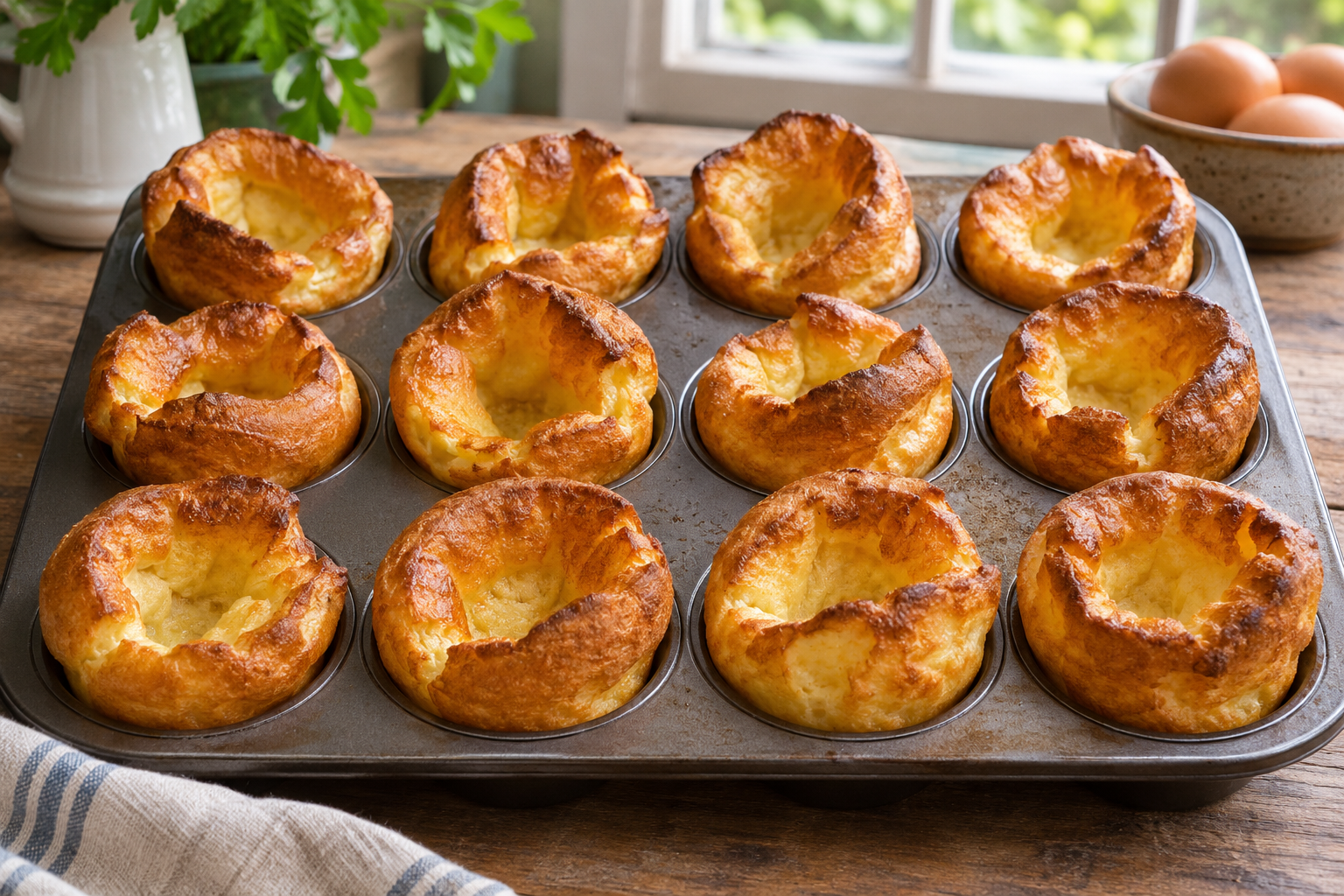
The main thing a Yorkshire pudding needs is a hot tin. Get the batter smooth, pour it into hot oiled wells and leave the oven door closed while the puddings rise. Take them out when the rims are browned and the centres have set. That's how you get the bit that cracks under a fork and the soft hollow that catches the gravy.
The harder part is usually getting the oven to yourself for 25 minutes. If the roast is still in there and you've got another tray waiting to go in, decide what will come out before you heat the oil. Mix the batter while the empty oven and tin heat. If dinner is running behind, refrigerate the batter until you can use it.
Pick the tin before you mix the batter
#The recipe card uses 140 g plain flour, four eggs and 200 ml milk, a batch adapted from Barney Desmazery's Good Food recipe. The full batch makes eight large puddings in two four-well Yorkshire pudding tins or 24 small ones in two 12-well muffin tins of the size used in that recipe. Muffin wells vary. Look at the size of yours before you decide how much to pour.
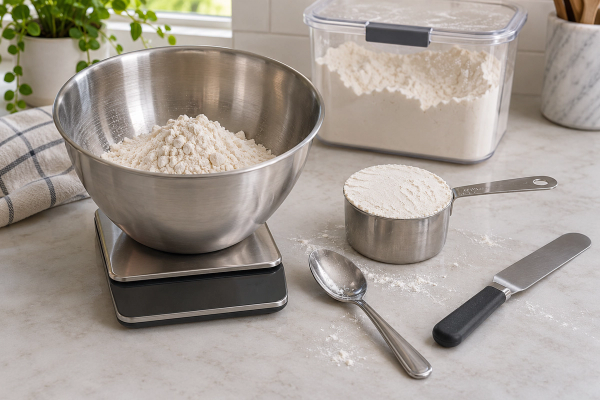
Plain flour is all-purpose flour in US shops. The puddings get their rise in the oven, so buy plain flour if you're choosing between that and self-raising. Weigh the flour if you've got a scale. Scooping can pack more flour into the same cup and give you a thicker batter than you expected.
If you have one standard 12-well muffin tin and are serving four, make a half batch with 70 g flour, two eggs and 100 ml milk. It gives you a sensible amount to divide between the wells, assuming they're comparable in size.
If you need the whole batch and only have one tin, plan on two rounds. Keep the remaining batter chilled between rounds, and bring the oiled tin back to temperature before filling it again. The first batch will cool and lose some of its crispness by the time the second comes out. If it's important that everybody gets theirs fresh and crisp, use two compatible tins that fit in the oven at once or cook one batch ahead.
Get one smooth pour before the tin comes out
#Beat the eggs into the flour. It can look like a thick paste at first, which makes it easier to see where the dry flour is hiding. Add the milk gradually and whisk as you go. Scrape the bottom and sides of the bowl once before pouring the batter into a jug. If you find flour under the whisk, mix it in now. Fixing a lump with the bowl still on the counter is much easier than doing it over hot oil.
The finished batter should run freely off a spoon. Check that the jug pours cleanly before you start. A heavy mixing bowl can dribble onto the flat of a muffin tray, where it burns before the batter in the wells is done. Set out a heatproof surface with enough space for the whole tin. Have your mitts, jug and a clear path to the oven ready.
Heat the oven to 230°C conventional or 210°C fan. On a Fahrenheit oven, use about 450°F conventional or 410°F convection. Use a small amount of sunflower oil in each well and heat the tins in the preheated oven. Use cookware rated for the temperature. When the tin is hot, set it down flat, pour the batter evenly and put it straight back. The work goes quickly if the jug and the space are already there.
Let the heat do the work
#When the batter gets hot, the water in it turns to steam and the pudding expands. The flour and eggs need more time to set into a shape that will hold. That's why a pudding can look big through the glass and still fall when you take it out early. A long enough bake gives you a rim that can stand and a base that can hold a spoonful of gravy.
The surface of the hot tin helps the batter start cooking as soon as it goes in. Give the oven and tin enough time to heat, then work steadily. You don't need to pour from a height or fling the tray back in. A few steady pours help the wells cook more evenly and keep hot oil in the tin where it belongs.
Leave the door closed for the 20 to 25 minute bake. Near the end, look through the glass if you can. You want browned rims with some colour down the sides. Once the batch looks ready, take the tin out and gently lift a pudding from a middle well. Its base should be cooked, even if the hollow is a little soft. If it is pale and the batter inside is still wet, give the batch longer. Serve promptly once cooked.
Read the batch before changing the recipe
#A flat tray gives you different clues from one small pudding surrounded by eleven good ones. Think about the rest of the tray before you change the ingredients.
| What happened | What to look at next time |
|---|---|
| Most of the batch stayed low and pale | Let the oven reach temperature fully and give the oiled tin time to heat. Check you used the stated flour and measurements. |
| The puddings lifted and dropped as soon as they came out | Let the rims and sides get more colour before removing them. |
| One corner baked darker than the rest | Check oven shelf placement and where the oven tends to brown other bakes. Compare the same positions on the next tray. |
| Several puddings joined at the top | Put a little less batter in each well and keep the tin level. |
| The tops crisped but the bases felt soft | Check whether the tin was fully heated and whether you used more than a thin layer of oil. Lift the cooked puddings out of the tin before serving. |
A little settling as the puddings cool is ordinary. If the shape shrinks so far that all you have left is a damp disk, note what the batch looked like when you opened the door. For the next round, keep the batter and tin the same and adjust the point at which you take them out. If one corner is always pale, repeat the recipe on a different shelf before changing the amount of flour.
Fit the batch around the roast
#Say you want to serve at seven and your main recipe allows the roast to rest long enough. Aim to have the Yorkshires out at about 6:58. That puts the batter in around 6:33 to 6:38, so get the oven raised to temperature and the oiled tin hot before then. Allow time for your oven to climb from the roast setting.
If the roast comes out at 6:40, the fresh batch probably needs another slot. Make the puddings earlier or move dinner a little later. The roast needs to follow its own cooking and resting directions.
Gravy is easier to finish while the puddings bake with the door closed. Move the cooked greens and main dish onto their serving plates before you take the tin out. The last minute can then be about getting the puddings to the table. A shallow spoon is handy if you want to fill the hollow with a little gravy while the top is still crisp.
You can build the plate around roast vegetables, mushrooms or beans and an onion gravy as easily as around roast beef. The puddings use sunflower oil, eggs and milk. If you're serving vegetarians, use a vegetable gravy too. If you've gone for a meal with several baked dishes, this is one good place to make use of the freezer.
Make a batch ahead when the oven is booked
#You can cool the cooked puddings and freeze them for up to one month, following the source recipe. Freeze them once they've cooled, in a suitable container, and give each one room when reheating so it can warm through without sitting inside another. Reheat thoroughly before serving. Larger puddings will warm differently from mini ones, so judge the batch you actually made.
If you're cooking for a group, reheat one first to get a feel for how much time you'll need before all the plates are waiting.
For a fresh first batch, keep a note of which tin you used and when the rims browned. The flour, milk and eggs are easy to measure again. Knowing that your tin took the longer end of the bake helps the next time somebody asks when dinner will be ready.