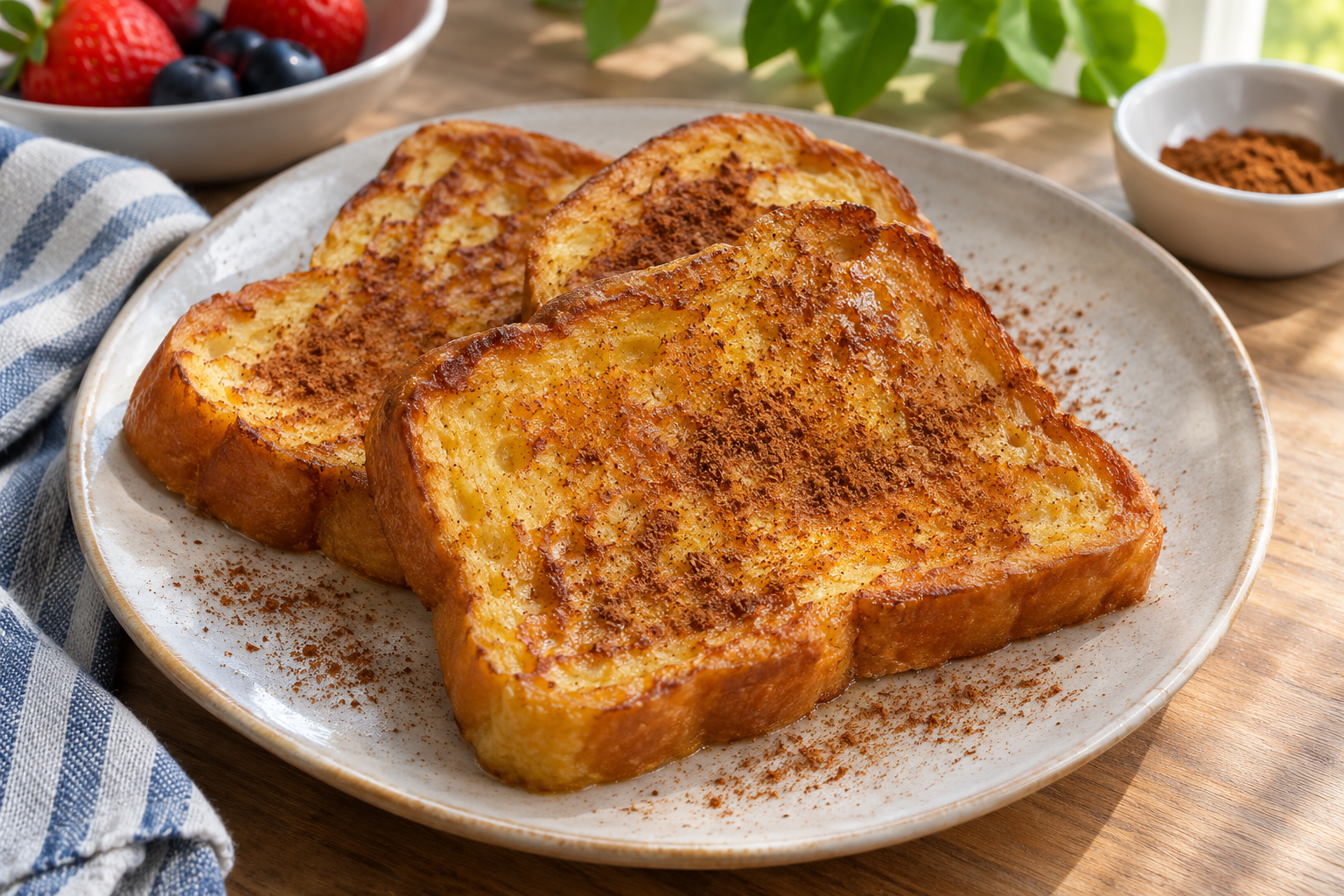
Picture an eggnog carton with a little left in it, six slices of bread on the counter, and someone already asking what’s for breakfast. That’s when I’d make eggnog French toast. The carton does most of the flavor work. I’d pay more attention to what the bread feels like when I lift it from the bowl and what the first slice looks like when I turn it.
Whisk 1½ cups refrigerated, pasteurized nonalcoholic eggnog with four eggs, vanilla, cinnamon and nutmeg. Dip four to six slices of bread, let the excess drip back into the dish, and cook in butter over medium heat. The outside should brown while the center sets. I’d start with one slice to find the right soak and heat for the bread I have.
Pick the bread before you whisk the eggs
#Brioche is what I’d use for a soft, rich center. Challah makes sense if there’s already a loaf on the counter. Plain sandwich bread works for a thinner slice with more browned surface in each bite. I’d worry less about the name of the bread and more about whether the slice will make it from the dish to the pan in one piece.
Look at the bread before you get it wet. A thick, slightly dry slice can spend a little longer in the custard. A fresh, thin slice that folds over when you lift it calls for a quick dip. I’d avoid cutting an extra-thick first slice because the cooking time in this recipe assumes a center the pan can reach before the outside gets very dark.
Sweet bread changes what I put on the plate. If the brioche and eggnog are both sweet, I’d set a few orange segments or tart berries beside the toast. With plain sandwich bread, I’d start with a touch of maple syrup. You can decide this after tasting the first fully cooked piece.
| Bread on the counter | How I’d dip it | What I’d watch |
|---|---|---|
| Thin, fresh sandwich bread | Turn once and lift promptly | The corners can soften and tear |
| Thick brioche or challah | Start with about 10 seconds total | The center takes longer to heat than the surface |
| Slightly dry country bread | Try the same short starting soak, then adjust | See whether the dry edges softened on the first slice |
What goes in the dish
#| Ingredient | Amount |
|---|---|
| Pasteurized nonalcoholic eggnog | 1½ cups |
| Large eggs | 4 |
| Ground cinnamon | ½ teaspoon |
| Ground nutmeg | ½ teaspoon |
| Vanilla extract | 1 teaspoon |
| Butter for the skillet | 2 tablespoons total |
| Brioche, challah or other sliced bread | 4 to 6 slices |
I’d whisk the eggs first to break up the whites, then add the eggnog and seasonings. A shallow dish gives both faces of the bread room to lie flat. If you whisk in a bowl first, pour the mixture into the dish once it’s smooth. Keep the custard cold until the pan is almost ready. Stir again before dipping the next batch if the spices have settled.
This formula makes it easy to coat several slices without chasing a shallow puddle around the dish. You may have some custard left, depending on the bread. Once you’ve been dipping into it, discard the remainder. To cook fewer slices, you can halve the mixture before it ever touches the bread and use a smaller dipping dish.
Let the first slice tell you what to change
#Heat a skillet or griddle over medium heat and melt some of the butter. Start with one slice. Turn it in the custard, give thicker bread about ten seconds total as a starting point, then lift it and let the free liquid run back into the dish. I’d put it straight into the skillet from there. A plate full of dipped slices waiting for their turn will keep absorbing custard.
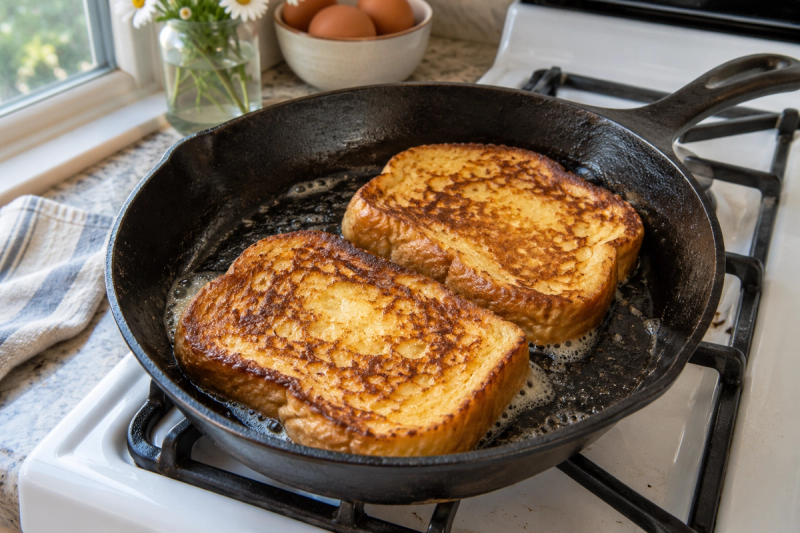
Cook the first side for about two minutes, then lift a corner with the spatula. Once it’s golden, flip and cook the second side for another two to three minutes as a starting point. The center should be fully set. Check a thick slice from the side with a thin-tip food thermometer if you’re unsure. The U.S. food safety recommendation for egg dishes is 160°F (71°C). A dark crust gives you a color cue, and the center gives you the doneness cue.
If the first slice colors too quickly, lower the heat before adding the others. A thick slice with a wet middle needs gentler heat and more time. If your first slice is pale and sits quietly in the butter, give the skillet time to come back up to temperature. A batch spread across a large pan can cool the surface. Leave a little space between pieces so you can turn one without dragging the others around.
When butter, bread and custard get in each other’s way
#A thin dark rim on the bread can come from a ragged trail of custard that ran into the pan. Let the next piece drain a moment longer and see whether it cooks more evenly. If there are scorched crumbs in the skillet between batches, take the pan off the heat briefly and carefully clear them before adding more butter. They’ll otherwise stick to the next slice and make it harder to read the browning.
If a slice tears during the transfer, shorten the dip on the next one and use a spatula under it. Thin bread with a hole through the middle can absorb custard around the hole faster than you expect. I’d put the sturdy slices on the main breakfast plates and let the odd pieces cook as small bites.
Sometimes the problem is simply a cold center in a rich, thick slice. Give that piece more time over lower heat, turning as needed. For the rest of the loaf, slice a little thinner or shorten the soak. Change one thing at a time. If you turn down the pan, halve the soak and cut thinner slices all at once, you won’t know which change you needed.
Serve everyone without leaving a stack to steam
#For two people, I’d cook and serve as I go. For more, I’d put the first cooked slices on a rack set over a tray in a low oven while the last batch finishes. A rack keeps the underside out of the condensation that collects when hot slices sit flat against one another. Keep the warm hold short, especially for thin pieces.
I’d set the butter, syrup and fruit out before the pan goes on. The toast will be ready long before someone finds the serving spoon at the back of a drawer. There’s room for a little whipped cream or a dusting of cinnamon if you want it, but let people add them at the table so you can get the slices out while their edges are still warm.
For a quieter morning, measure the spices and slice the bread the night before. Keep the eggnog and eggs refrigerated and mix the custard just before cooking. If cooked slices are left over, refrigerate them within two hours (within one hour if it’s hotter than 90°F or 32°C) and reheat to 165°F (74°C). A skillet can reheat them while bringing some texture back to the surface. I’d keep the syrup separate until they’re on the plate.