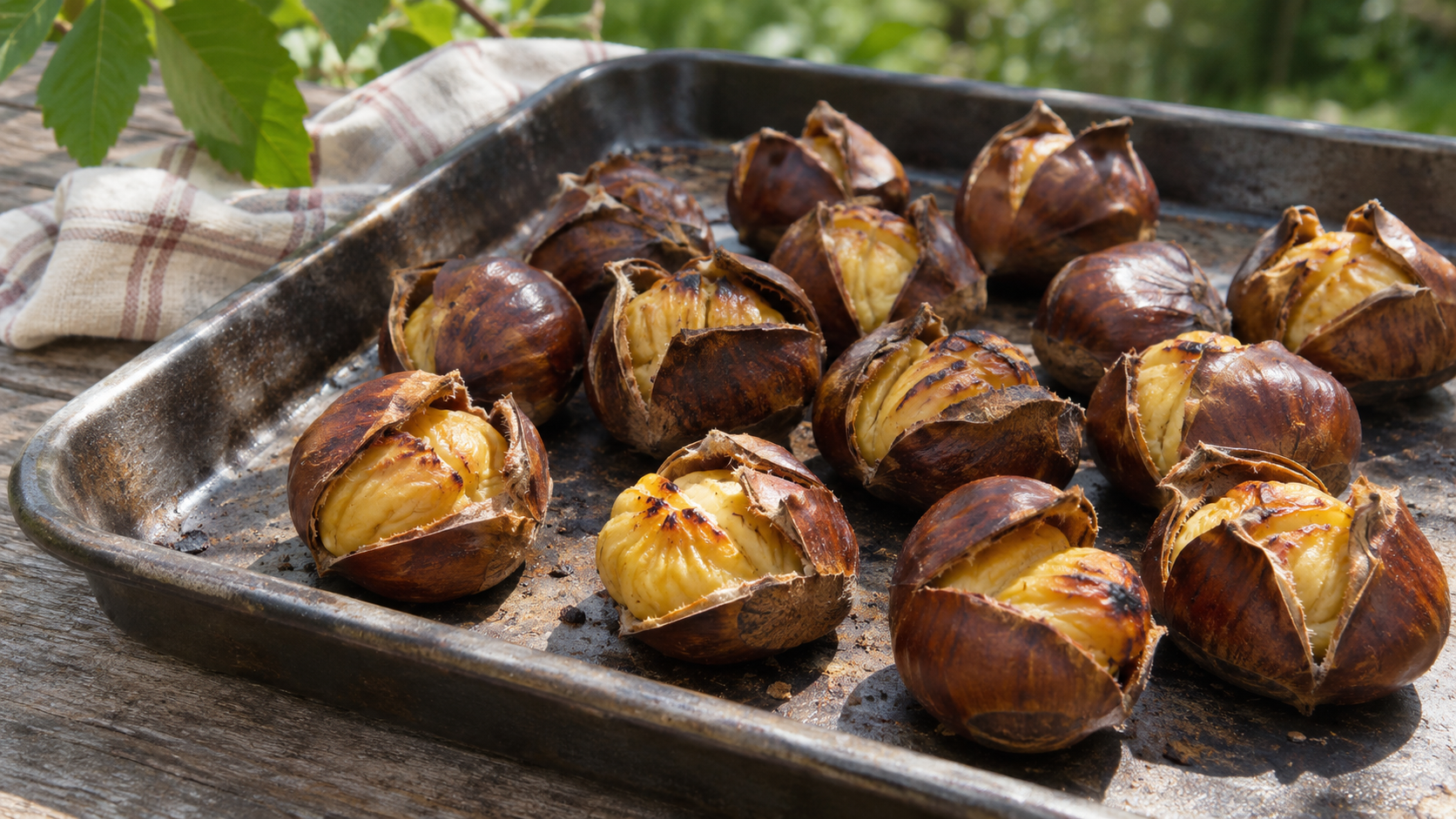
I’d start with one chestnut and a clean tea towel. When the tray comes out, that first chestnut is the one I’d sacrifice to find out how the rest are doing. The shell should pull back where you cut it, the brown skin underneath should lift, and the center should give when you bite or cut into it. If all I can tell from the tray is that the shells look handsome, I’m still missing the information that matters.
Roast scored, edible chestnuts at 400°F (205°C) in a single layer for about 25 minutes, until the centers are tender. Peel them while they’re warm enough for the shell and skin to loosen and cool enough for your hands. I’d set everything out before the tray goes in. A little preparation pays off when you’ve got a bowl of hot nuts and ten minutes’ worth of peeling to do.
Buy chestnuts you can cook
#For one tray, start with a pound of raw, shell-on edible chestnuts from a shop or seller that identifies them as food. If someone gives you a bag gathered outdoors and can’t confirm what they are, leave them out of the kitchen. Horse chestnuts and buckeyes are toxic. A guide to oven roasting can’t identify a nut from its color or a photo.
At the shop I’d look for firm chestnuts with intact shells and avoid ones with mold, holes, or a shell that gives under gentle pressure. Choose a batch close in size if you can. A small one may be done while the largest still has a firm center, and sorting them on the tray makes that easier to manage.
Peeled vacuum-packed chestnuts are a different purchase. If you’re making soup or chopping chestnuts into stuffing, they might save you a lot of time. For the experience of opening warm shells at the table, buy fresh shell-on nuts. I’d decide that before choosing between the two bags in the shop.
Score them on a board before they go in the oven
#Set the oven to 400°F (205°C). Wipe or rinse the shells if needed and dry them before cutting so they’re easier to grip. Put a chestnut flat side down on a stable board. With a sharp chestnut knife or small sturdy knife, cut an X in the exposed shell. Cut through the hard shell and stop as soon as you reach the flesh. Keep your supporting fingers out of the blade’s path.
Chestnuts are round enough to roll and the shell can be slippery. If one won’t sit steadily, take your time finding a stable face. I’d skip a piece that I couldn’t score safely. Hold the chestnut on the board instead of cupping it in your palm. A board that slides can also be steadied with a damp cloth underneath.
Before the tray goes in, run your eyes over the nuts. Every one should have a visible cut. That opening gives steam a way out and gives your fingers somewhere to start peeling. If you’re setting a second batch aside, score it separately so it’s easy to see which ones are oven-ready.
Roast until the meat is tender
#Arrange the chestnuts in a single layer on a rimmed tray, with the scores visible where they’ll sit that way. Roast for about 25 minutes. Around that time, take one out with tongs and let it cool briefly, then open it. The flesh should be tender through the center. A shell that has curled away from its score tells you where to try peeling. It gives you much less information about the middle.
Check a large nut if your batch ranges in size. If the smallest ones are ready before the big ones, move the ready ones off the hot tray and return the larger ones to the oven for a few minutes. I’d rather do one extra check than dry out half the tray waiting for the biggest chestnut.
| What you find | How I’d respond |
|---|---|
| Shell opens and flesh is tender all the way through | Start peeling the batch |
| Shell has opened but the center is hard | Return the underdone nuts to the oven and check again |
| A piece smells sour or shows mold when opened | Discard that chestnut |
| Some nuts look dry and crumbly inside | Check the rest individually and try a shorter roast next time |
Peel while the batch is still warm
#Put a clean, dry towel on the counter beside a bowl for shells and a plate for chestnuts. Tip some of the roasted nuts into the towel, or use tongs to move them. Once you can comfortably handle one through the towel, press gently at the scored edge so the shell cracks backward. Pull away the shell and then the papery brown skin. On some chestnuts they lift together. On others you’ll need to work around the grooves with your fingertips.
I’d peel a few at a time and leave the rest loosely covered in the towel. A whole tray left spread out cools while you work on the first handful. If two people are helping, give each a corner of the towel and a place to put shells. If you’re doing it alone, a smaller batch may be worth more than a bigger tray.
A strip of skin caught in a groove is easier to remove if you split the chestnut into pieces, especially if the pieces are going into soup or stuffing. If you want intact chestnuts at the table, move slowly and give the score another gentle squeeze before trying to pull everything off in one go. Set down anything that’s too hot for your fingers. The towel keeps heat in and protects your hands while you wait.
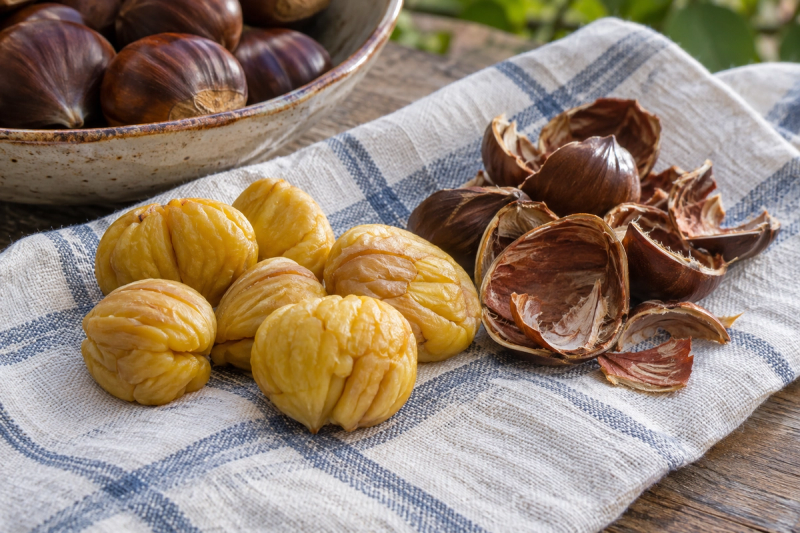
When a chestnut is hard to peel
#Stop and check whether you’re fighting the shell or the skin. If the shell has barely opened and the center is hard, more cooking makes sense. If the flesh is tender and only the thin inner skin is stuck, I’d try peeling the next chestnut while it’s still warmer. On a small batch, reheating a cooled portion briefly and letting it come back to a comfortable handling temperature can make that second attempt easier.
If you’ve got little pieces by the time you finish, there’s an easy decision to make. Serve the intact ones warm and put the pieces into a dish where shape matters less. I’d chop those bits with herbs for stuffing, or scatter them over a bowl of soup just before eating. Roast chestnuts have a soft center when done, so they bring a gentler texture than a handful of toasted walnuts.
How I’d time them for guests
#Work backward from when you want the bowl on the table. Leave time to score every nut, roughly 25 minutes for roasting, and a few extra minutes to test and peel. If you want guests to peel them as a snack, give them a towel and a separate bowl for the shells. Put a few peeled ones out first so anyone who would rather skip the work can still try some.
If they’re an ingredient for another dish, peel the whole batch while warm and refrigerate what you’re saving promptly in a clean container. When the chestnuts are being folded into a bake or a soup, I’d count backward from the other recipe and make room for this as a separate job. Doing the peeling with the next pan already demanding attention is where parts of the batch tend to cool before you reach them.
The easiest tray to learn from has one job: a small batch, similar-sized nuts, and a bowl ready to catch the shells. Once that first chestnut opens cleanly and feels tender in the middle, you’ll know what to look for on the rest.