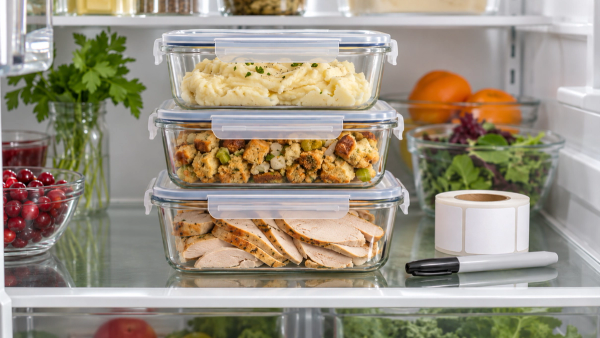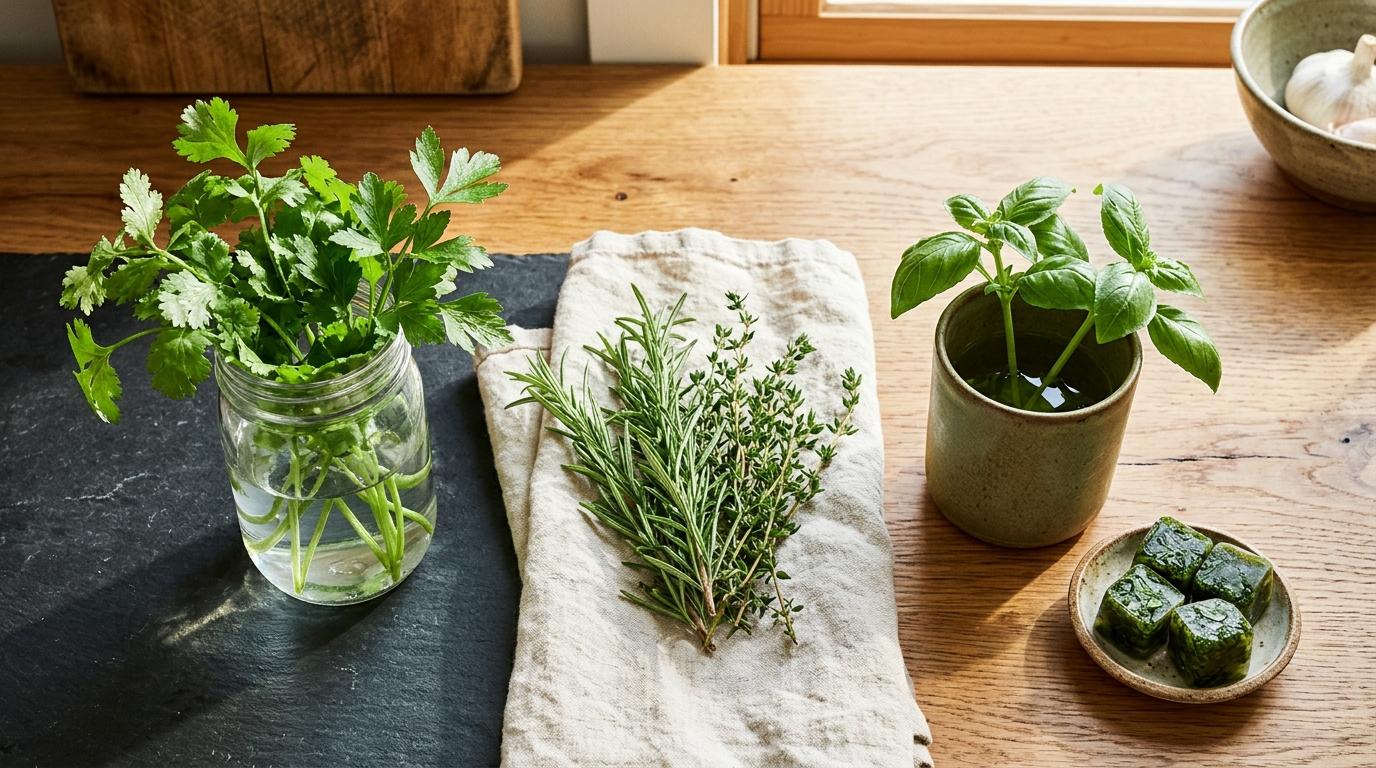
If you throw every bunch of fresh herbs into the fridge crisper in its grocery bag, most of it turns slimy or black within three days. To make fresh herbs last two to three weeks, split them into three simple setups: keep tender stems upright in a water jar inside the fridge, keep basil on the counter at room temperature, and wrap woody sprigs in a barely damp paper towel inside a sealed bag.
Once you stop treating cilantro, basil, and rosemary like the same plant, kitchen waste drops right away. You do not need special plastic pods or fancy kitchen gadgets. A couple of clean glass jars, paper towels, reusable zip bags, and an ice cube tray handle every herb you buy.
Why grocery herb bunches spoil so fast
#Most supermarket herbs already sit in cool supply chains for days before reaching your basket, and the packaging they come in works against them at home.
Thin plastic produce bags trap the moisture leaves breathe out, creating tiny water droplets on the surface. Wet leaves sitting against cold plastic rot quickly and turn into dark green sludge. Hard plastic clamshells have the opposite problem when they have vents, letting cold fridge air pull moisture right out of delicate stems until leaves droop.
Then there is temperature. According to the UK Food Standards Agency, a standard home refrigerator sits between 0 and 5°C (32 to 41°F). That cold zone slows decay on parsley, cilantro, dill, and rosemary, which is why extension storage research from UC Davis puts optimum storage for most culinary herbs near the cold end of the fridge. Yet that exact same fridge shelf destroys sweet basil within days because basil is a tropical plant.
Quick reference by herb type
#Not every herb reacts the same way to cold air, standing water, or sealing. Use this table to match each bunch to the right container as soon as you unpack groceries.
| Herb Group and Examples | Best Storage Method | Temperature Zone | Expected Fresh Life | Best Freezer Method |
|---|---|---|---|---|
| Tender herbs: cilantro, parsley, dill, mint, tarragon | Upright jar with water and loose bag | Fridge shelf, 0 to 5°C | 2 to 3 weeks | Chopped in olive oil or water cubes |
| Cold-sensitive basil | Upright jar with water and loose bag | Countertop out of sun, above 12°C | 1 to 2 weeks | Blanched leaves or olive oil cubes |
| Woody herbs: rosemary, thyme, oregano, sage | Barely damp paper towel in sealed bag | Fridge crisper, 0 to 5°C | 2 to 4 weeks | Whole sprigs on stem in airtight jar |
| Chives | Dry or lightly damp towel in sealed box | Fridge crisper, 0 to 5°C | 1 to 2 weeks | Chopped on flat tray or water cubes |
| Fresh curry leaves | Dry paper towels top and bottom in box | Fridge crisper, 0 to 5°C | 2 to 4 weeks | Completely dry whole leaves in zip bag |
How to store tender herbs like cilantro, parsley, dill, and mint
#Tender herbs have soft, hollow, or watery stems that collapse the moment they dry out, while their leaves rot fast if water pools on top of them. The simplest fix is treating the bunch like fresh cut flowers inside your refrigerator.
Allrecipes documents this bouquet setup keeping soft-stem leafy herbs usable for two to three weeks, depending on how fresh the bunch looked when you bought it. That matches what works best at home: keep the stems drinking, keep the leaves dry, and keep gentle humidity around the leaves without sealing them wet.
Step 1: Remove rubber bands and bad leaves
#Take off the twist tie, rubber band, or tight plastic sleeve right away. Those bands pinch soft stems and trap moisture where rot starts first.
Pick through the bunch and pull out any leaves that already look yellow, slimy, or blackened. Leaving one rotting leaf inside a tight bundle spreads mushy spots to healthy stems around it within a day.
Step 2: Trim the stems and strip submerged leaves
#Use sharp kitchen scissors or a clean knife to snip about half an inch off the bottom of the stems. A fresh, straight cut opens clean plant channels so the stems can actually draw water up to the leaves.
Next, strip off any leaves along the bottom two inches of the stems. If leaves sit underwater inside the jar, they rot fast, turn the water cloudy, and make the whole bunch smell sour. Use those pulled bottom leaves in dinner that same night so nothing goes to waste.
Step 3: Stand the bunch in shallow water with a loose bag canopy
#Pour one to two inches of clean cool water into a small glass jar, jam jar, or sturdy cup. Set the herb bouquet upright inside so every trimmed stem end rests below the waterline while all remaining leaves stay high and dry above the glass rim.
Now take the clean plastic produce bag from the store—or a reused zip bag—and slip it loosely upside down over the top of the herbs like a tent. Leave the bottom open around the jar or tuck it lightly without sealing it tight. That canopy holds enough humidity to keep leaves perky while still letting fresh air move underneath so condensation does not drown the greens. If you manage refrigerator humidity well across your produce drawer, the same moisture-versus-airflow balance applies to how to store leafy greens longer.
Step 4: Refresh water every few days and trim weekly
#Slide the jar onto a middle or upper fridge shelf rather than the very back wall where cold air vents sometimes freeze lettuce and tender leaves solid. Every two to three days, dump out the old water, rinse the jar quickly, and refill it with cold fresh water.
About once a week, take the bunch out for ten seconds and snip another sliver off the stem bottoms. Over days in cold water, cut stems naturally seal off at the tips; trimming keeps them drinking steadily through week two and week three.
What if your fridge shelves are too short for tall jars?
#In compact refrigerators where standing jars will not fit under the top shelf, lay tender herbs flat instead. Roll the unwashed bunch loosely in a barely damp paper towel—wrung out well so it feels cool, not dripping—then slide the roll into a zip-top bag with the zipper left cracked slightly open, or into a roomy vented container in the crisper drawer.
This towel-and-bag method generally gives tender herbs about one to two weeks instead of three, because the stems cannot pull water continuously. Still, it beats bare plastic bags by a wide margin.
Why basil hates the fridge and how to keep it green
#Basil breaks the rules. If you put sweet basil inside a 4°C refrigerator, the leaves do not stay crisp; they bruise, develop dark sunken patches, turn black along the edges, and lose their sweet clove-pepper aroma within two days.
That reaction is called chilling injury, not ordinary spoilage. Research compiled by Rutgers Cooperative Extension and UC Davis postharvest specialists shows that sweet basil is a warm-climate tropical plant whose optimal holding temperature sits around 55°F (roughly 13°C), with quality staying markedly healthier between 50°F and 68°F (10°C to 20°C) than anywhere near freezing temperatures. Below 10 to 12°C (50 to 54°F), basil cell membranes break down, releasing enzymes that stain leaves black and turn stems brown.
How to keep basil happy on the counter
#Treat fresh basil like a tabletop vase of flowers, not refrigerator produce:
- Snip half an inch off the bottom stems and remove any lower leaves that would touch the water.
- Stand the bunch in a glass jar with one to two inches of clean room-temperature water.
- Drape a loose plastic bag lightly over the top leaves if your kitchen air is very dry from air conditioning or winter heating, keeping the bottom open for airflow.
- Set the jar on the kitchen counter away from sunny windowsills, hot stoves, and cold refrigerator vents.
- Change the water every two days so it stays clear.
Sunlight heats the water in a clear jar and wilts basil quickly, while cold drafts chill it. A shaded spot in an ordinary kitchen keeps cut basil bright green and aromatic for roughly one to two weeks. If your kitchen gets very hot—above 28°C (82°F) in summer—keep basil in the coolest shaded corner of the house, or freeze what you cannot finish within several days before heat wears it down.
How to store woody herbs like rosemary, thyme, oregano, and sage
#Woody herbs behave completely differently from soft leafy herbs. Rosemary, thyme, oregano, sage, and marjoram grow on tough, bark-like stems packed with resinous essential oils and low surface water.
Because those woody stems do not drink water easily once cut—especially after spending days in store transit—standing rosemary or thyme in a water jar rarely helps. Worse, excess standing water encourages mold along dense needle clusters. Instead, woody herbs want a tiny bit of protected humidity inside a cool fridge.
The barely damp towel method
#This setup takes under thirty seconds and reliably keeps woody herbs aromatic for two to four weeks:
- Spread a clean paper towel or thin cotton cloth flat on the counter and lightly mist it or sprinkle a few drops of water across it, then wring or blot so it feels barely damp rather than wet.
- Lay the woody herb sprigs in a single loose row along one edge and roll the towel gently around them.
- Slide the rolled bundle into a reusable zip bag, squeeze out big air pockets without crushing the sprigs, and seal the bag shut.
- Place the bag in the vegetable crisper drawer, keeping heavier bags of carrots or apples off the top so needles do not bruise.
Notice the contrast with water-heavy produce: just as you keep excess liquid off fungi in a mushroom fridge storage and spoilage guide, woody herbs need moisture buffered by absorbent paper rather than sitting wet against plastic. Check the towel after ten days; if it feels bone dry, give it one light mist so thyme leaves do not shed off their stems.
Handling chives and fresh curry leaves
#Two everyday herbs trip up standard soft-versus-woody charts: chives and fresh curry leaves (kadi patta). Both pack strong aroma, both punish soggy plastic, and both have quirks worth getting right.
Keeping chives crisp without bending or rotting
#Chives are thin, hollow grass-like tubes filled with mild onion flavor. If you jam them into a tight plastic sleeve, the stems crimp, leak juice, and turn slimy at every fold.
If your chives are crisp and long, lay them straight and unwashed inside a dry or barely damp paper towel, tuck that wrap into a rigid airtight container long enough not to bend the tips, and place it in the crisper drawer for one to two weeks. If you prefer a jar, stand short bundles in barely half an inch of water in the fridge—just enough to touch the cut ends—with a loose bag over top, checking closely so hollow tubes do not turn mushy at the base.
When cooking rather than garnishing, remember that chives freeze far better than they dry. Drying strips out delicate onion compounds, while chopped frozen chives keep sharp fresh flavor for months.
Keeping curry leaves green and fragrant for weeks
#Fresh curry leaves come off sturdy woody twigs, yet the thin glossy leaves turn dark brown quickly if left loose in open fridge air or sealed wet inside plastic.
Skip washing fresh curry leaves before fridge storage. Instead, strip the healthy green leaves cleanly off their main stems, throw away spotted or torn leaves, and follow this dry-buffer box method:
- Line the bottom of a dry airtight glass or plastic food container with a folded dry paper towel.
- Drop the unwashed, dry curry leaves loosely inside without packing them down tightly.
- Lay a second dry paper towel flat over the top of the leaves and snap the lid shut.
- Store the box in the fridge crisper and swap the paper towel if you notice moisture droplets building up inside.
Stored this way, fresh curry leaves often stay green, snap-crisp, and fragrant for two to four weeks. Simply pull out the handful you need, rinse those leaves right before tempering them in hot oil, and seal the container back up.
Should you wash fresh herbs before storing them?
#In almost every kitchen situation, no—wait to wash fresh herbs until right before you cook or plate them.
Extra surface water sitting inside leaf folds is the single fastest trigger for slimy bacterial rot in a home fridge. Even a clean towel pat leaves microscopic water pockets trapped between feathery dill fronds or curly parsley leaves. Rutgers Extension food-safety notes for fresh market basil emphasize this exact trade-off: inspect bunches first, skip washing if there is no visible soil, and if soil or grit forces you to wash early, dry the herbs completely before putting them away.
If your cilantro or mint comes home coated in garden mud or sandy grit, rinse it immediately in a bowl of cold water so grit sinks to the bottom, lift the herbs out gently, spin them dry in a salad spinner, and spread them flat on a clean kitchen towel for 20 to 30 minutes until every droplet evaporates before putting them in a jar or bag.
How to rescue wilted herbs with an ice bath
#Suppose you forgot a bunch of cilantro or parsley inside its grocery bag at the back of the crisper, and three days later the stems hang limp like wet string. Do not throw it out yet—provided the leaves are dry-wilted rather than slimy and rotting.
Herbs wilt when water evaporates out of leaf pores faster than the cut stems can replace it. Inside healthy plant cells, water pushes outward against the cell walls, keeping leaves firm and upright (botanists call this turgor pressure). When those cells lose water, they go slack; when you dunk them in ice-cold water, water moves back into the thirsty cells quickly while the cold temperature slows enzyme breakdown.
Steps to bring wilted soft herbs back
#- Sort the bunch first and discard any slimy, dark brown, or foul-smelling stems.
- Snip half an inch off the bottom of the remaining stems so fresh channels open up.
- Fill a large mixing bowl with cold tap water and a generous handful of ice cubes.
- Submerge the entire herb bunch—both stems and leaves—under the ice water for 15 to 60 minutes, checking every 15 minutes until stems stiffen and leaves perk back up.
- Lift the herbs out, spin them completely dry in a salad spinner, and pat away any remaining water with a clean towel before cooking or storing in a jar.
When the ice bath does not work
#Two rules keep you from ruining good herbs or wasting time on spoiled ones:
- Never put wilted basil in an ice bath. Cold ice water shocks basil and accelerates blackening. Revive mildly droopy basil by trimming the stems and standing it in clean room-temperature water on the counter for a few hours.
- Skip revival when leaves are translucent, mushy, sticky, or smell sour. Once cell walls break down from rot or freeze damage, osmosis cannot inflate them again. Compost them or, if leaves are merely mildly bruised and odor-free, blend them straight into green herb sauce or pesto for dinner that night.
Freezing surplus herbs without turning them unsafe or mushy
#Even with good jar and towel habits, big bunches of dill, basil, cilantro, or curry leaves sometimes outlast your meal plan. Freezing is the simplest way to save the rest for four to six months—provided you match the method to how you cook and respect one critical food-safety rule.
Freezing inside a home freezer set around minus 18°C (0°F), per UK Food Standards Agency guidance, pauses spoilage bacteria cleanly. However, freezing also expands the water inside plant cell walls into ice crystals, rupturing those walls. When frozen herbs thaw, they turn limp and darker green. That means frozen herbs belong in cooked dishes—soups, curries, pasta sauces, roasted vegetables, pan gravies, and marinades—never sprinkled raw over salads or tacos.
Water cubes vs olive oil cubes vs flat freezer bags
#Penn State Extension outlines three practical ways to freeze chopped soft herbs depending on how you like to cook:
- Water ice cubes work best for mild soups, broths, stocks, and rice pots. Strip leaves from thick stems, chop coarsely, drop roughly one tablespoon into each ice cube slot, fill halfway with cold water, push herbs under, freeze solid, top with a bit more water, freeze again, then pop cubes into a sealed bag or glass jar.
- Olive oil or neutral oil cubes preserve green color and bright volatile flavor better than water—especially for basil, cilantro, parsley, rosemary, and thyme. Mix roughly one-third to one-half cup of olive oil (or neutral cooking oil) with two cups of finely chopped herbs, spoon into ice cube trays or small freezer jars, freeze solid, and bag the cubes. Because oil does not freeze rock-hard like plain ice, you can also scoop portions straight from a small glass freezer jar.
- Flat zip-bag sheets melt fastest in hot skillets. Blend or toss chopped herbs with enough olive oil to coat thinly, press the mixture flat inside a heavy-duty freezer bag with excess air squeezed out, freeze flat on a baking tray, and snap off small shards straight into a hot pan whenever needed.
Flash-freezing whole leaves and stems
#If you do not want chopped cubes, woody herbs and dry leaves freeze cleanly whole. Wash and dry rosemary, thyme, oregano, or completely water-free curry leaves until no moisture remains, spread leaves or sprigs in a single flat layer on a parchment-lined tray, freeze one to two hours until rigid, and transfer quickly into an airtight container or freezer bag with air pressed out. Working fast prevents partial thawing and clumping.
Basil turns dark quickly if frozen plain, so Penn State Extension suggests blanching whole clean basil leaves in boiling water for 15 seconds, plunging immediately into ice water to halt cooking, draining, patting totally dry, and tray-freezing before bagging—or skipping blanching altogether by freezing chopped basil coated in olive oil.
One freezer detail cooks often overlook is odor transfer. Strong-smelling herbs like dill, cilantro, and curry leaves pass aroma through ordinary thin plastic bags into ice cubes and frozen fruit nearby. Store frozen herb bags inside an airtight glass jar or overwrap plastic packets tightly with aluminum foil so your freezer stays clean.
The botulism rule for fresh herbs in oil
#Here is the safety boundary you cannot bend: never store fresh herbs submerged in olive oil at room temperature, and do not keep unfrozen homemade herb-in-oil mixtures sitting in the fridge for weeks.
As Penn State Extension food-safety specialists explain, fresh herbs are low-acid plants that can naturally harbor spores of Clostridium botulinum. When you submerge wet fresh leaves in oil, the oil blocks out oxygen and creates an anaerobic environment. At kitchen counter temperatures, those spores can wake up and produce dangerous botulinum toxin without changing how the oil smells or tastes.
Keep fresh herbs in oil strictly inside your freezer, where minus 18°C halts bacterial growth. Drop frozen herb-oil cubes straight from the freezer into hot cooking pans, or if you thaw one in the refrigerator, use it within two to four days. If you want shelf-stable flavored oil on the kitchen counter, use completely dried herbs instead of fresh leaves.
Mistakes that cut herb life short
#Even with the right jars and bags, small habits quietly knock days off your herb shelf life:
- Sealing wet bags tight right after rinsing: trapped droplets plus zero airflow creates rot overnight.
- Parking jars next to the fridge freezer vent or back wall: sub-zero cold drafts freeze cilantro and parsley tips into black mush.
- Leaving the water jar uncovered in a frost-free fridge: modern refrigerators pull moisture out of open air aggressively, drying leaves at the top faster than stems can pump water upward.
- Storing herbs right beside high-ethylene fruits like apples, bananas, or ripening tomatoes in a cramped drawer, which speeds yellowing on delicate greens.
- Trying to revive slimy leaves or freezing unlabelled mystery cubes that absorb freezer odors and lose flavor after six months.
Match the container to the stem, keep excess surface water off leaves, and freeze surplus herbs in oil or dry bags before they fade. That five-minute routine when unloading groceries turns flimsy three-day bunches into reliable pantry staples that stay ready for weeks.