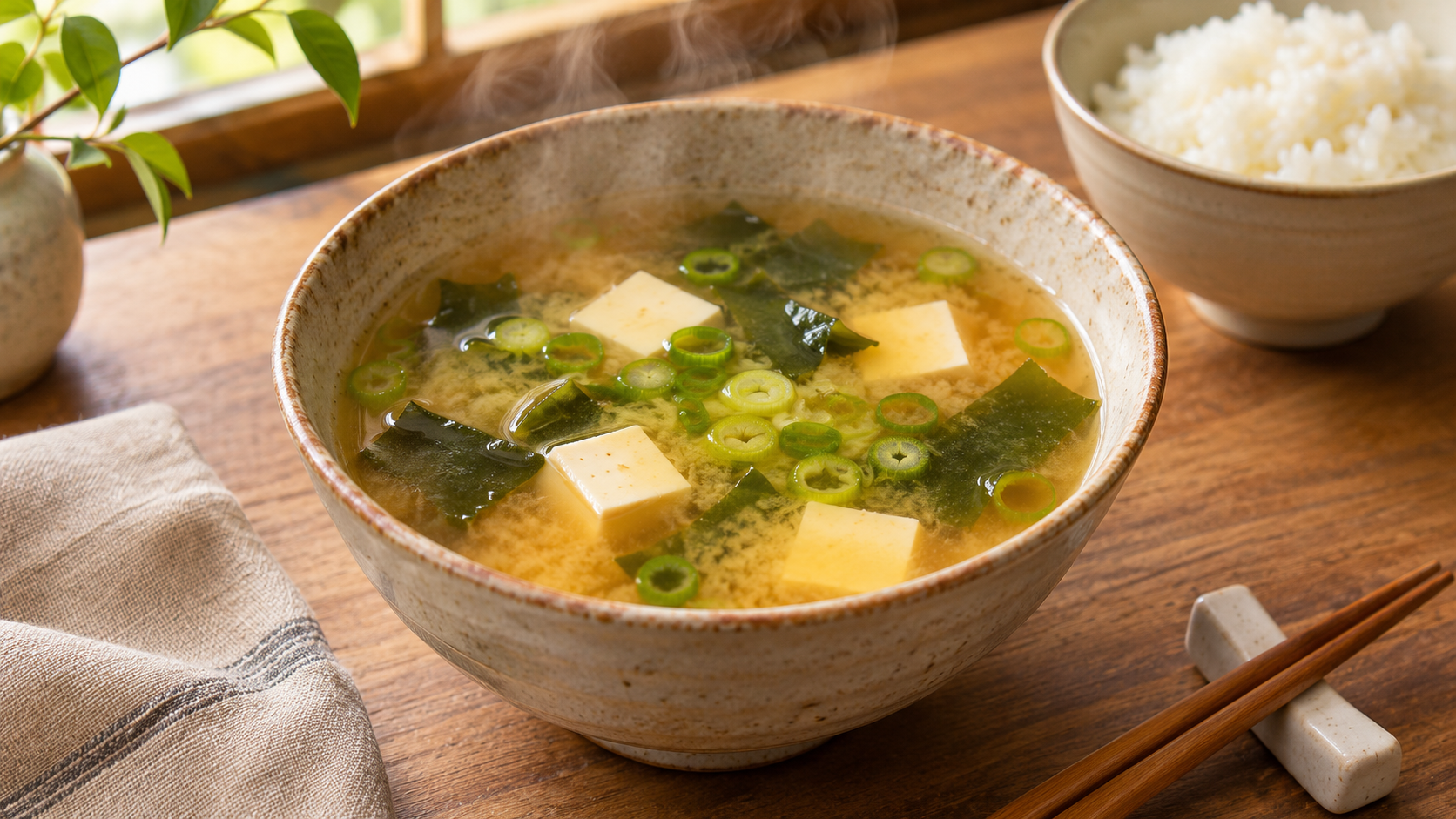
Good miso soup is simple on purpose. Start with a dashi you would happily sip on its own, dissolve the miso gently, and add tofu and wakame at the end so they stay tender. The whole pot does not need to boil hard. In fact, that is usually the quickest way to make it taste less fresh.
This is a basic tofu-and-wakame version for a home kitchen. It gives you a reliable method first, then enough room to use the miso, dashi and vegetables you actually have. It is not a claim that every household in Japan makes the same bowl. Miso soup changes with the season, the region and what is in the fridge. That flexibility is part of the point.
If I were making this for the first time, I would keep the first pot small and plain: dashi, miso, tofu, wakame and scallions. That makes it easier to notice what each part is doing. Once I knew whether the dashi was strong enough and the miso was too mild or too salty for my taste, I would start adding mushrooms or vegetables.
Start with dashi, not plain water
#Dashi is the broth that gives miso soup its backbone. It is light, but it should not taste empty. A kombu-and-katsuobushi dashi has a clean savoury flavour; a dried-fish dashi has more pronounced depth; and a vegetarian kombu-and-dried-shiitake version has its own rounded, earthy character.
If you make dashi from scratch, keep the method gentle. Kombu is usually steeped and heated slowly rather than boiled hard, while bonito flakes are added after the heat is reduced. The result should taste clear and savoury, not fishy or heavy. If you use instant dashi, choose one you enjoy and taste it before adding miso. Different brands can be far saltier than you expect.
Plain water can make a quick soup when there is no other option, but it changes the result. Miso brings salt and fermentation, not the full savoury base. If you are using water, add ingredients with flavour of their own, such as mushrooms, onion or a little kombu, and be modest with the miso until you taste the final bowl.
Choose miso by flavour, not by a rule
#Miso is a fermented paste made with soybeans and, depending on the style, rice or barley. It is not one fixed ingredient. White miso is generally milder and sweeter. Red miso is deeper, saltier and more robust. Awase miso is a blend that sits somewhere in the middle and is a good everyday option.
For a light tofu-and-wakame soup, white or awase miso is usually the easier place to start. Red miso can be lovely with stronger ingredients such as daikon, mushrooms or hearty root vegetables. There is no need to collect three tubs immediately. Use the miso you have, taste it, and adjust the amount next time.
Miso keeps its character best when you dissolve it in a ladle or small bowl with some warm broth, then stir it back into the pot. That spreads it evenly and avoids a clump of paste sinking to the bottom. Once it is in, keep the soup at a quiet heat. A hard boil can dull the aroma that makes miso soup taste alive.
Tofu and wakame need less attention than you think
#Soft or medium-firm tofu works well because it warms through without becoming chewy. Cut it into small cubes with a gentle hand. You do not need to stir the pot aggressively after it goes in; that is how neat cubes turn into crumbs.
Dried wakame expands quickly. A small amount can become a lot once it hits liquid. Rehydrate it separately if the package asks for that, squeeze away excess water, then add it near the end. If you put a big handful straight into the pot, it can take over the bowl and make the broth feel crowded.
Scallions are a finishing ingredient, not something to simmer into the background. Add them just before serving for a fresh, clean edge. If you are using vegetables that need actual cooking—such as carrots, potato, cabbage or daikon—cook those in the dashi before the tofu, wakame and miso enter the picture.
The basic method
#The recipe card below has full quantities and instructions. The working order matters more than speed:
- Prepare the dashi and cook any firm vegetables in it first.
- Warm the tofu gently; do not let it tumble around in a boiling pot.
- Rehydrate wakame if needed, then add only what the bowl needs.
- Dissolve miso in some warm broth, return it to the pot, and keep the heat low.
- Add scallions at the end and serve while the soup is hot.
This may look like a lot of care for a small bowl of soup. It is really just a way of avoiding the common problems. Once you make it a few times, it becomes one of the fastest meals you can pull together.
How much miso should you use?
#Start with the amount in the recipe, then taste. Miso varies in saltiness, and dashi may already contain salt. Add more paste in small increments after dissolving it in broth. It is much easier to deepen a light soup than to rescue one that is too salty.
If the soup tastes rich but flat, a few drops of soy sauce are not automatically the answer. Check the dashi first. Then consider whether the soup needs a little more miso or simply a fresh garnish. Soy sauce is useful in other Japanese soups, but in a basic miso soup it can quickly cover the flavour you were trying to keep clear.
The dashi choice I would make on a normal weeknight
#If I had kombu and dried shiitake, I would make a vegetarian dashi with those. If I wanted the traditional fish-forward profile and had the ingredients, I would use a kombu-and-bonito version. On a busy evening, I would use a good instant dashi and be honest that it is a convenience choice.
What I would not do is pretend all shortcuts taste identical. Instant dashi can be very useful, but it may bring salt and a stronger flavour before the miso is even added. I would make the broth slightly lighter than I think I need, then let the miso complete it. That is easier than trying to dilute an over-seasoned pot after tofu and wakame are already in it.
For a vegetarian bowl, I would read the package rather than assuming a powder is meat-free because it is called dashi. That one small check saves a frustrating dinner when the dietary choice matters.
Easy variations that still make sense
#Mushroom and tofu
#Slice shiitake, cremini or another mushroom and simmer it in the dashi until tender. The mushroom gives the soup more body without making it heavy. Use white or awase miso so the mushroom flavour still comes through.
Potato, onion and miso
#Thinly slice onion and cut potato into small even pieces. Cook them fully in the dashi before adding miso. This is a heartier bowl, so a slightly stronger miso can work well. Keep the potato pieces small enough that they do not turn the soup into a stew.
Greens at the end
#Spinach, bok choy or tender cabbage can go in near the end. Add just enough heat to wilt the leaves. If you simmer greens for too long, the soup loses its clean look and the leaves lose their bite.
Vegetarian dashi
#For a vegetarian bowl, make dashi with kombu and dried shiitake or use a vegetarian instant dashi. Read the label if this matters to you; many instant dashi products contain fish. The soup still needs the same gentle treatment once the miso is added.
The mistakes that make miso soup disappointing
#Boiling after the miso goes in
#This is the most common one. The soup is still safe to eat, but it loses some of the softer aroma that makes miso distinctive. Bring the dashi and cooked ingredients together first. Then lower the heat, stir in dissolved miso, and serve without turning the pot into a rolling boil.
Adding tofu too early
#Tofu does not need a long cook. If it sits in a hard boil while you finish other things, it can toughen at the edges and break apart. Add it after vegetables are cooked, then warm it through gently.
Using too much wakame
#Dried wakame is easy to underestimate. Start small. You can always add more to the next pot, but a soup full of swollen seaweed becomes hard to balance.
Treating one miso as the only correct miso
#The better question is whether the miso fits the bowl. A mild miso is often good with tofu and wakame. A stronger one can stand up to root vegetables and richer ingredients. Let the soup guide the choice.
Forgetting that it is a bowl, not a side project
#Miso soup can become overcomplicated when every pantry ingredient goes in at once. Pick two or three ingredients that make sense together. Leave enough room for the dashi and miso to be noticeable.
What to serve with it
#Miso soup works next to rice, grilled fish, tofu, eggs, noodles or a simple vegetable dish. It can also be a light meal with rice and a few toppings, especially when you use mushrooms or potato for more substance.
The bowl is most satisfying when the rest of the meal does not compete with it. A salty, heavily sauced main can make even a well-balanced soup taste thin. If dinner is bold, keep the soup simple. If dinner is plain rice and vegetables, give the soup a little more depth with mushrooms or a stronger dashi.
I would give the bowl a clear job
#Sometimes I would serve miso soup as a small warm start. Other times, I would make it the calming part of a simple meal with rice, vegetables and a little protein. The amount of tofu and vegetable choice changes with that job.
If I wanted the soup to be more filling, I would add one substantial ingredient such as potato, squash or mushrooms rather than loading it with five things. If I wanted it as a lighter side, I would keep it to tofu and wakame. The bowl stays better when there is a clear idea behind it.
That is also how I would decide on garnishes. Scallions make sense because they add a fresh contrast. Sesame seeds or a little chilli can work if they suit the rest of the meal. I would not add every garnish in the cupboard just because the soup looks simple. Simple is the point.
Make-ahead without losing the best part
#You can make dashi and cook the vegetables ahead. Store them chilled, then reheat gently and add miso, tofu, wakame and scallions close to serving. That keeps the aroma fresher and prevents the tofu from sitting in the pot too long.
Leftover miso soup can be reheated carefully, but it will not taste exactly like a just-made bowl. Use low heat and avoid a hard boil. If it has thickened because vegetables absorbed broth, add a little water or dashi, then taste before adding more miso.
If I knew I wanted leftovers, I would keep the dashi and cooked vegetables separate from the miso until each serving is reheated. It takes one extra minute, but it keeps the second bowl closer to the first one.
Keep the bowl simple enough to repeat
#The first bowl does not need to be a perfect restaurant copy. Make a good dashi. Use a miso you like. Add tofu and wakame at the right moment. Then pay attention to what you would change next time.
That is how this becomes an everyday meal instead of a specialty ingredient you only use once. A pot of miso soup is small, forgiving and worth repeating—not because it is fancy, but because the details are clear once you know where to look.