If you are choosing between a baby bath tub, bath seat, or sink insert, most newborns do best with either a newborn baby bath tub or a well-fitting sink insert. A baby tub usually lasts longer but needs more storage. A sink insert can be easier in small homes. A bath seat is usually a later-stage aid for babies who can sit fully unassisted.
Bath time can feel simple until you are holding a tiny, slippery newborn and realizing the towel is across the room. The right bath gear should make the routine calmer, not make you feel like you need every product on the shelf.
This guide compares the three common options by age fit, bathroom space, cleaning, storage, and safety so you can buy one practical setup and skip the rest.
First, the Safety Rule That Matters Most
#Baby bath tubs, sink inserts, bath seats, and bath supports are bathing aids, not safety devices. They can help position your baby, but they do not make bath time hands-free.
Stay within arm’s reach, keep your supplies ready before the bath, follow the product manual, and never leave a baby unattended in or near water. For any bath product, check the current manual, warning labels, age and weight limits, water-level instructions, cleaning rules, and official recall notices before use.
If a product wobbles, slips, has missing instructions, or does not fit your sink or tub exactly as directed, choose another setup.
Baby Bath Tub vs Bath Seat vs Sink Insert: Quick Comparison
#Option 1: Standalone Baby Bath Tubs
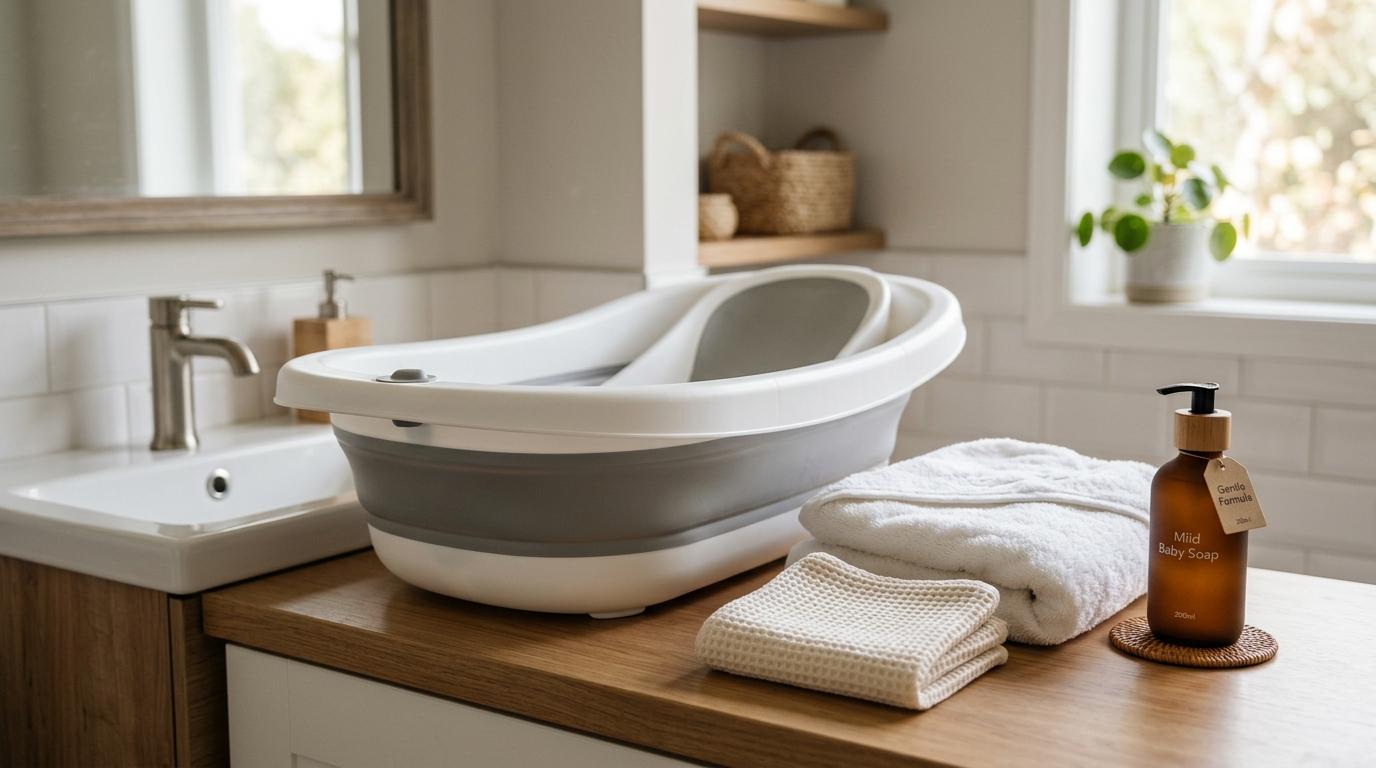
#A standalone baby bath tub is a small tub made specifically for babies. Many are staged products with a newborn sling, reclined insert, or removable support that changes as your baby grows.
For many families, this is the most flexible option because it gives the baby a dedicated bath space and usually lasts longer than a sink insert.
Why parents like baby bath tubs
#- They usually last longer. A multi-stage newborn bath tub can often work from the early newborn days into later infancy, depending on the product’s instructions.
- They use less water than a full bathtub. You only fill the smaller tub to the level directed by the manual.
- They feel more controlled than an adult tub. A baby-sized space can make newborn baths less awkward.
- They can work after the sink stage. Once your baby is too long or active for the sink, a baby tub may still feel manageable.
What to watch out for
#Storage is the biggest downside. Even a compact baby tub still has to dry somewhere and live somewhere. In a small apartment, it may end up leaning against the shower wall or blocking floor space.
Also think about your body. If the baby tub sits inside the adult bathtub, you may need to kneel, bend, and lift a wet baby from a low position. That can be uncomfortable, especially during postpartum recovery or if you already have back, knee, or hip pain.
Who should choose a baby bath tub?
#Choose a baby bath tub if you want one option that may last longer, have enough storage space, and prefer a separate baby-sized bath area. It is also a good choice if your sink is too small or awkward for a sink insert.
Who should skip it?
#Skip a standalone tub if you have no practical drying space, cannot comfortably kneel or bend, or would need to balance the tub somewhere unstable to make it work.
Option 2: Sink Inserts
#A sink insert baby bath fits inside a kitchen or bathroom sink. Some are soft cushions, while others are foam, mesh, or foldable supports.
For newborns and young infants, a sink insert can be one of the easiest options, especially in small homes.
Why parents like sink inserts
#- They are easier on your back. Standing at the sink can feel much better than crouching over a bathtub.
- They save space. Many inserts fold flat, hang up, or dry on a rack.
- They feel cozy for newborns. A smaller setup can feel less overwhelming for both baby and caregiver.
- They make quick baths manageable. Newborn baths are usually short, and a sink setup can reduce setup time.
What to watch out for
#Your sink has to truly fit the insert. A shallow bathroom sink, narrow basin, strong faucet angle, or divided kitchen sink may make the setup awkward.
The sink also needs to be cleaned before bath time, especially if it is a kitchen sink. Soft or plush inserts need careful drying after every use so they do not stay damp.
Babies can outgrow sink baths quickly. Once your baby starts pushing up, twisting, rolling, or trying to sit, the sink may no longer be practical.
Who should choose a sink insert?
#Choose a sink insert if you have a newborn, a sink that fits the product properly, limited storage, and a good place to dry the insert.
Who should skip it?
#Skip it if your sink is too shallow, too narrow, hard to clean, or shaped in a way that makes the insert unstable. Also skip it if your baby is already very active during bath time.
Option 3: Baby Bath Seats and Supports
#A baby bath seat or bath support is usually used inside an adult bathtub. Some designs are upright seats, while others are reclined supports.
This option needs the most caution because it can look safer than it really is. An upright bath seat is not a newborn product. It should only be considered when your baby can sit fully unassisted and meets the product manual’s guidance.
Why parents like bath seats
#- They may help position older babies. Once baby is sitting well, a seat may reduce some awkwardness.
- They use the regular bathtub. You do not need another large baby tub.
- Some are easy to rinse and dry. Smooth plastic designs may dry faster than plush inserts.
What to watch out for
#A bath seat can create a false sense of security. Babies can lean, slip, twist, or tip. Suction cups may not grip all tub surfaces, especially textured or uneven ones. A bath seat is still not a hands-free setup.
Always test the product as the manual directs before placing your baby in it. If the seat slides, lifts, wobbles, or feels unstable, do not use it.
Who should choose a bath seat?
#Consider a bath seat only if your baby can sit fully unassisted, your bathtub surface is compatible, and you understand that the seat is only an aid.
Who should skip it?
#Skip a bath seat if you are shopping for a newborn, your baby still topples while sitting, your tub surface does not allow a secure fit, or you are hoping it will let you step away. It should not.
Small Bathroom Baby Bath Buying Checklist
#Use this checklist before buying bath gear for an apartment, rental, or small bathroom:
- Measure your sink, bathtub, cabinet space, and drying area.
- Check whether the product folds, collapses, or hangs.
- Look for quick-drying materials where possible.
- Confirm the age and weight guidance in the manual.
- Check the exact water-level instructions.
- Make sure the product can sit on a stable surface as directed.
- Picture your real bath routine: where towel, diaper, clothes, soap, and washcloth will be.
- Avoid anything that has to be propped up, balanced, or “made to work.”
- Check official recall sources before first use and periodically after purchase.
Baby Bath Safety Rules Every Caregiver Should Follow
#1. Get everything ready first
#Before water is involved, place the towel, washcloth, fresh diaper, clothes, and baby wash within reach. If something is missing, get it before the baby goes in.
2. Stay within arm’s reach
#Keep touch supervision throughout the bath. Do not answer the door, check your phone, or turn away to handle another task.
3. Use warm water, not hot water
#Bath water should feel comfortably warm, not hot. A bath thermometer can help, but always test with your wrist or elbow and follow pediatric or product guidance if provided.
4. Use only a small amount of water
#Newborns do not need much water to get clean. Follow the product manual’s water-level directions.
5. Drain water right away
#Empty the sink, tub, or basin as soon as bath time is done. Do not leave standing water in reach of children.
6. Follow the manual every time
#Age range, weight limit, placement rules, and cleaning instructions are not optional details. They are part of using the product safely.
7. Ask for professional help when unsure
#If you are uncertain about bathing after a medical procedure, cord-care instructions, skin concerns, or a safety issue, ask your pediatrician or qualified healthcare professional.
So, Which One Should New Parents Buy?
#For most newborns, start with either a newborn baby bath tub or a sink insert.
Choose a sink insert if you have a small home, a sink that fits well, and you want a back-friendly setup for early baths. Choose a baby bath tub if you want something that may last longer and you have space to store and dry it.
Wait on a baby bath seat until your baby is older, sitting fully unassisted, and the product fits your bathtub exactly as directed.
If you are still unsure, choose the simplest setup you can use correctly every time. Bath gear should reduce stress, not add a complicated routine.
Internal Link Suggestions
#Relevant AllBlogs guides to connect from this article:
- Babyproofing Checklist for Small Apartments — for broader room-by-room home safety.
- High Chair Buying Checklist: Safety, Space and Cleaning Checks — for another new-parent gear decision.
- Bottle Sterilizer vs Boiling vs UV: What Should New Parents Use? — for baby hygiene and cleaning decisions.
- Diaper Bag Checklist for First Outings — for practical new-parent setup beyond the bathroom.