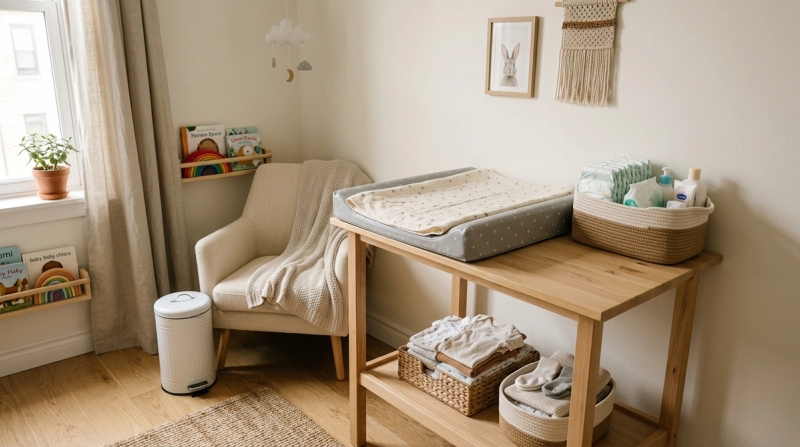
A practical diaper changing station checklist for a small home is much simpler than most baby-shopping lists make it look. You need a safe changing surface, a small set of everyday diaper supplies, something for dirty diapers, and a setup that lets you keep one hand on your baby at all times.
For most small homes, this means:
- A waterproof changing pad or portable mat
- 10 to 12 diapers
- Wipes or clean wet cloths
- Barrier cream
- A few washable liners or dry sheets
- Hand hygiene supplies
- A sealed diaper pail or lidded bin
- A small basket for laundry or soiled clothes
You do not need a huge nursery. You do not need a fancy changing table unless it genuinely fits your space and routine. The best diaper station is the one you can use safely when you are tired, holding a wriggly baby, and trying to get through the change without hunting for wipes.
Why small homes need a different diaper setup
#In a compact apartment, shared bedroom, or busy family home, the “perfect” diaper station is rarely the prettiest one.
It is the one that works at 3 am.
It is the one where the wipes are where you expect them to be. The diaper pail is close enough. The cream is not buried under five random things. And you are not stepping away from your baby for “just one second.”
A safe newborn diaper setup does not require a full nursery. It needs four things:
- A stable changing surface
- A few daily supplies within your reach
- A separate place for dirty diapers and laundry
- A simple routine you can repeat without thinking too much
The goal is not to buy more baby gear. The goal is to make diaper changes calmer, cleaner, and safer, especially when your home already feels full.
The basic diaper changing station checklist
#Here is the simple version.
Must-have items
#- Waterproof changing pad, contoured pad, or portable changing mat
- 10 to 12 diapers in the current size
- Alcohol-free wipes or clean wet cloths
- Barrier cream
- A few washable liners, dry sheets, or quick-dry mats
- Small disposal bags for soiled diapers, if you use them
- Hand hygiene supplies for the caregiver
- A sealed diaper pail or lidded bin
- Clean baby clothes nearby, if outfit changes happen often
- Small laundry basket or wet bag for washable cloths and soiled clothes
Nice to have, but not essential
#- Drawer dividers
- Small night light
- Wall shelf
- Hanging organizer
- Extra portable changing mat for the living room or travel
Usually safe to skip
#- Wipe warmer
- Large decorative baskets that take up floor space
- Too many creams and lotions at the station
- Loose powders
- Oversized changing furniture that makes the room harder to move around in
A compact diaper station should honestly feel a little boring. Same supplies, same place, every time. Boring is good when you are changing diapers on very little sleep.
Changing table safety: the rules that really matter
#Before thinking about how the station looks, think about changing table safety.
Babies can roll, kick, twist, or jerk suddenly, sometimes earlier than parents expect. Falls can happen very quickly, especially from an elevated surface.
Use these rules every single time.
1. Keep one hand on your baby
#Even if the changing pad has raised sides or a strap, keep one hand on your baby during the change.
Straps and raised edges are not a replacement for supervision.
2. Never leave your baby unattended
#Do not step away from an elevated changing surface, even for a second.
If you forgot wipes, pick up your baby and take them with you. It may feel inconvenient in the moment, but it is much safer.
3. Keep supplies in your reach, but out of baby’s reach
#Diapers, wipes, and cream should be easy for you to grab without turning away.
But they should not be so close that your baby can grab them, mouth them, knock them down, or open them.
4. Read the product manual
#If you are using a changing pad, changing topper, or changing table, read the manual.
Check:
- Assembly instructions
- Attachment or securing steps
- Weight limits
- Cleaning instructions
- Any warnings from the manufacturer
If the pad is meant to be secured to furniture, secure it exactly as instructed.
5. Check for current safety compliance
#In the United States, baby changing products are covered by CPSC safety rules. If you are buying a changing table, topper, or pad, make sure it is sold as a baby changing product and comes with proper instructions and safety information.
6. Register the product if possible
#Product registration helps the manufacturer contact you if there is a recall or safety update.
AAP and HealthyChildren guidance also reminds parents to never leave a baby alone on a changing table. CDC diaper hygiene guidance focuses on keeping clean and dirty items separate, cleaning the changing surface, and washing hands after diaper changes.
It is simple advice, but it matters every time.
Changing table vs changing pad vs portable caddy
#Small homes need flexible setups. Here is how the most common options compare.
If space is tight, a portable caddy and mat is often the easiest place to start.
If you already have a sturdy dresser at a comfortable height, a secured changing pad can work well.
A dedicated changing table can be useful, but it is not a must-have for a safe diaper station.
The best diaper setup for a small apartment
#For many small homes, this setup works beautifully:
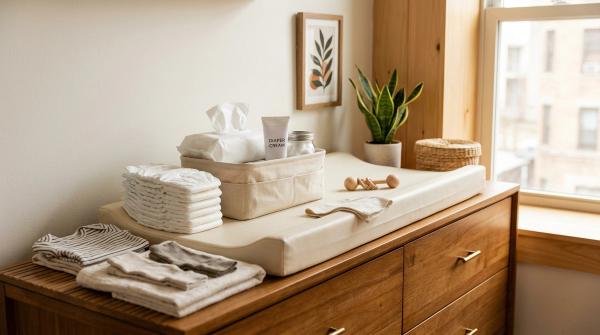
- A waterproof changing mat or secured changing pad
- A compact caddy with daily supplies
- A lidded diaper pail or step bin nearby
- One small laundry basket for washable cloths and clothes
- A shelf, drawer, or organizer for backup supplies
The real trick is to separate daily-use items from bulk storage.
Keep only one day’s worth of diapers and wipes at the changing spot. Store extra diaper packs, wipe refills, and creams in a cupboard, under-bed box, or top shelf.
Otherwise, the station slowly turns into a mini warehouse. And once that happens, you somehow still cannot find the wipes when you need them.
Diaper caddy checklist for daily use
#A good diaper caddy checklist should be short.
If the caddy is stuffed with everything you own, it becomes heavy, messy, and annoying to use.
Keep these in the caddy
#- 10 to 12 diapers
- One pack of wipes, or a small stack of clean cloth wipes
- Barrier cream
- Two or three quick-dry liners or washable dry sheets
- One spare onesie or nappy cover, if you use them
- Small disposal bags
- Small clean cloth or burp cloth
- Hand sanitizer for the caregiver, if a sink is not close by
Keep these near the caddy, not inside it
#- Full diaper packs
- Large wipe refills
- Extra baby clothes
- Surface cleaning supplies
- Laundry basket
- Diaper pail or lidded bin
This keeps the caddy light enough to move from the bedroom to the living room.
In many Indian homes, where rooms are shared, relatives visit often, and the baby may be changed in different places during the day, that flexibility is genuinely useful.
Diaper pail or normal dustbin: what do you actually need?
#A diaper pail is helpful, but it does not have to be expensive.
In a small apartment, smells travel fast. This is especially true in hot or humid weather. An open bin usually becomes a problem quickly.
What you really need is a bin that:
- Closes well
- Is easy to clean
- Can be opened without too much effort
- Can be emptied often
Good options
#- Dedicated diaper pail with a tight lid
- Stainless steel step bin with a close-fitting lid
- Small lidded bin that you empty daily
- Disposal bags for heavily soiled diapers before putting them in the main bin
What to check before buying
#- Does it seal well?
- Can you open it with one hand or your foot?
- Is it easy to clean?
- Does it need special refill bags?
- Are those refills easy to buy where you live?
- Is it too big for your room?
For many families, a small step bin with a tight lid works perfectly well. Empty it daily, especially during summer or monsoon months.
India-aware setup tips for small homes
#Indian homes often come with a few extra realities: heat, humidity, monsoon laundry delays, shared bedrooms, visiting relatives, and limited drying space.
Your diaper station should work with those realities, not against them.
1. Plan for heat
#In hot weather, keep the changing area airy and uncluttered.
A waterproof pad is useful, but it can feel warm against your baby’s back. A thin cotton cloth or quick-dry sheet over the pad can make diaper changes more comfortable.
Avoid keeping diapers, wipes, or creams in direct sunlight. A shaded shelf, drawer, or covered caddy is better.
2. Plan for monsoon drying
#During monsoon, washable cloths, langots, and dry sheets may take longer to dry.
If you use washable layers, keep a few extra quick-dry liners ready. Do not depend on only one or two mats, because one leak plus one delayed laundry cycle can throw off the whole system.
3. Make it easy to move during family visits
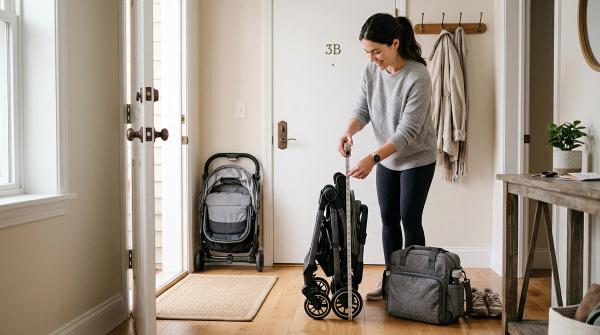
#When grandparents, cousins, or guests are around, a portable diaper caddy helps a lot.
You can move to a quieter room without packing a full diaper bag each time.
Keep the caddy simple:
- Diapers
- Wipes
- Cream
- Mat
- Spare cloth or outfit
That is enough for most changes.
4. Use vertical storage carefully
#Wall shelves and hanging organizers are great for saving floor space, but place them thoughtfully.
Supplies should be within your reach while you are changing the baby. They should not be within your baby’s reach.
Also, avoid storing heavy items directly above the changing area. Things do fall sometimes.
5. Do not block walkways
#In a small apartment, it is tempting to squeeze a changing table into whichever corner is free.
But if it blocks a cupboard, bed, bathroom path, or balcony door, it will irritate you every day.
A safe setup should leave enough room for you to stand properly, bend comfortably, and lift your baby without twisting awkwardly.
Where to place the diaper changing station
#Choose the spot based on safety and routine, not just how it looks.
Good places
#- On top of a sturdy dresser, if the changing pad can be secured as instructed
- On a firm floor area with a portable mat
- Beside the baby’s clothes storage
- Near a bathroom, if space allows
- In the parent’s bedroom during the newborn stage
Places to avoid
#- Narrow surfaces
- Wobbly tables
- Soft furniture edges
- Areas near open windows
- Spots near reachable cords
- Places where you have to turn away to reach supplies
- Areas where the diaper pail is too far away and tempts you to step away
If you change your baby on the floor, the fall risk from height is lower. But hygiene and organization still matter. Clean items and dirty items should not get mixed together.
A simple layout that works
#Here is a practical layout for a compact room.
Top surface or floor mat area: Changing pad or portable mat
Right side or dominant-hand side: Diapers, wipes, barrier cream
Back corner or upper shelf: Hand hygiene item, spare liners, clean clothes
Below or beside the station: Lidded diaper pail
Separate basket: Laundry for washable cloths, dry sheets, or soiled clothing
The main thing is reach.
Not symmetry. Not Pinterest. Not matching baskets.
You should be able to keep one hand on your baby and still grab what you need.
What to buy first
#If you are setting up from scratch, buy in this order:
- Waterproof changing pad or portable mat
- Diapers in newborn or current size
- Wipes or cloth wipe system
- Barrier cream
- Quick-dry liners or washable dry sheets
- Compact diaper caddy
- Lidded diaper pail or step bin
- Laundry basket
- Shelf, drawer organizer, or hanging storage if needed
Do not rush into buying a large changing table until you know exactly where it will go and whether you will actually use it.
Many small homes work better with a pad and caddy.
What not to overbuy
#New parents often end up with more diapering supplies than they need. Some things are gifted. Some are bought during late-night panic shopping. Some simply looked useful at the time.
It happens.
But in a small home, extra stock turns into clutter very quickly.
Avoid overbuying
#- Too many newborn-size diapers before you know the fit
- Multiple creams at the changing station
- Extra-large caddies
- Decorative organizers that are hard to clean
- Bulky bins that do not seal well
- Too many washable layers if drying space is limited
Buy enough for the first few weeks. Then adjust once you understand your baby’s routine, diaper size, laundry cycle, and storage space.
Diaper hygiene basics for home use
#Diaper hygiene does not need to be complicated. It just needs to be consistent.
- Wash your hands after diaper changes when possible.
- If soap and water are not nearby, use hand sanitizer first, then wash when you can.
- Keep clean diapers and wipes separate from soiled diapers and laundry.
- Close the diaper pail after each use.
- Clean the changing surface regularly, following the product instructions.
- Wash reusable mats, cloths, and liners as needed.
Try not to toss dirty laundry, clean diapers, creams, and wipes into the same basket.
Small separation habits make the whole station easier to manage.
Quick safety check before the first diaper change
#Before using the station, stand where you will actually change your baby and ask yourself:
- Can I keep one hand on my baby the whole time?
- Are diapers, wipes, and cream within reach?
- Are they out of my baby’s reach?
- Is the changing pad stable?
- Have I checked the product manual and weight limit?
- Is the diaper pail close enough to use without stepping away?
- Is anything heavy stored above the changing surface?
- Can I clean the surface easily?
- Is there enough light for night changes?
If one answer is no, fix it now.
You will be very glad you did when you are tired, rushed, or dealing with a messy diaper change.
Final takeaway
#A safe diaper station in a small home does not need to be expensive, large, or beautifully styled.
Start with the basics:
- A waterproof pad or mat
- A simple diaper caddy
- Daily diapering supplies
- A sealed bin or diaper pail
- A small laundry basket
Keep the setup small, reachable, and easy to clean.
And remember the most important safety habit: keep one hand on your baby, never leave your baby unattended, and keep supplies close to you but away from your baby’s hands.
That is the whole system.