If your baby is younger than 2 months, skip mosquito repellent on the skin. Use a baby mosquito net, light covered clothing, stroller nets, and room barriers instead. After 2 months, CDC/AAP/EPA guidance says EPA-registered repellents such as DEET, picaridin, or IR3535 can be safe when used exactly as directed. Still, for sleep, indoor use, and everyday protection, nets and clothing should remain your first line of defence.
Mosquito protection feels simple until there’s a baby in the house.
Suddenly, every product raises a question. Is this spray too strong? Is a patch enough? Can I use a vaporizer in the bedroom? Are “natural” oils safer? What about monsoon mosquitoes that seem to appear out of nowhere?
If you live in India, this becomes even more familiar during the rainy season. Balcony doors open and close all day. Plant saucers collect water. Bathrooms stay damp. Mosquitoes sneak in through window gaps, utility areas, lifts, and staircases — even in high-rise apartments.
The truth is, one product rarely solves everything. The safest and most practical approach is layering: keep mosquitoes out, keep them away from your baby, and use repellents only when your baby is old enough and the situation really calls for it.
This guide walks you through mosquito nets, baby-safe repellents, patches, vaporizers, clothing, stroller protection, and simple home habits that actually work.
The easiest rule: barriers first, repellents later
#When it comes to baby mosquito protection, start with the least invasive options.
Think of it like this:
- Stop mosquitoes from entering your homeUse window mesh, door screens, closed gaps, and remove stagnant water.
- Create a physical barrier around your babyUse a baby mosquito net, stroller net, and loose long clothing.
- Use topical repellent only when age-appropriateFor babies older than 2 months, use only suitable products and follow the label exactly.
- Be careful with indoor fumesVaporizers, coils, sprays, and strong-smelling products need extra caution around babies, especially in closed rooms.
A mosquito repellent for babies is not always the first or best answer. For newborns, naps, night sleep, and indoor protection, a well-fitted mosquito net is usually the safer and simpler choice.
Age-based mosquito safety for babies
#Age matters a lot. What may be acceptable for a toddler is not automatically safe for a newborn.
Babies under 2 months
#For babies younger than 2 months:
- Do not apply mosquito repellent to the baby’s skin
- Avoid DEET, picaridin, IR3535, essential oil sprays, and “natural” repellent oils on the skin
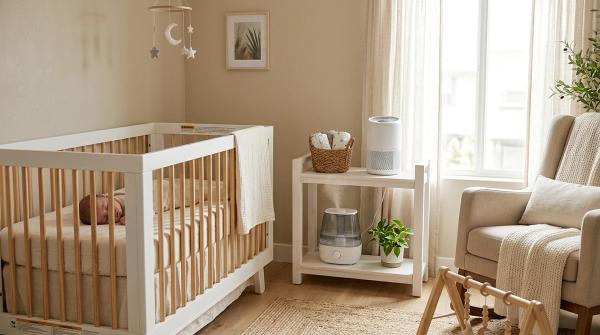
- Use a baby mosquito net for sleep and rest
- Dress the baby in loose, lightweight clothing that covers arms and legs
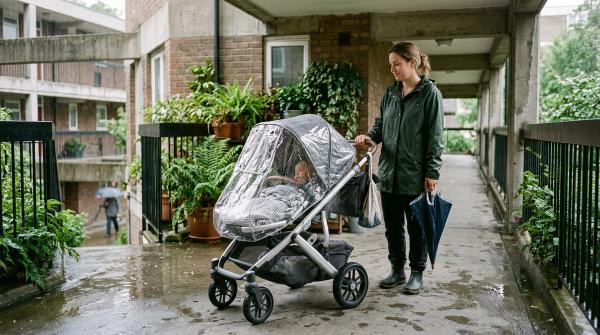
- Use a stroller net when going outside
- Improve room protection with window mesh, door screens, and fewer entry points
At this age, physical barriers are the main protection. A good net, breathable clothing, and a mosquito-free room are the safest starting point.
Babies 2 months to under 3 years
#Once your baby is older than 2 months, CDC/AAP/EPA guidance says EPA-registered mosquito repellents can be safe when used exactly as directed.
Common active ingredients include:
- DEET
- Picaridin
- IR3535
Use them carefully:
- Do not apply repellent to your baby’s hands, because babies put their hands in their mouth often.
- Do not spray repellent directly on the face.
- If applying near the face, put it on your own hand first, then gently apply only where needed.
- Use it only on exposed skin or clothing if the label allows.
- Wash it off once you are back indoors and protection is no longer needed.
- Do not use Oil of Lemon Eucalyptus, also called OLE, or PMD on children under 3 years.
Children 3 years and older
#After age 3, products with OLE or PMD may be considered if the product label allows it.
DEET, picaridin, and IR3535 can still be used when appropriate. But remember: more repellent does not mean better protection. Use only what is needed for the time outdoors, and always follow the label.
Mosquito net vs mosquito repellent for babies: quick comparison
#Why mosquito nets are so useful for babies
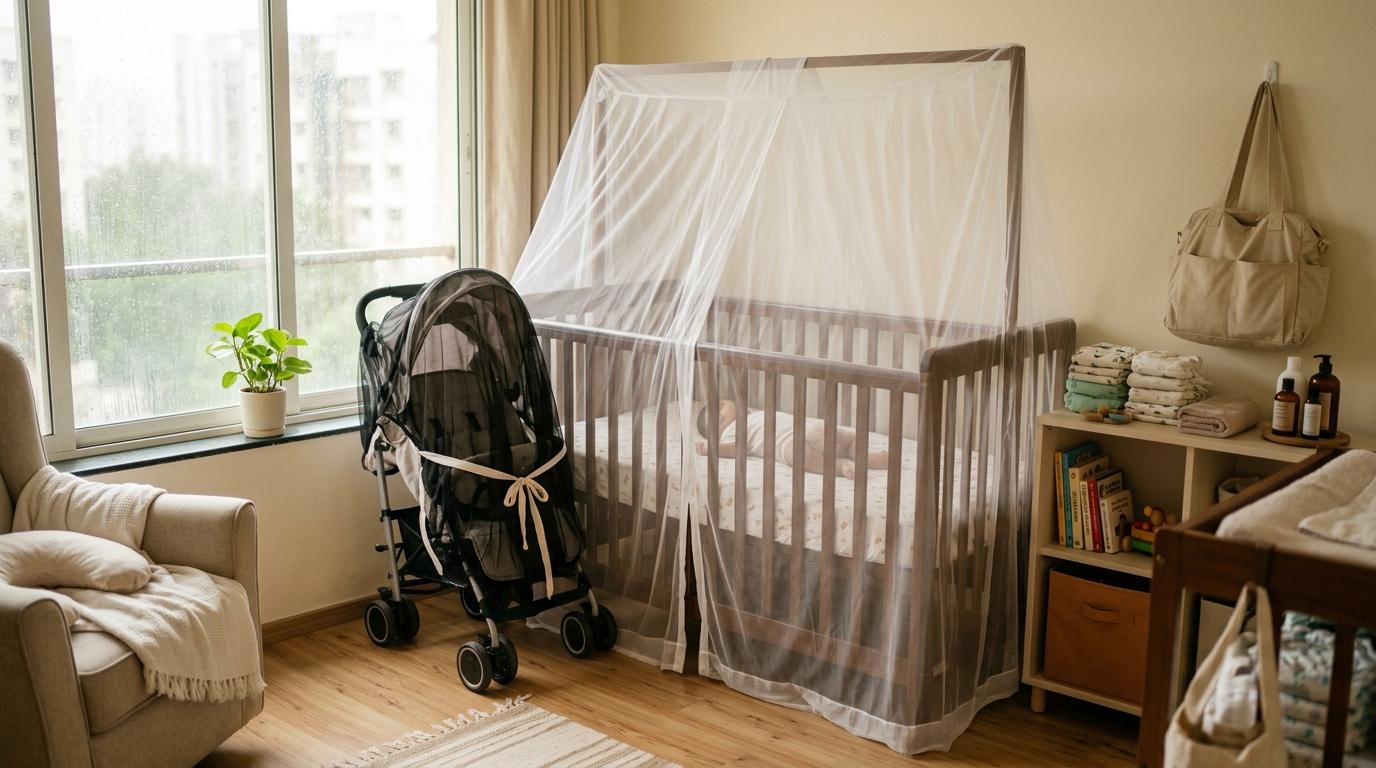
#A baby mosquito net is often the most practical first purchase because it protects without touching your baby’s skin and without releasing anything into the air.
Use a net for:
- Cot or crib sleep
- Daytime naps
- Stroller walks
- Balcony time
- Travel
- Power cuts
- Visits to homes where mosquitoes are common
A good baby mosquito net should be:
- Fine enough to keep mosquitoes out
- Breathable enough for warm weather
- Properly fitted around the cot, mattress, stroller, or play area
- Free from holes or loose edges
- Kept away from the baby’s face
The most important part is sealing it properly. One open corner is enough for mosquitoes to get inside. And once they are inside, the net stops being useful.
Clothing helps more than people think
#Clothing is one of the simplest mosquito barriers for babies. It is especially helpful during dawn, dusk, monsoon evenings, garden visits, and stroller walks.
Choose:
- Loose long-sleeved tops
- Loose full-length pants
- Lightweight cotton or breathable fabrics
- Socks if the ankles are exposed
Avoid very tight clothing when possible. Mosquitoes can sometimes bite through thin, tight fabric. Loose clothing creates a small gap between the mosquito and the skin, which gives better protection.
DEET for babies: what parents should know
#DEET is one of the most studied mosquito repellent ingredients. For babies older than 2 months, CDC/AAP/EPA-aware guidance supports EPA-registered repellents containing DEET when used as directed.
Basic rules:
- Do not use DEET on babies under 2 months.
- Do not apply it to hands.
- Do not apply it near the eyes or mouth.
- Do not use it on cuts, rashes, irritated skin, or broken skin.
- Do not apply under clothing unless the label specifically says so.
- Use only enough to cover exposed areas.
- Wash it off after coming indoors.
For babies, lotion or roll-on formats can be easier to control than sprays. If you use a spray, do not spray near the baby’s face. Spray it onto your own hand first, away from the baby, and then apply gently where needed.
Picaridin for babies: another option after 2 months
#Picaridin is also an EPA-registered repellent option for babies older than 2 months, when used according to the label.
Some parents prefer picaridin because it may feel lighter or less oily than some other repellents. But it still needs the same careful handling.
Use these habits:
- Avoid hands, eyes, mouth, and broken skin.
- Do not spray around the baby’s face.
- Apply only when needed.
- Use only the amount recommended.
- Wash it off when the baby is back indoors.
The safest mosquito repellent for babies is not just about the ingredient. It also depends on the baby’s age, the concentration, the label directions, how much you use, and where you apply it.
What about mosquito repellent patches for babies?
#Mosquito repellent patches are popular because they usually stick to clothing, a stroller, a cot frame, or a nearby surface instead of the baby’s skin.
That can be convenient, but it is important to keep expectations realistic.
Patches may help a little in the area close to the patch, but they do not give full-body protection. A patch on the sleeve may not protect the feet. A patch on the stroller may not help once you lift the baby out.
If you use patches, treat them as an extra layer, not your main protection.
Also, check the label carefully for age guidance and ingredients. “Herbal” or “natural” does not automatically mean safe for babies.
Are mosquito vaporizers safe in a baby room?
#A mosquito vaporizer in a baby room should be used with caution.
Liquid vaporizers are common in Indian homes, but they release insecticide vapors into the air. Since babies have developing airways, it is sensible to avoid unnecessary exposure, especially in small or closed rooms.
If your family chooses to use a vaporizer, a more cautious routine is:
- Use it before the baby enters the room, not while the baby is sleeping next to it.
- Keep the room ventilated afterward.
- Turn it off before bringing the baby in.
- Do not place it near the cot.
- Avoid using multiple fragranced or chemical products in the same small room.
For regular sleep, a mosquito net and good room barriers are usually a cleaner first choice.
Monsoon mosquito protection for babies in India
#Monsoon season needs extra attention because mosquitoes breed quickly in standing water. Even a small amount of collected water can become a problem.
Check these common spots:
- Balcony plant saucers
- Buckets and mugs in bathrooms
- AC drip trays
- Water collected in window tracks
- Open drains nearby
- Damp floor corners
- Terrace or common-area containers
- Pet bowls that are not changed often
Comfort matters too. Monsoon weather can be hot and humid, and babies can get uncomfortable quickly under thick clothing or poorly ventilated nets.
Use breathable fabrics, keep air moving, and check your baby often for sweating or overheating.
If your baby is older than 2 months and you use a topical repellent, remember that sweat may reduce how long it stays on the skin. Follow the label and do not reapply more often than recommended.
What works for apartment families
#High-rise apartments do not fully protect against mosquitoes. They can still enter through lifts, staircases, balcony doors, utility ducts, bathroom vents, and windows left open for just a few minutes.
A practical apartment setup includes:
- Magnetic or Velcro mesh for balcony doors
- Window screens that close fully
- Door sweeps if there is a large gap under the main door
- Covered drains where possible
- Dry plant saucers
- No standing water in buckets or mugs
- A mosquito net for the baby’s cot or stroller
- A fan, since moving air makes it harder for mosquitoes to settle
Try to reduce mosquito entry first. If mosquitoes keep entering every evening, you may end up relying too much on repellents, sprays, or vaporizers.
Stroller, travel, and evening walks
#For stroller walks, a fitted stroller mosquito net is usually the cleanest first layer. It protects your baby without putting anything on the skin.
Be extra careful during:
- Dawn
- Dusk
- Garden visits
- Parking areas
- Ground-floor entrances
- Areas near stagnant water
- Monsoon evenings
For babies older than 2 months, if your baby will be outside the stroller or exposed for a longer time, you can consider an EPA-registered repellent such as DEET, picaridin, or IR3535. Use it exactly as directed.
Avoid applying repellent under clothing. Focus only on exposed areas, and wash it off later.
The new parent mosquito checklist
#Use this quick checklist before sleep, stroller walks, or travel.
- Check your baby’s age: Under 2 months means nets, clothing, and room barriers only.
- Check the label: For babies over 2 months, look for EPA-registered active ingredients such as DEET, picaridin, or IR3535.
- Avoid OLE/PMD under 3 years: Do not use Oil of Lemon Eucalyptus or PMD on younger children.
- Use the net properly: Tuck or seal all edges and check for tears.
- Cover exposed skin: Use loose, breathable long clothing when practical.
- Avoid hands and face: Do not apply repellent to baby’s hands or spray near the face.
- Wash off later: Clean repellent from the skin once your baby is indoors.
- Check the balcony: Empty plant saucers, buckets, AC trays, and any stagnant water.
- Ventilate rooms: Be careful with vaporizers and avoid fumes in a closed baby room.
- Pack for travel: Carry a stroller net, light full clothing, and age-appropriate repellent if needed.
So, which should you choose?
#Choose a baby mosquito net as your everyday base layer, especially for newborns, sleep, stroller use, and indoor protection.
Choose a mosquito repellent for babies only when your baby is old enough, the product is suitable, and there is genuine outdoor exposure. DEET and picaridin can be useful after 2 months when they are EPA-registered and used exactly as directed.
Use patches only as an extra layer, not your main plan.
Use vaporizers carefully, with ventilation, and avoid unnecessary fumes around your baby.
The safest approach is not one magic product. It is a simple routine: keep mosquitoes from entering, block them from reaching your baby, and use repellent carefully only when it is truly needed.