Quick answer: The safest baby car seat heat checklist is simple: cool the car before your baby gets in, use window shades to block direct sun, check hot buckles and straps, keep air moving toward the back seat, and only use accessories your car-seat manual clearly allows. Avoid random pads, liners, covers, clip-on fans, or “cooling” products that attach to or sit inside the seat. And above all: Never leave a child unattended in a vehicle, not even for a minute.
Hot weather and babies in cars can make any parent anxious. The car has been parked in the sun, the back seat feels like an oven, the rear-facing seat is warm to touch, and everyone is already late for a family visit or appointment. It is a very normal situation.
But the answer is not to buy every cooling gadget online.
The safer approach is to cool the car and protect your baby without changing how the car seat works.
This guide walks through practical options like window shades, car-seat canopies, clip-on fans, and cooling towels, while keeping safety first. It follows common guidance from child passenger safety sources such as NHTSA, AAP/HealthyChildren, CDC travel safety advice, car-seat manufacturer manuals, and CPSC recall information for small battery-powered products.
Why heat and car seats need extra care
#A parked car can heat up quickly, even on a day that does not feel extreme. NHTSA heatstroke guidance warns that vehicle interiors can become unsafe in a short time. Cracking the windows does not make a parked car safe for a child.
Babies and young children are more vulnerable to heat than adults. They cannot adjust clothing, move into shade, ask for water, or tell us clearly that they are overheating. They depend on adults for shade, airflow, timing, clothing, and safe routines.
In India, this comes up in everyday situations:
- The car is parked outside a relative’s house during an afternoon visit.
- You stop at a shop and think, “I’ll be back in two minutes.”
- The vehicle is parked near an apartment, clinic, mall, temple, school, petrol pump, or roadside dhaba.
- A rear-facing car seat is on the sunny side of the car.
- The front AC feels fine, but the back seat is still warm.
- Buckles, clips, straps, and dark car-seat fabric become hot to touch.
This does not mean you need to panic every time you travel. It just means you need a small routine you can follow every single time.
The golden rule: do not change how the car seat protects your baby
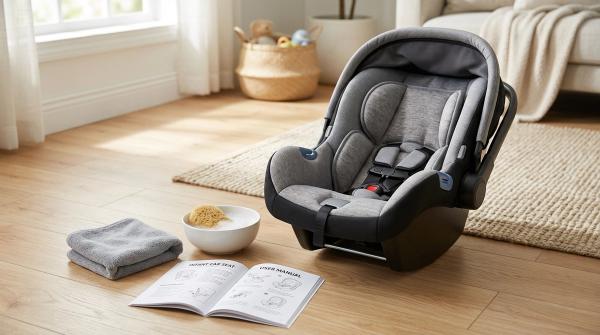
#A car seat is tested as a complete safety system. The shell, harness, buckle, chest clip, padding, approved inserts, and installation method all work together.
So the most important rule is:
Only use car-seat accessories allowed by your car-seat manual.
If something goes under your baby, behind your baby, under the harness, around the straps, or between your baby and the seat, it may affect how the harness works in a crash.
That includes many aftermarket:
- Cooling mats
- Gel pads
- Thick liners
- Sweat pads
- Strap covers
- Head supports
- Body pillows
- Extra inserts
- Padded covers
In real life, this means the car-seat manual is not just a booklet to keep in the box. It is part of the safety setup.
If the manual does not allow an item, skip it.
Cooling gear compared: what helps and what to avoid
#Window shades: usually helpful when used correctly
#A baby car sun shade or car seat sunshade for baby usually means a shade attached to the vehicle window, not to the car seat itself.
This can be useful because it blocks direct sunlight before it hits your baby’s face, legs, or the seat fabric. Window shades are especially helpful with rear-facing seats because babies often sit lower and farther from the main AC vents.
Choose simple, lightweight shades that attach securely to the window. Avoid anything heavy, hard, or loose that could come off during sudden braking or a crash.
Best use:
- Place the shade on the window closest to the car seat.
- Make sure it does not block the driver’s view.
- Check that it is attached properly.
- Use it along with AC and pre-cooling, not instead of them.
Be careful with: bulky roller shades with hard parts, shades that fall off easily, anything that blocks visibility, and loose items on the rear shelf or back seat.
Window shades are often one of the better cooling choices because they do not sit inside the harness area or change how the car seat holds your child.
Car-seat canopies and draped covers: risky in hot weather
#A car-seat canopy can look harmless, especially if it is marketed as “breathable” or “lightweight.” But fabric draped over a car seat can reduce airflow around your baby.
That is a problem in hot weather, inside a parked car, or before the AC has cooled the cabin. A covered seat can trap warm air around the child, even if the fabric feels thin.
Avoid using:
- Blankets over the car seat.
- Muslin cloths draped over the seat opening.
- Canopies that cover the baby while the seat is in the car.
- Any cover that blocks your view of the baby’s face and body.
A window shade and a draped cloth are not the same thing. A window shade blocks sunlight at the window. A draped cloth can trap heat right where your baby is sitting.
Clip-on fans: only with very careful placement
#A clip-on fan for baby car seat sounds like an easy fix, especially when the rear-facing seat is not getting enough airflow. But clipping a fan directly to the car seat can create safety problems.
Most car-seat manuals do not allow fans or other add-ons to be attached to the seat. A fan can become a loose object in a sudden stop or crash. It can also put hard plastic parts, clips, cords, or blades too close to your baby’s face and hands.
Safer approach:
- Do not clip a fan to the car seat unless the manual clearly allows it.
- If you use a fan, secure it to the vehicle, not the seat.
- Make sure it does not interfere with the harness, airbags, visibility, or the driver.
- Keep cords, clips, and blades out of your baby’s reach.
- Use the fan to move cooled cabin air, not as a replacement for AC or shade.
- Do not leave battery-powered fans inside a hot parked car.
Also check for recalls. CPSC recall awareness is important for small rechargeable or battery-powered fans, especially those bought online. If a fan has battery swelling, overheating, damage, loose parts, exposed wiring, or a strange smell, stop using it.
A fan may help with airflow, but it should never weaken crash safety.
Cooling towels: useful, but not inside the harness
#Cooling towels can be helpful, but not as padding inside the car seat.
A damp towel can be used to wipe hot buckles before your baby gets in. You can also use it to cool your own hands while handling the seat, or briefly cool the empty seat surface before removing it completely.
But a wet towel wrapped around your baby inside the harness can bunch up, trap moisture, and affect harness fit.
Better use:
- Wipe hot buckles, clips, or plastic parts before seating the baby.
- Use it on the empty seat surface, then remove it fully.
- Keep it away from the harness path.
- Make sure no damp cloth stays under, behind, or around the baby.
Avoid: placing a towel behind the baby, putting it under the baby, wrapping it between the baby and the harness, or leaving damp fabric in the seat during the ride.
A simple rule helps: if it sits between the child and the car seat, or between the child and the harness, do not use it unless the manual clearly allows it.
Hot-weather car-seat risks parents often miss
#Hot buckles and clips
#Metal buckle tongues, plastic chest clips, and dark harness parts can become very hot when the car is parked in direct sun.
Before placing your baby in the seat, touch the buckle, chest clip, harness, and seat fabric with the inside of your wrist or the back of your hand. If it feels too hot for you, cool it first.
You can:
- Run the AC before bringing the baby to the car.
- Park or move the car out of direct sunlight if possible.
- Wipe hot parts with a damp cloth.
- Hold buckles near cool AC air for a short time.
- Cover the empty car seat with a light cloth while parked, then remove it fully before the baby gets in.
Do not leave any towel, cover, or cooling product under the child during the ride unless the car-seat manual allows it.
Rear-facing seats and airflow
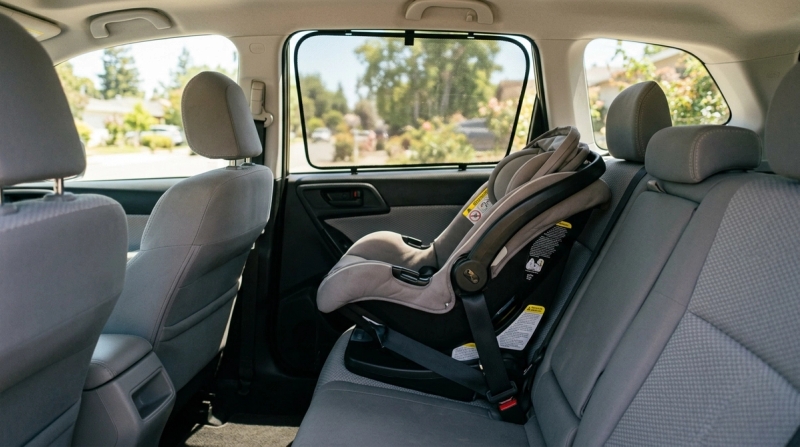
#A rear-facing car seat summer setup can be harder to cool because the seat shell faces away from the front AC vents. Many parents notice that the front seats feel comfortable while the back seat is still warm.
To improve airflow:
- Pre-cool the car before buckling the baby.
- Aim vents so cool air moves toward the back seat.
- Use rear AC vents if your car has them.
- Use window shades to reduce direct sunlight.
- Have an adult sit in the back when possible, especially on longer trips.
- Take breaks during long drives.
Keep checking your child. A calm habit is better than relying on one gadget and hoping it works.
Parked cars during errands and family visits
#This is where risk can quietly creep in.
The baby is asleep. The car was cool a minute ago. You are just stepping into a shop. A relative says, “I’ll be right back.” It feels harmless.
But the rule does not change.
Never leave a child unattended in a vehicle.
Not with the windows cracked. Not with the AC running. Not while paying at a shop. Not while picking something up from a relative’s home. Not during a quick temple visit, school pickup, petrol pump payment, pharmacy stop, or apartment parking run.
Take the child with you every time.
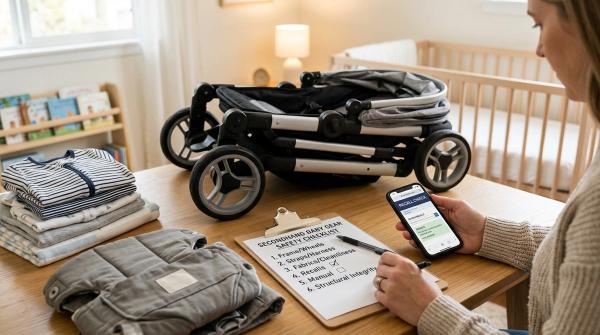
Baby car seat heat checklist for hot-weather trips
#Use this checklist before short drives, long drives, family visits, school pickups, and errands.
Before you leave home
#- Check the weather and avoid peak afternoon travel when practical.
- Park in shade whenever possible.
- Open the car carefully and let trapped hot air escape.
- Run the AC before bringing the baby to the car.
- Check that the car seat is installed correctly.
- Confirm that any accessory in use is allowed by the car-seat manual.
- Remove loose items that could become projectiles.
- Place window shades securely if direct sun reaches the baby’s side.
- Dress the baby in light, comfortable clothes.
- Avoid bulky clothing, thick padding, or extra layers under the harness.
Before buckling the baby
#- Touch the buckle tongues, chest clip, harness, and seat fabric.
- Cool hot parts before putting the baby in.
- Remove any towel, cover, cooling pack, or cloth from the seat.
- Make sure nothing is behind the baby unless it came with the seat or is allowed by the manual.
- Buckle the harness snugly according to the manual.
- Check that the chest clip is positioned as the manufacturer instructs.
- Keep straps flat and untwisted.
During the drive
#- Keep the AC running at a comfortable level.
- Direct airflow toward the back seat.
- Use vehicle window shades to reduce direct sun.
- Watch the baby through a properly secured mirror, or have another adult sit in the back when possible.
- Stop safely if the baby seems too hot, unusually upset, unusually quiet, or just not like themselves.
- Keep fans, cords, and clips out of the baby’s reach.
- Do not drape cloth over the car seat while travelling.
At stops
#- Take the baby out whenever you leave the vehicle.
- Never leave a child unattended in a vehicle.
- If visiting family, decide in advance who is taking the baby inside.
- Do not assume another adult has taken the child out.
- Check the back seat before locking the car.
- Keep a bag, phone, or other essential item in the back seat as a reminder to open the rear door.
After parking
#- Park in shade if available.
- Use a windshield shade if you normally use one, and store it safely before driving.
- Cover the empty car seat lightly only while the child is not in it.
- Remove the cover completely before the next ride.
- Do not leave battery-powered fans or electronics in a hot parked car.
- Check the seat again before the next use.
What not to buy just because it says “cooling”
#Hot-weather baby gear can sound very convincing. But more gear does not always mean more safety.
Be careful with:
- Aftermarket cooling mats placed under the baby.
- Gel pads not listed in the car-seat manual.
- Extra head supports or body supports.
- Thick strap covers.
- Seat liners that change harness fit.
- Clip-on fans attached to the car seat.
- Canopies that cover the baby inside the car.
- Loose ice packs or frozen packs near the child.
- Any item that makes the harness harder to tighten correctly.
A good rule: if a product promises comfort but sits inside the car seat, check the manual first. If the manual does not allow it, do not use it.
Practical India-aware car-seat cooling tips
#Hot-weather travel in India is often a mix of short city drives, longer highway trips, apartment parking, family functions, school pickups, and waiting outside buildings. It is not always perfectly planned.
These small habits can help:
- Travel earlier in the morning or later in the evening when practical.
- Choose shaded parking, even if you have to walk a little farther.
- Pre-cool the car before bringing the baby down from the house.
- Ask one adult to focus only on the baby during loading and unloading.
- For family visits, take the baby inside first, then unload bags.
- Do not let relatives add cloths, cushions, or towels inside the car seat.
- Keep the car-seat manual accessible, either printed or saved on your phone.
- Use window shades instead of covering the car seat.
- Recheck buckles after the car has been parked in the sun.
- Do a back-seat check every single time.
This is not about being overprotective. It is about making the safe choice automatic.
Signs your baby may be too hot in the car
#This article is not a substitute for medical advice, but caregivers should pay close attention when a baby seems affected by heat.
Possible warning signs include flushed skin, unusual fussiness, unusual quietness or low responsiveness, rapid breathing, heavy sweating, skin that feels very hot, or the baby seeming generally “not right.”
If you are worried, stop safely, move to a cooler place, and seek medical help if needed.
The safest setup is usually the simplest
#For most families, a safe hot-weather car-seat setup looks like this:
- A correctly installed car seat.
- No unapproved inserts, liners, or pads.
- Secure window shades.
- A pre-cooled cabin.
- Good AC airflow.
- Light clothing.
- Regular back-seat checks.
- No child left alone in the car, ever.
It may not sound as exciting as a bunch of cooling gadgets, but it is much closer to how car-seat safety is meant to work.