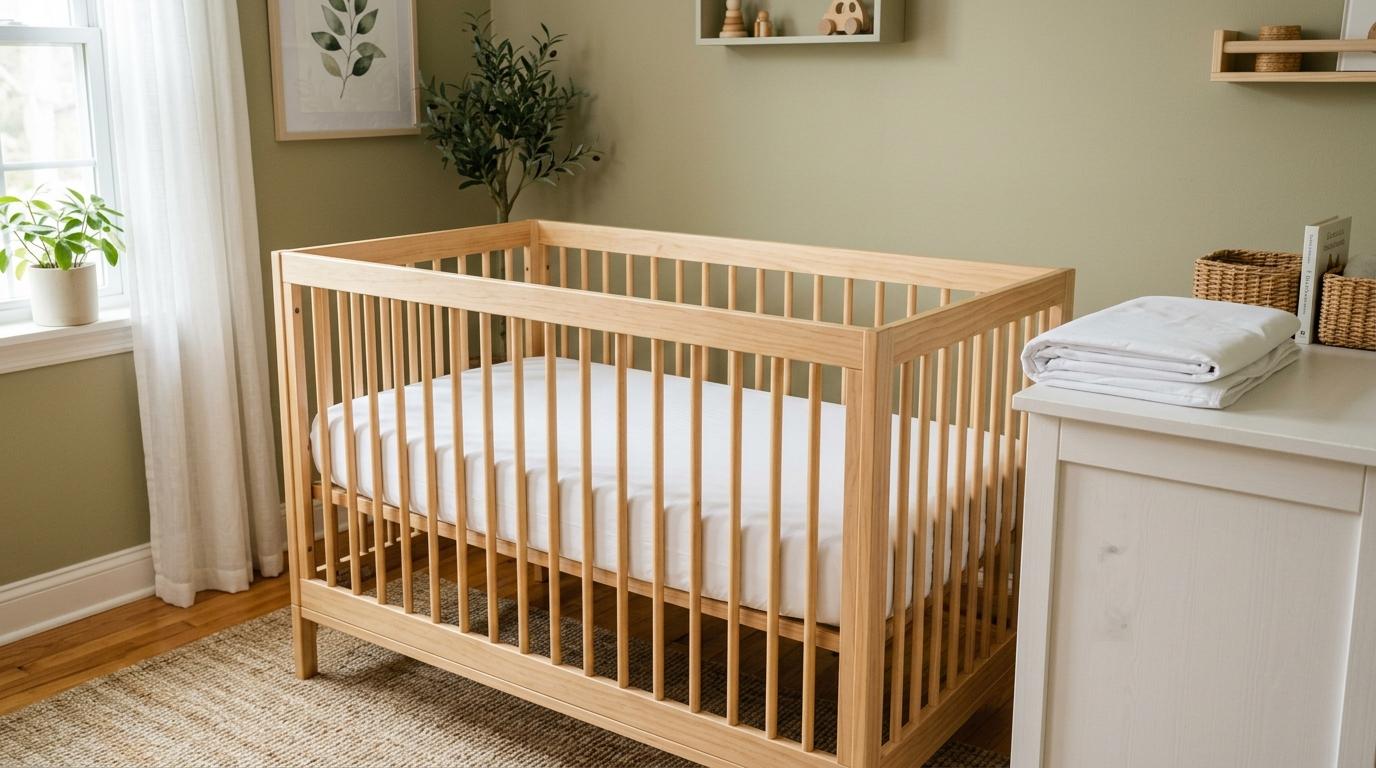
New parents get sold a lot of crib bedding: matching sets, tiny quilts, cute pillows, soft pads, bumpers, and nursery photos that make it seem like a crib needs five layers before it is “ready.” For real baby sleep, you need much less.
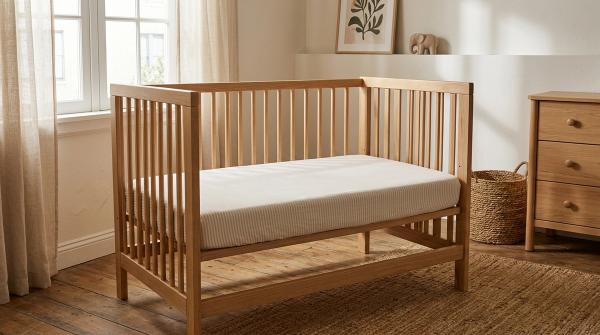
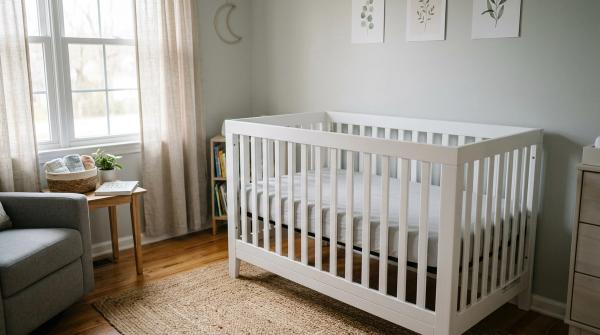
For most babies, the safest and most practical setup is a firm, flat mattress that fits the crib, bassinet, or play yard properly, a snug fitted sheet made for that mattress, and optionally a thin, flat waterproof mattress protector underneath the sheet.
If you want leak protection, a crib mattress protector can be very useful. If your mattress already wipes clean, you may not need one. What you do not need are thick pads, loose layers, plush toppers, pillows, blankets, bumpers, or anything that makes the sleep surface soft or uneven.
The goal is boring in the best possible way: firm, flat, snug, washable, and easy to deal with at 2 a.m.
The safest basic crib setup
#For a crib, bassinet, mini crib, or play yard, start with the basics:
- A firm, flat mattress that fits correctly
- A snug fitted sheet
- A thin waterproof protector or pad, only if it lies flat and secure
The fitted sheet is the layer your baby sleeps on. The protector, if you use one, goes underneath the sheet to help keep moisture away from the mattress.
Anything loose, padded, puffy, quilted, slippery, or poorly fitted should stay out of the sleep space. Simple really is better here.
What does a fitted crib sheet do?
#A fitted crib sheet gives your baby a clean, washable surface to sleep on.
It should fit tightly around the mattress, with no loose fabric, sagging, bunching, or corners that pop off easily. With baby bedding, the fit matters much more than the color, print, or fabric trend.
Look for a fitted sheet that has:
- The correct size for your crib, bassinet, mini crib, or play yard
- Strong elastic, ideally around the whole edge
- Smooth fabric that stays flat on the mattress
- Machine-washable material
- No ribbons, ties, loose trim, or raised decorations
Do not assume one crib sheet fits everything. Standard cribs, mini cribs, bassinets, and play yards often use different mattress sizes. Always check your product manual and mattress measurements before buying sheets.
What does a crib mattress protector do?
#A crib mattress protector is a thin layer that helps protect the mattress from moisture.
It can be handy for diaper leaks, spit-up, milk dribbles, sweat, and the small baby messes that often happen right after you changed the sheet.
A good crib mattress protector should act like a washable barrier. It should not make the mattress feel softer, puffier, or lumpy.
Look for a mattress protector that is:
- Thin
- Flat
- Waterproof or water-resistant
- Snug-fitting or designed so it does not shift
- Free from thick quilting or plush padding
- Machine-washable
- The exact right size for the mattress
If your crib mattress does not have a waterproof surface, a protector is especially useful.
If your mattress already has a waterproof wipe-clean cover, a protector is more of a convenience than a must-have. Some parents prefer fewer layers. Others like being able to strip off a dirty sheet and protector quickly in the middle of the night.
Both approaches are fine as long as the sleep surface stays firm, flat, and snug.
What is a waterproof crib pad?
#A waterproof crib pad is another type of moisture barrier. Some are thin and simple. Others are quilted, padded, or designed to make the mattress feel softer.
That difference matters.
A thin, flat waterproof crib pad that stays securely under a fitted sheet can work much like a crib mattress protector. But a thick or cushioned pad can change the feel of the mattress, and babies need a firm, flat sleep surface.
The safer type of waterproof crib pad is:
- Thin
- Flat
- Waterproof
- Secure under the fitted sheet
- Not bunchy
- Not slippery
- Not cushioned
Skip waterproof pads that are:
- Puffy
- Plush
- Quilted
- Pillow-like
- Loose
- Smaller than the mattress
- Designed mainly to add softness
A good rule: if the product looks like it is meant to make the crib mattress “cozier,” it probably is not the right choice for infant sleep.
Crib mattress protector vs fitted sheet vs waterproof pad
#What should new parents buy first?
#If you are setting up a crib from scratch, start small.
You do not need a huge bedding bundle. You need a few pieces that fit well, wash well, and are safe to use again and again.
A practical starter list:
- 2 to 4 fitted crib sheets
- 1 to 2 thin crib mattress protectors
- Optional: 1 extra protector if laundry takes a long time to dry
That is enough for most families.
If your baby spits up often, has frequent diaper leaks, or you do not do laundry every day, having an extra sheet and protector can make life easier. If your laundry setup is simple and your mattress wipes clean, you can buy less.
The best newborn crib bedding is not the prettiest set. It is the stuff you can wash, dry, and put back on safely when everyone is exhausted.
Safe sleep basics every caregiver should know
#Safe sleep guidance from groups such as the American Academy of Pediatrics, U.S. Consumer Product Safety Commission, and CDC all points in the same direction: keep the baby’s sleep space simple.
For babies, the sleep area should be:
- Firm
- Flat
- Bare except for a snug fitted sheet
- Free from loose bedding and soft items
That means no pillows, blankets, quilts, stuffed toys, loose sheets, crib bumpers, sleep positioners, soft padding, or plush toppers.
A crib mattress protector or waterproof pad should only be used if it stays flat, fits securely, and does not make the mattress feel soft or uneven.
Also keep these points in mind:
- Follow the manual for your crib, bassinet, play yard, and mattress.
- Use sheets and protectors that match the exact mattress size.
- Do not add extra mattresses or aftermarket padding to a bassinet or play yard unless the manufacturer specifically allows it.
- This article is general guidance, not a replacement for your pediatrician’s advice or your product’s safety instructions.
Can you double-layer a crib sheet and protector?
#Some parents use a double-layer setup like this:
- Protector
- Fitted sheet
- Protector
- Fitted sheet
The idea is that if the top layer gets wet during the night, you can remove the top sheet and protector, and there is already a clean sheet underneath.
Only do this if the final sleep surface still stays tight, flat, and firm. If the extra layers make the sheet stretch, wrinkle, bunch, slide, or lift at the corners, skip it.
For many parents, the simpler setup is easier:
- One protector
- One fitted sheet
- Clean spares nearby
Safe and boring wins a lot of the time.
A simple laundry setup for crib bedding
#Babies create an unbelievable amount of laundry. You do not need fancy bedding, but you do need a system that is easy to repeat.
A practical routine:
- Keep one fitted sheet on the mattress
- Keep one thin protector underneath it, if using one
- Store one clean sheet and one clean protector nearby
- Put dirty bedding straight into the laundry basket
- Wash according to the care label
- Make sure everything is fully dry before putting it back on the mattress
That last point matters. Moisture trapped between bedding layers can cause smells and make the bed unpleasant. In humid weather, it can also take much longer for protectors and pads to dry properly.
If a mattress protector takes forever to dry, it may not be practical for everyday use, even if it looked perfect online.
Notes for hot, humid, or monsoon weather
#If you live in India or another hot and humid region, crib bedding needs to work in real weather, not just in product photos.
During summer or monsoon months, thick pads can be annoying because they take longer to dry. A thin, flat crib mattress protector is usually easier to wash and dry than a bulky quilted pad.
Helpful things to consider:
- Choose thinner layers instead of thick padded ones.
- Check whether the protector dries fully in your usual laundry setup.
- Avoid anything that traps heat or feels plasticky under the sheet.
- Keep at least one spare fitted crib sheet ready.
- Make sure the mattress and bedding are completely dry before remaking the bed.
If you air-dry laundry, drying time matters. A beautiful mattress pad is not very useful if it stays damp for too long.
Who can skip extra crib bedding?
#You can probably skip extra waterproof pads or multiple protectors if:
- Your mattress already has a waterproof wipe-clean cover
- Your baby rarely has leaks
- You do laundry often
- You prefer a minimal crib setup
- Extra layers make the sheet fit less securely
- You are using a bassinet or play yard with strict bedding rules
You should definitely skip loose waterproof pads, thick quilted crib mattress pads, plush comfort toppers, decorative bedding sets, pillows, blankets, bumpers, and sleep positioners.
You can prepare for baby messes without filling the crib with unnecessary layers.
Buying checklist
#Before buying a fitted sheet, crib mattress protector, or waterproof pad, check the basics.
- Correct size: does it match your exact mattress dimensions?
- Snug fit: does it stay tight at the corners?
- Flat surface: does it lie smooth with no bunching or folds?
- No added padding: is it thin rather than quilted, plush, or puffy?
- Safe design: are there no ties, ribbons, loose trims, or raised decorations?
- Washable: can it handle frequent washing?
- Drying time: will it dry properly in your climate and laundry routine?
- Manual-friendly: does your crib, bassinet, or play yard manufacturer allow this type of bedding?
- Actually useful: are you buying something you will really use, not just part of a decorative set?
If you are choosing between two options, go with the flatter, simpler, better-fitting one.
Quick buying guide by sleep space
#Standard crib
#Buy fitted sheets made for a standard crib mattress. Add a thin fitted crib mattress protector if you want waterproofing.
Mini crib
#Do not use standard crib sheets unless they are specifically made to fit your mini crib mattress. Buy mini crib sheets and protectors that match the exact size.
Bassinet
#Use only the sheet size recommended by the bassinet manufacturer. Avoid adding extra pads unless the manual clearly says they are allowed.
Play yard
#Play yards often have very specific rules about mattresses and sheets. Use the manufacturer-approved mattress and a snug sheet designed for that play yard. Do not add extra padding.
Final thought
#A safe crib setup does not need to be complicated.
Buy a snug fitted crib sheet. Add a thin, flat crib mattress protector if you want easier cleanup. Skip the bulky extras.
That setup is easier to wash, easier to check, and much more in line with safe sleep guidance.
Safety sources checked for this article: American Academy of Pediatrics safe sleep guidance, U.S. Consumer Product Safety Commission safe sleep guidance, and CDC safe sleep guidance.