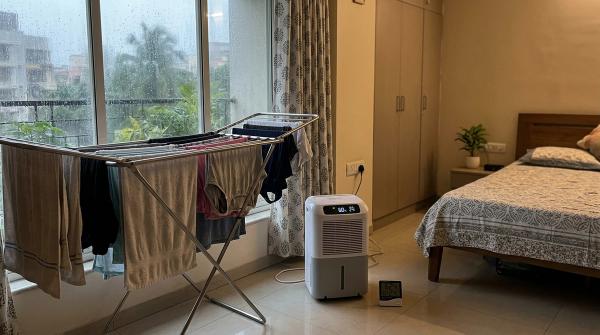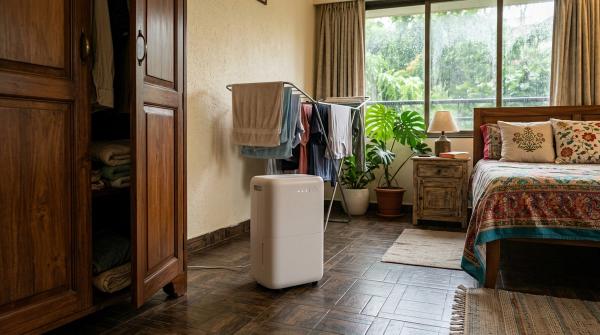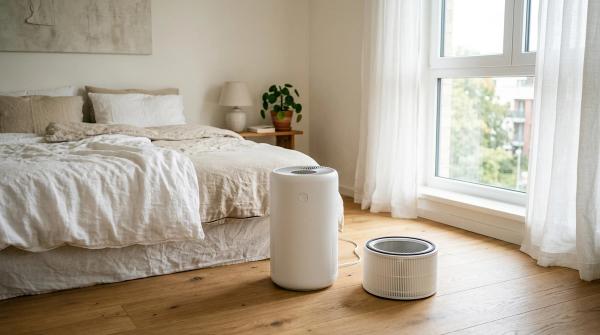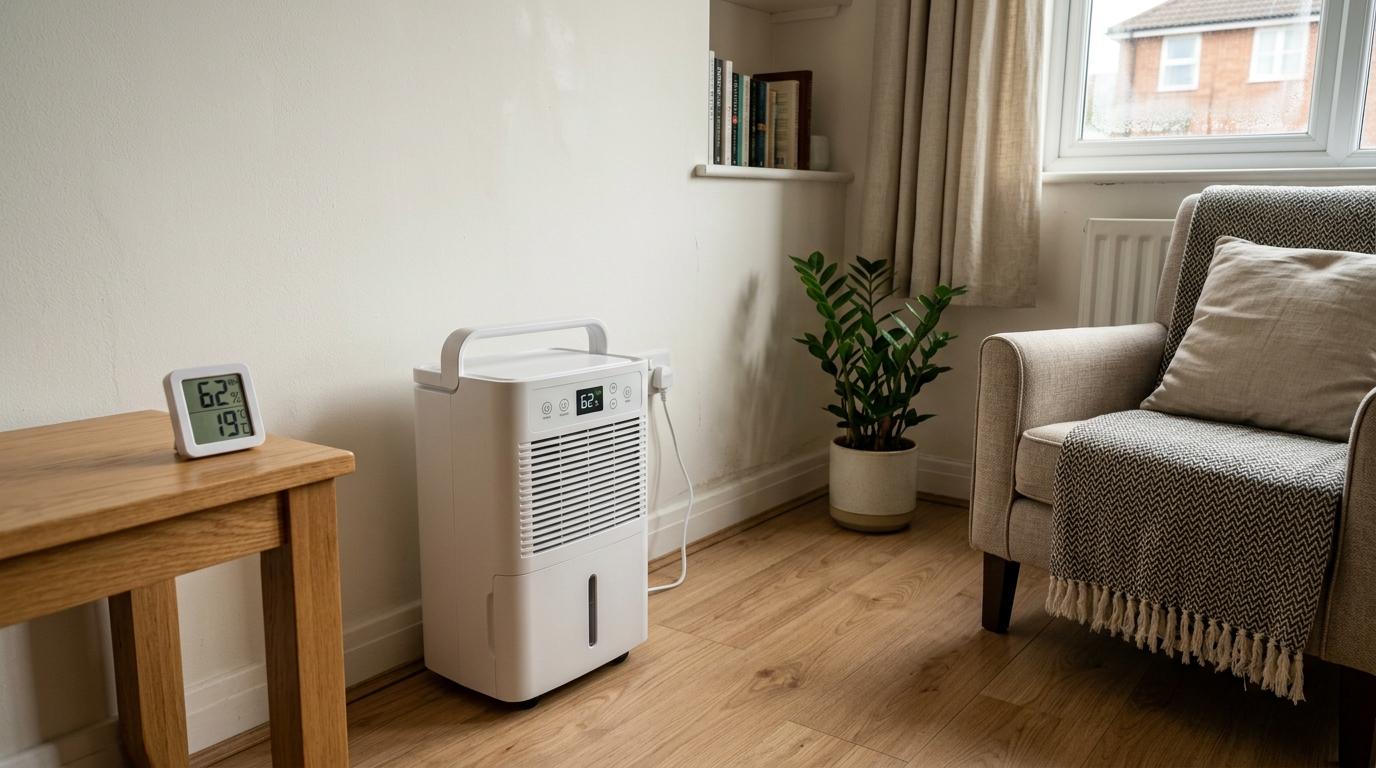
If your dehumidifier is freezing up, don’t panic yet. Ice on the coils usually comes down to one of a few common problems: poor airflow, a dirty dehumidifier filter, a room that’s too cold, a drain issue, or a unit that’s running nonstop without getting a break.
The first move is simple: turn it off, unplug it, and let the ice melt on its own. After that, check the room temperature, filter, vents, placement, drain hose, and humidity setting before you spend money on a service call.
Seeing ice on dehumidifier coils is annoying, especially in a basement, laundry room, or during heavy seasonal humidity when you really need the machine working. But frozen coils don’t automatically mean the dehumidifier is ruined.
A dehumidifier works a lot like a small air conditioner. It pulls damp air across cold coils. Moisture from the air condenses on those coils, then drips into the bucket or out through the drain hose. But if the coils get too cold, or if air can’t move through the unit properly, that moisture freezes instead of draining away.
Before calling a technician, there are several safe checks you can do yourself. Stick to basic cleaning and setup checks, follow your owner’s manual, and don’t open sealed parts. If you see burned wiring, leaking, damaged coils, sparks, or anything that feels beyond normal maintenance, stop and call a pro.
Quick Diagnostic Table: Why Is My Dehumidifier Freezing Up?
#First, Thaw the Unit Safely
#If your dehumidifier coils are freezing, the machine can’t remove moisture the way it should. You may also notice the dehumidifier is not collecting water, because the water is trapped as ice instead of dripping into the bucket.
Don’t scrape the ice off. It’s tempting, especially when you want the unit running again, but the coils and fins are easy to damage. A punctured coil can turn a small problem into a dead appliance.
Safe Thaw and Reset Checklist
#- Turn the dehumidifier off and unplug it from the wall.
- Put towels around the unit if it’s sitting on a finished floor.
- Let the ice melt naturally. This can take a few hours, and sometimes longer.
- Keep the unit in a room above about 65°F, or 18°C, if possible.
- Empty the bucket as the ice melts.
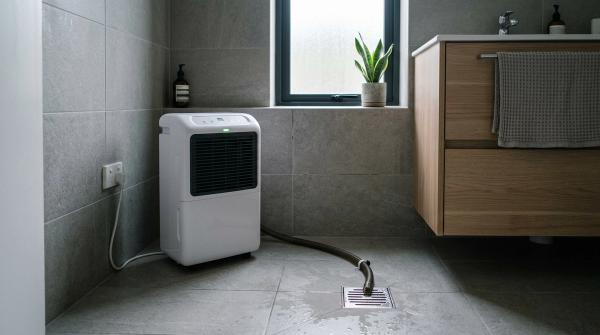
- Check the drain hose if you use continuous drainage.
- Wipe up any standing water around the bucket area.
- Do not use a hair dryer, heat gun, knife, screwdriver, or ice pick.
- Do not remove sealed panels unless your manual clearly says to.
- Once the unit is fully thawed, reinstall the clean, dry filter and test it in a warm, open area.
If the dehumidifier smells burned, trips a breaker, leaks from an unusual spot, or freezes again quickly, stop using it and call for service.
Check 1: Room Temperature
#Room temperature is one of the most common reasons for a dehumidifier freezing up.
Most standard compressor dehumidifiers work best in warmer rooms. When the room temperature drops below about 65°F, or 18°C, the coils can get too cold. Instead of water collecting and dripping into the bucket, frost starts forming on the coil surface.
This often happens in unfinished basements, garages, storage rooms, cold laundry rooms, tile-floor rooms and spaces cooled heavily by air conditioning.
Put a basic thermometer near the dehumidifier. If the room is below the operating range listed in your manual, the dehumidifier may simply not be the right fit for that space at that time.
Look in your manual for phrases like operating temperature range, low-temperature operation, auto-defrost and frost control.
Check 2: Airflow Around the Unit
#A dehumidifier needs steady airflow to work properly. If the intake or exhaust vents are blocked, the coils can get too cold and ice can start building up.
Airflow can be blocked by a wall, curtains, boxes, furniture, laundry baskets, dust inside the grille or a clogged filter.
Give the unit open space around it, especially near the intake and outlet vents. Many manuals recommend several inches of clearance, and some models need even more.
Try not to place the dehumidifier tight in a corner, flat against a wall, behind furniture, under a shelf with poor ventilation, next to a dryer vent blowing lint or inside a closet unless the manual says that’s allowed.
Check 3: The Dehumidifier Filter
#A dirty dehumidifier filter is one of the easiest problems to overlook. It’s also one of the most common reasons coils freeze.
When the filter is clogged, less warm room air reaches the cold coil. The coil gets colder than it should, frost forms, and eventually the whole thing can ice over.
This is especially common in laundry rooms with lint, dusty basements, homes with pets, rooms under renovation and very humid weather when the unit runs for hours.
Unplug the unit first. Then remove the filter according to your manual. Most household dehumidifiers have washable filters, but not all filters are cleaned the same way.
Gently remove loose dust, rinse a washable filter if the manual allows it, let the filter dry completely before reinstalling it and don’t run the unit without the filter unless your manual specifically says that’s okay.
Check 4: Humidity Setting and Hygrometer Use
#Sometimes a dehumidifier freezes because it’s being asked to work too hard.
The EPA and CDC commonly advise keeping indoor relative humidity below 60%, with about 30% to 50% as a useful target range where possible. But that doesn’t mean every room needs to be pushed down to the lowest setting all day.
If your unit is set to continuous mode, or the humidity target is set very low during monsoon humidity, it may run almost nonstop. That can contribute to frost buildup, especially if the room is cool or airflow is already limited.
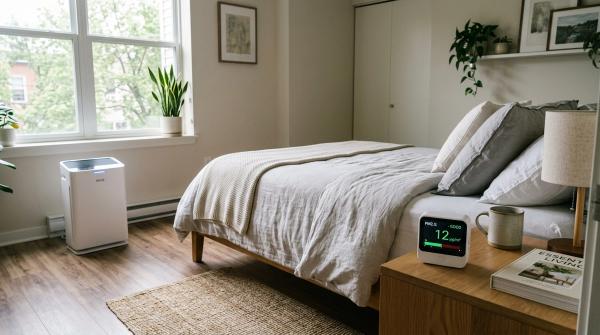
A separate humidity meter, also called a hygrometer, helps you stop guessing. Place it across the room, away from the dehumidifier’s air outlet. Let it sit for a while, then compare that reading with the number on your dehumidifier’s display.
For many homes, around 45% to 50% is a practical target. If your hygrometer says the room is already near the target but the dehumidifier keeps running like the room is soaking wet, the built-in humidity sensor may be inaccurate.
ENERGY STAR information can help when you’re choosing a new dehumidifier because it focuses on energy efficiency. But efficiency alone won’t prevent freezing. Even a good unit still needs clean airflow, proper placement, suitable room temperature and reasonable settings.
Check 5: Is the Fan Moving Air?
#After the unit is fully thawed, the filter is clean and dry, and the room is warm enough, you can do a short test.
Plug the dehumidifier back in and turn it on. Listen for the fan, then feel for air moving through the cabinet.
A healthy dehumidifier should blow air steadily. If you hear a hum but feel little or no airflow, the fan or blower may not be working. Without airflow, the cold coil can freeze quickly.
Don’t open the unit to test wiring. Don’t push the fan blade by hand. If airflow does not return after basic cleaning and better placement, unplug the unit and call a qualified technician.
When to Call a Qualified Technician
#There’s a clear line between homeowner maintenance and appliance repair.
You can safely check the room temperature, placement, humidity setting, bucket, drain hose, vents and filter. You should not repair refrigerant lines, sealed-system parts, control boards, sensors, compressors or internal wiring unless you’re trained to do that work.
Call a qualified technician, or contact the manufacturer if the unit is still under warranty, when:
- The coils freeze again soon after thawing. If the room is warm, the filter is clean and the vents are clear, repeat freezing may point to an internal problem.
- The fan does not move air. A bad fan motor, blower wheel or internal electrical issue needs proper diagnosis.
- The unit runs constantly even when the room humidity is already in range. The humidistat or sensor may be faulty.
- The dehumidifier is not collecting water after thawing. If the room is humid but the bucket stays dry, the unit may have a sealed-system or refrigerant problem.
- You see oil stains, damaged coils, burned smells, sparks or repeated breaker trips. Stop using the appliance.
- The manual warns against the condition you’re seeing. The manufacturer’s manual should always come first for safety instructions, warranty rules and error codes.
How to Prevent Repeat Freezing
#Once the ice is gone, preventing it from coming back mostly comes down to three things: airflow, temperature and realistic humidity settings.
Try these habits:
- Keep the dehumidifier filter clean.
- Leave open space around the intake and exhaust vents.
- Don’t run a standard compressor model in a room colder than the manual allows.
- Use a humidity meter to check the real room humidity.
- Set a practical target, often around 45% to 50%.
- Avoid continuous mode unless the room truly needs it.
- Empty the bucket before it overfills.
- Keep the drain hose clear if you use continuous drainage.
- Vacuum dust near the unit so it doesn’t get pulled into the filter.
- Check the manual for auto-defrost and maintenance instructions.
A dehumidifier doesn’t need perfect conditions. But it does need enough warmth and enough airflow. Without those, condensation can turn into ice pretty quickly.
Related AllBlogs reads
#For the next step, read AllBlogs guides on dehumidifier maintenance, dehumidifier placement, humidity meters, and AC dry mode vs dehumidifier to build a better humidity-control routine at home.