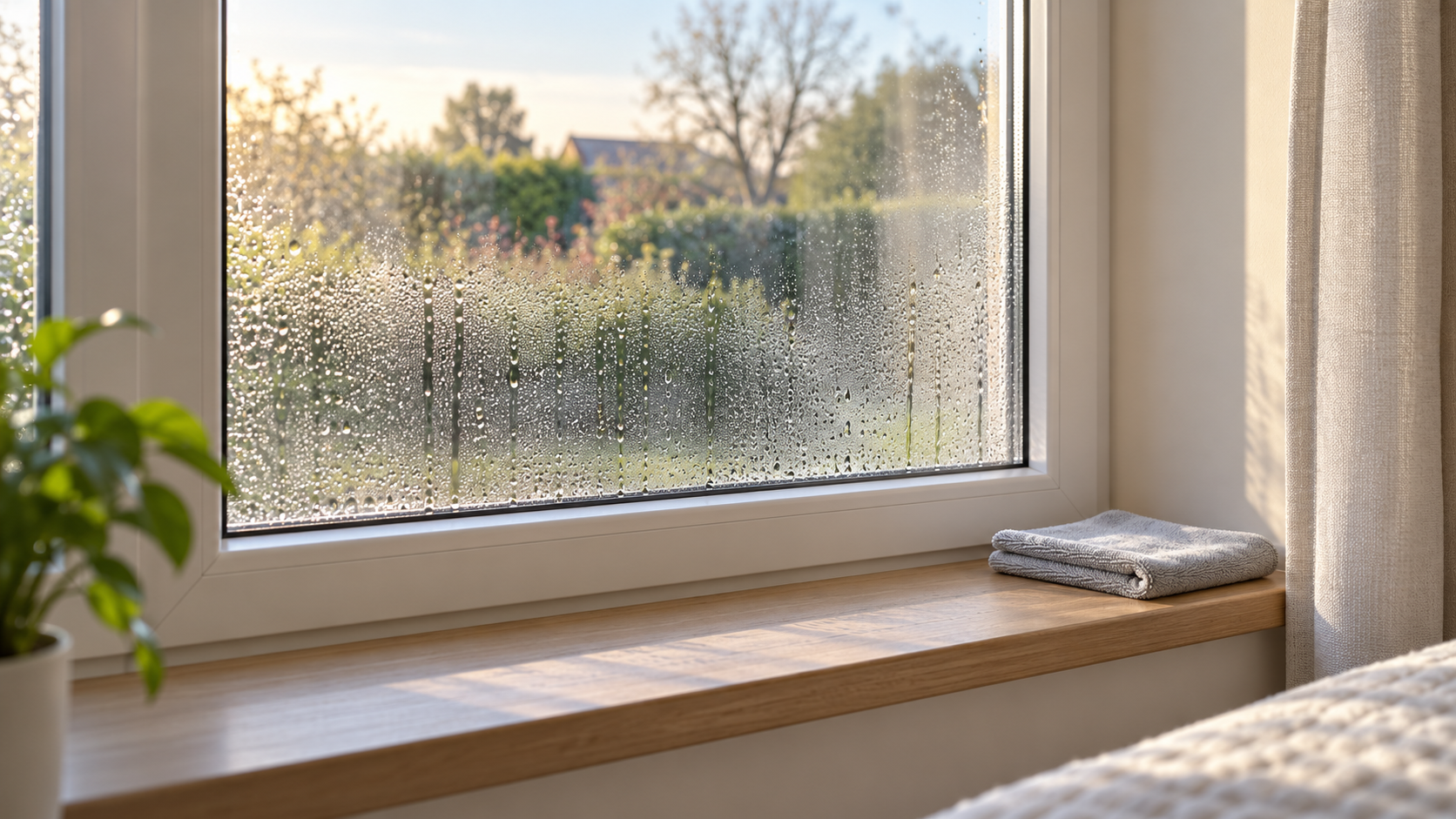
Window condensation needs a different response depending on where the water sits. Water you can wipe off from indoors calls for a moisture and temperature check. Dew on the outdoor face often needs observation. Fog trapped inside a sealed double- or triple-glazed unit needs a glazing assessment. Water entering around the frame during rain belongs on a repair list.
Start with that distinction before buying a dehumidifier or agreeing to replace a window. Two windows can look equally foggy and have completely different problems.
First, find the wet surface
#Look at the glass before wiping everything away. Take a photo showing the whole window, then a closer picture of the droplets or haze. Note whether it appeared overnight, after a shower, during rain or while air conditioning was running.
Use a clean, dry cloth on a small, easily reached patch of the room-facing glass. If the cloth removes droplets and leaves a clear patch, you have confirmed moisture on that surface. It does not establish why that surface became wet, or exclude a second problem elsewhere.
If the haze remains, check whether the exterior surface could be responsible. Inspect only from a safe position. Do not lean out, remove restrictors or climb to reach an outside pane. When neither surface is safely accessible, leave the location uncertain and ask a window professional to confirm it.
| Where the moisture appears | What it can mean | Sensible next step |
|---|---|---|
| Room-facing glass | Indoor air is meeting a surface cold enough for condensation | Dry the sill, record humidity and temperature, check moisture sources and airflow |
| Outdoor glass, often in the morning | Outdoor dew on a cool surface | Observe whether it clears as conditions change; inspect separately if water enters indoors |
| Inside a factory-sealed glazing unit | Moisture may have entered through a failed insulating-glass seal | Contact the manufacturer, installer or a qualified glazier |
| Around the frame or wall, especially during rain | Rain ingress or another building defect may be involved | Document the pattern and arrange a repair assessment |
One detail matters here: separate storm windows and secondary glazing are not always factory-sealed insulating-glass units. Moisture in their larger air gap needs advice for that particular assembly. Describe the window construction when asking for help.
Why windows become wet overnight
#Condensation forms when a surface is cold enough for water vapour in nearby air to turn into liquid. That temperature is called the dew point. The window does not make the water; it provides the surface where moisture becomes visible.
Three things interact: moisture in the air, air temperature and glass temperature. A colder night can produce wet glass even when your evening routine has not changed. Cooking, showers and drying laundry can also add moisture without any change in the weather.
Breathing adds water vapour too. That helps explain a familiar pattern: the bedroom window is clear at bedtime and wet in the morning after people have slept in a closed room. It is a useful clue, not proof that the occupants caused every damp patch in the building.
A room humidity reading also does not tell you the temperature of the glass. The centre of the room and the small pocket of air behind a blind are different locations. A comfortable-looking reading cannot, by itself, rule out condensation on a particularly cold pane or frame.
Think of the window as an observation point. Your task is to find out whether moisture needs removing, the surface needs attention, or both.
If the water is on the inside
#Protect the sill while you investigate
#Wipe up accessible water and dry the frame and sill so that runoff does not repeatedly soak finishes or nearby materials. Keep curtains and stored items out of pooled water. Put the cloth somewhere it can dry rather than leaving it wet on the sill.
Drying is immediate damage control. If the glass is wet again tomorrow, you still need to investigate the cause. A window vacuum or cloth can remove today's water without changing tomorrow's conditions.
Check whether there is also staining, softness, peeling paint or visible mould. Record those separately. A clear pane after wiping does not mean the surrounding materials are dry or undamaged.
Reduce moisture where it starts
#Use the existing bathroom and kitchen extraction as intended when bathing and cooking. Effective extraction carries moist air outdoors. A cooker hood that only recirculates air through filters does not provide that same route out of the home.
Keep shower moisture from drifting into the bedroom while using the bathroom's intended ventilation. Review where laundry dries and whether a humidifier is adding water to a room with already-wet windows. Follow appliance instructions when adjusting settings or switching equipment off.
These are checks of ordinary use. Do not alter ducting, combustion-air supplies or electrical equipment yourself. If extraction seems ineffective, ask the landlord or a qualified contractor to assess it.
For example, suppose the bedroom window becomes wet mainly after evening showers. The useful first question is whether shower moisture is being removed at the bathroom. Buying a larger appliance for the bedroom skips that investigation.
Let room air reach the glass
#Heavy curtains and tightly closed blinds can leave a colder pocket beside the window. Open window coverings when practical and keep heating outlets clear. Check behind the covering as well as on its room-facing side; a tidy-looking blind can hide a wet sill.
Keep comfort, privacy and window safety in the decision. You do not need to leave a bedroom exposed all night to prove a point. Start by opening coverings during the day, drying the area and noting whether the pattern changes.
A persistent wet strip on one frame deserves attention even if the rest of the glass clears. Note its exact position for an assessor instead of assuming every window needs the same treatment.
What humidity reading should you aim for?
#The US Environmental Protection Agency advises keeping indoor relative humidity below 60%, ideally around 30–50% where possible. Treat that as general moisture-control guidance, not a guarantee that every window will stay dry throughout winter.
Very cold glass may still collect moisture within that broad range. The EPA also publishes lower winter humidity guidance for progressively colder outdoor conditions. The practical point is that climate and window performance matter; one year-round percentage cannot settle every case.
Use a hygrometer according to its instructions and record room temperature alongside humidity if the device measures both. Choose a representative room position rather than putting it against the wet glass, directly above a heater or in a stream of shower vapour. Let it settle as the manufacturer directs.
Take readings at bedtime and when you first notice morning moisture. Add readings around activities you suspect. A short record is more useful than one isolated number, especially if the room warms substantially between checks.
Avoid chasing the lowest possible percentage. If the air already feels very dry or the window stays wet despite reasonable moisture control, ask for an assessment of the window and ventilation. More drying is not automatically the right next step.
Should you open a window, use heating or run a dehumidifier?
#Choose according to the conditions and the part of the problem you are trying to change.
Ventilation exchanges indoor and outdoor air. In cold weather, bringing in cold outdoor air and warming it can help remove indoor moisture. In warm, humid weather, bringing more untreated outdoor air indoors may increase the moisture load instead. Outdoor humidity percentages alone are difficult to compare when temperatures differ.
Use existing ventilation controls as intended. Window opening must also suit rain, security, outdoor pollution and the safety of children or pets. There is no universal instruction to leave every bedroom window open overnight.
Heating can help keep surfaces warmer. It does not itself carry water out of the home. If raising the temperature makes the humidity percentage fall, avoid treating that number alone as proof that moisture has been removed. Check the window and the broader pattern too.
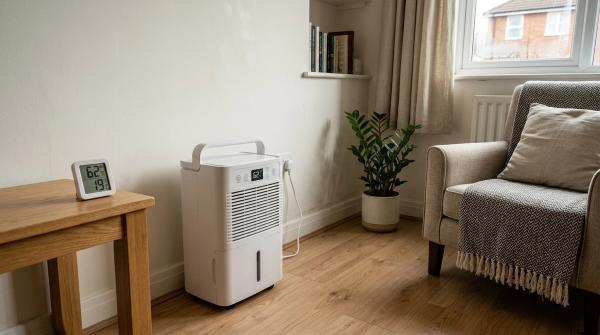
A dehumidifier removes water from air. It may help when indoor moisture remains excessive, particularly when ventilation options are limited by humid weather. It cannot repair failed glazing seals, stop rain entering a wall or replace necessary fresh-air provision.
Before purchasing one, write down the job you expect it to do. “Reduce persistent indoor moisture” is a plausible job. “Clear fog inside a sealed pane” is a different problem. If the first description fits, the existing Allblogs humidity meter and dehumidifier guide explains that buying decision in more detail.
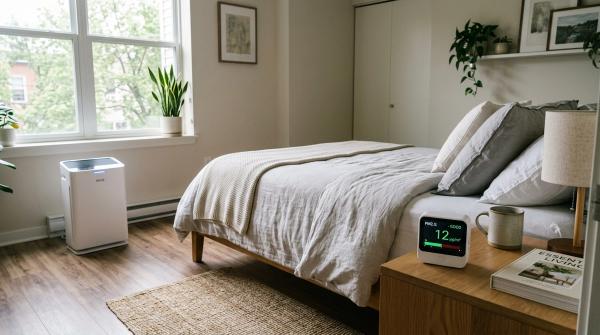
An ordinary air purifier filters pollutants rather than solving the building's moisture source. A cleaner-air display should not be used as evidence that a wet window has been fixed.
If the condensation is outside
#Outside dew can appear when exterior glass falls below the outdoor dew point. Still, clear nights followed by cool mornings are a familiar setting. Efficient insulating glass can remain cool outside because less indoor heat reaches that surface.
Look for a pattern: the room-facing glass and sill remain dry, the haze sits outside, and it clears later as conditions change. That is different from water running indoors. Exterior condensation alone does not establish that the window has failed.
You may notice it on one pane before another because exposure, shade and surface temperature differ. Do not replace a dry indoor window simply because its outdoor face fogged one morning.
If you cannot confirm which surface is wet, keep that uncertainty in your notes. “Looks outside, not safely accessible” is a better description than a confident diagnosis made from across the room.
If the fog is between sealed panes
#Double- and triple-glazed insulating units contain a sealed space between panes. Manufacturer guidance identifies moisture inside that sealed space as a sign of seal failure allowing moisture in.
This differs from drops you can wipe off a room-facing pane. A room dehumidifier cannot restore the unit's seal. Contact the installer, manufacturer or glazier with photos, the approximate installation date and any available product identification.
Ask them to confirm the location of the moisture, identify the window construction, explain repair or replacement options and check any applicable warranty. Do not assume that every case requires replacing the whole frame; equally, do not accept a cosmetic clearing treatment as proof that original insulating performance has been restored.
Avoid drilling the glazing or taking the unit apart. The useful action at this stage is a documented assessment. If this is separate secondary glazing or a storm-window gap, say so, because its moisture and ventilation arrangements differ from a sealed unit.
When it could be a leak instead
#Rain entering around a frame and condensation on glass can happen in the same home. One does not exclude the other.
Note whether water appears during wind-driven rain, begins at a particular joint or leaves a growing patch on the surrounding wall. Compare that with the fine droplets that appear across cold glass after a dry night. These observations help an assessor decide what to investigate; they are not a substitute for inspecting the installation.
For a renter, send dated photos and a clear description to the property manager promptly. Include when it happens, where the water first appears and what damage you can see. Ask for the cause to be investigated rather than requesting only repainting or a tube of sealant.
Do not cover unfamiliar frame openings with sealant. Window assemblies can include drainage paths, and changes should follow the product's instructions. Keep people away from water affecting electrical equipment and arrange qualified help.
A simple record that makes the next decision easier
#For minor recurring surface condensation without active damage, use a few mornings to collect useful observations. Do not delay reporting a leak or worsening damage to finish the record.
Record the same items each time: date, weather, room temperature, humidity, affected surface, moisture sources the evening before, ventilation used and whether the sill is wet. Photograph from a similar position. Mark an uncertain detail as uncertain.
Here are three hypothetical entries and what they would help you ask:
- Bedroom glass wipes clear indoors after shower evenings. Check bathroom extraction and the route by which moisture reaches the room.
- Outside haze clears later; indoor surfaces stay dry. Continue observing the exterior pattern before buying moisture-removal equipment.
- Haze remains inside a sealed unit after accessible surfaces are dry. Request a glazing assessment with the photos attached.
Make one manageable change at a time when conditions allow. Otherwise, changing heating, curtains, laundry location and ventilation together makes it hard to know what helped. Weather will still vary, so treat the record as practical evidence rather than a controlled test.
When to stop experimenting
#Get professional help for recurring mould, suspected hidden dampness, soft or damaged surrounding materials, persistent rain ingress or a problem that continues after reasonable moisture controls. Health Canada specifically identifies returning mould and suspected hidden contamination as reasons for professional involvement. Discuss symptoms or health concerns with a healthcare professional.
A useful handover is specific: “The lower inside glass is wet on cold mornings; the wall is also stained after heavy rain.” That gives someone two problems to check rather than one vague complaint about fog.
The next action should follow the wet surface: manage indoor moisture, observe outdoor dew, assess sealed glazing or investigate water entry. That first observation can save a lot of unnecessary purchases and repeated wiping.