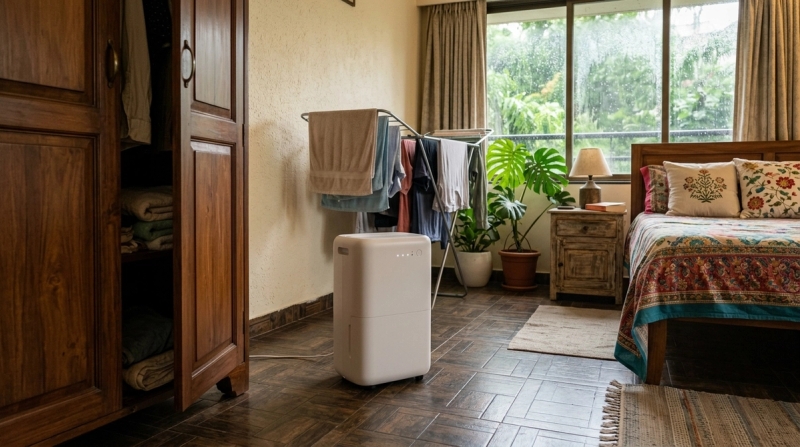
The best place for a dehumidifier is the room that feels damp, with open space around the unit and doors and windows closed while it runs. Keep it away from splashes, wet floors, heat sources, curtains and furniture. For wardrobes, run the machine in the room with cupboard doors open rather than placing it inside a closed cabinet.
Why placement matters
#A dehumidifier pulls moist air in, removes water from it, and sends drier air back into the room. If the intake or outlet is blocked, the machine may run longer, collect less water and still leave the space feeling sticky or musty.
Good placement can help with damp bedrooms, window condensation, indoor laundry, musty wardrobes and monsoon humidity in apartments. It cannot fix leaks, severe mold, water damage or unsafe electrical conditions, so treat it as a moisture-control tool, not a repair service.
Room-by-room dehumidifier placement table
#Quick checklist before switching it on
#- Place the unit on a flat, stable surface.
- Leave roughly 20–30 cm of clear space around it, or follow the brand manual if it asks for more.
- Keep the air intake and outlet clear.
- Close doors and windows in the room you are treating.
- Keep it away from splashes, wet floors and dripping laundry.
- Keep it away from heaters, direct sunlight and cooking heat.
- Make sure the tank is easy to remove and empty.
- If using a drain hose, check that water flows safely and the hose is not kinked.
- Keep the filter accessible for cleaning.
- Use a humidity meter to check whether the room is actually too humid.
Where to place a dehumidifier in a bedroom
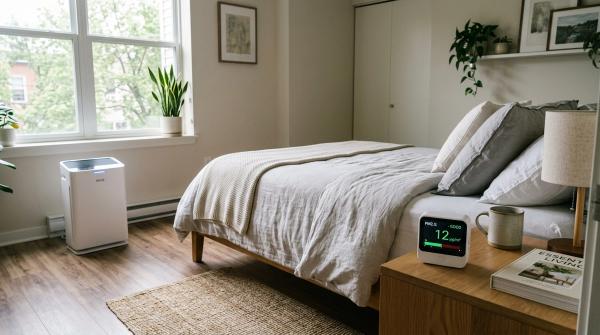
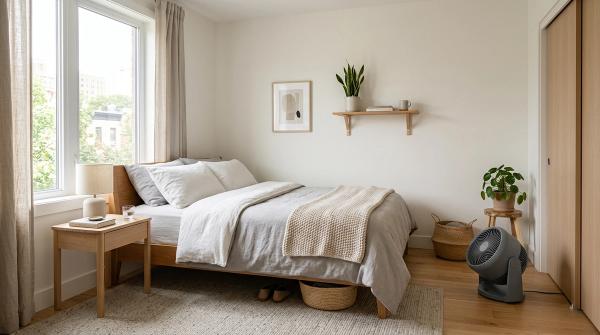
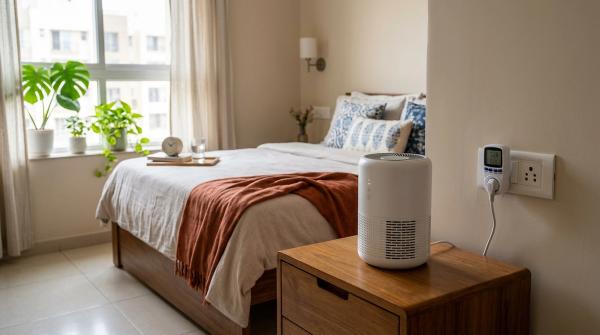
#For a bedroom, place the dehumidifier on the floor in an open area. A spot near a damp window or musty wall can work well, but do not push the unit right against the wall. Keep bedding, curtains, rugs and laundry baskets away from the vents.
Bedrooms often contain moisture-holding materials such as mattresses, clothes, curtains and upholstered furniture. During monsoon, these can make the room feel damp even after the rain stops. A dehumidifier works best when the door is closed and the machine is treating one defined room rather than the whole flat.
If noise is a problem, run the unit during the afternoon or evening and lower the setting at night. Do not place it where you may trip over it in the dark.
Where to place a dehumidifier for bathrooms
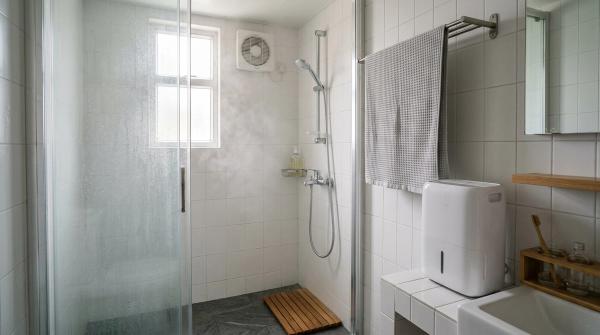
#Bathrooms need extra caution because steam, wet tiles and electricity do not mix well. In many homes, the safer setup is to place the dehumidifier just outside the bathroom door after bathing, then leave the door open so moist air can move toward the machine.
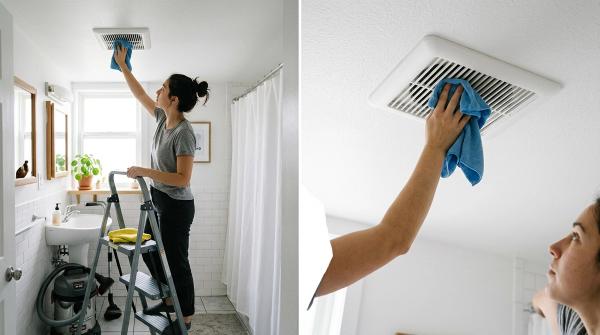
If you use a unit inside a large bathroom, keep it in a clearly dry area away from the shower, bathtub, sink and wet floor. Never run a cord across wet tiles. Use an exhaust fan first for routine shower steam; a dehumidifier is more useful when towels, corners or nearby walls stay damp even after ventilation.
Where to place a dehumidifier for wardrobes
#A dehumidifier should usually not go inside a closed wardrobe. It needs airflow, and a packed cupboard can block vents and trap heat.
A better setup is to place the unit in the bedroom or dressing area, open the wardrobe doors and give the cupboard time to air out. Open drawers if possible and avoid packing clothes too tightly. For small spaces such as shoe boxes, document boxes, camera bags and drawers, passive moisture absorbers or silica gel packs are usually more practical.
Where to place a dehumidifier in the living room
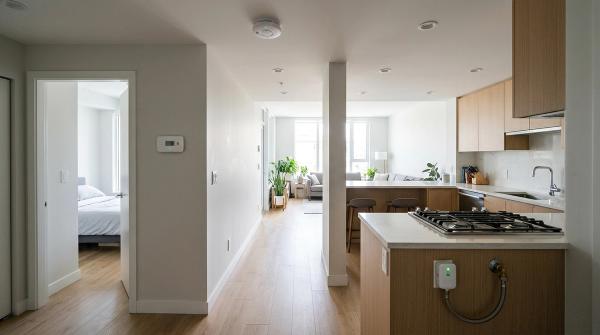
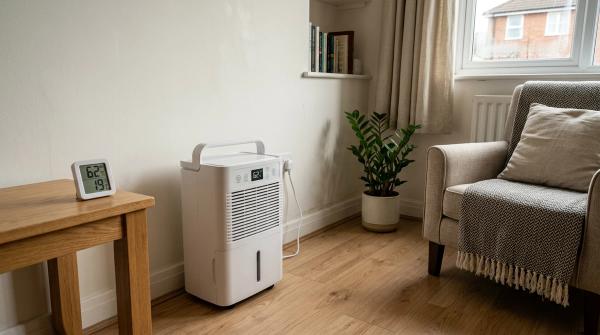
#Living rooms are often larger and connected to balconies, kitchens or hallways. Place the unit in an open spot with good airflow, away from sofas, curtains, sunlight and heat sources. If your living room is open-plan, close available doors or treat a smaller zone first.
Do not hide the unit behind furniture just because it looks untidy. A hidden dehumidifier is usually a less effective dehumidifier.
Where to place it for indoor laundry
#For drying clothes indoors, choose the smallest practical room. Put the laundry on a rack, keep the dehumidifier nearby, and aim the dry air outlet toward the clothes if the unit design allows. Keep it away from dripping garments and wet floors.
This setup is especially useful in apartments during Indian monsoon, when balconies stay wet and clothes dry slowly. The key is to close doors and windows so the machine is not trying to dry fresh humid air from outside.
Spots to avoid in any room
#Avoid placing a dehumidifier:
- Tight against a wall
- Behind curtains or sofas
- Under a table with poor airflow
- Inside a closed wardrobe
- On an uneven or wet surface
- Near showers, sinks or bathtubs
- Under dripping laundry
- Near stoves, heaters or direct sunlight
- Where children or pets can knock it over
- Where the tank or filter is hard to access
Do you really need a dehumidifier?
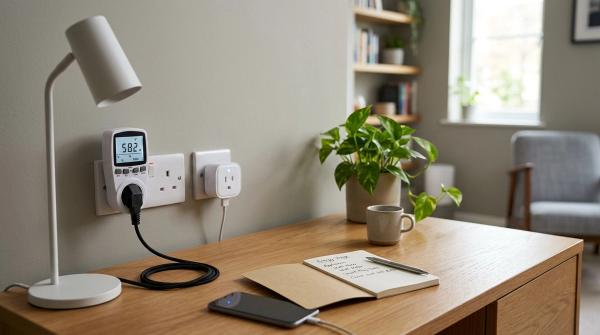
#Before buying one, use a simple humidity meter or hygrometer. The EPA recommends keeping indoor humidity below 60%, ideally between 30% and 50% relative humidity. CDC mold guidance also advises keeping humidity no higher than 50% all day where possible.
If a room is only briefly humid after cooking or bathing, ventilation may be enough. If readings stay high, clothes smell musty, windows sweat or damp corners keep returning, a dehumidifier may help. For active leakage, recurring damp patches, visible mold over a large area, electrical faults or flooding, call a qualified professional instead of relying on appliance placement.
Final takeaway
#Good dehumidifier placement is simple: keep it in the damp room, keep airflow open, close windows and doors, and keep the appliance away from water and heat. Bedrooms, bathrooms, wardrobes, living rooms and laundry areas all need slightly different setups, but the rule is the same: let the machine breathe and measure humidity before assuming you need to run it all day.