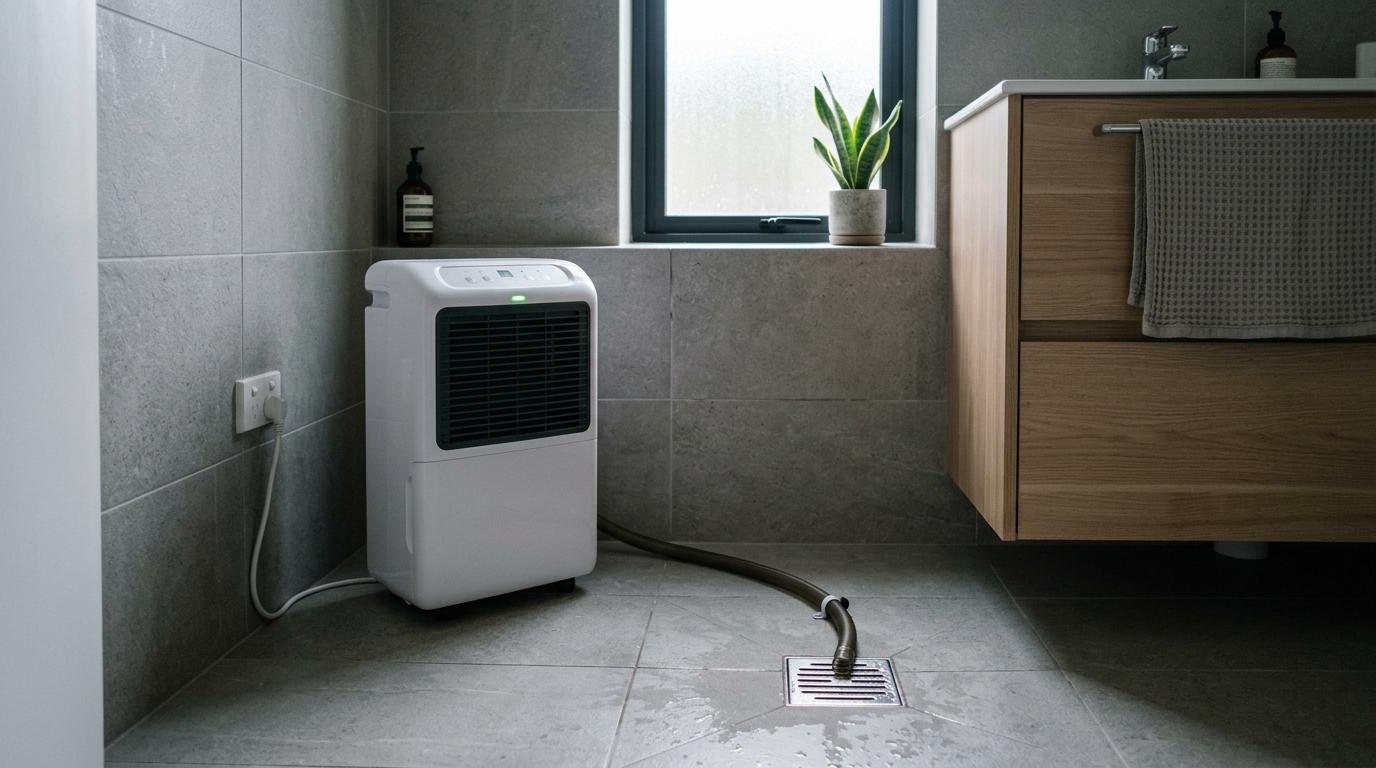
If you’re choosing between a dehumidifier drain hose vs tank, here’s the simplest way to think about it:
Use the water tank if you rent, move the dehumidifier from room to room, or don’t have a safe drain nearby. Use a gravity drain hose if the unit can sit close to a lower bathroom, utility, floor, or covered balcony drain. Choose a pump dehumidifier only if you need continuous drainage but the water has to travel upward, such as into a sink.
That’s the quick answer. But in real apartment life, the “best” option depends less on the dehumidifier and more on your home’s layout.
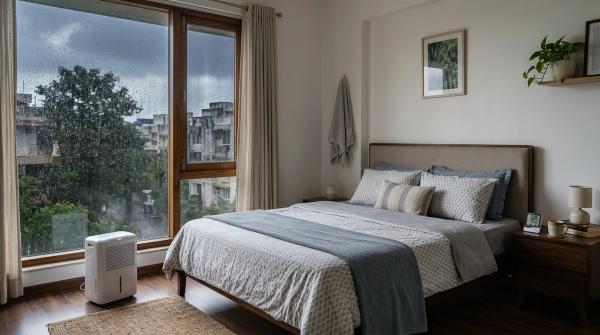
Humidity can make a flat feel sticky, heavy, and musty. This is especially common during the Indian monsoon, but it can also happen in rooms with poor ventilation, damp walls, closed windows, or laundry drying indoors. A dehumidifier helps by pulling extra moisture out of the air. Then comes the practical question: where does all that water go?
The EPA recommends keeping indoor relative humidity below 60%, and ideally between 30% and 50%. For most apartment users, we’re talking about portable room dehumidifiers, not whole-home systems.
Most portable dehumidifiers handle collected water in one of three ways:
- A built-in dehumidifier water tank
- A gravity-based dehumidifier continuous drain hose
- A built-in or add-on dehumidifier pump
Let’s break down what each one actually means in a normal apartment setting.
What Each Drainage Option Means
#1. Dehumidifier Water Tank
#A dehumidifier water tank is the built-in bucket inside the machine. As the dehumidifier pulls moisture from the air, the water collects in this tank. When the tank fills up, the unit usually stops automatically until you empty it.
This is the easiest setup by far. You plug in the machine, turn it on, and empty the tank into a sink, toilet, or bathroom drain whenever it gets full.
For renters, this is often the most practical choice. There’s no plumbing change, no drilling, no permanent setup, and no hose running across the floor. You can use the same unit in the bedroom one day, near a damp wardrobe the next, and in the living room after that.
The catch is simple: you have to empty it.
During very humid weather, especially in monsoon season, the tank can fill quickly. In some homes, you may need to empty it once or twice a day. If it fills while you’re sleeping or away at work, the dehumidifier will stop running until you come back and empty it.
Best for: renters, small flats, bedrooms, occasional dampness, flexible use, and homes without a safe nearby drain.
2. Gravity Drain Hose
#A dehumidifier with drain hose allows water to flow out through a hose instead of collecting in the tank. The hose connects to the drain outlet on the dehumidifier and carries water into a nearby drain.
This is often called dehumidifier continuous drain, but there’s one important thing to remember: gravity does the work.
The hose does not push water upward. Water must flow downward from the dehumidifier into a lower drain. That means placement matters a lot.
For gravity drainage to work well:
- The drain must be lower than the dehumidifier’s drain outlet
- The hose should slope downward smoothly
- There should be no kinks, loops, or uphill sections
- The hose should not be squeezed under furniture or doors
A gravity drain hose can work very well in an apartment if the unit can sit near a bathroom floor drain, laundry drain, utility area, wet balcony drain, or similar outlet. It’s less useful if the drain is far away, across a doorway, or in a place where people walk often.
Best for: continuous use near a lower drain, especially bathrooms, laundry corners, utility spaces, or covered balcony areas.
3. Pump Setup
#A pump setup is useful when gravity drainage won’t work. A dehumidifier pump actively pushes water through a tube, so the water can move upward or across to a sink, drain pipe, or another outlet, depending on the model.
This can be helpful if you want hands-free drainage but don’t have a floor drain nearby. For example, your dehumidifier may need to sit in a damp bedroom, storage area, or utility corner, while the nearest practical outlet is a kitchen sink or higher drain.
The tradeoff is cost and complexity. Pump models usually cost more than basic units. Pumps can also add some noise, and because they have moving parts, they may need more attention over time.
Best for: continuous drainage when the outlet is higher than the dehumidifier, or when emptying the tank frequently is not practical.
Comparison Table: Tank vs Gravity Hose vs Pump
#When a Dehumidifier Water Tank Is Enough
#For many apartment homes, the tank is enough.
Choose the tank if:
- You rent and cannot make plumbing changes
- You move the dehumidifier between rooms
- You only use it for a few hours a day
- You don’t have a safe floor drain nearby
- You don’t want a hose lying across the floor
- The dampness is seasonal or limited to one room
A tank setup also gives you a clear sense of how much moisture the unit is pulling from the air. If the tank fills very fast, your room may be extremely humid, or the dehumidifier may be working in tough conditions.
This is common during monsoon months, especially when clothes are dried indoors or windows stay shut for long periods.
The main inconvenience is emptying the tank. A full tank can be heavy and awkward, especially for older adults or anyone with back, wrist, or mobility issues. If you expect to empty it often, look for a unit with a comfortable handle and a bucket that slides out easily.
Also check how smoothly the tank fits back into the machine. Some tanks are a little fussy. If they aren’t seated properly, the dehumidifier may not restart.
When a Gravity Drain Hose Helps
#A gravity hose makes sense when the dehumidifier can stay in one place near a suitable drain.
Choose gravity drainage if:
- You have a bathroom, utility area, or covered balcony drain nearby
- The drain is lower than the dehumidifier’s drain outlet
- The hose can slope downward the whole way
- The hose will not cross a walking path
- You want the unit to run for long periods without emptying the tank
This setup can be very useful during heavy humidity months. If your flat has a damp bathroom wall, laundry corner, or enclosed balcony, a dehumidifier with drain hose can save you from emptying the tank every few hours.
But gravity drainage is not automatic magic. If the hose goes upward, gets pinched, bends sharply, or sits in a loop, water may not drain properly. In some units, the water may simply return to the bucket. In others, it may leak around the hose connection.
A good rule of thumb: if water can’t roll downhill through the hose, the setup probably won’t work.
When a Pump Is Worth It
#A pump is worth considering only when you genuinely need continuous drainage and gravity drainage is not possible.
Choose a pump setup if:
- You are away from home for long hours
- The tank fills too often
- There is no floor drain nearby
- The only practical outlet is a sink or higher drain
- You need the dehumidifier to run for extended periods with less manual emptying
A pump can be useful in basement-style apartments, utility rooms, or flats where the dehumidifier cannot sit near a lower drain. It gives you more flexibility than a gravity hose, but it also costs more.
If you’re home most of the day and don’t mind emptying the tank, you probably don’t need a pump. But if your dehumidifier runs daily through a long humid season and the tank keeps filling too fast, the extra cost may feel worth it.
Apartment and Renter Setup Checklist
#Before choosing between a tank, gravity hose, or pump, look at your apartment carefully. A setup that sounds perfect on paper can become annoying in daily use.
1. Check Where the Water Can Go
#Walk around your home and identify possible drainage points:
- Bathroom floor drain
- Shower area drain
- Utility or laundry drain
- Covered balcony drain
- Kitchen sink
- Washing machine drain area, if suitable for your setup
If none of these are practical, the tank is usually the safest choice.
2. Check Drain Height
#For gravity drainage, the drain must be lower than the dehumidifier’s drain outlet. Not just lower than the unit’s wheels or feet, but lower than the actual outlet where the hose connects.
If the drain is higher, use the tank or choose a pump model.
3. Avoid Trip Hazards
#Do not run a hose across:
- Doorways
- Hallways
- Bedroom walking paths
- Kitchen work areas
- Places where children, guests, or older adults may trip
A hose that causes someone to fall is not a good apartment solution, even if it drains perfectly.
4. Keep the Unit Level and Stable
#If you raise the dehumidifier to improve the hose slope, place it on a sturdy, level surface. Don’t balance it on a weak stool, a stack of boxes, or an uneven stand.
It may look fine at first, but a vibrating unit can slowly shift over time.
5. Secure the Hose End
#If the hose drains into a sink or drain opening, make sure the end cannot slip out. A loose hose can spill water onto the floor, and you may not notice until it has already made a mess.
6. Test It While You’re Home
#After setting up a continuous drain, run the dehumidifier while you’re at home. Check it after 30 minutes, then again after a few hours.
Look for:
- Drips around the hose connection
- Water collecting in the tank
- Water pooling under the unit
- Kinks or flattened hose sections
- Hose movement near the drain
Don’t leave a new hose setup unattended until you’re sure it drains properly.
Maintenance and Safety Notes
#A dehumidifier is simple to use, but it still needs basic care.
Clean the Water Tank
#If you use the tank, empty it regularly and wash it with mild soap and water. Standing water can get dirty and start to smell if it sits too long.
Check the Hose
#If you use continuous drainage, inspect the hose from time to time. Make sure it is not blocked, kinked, slimy, or leaking. A blocked hose can stop drainage and may cause water to return to the tank or leak out.
Keep Filters Clean
#Follow the manufacturer’s instructions for cleaning the filter. A clogged filter can reduce performance, increase noise, and make the unit work harder than it should.
Don’t Expect It to Remove Mold
#A dehumidifier can help control indoor humidity, but it does not remove existing mold, repair water damage, or fix a hidden leak.
If your apartment already has visible mold, damp patches, peeling paint, or a constant leak, deal with the moisture source first. Renters should report structural dampness or leaks to the landlord, society office, or building manager.
Keeping humidity below 60% can help with moisture control, but it is not the same as proper mold cleaning or repair work.
Don’t Drink Dehumidifier Water
#Water collected in a dehumidifier tank is not drinking water. It may contain dust, microbes, and material from inside the machine. Do not use it for drinking or cooking.
Buying Decision Flow
#Still unsure? Use this quick guide.
Choose a Dehumidifier Water Tank If:
#- You want the simplest setup
- You move the unit around
- You have no nearby drain
- You are okay emptying water manually
- You live in a rented flat and want no installation hassle
Choose Gravity Continuous Drain If:
#- The unit can stay near a lower drain
- The hose can slope downward safely
- You want less daily emptying
- You can keep the hose away from walking paths
Choose a Pump Setup If:
#- You need continuous drainage
- The drain or sink is higher than the unit
- The tank fills too often
- You are willing to pay more for convenience
For most apartment residents, it’s best to start simple. A tank is enough for occasional use and room-to-room drying. Upgrade to a gravity hose if your layout supports it. Choose a pump only when your drainage situation truly needs it.