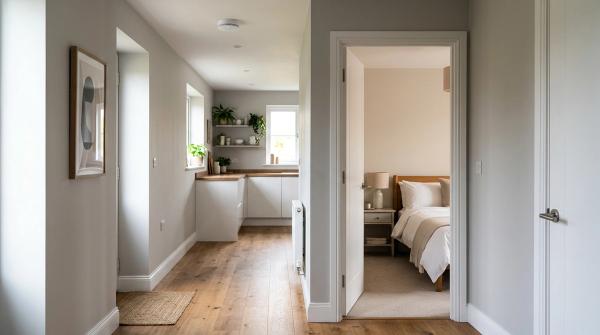
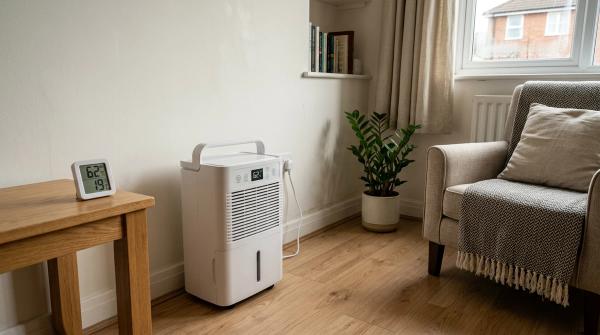
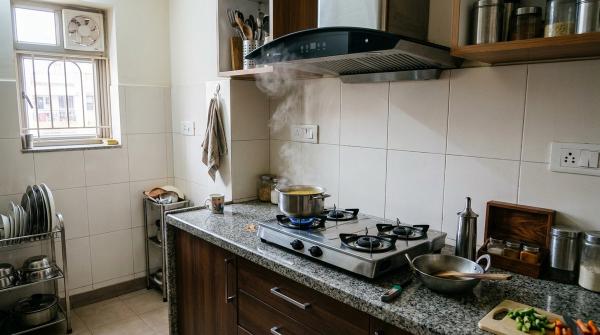
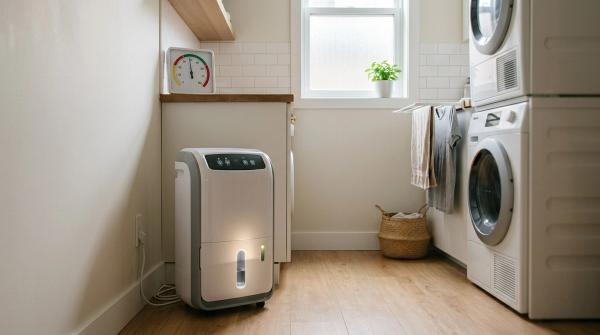
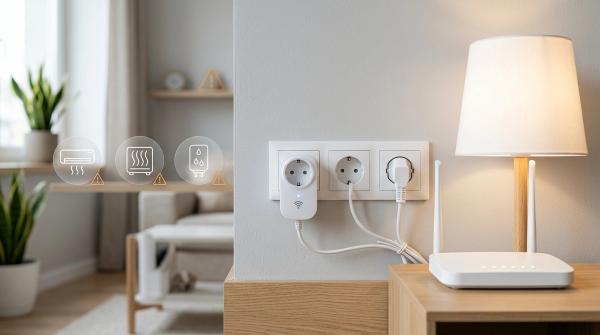
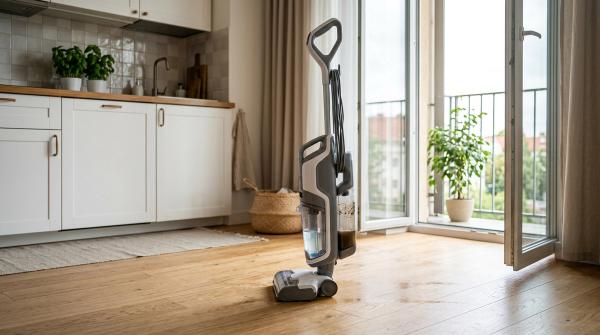
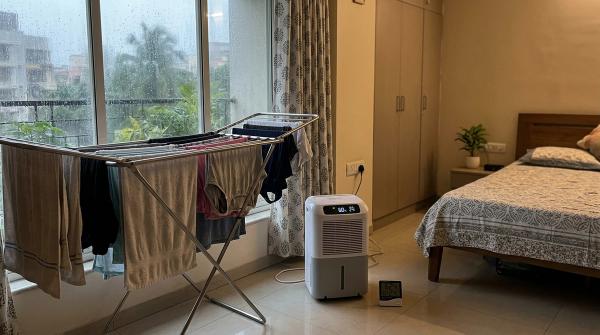
Use auto mode for normal daily use, sleep mode at night after the room is already cleaner, and manual high before or after cooking, cleaning, dusting, smoke or outdoor pollution spikes. Auto mode is convenient, sleep mode is quiet, and manual mode gives you control when you already know the air is getting worse.
What auto mode actually does
#Most modern air purifiers have a particle sensor, often called a PM2.5 sensor. PM2.5 refers to very fine particles in the air, including particles from dust, smoke, pollution and other sources.
When the sensor detects more particles, the purifier increases the fan speed. When the air looks cleaner to the sensor, the fan slows down. That is basically auto mode.
It is useful because you do not have to keep changing settings yourself. If someone opens a balcony door, shakes a blanket, sweeps the floor, or dust enters from outside, the purifier may detect the change and respond.
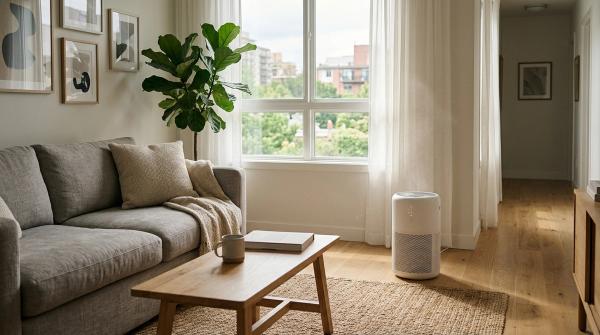
For a living room, bedroom during the day, home office or rented apartment, auto mode is often the most convenient everyday setting.
But auto mode is not perfect. Most purifier sensors are better at detecting particles than smells or gases. So the room may smell of cooking, cleaning liquid, dampness or smoke, but the purifier may not always react strongly if the sensor does not detect enough particles.
Different brands also behave differently. One purifier may speed up quickly. Another may wait longer. Some sensors are more sensitive than others. Some are placed in a way that delays detection if the polluted air does not reach the sensor quickly.
Think of auto mode as a good daily helper, not a mind reader. It works well for regular dust and particles. It is less dependable when you already know pollution is about to happen, such as frying, tadka, incense, cleaning sprays, smoke or a bad outdoor pollution day.
What sleep mode actually does
#Sleep mode is designed for comfort.
In most air purifiers, sleep mode usually does three things:
- Runs the fan at a very low speed
- Dims or switches off display lights
- Avoids sudden loud fan changes at night
This is useful for bedrooms. If you leave the purifier on auto mode while sleeping, the fan may suddenly speed up if the sensor detects a spike. That can happen because of dust from bedding, outdoor air leaking in, someone opening the door, or movement in the room.
If you are a light sleeper, that sudden fan noise can be annoying. Sleep mode avoids that. It keeps the room quieter and darker, which is what most people actually want at night.
But there is a trade-off: low airflow.
An air purifier cleans by pulling room air through its filters. When the fan runs very slowly, less air passes through the machine. So sleep mode is better at maintaining reasonably clean air than quickly cleaning a dusty or smoky room.
A better routine is simple: run the purifier on manual high for some time before bed, with the bedroom door closed. Then switch to sleep mode when you are ready to sleep.
That way, sleep mode is not doing all the hard work from scratch. It is just helping keep the room stable overnight.
What manual mode does
#Manual mode gives you direct control. Instead of letting the purifier decide, you choose the fan speed yourself: low, medium, high, turbo or whatever your model offers.
This is the most predictable mode. And it is often the one people forget to use.
Manual high is useful when you already know the air is going to get worse.
Use manual high:
- Before frying, roasting, grilling or heavy cooking
- During and after dusting, sweeping or cleaning
- When outdoor pollution or dust has entered the room
- When windows were open during bad air or construction dust
- After incense, smoke or any strong indoor particle source
- Before sleeping, if the bedroom has been closed and dusty all day
Auto mode usually reacts after the sensor notices the pollution. Manual high lets you act before the room gets bad.
Manual medium is a good middle ground. It gives better airflow than low without being as loud as high. It works well on polluted days, in dusty apartments, or in rooms where people are moving around often.
Manual low is good when you want quiet, steady filtration. It is slower, but predictable. It is useful during work calls, study time, reading, or when auto mode keeps speeding up and slowing down in a distracting way.
The downside of using high all day is obvious: it is louder, uses more electricity than lower speeds, and may load the filter faster, especially in dusty homes.
In many Indian cities, filter replacement is not cheap. So it makes sense to use high when it helps, not as the default all day.
Auto vs sleep vs manual: quick comparison
#What about CADR?
#When comparing air purifiers, you may see something called CADR, or Clean Air Delivery Rate. AHAM CADR is a standardized way to compare how much clean air a purifier can deliver for smoke, dust and pollen.
CADR is useful when choosing a purifier. But CADR is not the same as the mode you use every day.
A purifier may have a strong CADR rating on high speed. But if you always run it in sleep mode, it is moving much less air than that rating suggests.
This is why a purifier can look powerful on paper but feel slow in real life. It may not be the machine’s fault. It may simply be running on a very low fan speed most of the time.
The practical rule is easy: higher fan speed usually cleans faster. Lower fan speed is quieter.
Choose the setting based on what is happening in the room, not only what looks neat on the display.
India-aware tips for apartments, dust, cooking and pollution
#Using an air purifier in an Indian apartment can be very different from using one in a tightly sealed home elsewhere. Dust, traffic pollution, construction, cooking fumes, open windows, balconies, corridor air and gaps around doors all affect indoor air.
1. City dust and outdoor pollution
#In cities with heavy dust or seasonal pollution, your purifier may run faster on auto mode more often. That does not always mean the purifier is faulty. It may simply be reacting to the air.
If outdoor pollution is clearly bad, or if dust is entering through windows and balconies, manual medium can be more useful than waiting for auto mode to respond.
If pollution suddenly enters the room, use manual high for a while. Once the room feels better, switch back to auto or medium.
2. Cooking smoke, frying and tadka
#Indian cooking can create short but strong bursts of smoke, oil particles and odours. Frying, roasting spices, tempering, making tadka, or using very hot oil can change the air quickly.
Do not wait for the purifier to notice.
If you have a kitchen exhaust fan or chimney, use it. Then switch the purifier in the nearby living room or dining area to manual high before the smoke spreads.
Keep it running on high for a while after cooking. Once the air feels clearer, return to auto mode or manual low.
An air purifier can help reduce particles, but it should not be treated as a replacement for kitchen ventilation.
3. Bedrooms near busy roads
#If your bedroom faces a main road, particles may enter through window gaps, balcony doors or small leaks. Auto mode may respond to this, but if the fan keeps changing speed at night, it can disturb your sleep.
Try this routine:
- Run manual high before bed
- Keep the bedroom door closed
- Switch to sleep mode when you are ready to sleep
If outdoor air quality is poor, avoid opening windows unnecessarily at night. If outdoor air is acceptable, ventilate earlier in the evening and then close the room before sleeping.
4. Electricity and filter cost
#Air purifiers usually use less power on low speed and more power on high speed. But for many homes, especially dusty apartments, filter cost can be the bigger long-term expense.
Running high all day can load the filter faster. That does not mean you should avoid high. It means you should use it when it actually helps.
A practical pattern looks like this:
- High when pollution is obvious or expected
- Medium during ongoing dusty or polluted periods
- Auto for normal daily use
- Sleep mode at night after pre-cleaning the room
This is more realistic than keeping the purifier on one setting forever.
5. Renters and small apartments
#If you rent, you may not be able to change windows, seal gaps, install a better exhaust system, or modify ventilation. That makes placement and settings even more important.
Keep the purifier where air can move freely around it. Do not block the intake or outlet with curtains, furniture, bags, boxes or drying clothes.
Use manual high during obvious pollution events. Once the room settles, go back to auto, medium or low.
The setting that matters more than any button: source control
#An air purifier helps, but it cannot solve every indoor air problem by itself.
The EPA emphasizes source control and ventilation as important parts of indoor air quality. In plain language: reduce the pollution source first if you can, ventilate when outdoor air is suitable, and use the purifier to reduce what remains.
For example, if cooking smoke is trapped indoors every day, the purifier will help, but an exhaust fan or chimney matters too.
If windows are open during a pollution spike, the purifier may keep working hard without catching up.
If strong cleaning products are used in a closed room, the purifier may not remove all fumes, especially gases or vapours.
Before blaming the purifier, ask:
- Is cooking smoke being exhausted outside?
- Are windows open when outdoor pollution is high?
- Is dust entering from the balcony, hallway or nearby construction?
- Are strong cleaning products being used in a closed room?
- Is the purifier too small for the room?
- Is the purifier placed in a blocked corner?
- Is the filter overdue for replacement?
- Is the fan speed too low for the situation?
This is general appliance guidance, not medical advice. If someone at home has asthma, severe allergies, breathing problems or another health condition, speak with a qualified healthcare professional for personal advice.
Simple bedroom checklist
#Before bed
#- Close the bedroom door.
- Run the purifier on manual high for some time.
- Keep the intake and outlet clear.
- If outdoor air is acceptable, ventilate earlier in the evening.
- Close windows later if outdoor pollution, dust or noise is an issue.
At bedtime
#- Switch to sleep mode if fan noise or lights disturb you.
- Use manual low if you prefer steady airflow and your purifier lets you dim the display.
- Do not expect sleep mode to quickly clean a dusty room from scratch.
In the morning
#- Ventilate if outdoor air quality is acceptable.
- Check if dust is collecting near windows, curtains or under the bed.
- Return the purifier to auto mode or manual low for the day.
Simple living room checklist
#Normal daytime
#- Use auto mode for hands-off daily dust control.
- Use manual low if you want quiet, steady operation.
- Use manual medium if the room is busy or outdoor dust is persistent.
Cooking time
#- Turn on kitchen ventilation if available.
- Switch the purifier to manual high before smoke spreads.
- Keep it on high after cooking until the air improves.
- Then return to auto or low.
Cleaning time
#- Use manual high before dusting, sweeping or vacuuming.
- Let the purifier run after cleaning.
- Keep airflow clear around the machine.
- Avoid blocking it with curtains, furniture or drying clothes.
Pollution or dust spike
#- Close windows if outdoor air is the source.
- Use manual high or medium instead of waiting for auto mode.
- Return to auto once the room stabilizes.
So, which setting should you use most?
#For most homes, the best pattern is:
- Auto mode for normal daily use
- Manual high for cooking, cleaning, dust, smoke or pollution spikes
- Manual medium for ongoing dusty or polluted periods
- Manual low for quiet, steady background filtration
- Sleep mode after the bedroom has already been cleaned
Think of it this way:
Auto mode is convenience.
Sleep mode is comfort.
Manual mode is control.
If you use sleep mode all day, the purifier may be too slow for real dust, smoke and pollution.
If you use high all day, it may be noisy and load the filter faster.
If you only use auto mode, you may miss moments where the sensor does not react the way you expect.
The best air purifier setting is not one button forever. It is the right button for what is happening in the room.