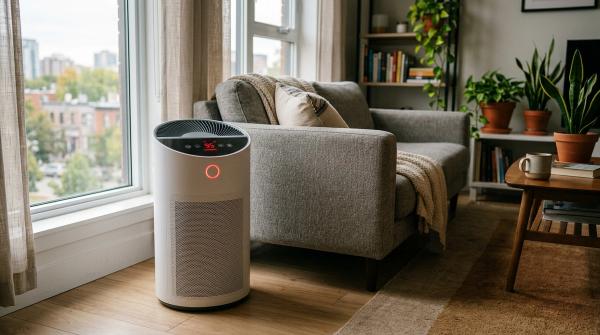
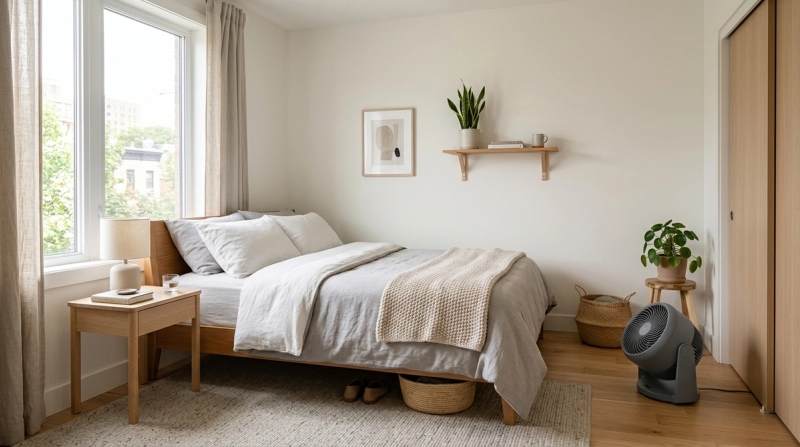
The best place to put an air circulator in a small room is usually a corner, aimed diagonally across the room or slightly upward toward the ceiling.
It sounds almost too simple, but that small change can make a big difference.
Instead of blasting air straight at your face, the circulator gets more room to work. The airflow travels farther, hits a wall or ceiling, and starts moving around the space. That helps break up the stuffy pockets that tend to collect near beds, wardrobes, desks, and corners.
If you use an AC, place the air circulator near or below the AC airflow and angle it upward or outward into the room. You want the circulator to help spread the cool air, not push against it.
This guide is mainly for small bedrooms, rentals, studio apartments, and compact rooms where you do not have much floor space to experiment with.
Quick Answer: Best Air Circulator Placement
#For most small rooms, the best air circulator placement is:
- In a corner
- Aimed diagonally across the room
- Tilted slightly upward
- Kept clear of beds, curtains, sofas, cabinets, and laundry
- Set to a gentle or medium speed, not full blast all the time
If the room has AC, place the air circulator near the AC airflow and point it toward the warmer side of the room.
If the room has a window, face the circulator outward to push hot air out, or inward when the outdoor air is cooler than the air inside.
Placement Goal vs Best Position
#How Air Circulators Work in Small Rooms
#An air circulator is not quite the same thing as a regular fan.
A regular fan is usually for direct comfort. You sit in front of it, it blows air on you, and you feel cooler. Easy.
An air circulator is designed to move air around the room. It sends air in a more focused stream. When that stream hits a wall, ceiling, or open area, it helps create a loop of moving air.
That is why the answer to where to put an air circulator is not always “right in front of you.” That might feel nice for a few minutes, but it does not always help the rest of the room.
In a small room, an air circulator can help with:
- Stuffy corners
- Uneven AC cooling
- Hot air trapped near the ceiling
- Indoor clothes drying
- Moving air from one room to another
- Making a bedroom feel less closed in
- Improving comfort without buying another cooling appliance
One important thing to remember: an air circulator does not lower the actual room temperature like an AC does. It moves air. That moving air can make your body feel cooler, and it can help your AC or open window work better.
Also, fans cool people, not empty rooms. If no one is in the room, turn it off. There is no real benefit to circulating air for furniture.
Best Overall Air Circulator Placement for a Small Room
#For most small rooms, start with this setup:
- Put the air circulator in a corner.
- Aim it diagonally toward the opposite wall.
- Tilt the head slightly upward.
- Keep the airflow path as open as possible.
- Start on low or medium speed, then adjust.
This gives the air more space to travel. Instead of hitting your bed, desk, or chair immediately, the air moves across the room and bounces back into circulation.
Small rooms can be surprisingly tricky. One chair, cupboard, or pile of laundry can change the airflow more than you would expect. So if the first spot does not feel right, move the unit a little.
Even shifting it one or two feet can make the room feel more balanced.
A good setup should make the room feel gently active. You should notice that the air feels fresher, but you should not feel like the circulator is attacking you.
Air Circulator Placement in a Bedroom
#An air circulator for bedroom use should feel comfortable. Not too loud, not too direct, and definitely not placed where you will trip over the cord at 2 AM.
Bedrooms are different from living rooms because you may leave the unit on while sleeping, reading, or working quietly. Direct airflow can feel great at first, but after a few hours it may dry your eyes, make you feel chilly, or just become annoying.
Bedroom Placement Checklist
#- Place the air circulator in a corner if possible.
- Aim it diagonally across the room.
- Tilt the airflow above the bed, not straight at your face.
- Keep it away from curtains, bedsheets, and loose clothes.
- Use a lower speed at night.
- Keep cords away from walking paths.
- If using a window, decide whether you want to pull air in or push air out.
Where to Put It Near the Bed
#If your bed takes up most of the room, avoid placing the air circulator right beside your pillow. It may feel refreshing for ten minutes, then too much for the rest of the night.
Better options include:
- Opposite corner, aimed above the bed
- Side wall, aimed toward the ceiling
- Near the door, aimed into the room if the hallway air feels cooler
- Near the window, facing outward if warm air is trapped inside
For sleeping, indirect airflow is usually better. You want the whole room to feel lighter and less stuffy, not a constant stream of air hitting your nose all night.
Air Circulator Placement With AC
#Using an air circulator with AC is one of the best ways to use it, especially in a small apartment or bedroom.
AC units often cool the area closest to them first. Meanwhile, the far side of the room can still feel warm, especially if a bed, sofa, wardrobe, or curtain blocks the airflow.
The air circulator helps carry that cool air farther into the room.
AC Room Checklist
#- Find where the AC air is blowing.
- Place the circulator near or below that airflow.
- Angle it upward or outward into the room.
- Do not block the AC intake or outlet.
- Keep furniture out of the airflow path.
- Do not point the circulator against the AC airflow.
- Turn it off when the room is empty.
Best Placement for a Window AC
#If you have a window AC, place the air circulator a short distance inside the room. Do not press it directly against the AC unit.
Aim the circulator so it catches some of the cooled air and pushes it toward the middle or far side of the room.
If the AC is on one wall and your bed or desk is on the opposite side, a diagonal angle usually works well. This helps reduce that annoying “cold near the AC, warm everywhere else” feeling.
Best Placement for a Split AC
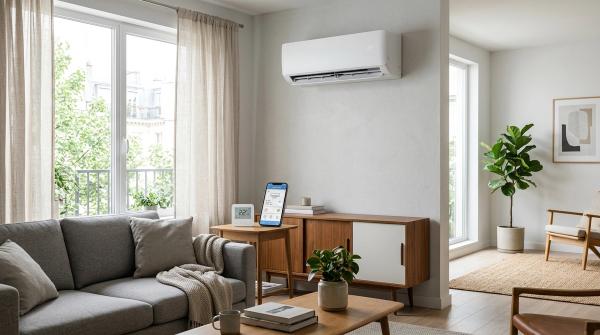
#For a wall-mounted split AC, cool air usually moves downward and outward.
Place the air circulator below the AC airflow, or across the room where it can pick up the cool air and send it around. Tilt it slightly upward or diagonally.
Do not aim the circulator directly into the split AC. You are trying to spread the cool air, not disturb the intake or block the outlet.
Best Placement for Central AC Vents
#If your room has a central AC vent, first make sure the vent is not blocked by furniture, rugs, storage boxes, or curtains.
Then place the air circulator where it can help move cooled air into the rest of the room. A floor-level circulator angled upward often works well because cool air tends to sit lower, while warmer air gathers higher up.
Where to Put an Air Circulator Near Windows
#Windows can be very helpful, but direction matters.
You do not always want to face the air circulator inward. Sometimes the better move is to push hot indoor air out first.
When the Room Is Hot and Stuffy
#Place the air circulator near the window and face it outward.
This helps push trapped warm air outside. It is especially useful after a hot day when the room has been closed for hours.
It can also help after cooking, after several people have been in a small room, or when electronics have made the space feel warm and stale.
When Outdoor Air Is Cooler
#If the outdoor air feels cooler than the indoor air, face the circulator inward.
This pulls cooler air into the room. It works even better if you can open another window or door somewhere else, because air needs a path. One opening brings air in, and another lets air leave.
If you only have one window, you can still try it. You may just need to experiment a little.
If You Have Only One Window
#With one window, start by facing the air circulator outward for a while. This pushes hot indoor air out.
After the room feels less stuffy, turn it inward if the air outside is cooler.
The best direction may change throughout the day. Afternoon, evening, and late night can all need different setups.
Air Circulator Placement for Small Apartments
#Small apartments often have uneven airflow. The living room feels fine, but the bedroom feels trapped. Or the AC cools one room but barely reaches the hallway.
It is very common.
The trick is to think of air like it needs a route.
Where is the cooler or fresher air coming from? Where does it need to go?
Small Apartment Checklist
#- Find the coolest or freshest area in the apartment.
- Place the air circulator so it pushes air from that area toward the warmer room.
- Use doorways and hallways as airflow paths.
- Keep internal doors open when you want air to travel.
- Avoid placing the unit behind furniture.
- Keep cords along walls if possible.
- Do not block AC vents, return vents, or appliance ventilation.
Doorway Placement
#If the bedroom is stuffy and the living room is cooler, place the circulator near the doorway and aim it into the bedroom.
If the bedroom is hot and you want to push stale air out, turn the circulator around and aim it from the bedroom toward the hallway or window.
It depends on what you are trying to do: bring better air in, or push stale air out.
Hallway Placement
#A hallway can work like a small wind tunnel.
Place the circulator at one end of the hallway and aim it toward the room that needs more air movement. This is useful in rentals where you cannot add vents or make permanent changes.
Studio Apartment Placement
#In a studio apartment, avoid pointing the air circulator at only one area. A corner position aimed diagonally is usually the best starting point.
If your bed, desk, and sofa are all in one room, aim the airflow above the main sitting or sleeping area. This keeps the whole space moving without making one spot uncomfortable.
Using an Air Circulator to Dry Clothes Indoors
#An air circulator can help clothes dry indoors by moving damp air away from the fabric.
This is useful in apartments, especially when there is no balcony or when it is raining outside.
Place the circulator a few feet from the drying rack and aim it across the clothes, not directly at one tiny section. If your model oscillates and the movement spreads the air more evenly, use that setting.
A few practical tips:
- Leave space between garments.
- Keep the drying rack away from walls if possible.
- Do not put dripping wet clothes above the circulator.
- Keep the unit away from wet floors.
- Open a window slightly if the room feels humid.
- Do not cover the circulator with clothes, even for “just a minute.”
The goal is to move damp air away from the clothes, not blow moisture into a closed corner.
Common Air Circulator Placement Mistakes
#1. Pointing It Directly at Your Face All Day
#This gives quick relief, but it does not always improve whole room airflow. It can also feel too strong after a while, especially when you are sleeping.
2. Placing It Behind Furniture
#If the airflow hits the back of a sofa immediately, the rest of the room will not get much benefit.
Give the air a clear path.
3. Blocking the Back of the Unit
#Air circulators need intake space. Do not press the back of the unit against a wall, curtain, bedcover, or pile of clothes.
If it cannot pull air in properly, it cannot push air out properly either.
4. Fighting the AC Airflow
#Do not aim the circulator against the AC output. This can make the airflow feel messy and less effective.
Use the circulator to carry cool air farther into the room.
5. Leaving It in the Same Spot for Every Situation
#The best air circulator fan placement changes depending on what you need.
AC cooling, window ventilation, sleeping comfort, and drying clothes may all need different positions. Do not be afraid to move it around.
Safety Notes for Small Rooms and Rentals
#Small rooms get crowded quickly, so safety matters just as much as airflow.
Cords
#Keep cords along the wall where possible. Avoid running cords through doorways, across the middle of the room, or beside the bed where you may trip over them.
If you move the circulator often, check the cord each time.
Wet Areas
#Keep standard air circulators away from bathtubs, showers, wet bathroom floors, kitchen sinks, and dripping laundry.
Unless the product is made for damp areas, treat it like any normal indoor electrical device.
Kids and Pets
#Place the circulator on a stable surface. Keep fingers, paws, toys, and fabric away from the grille.
Do not balance it on narrow stools, soft mattresses, or unstable shelves. It might seem fine, until it is not.
Vents and Airflow Openings
#Do not block AC vents, return vents, exhaust fans, or appliance ventilation.
Also avoid placing the circulator where it pushes dust, loose paper, or fabric into a vent or heater.
Curtains and Bedding
#Keep curtains, bedsheets, scarves, and lightweight clothing away from the intake and outlet.
Fabric can block airflow and may become a safety risk if it gets pulled against the grille.
Buying Checks Before You Choose an Air Circulator
#Before buying one, check whether an air circulator is actually the right tool for your room.
1. Do You Have a Clear Airflow Path?
#Air circulators work best when they can send air across the space. If your room is packed with tall furniture, storage boxes, or heavy curtains, placement becomes even more important.
2. Is Floor Space Limited?
#Some air circulators take up more visible floor space than tower fans. If your room is already tight, think about where the unit will actually sit.
A good product in a bad spot will still be annoying.
3. Do You Want Whole Room Airflow or a Direct Breeze?
#If you want air to move around the full room, an air circulator makes sense.
If you only want a soft breeze at your desk or bedside, a small regular fan may be enough.
4. Will You Use It With AC?
#If yes, look at where your AC airflow comes from.
A circulator is most useful when you can place it near the AC airflow without blocking vents, furniture, or walkways.
5. Can You Clean It Easily?
#Small rooms collect dust quickly, especially near beds, curtains, and clothes.
Choose a model you can clean without too much trouble. A dusty fan is not ideal, and it will also push dust around the room.
Simple Placement Recipes
#If Your Bedroom Feels Stuffy
#Put the circulator in a corner, aim it above the bed toward the opposite wall or ceiling, and keep the door slightly open if the hallway feels fresher.
If Your AC Cools Only One Side of the Room
#Place the circulator near the AC airflow and angle it toward the warmer side of the room. Keep furniture out of the airflow path.
If Your Room Is Hot After Sunset
#Open the window and face the circulator outward for a while to push warm indoor air out. If the outdoor air becomes cooler, turn it inward later.
If Clothes Take Too Long to Dry Indoors
#Place the circulator a few feet from the drying rack and aim it across the clothes. Keep the area dry and slightly ventilated.
If One Apartment Room Is Cooler Than Another
#Place the circulator in a doorway or hallway and aim it from the cooler room toward the warmer one.