If you’re trying to decide between a diaper pail vs regular trash can, the short answer is this: choose a diaper pail if diaper smells bother you, your home is small, your changing station is in the bedroom, the weather is hot or humid, or your trash does not go out every day. Choose a regular trash can if you can empty it daily, want to save money, and are willing to buy a covered step bin with a tight lid.
That’s the practical answer. But like most baby-gear decisions, real life is not always that tidy.
Some parents love their diaper pail and would buy it again without thinking twice. Others never use one and manage perfectly well with a normal bin. Both are fine. This is not one of those baby items where there is one “right” answer for every family.
The best diaper disposal setup is the one that fits your home, your routine, your budget, and your personal tolerance for diaper smell at 3 a.m.
Because babies go through a lot of diapers. During the diaper years, you’ll be dealing with thousands of changes, and very quickly, the question of “where does this diaper go?” becomes part of your daily rhythm.
A good setup will not make parenting easy, exactly. But it can make diaper changes feel a little less annoying, especially during night changes, hot weather, or mornings when you’re already exhausted before breakfast.
What a Diaper Pail Actually Does
#A diaper pail is basically a trash bin designed specifically for diapers. Its main job is odor control for diapers.
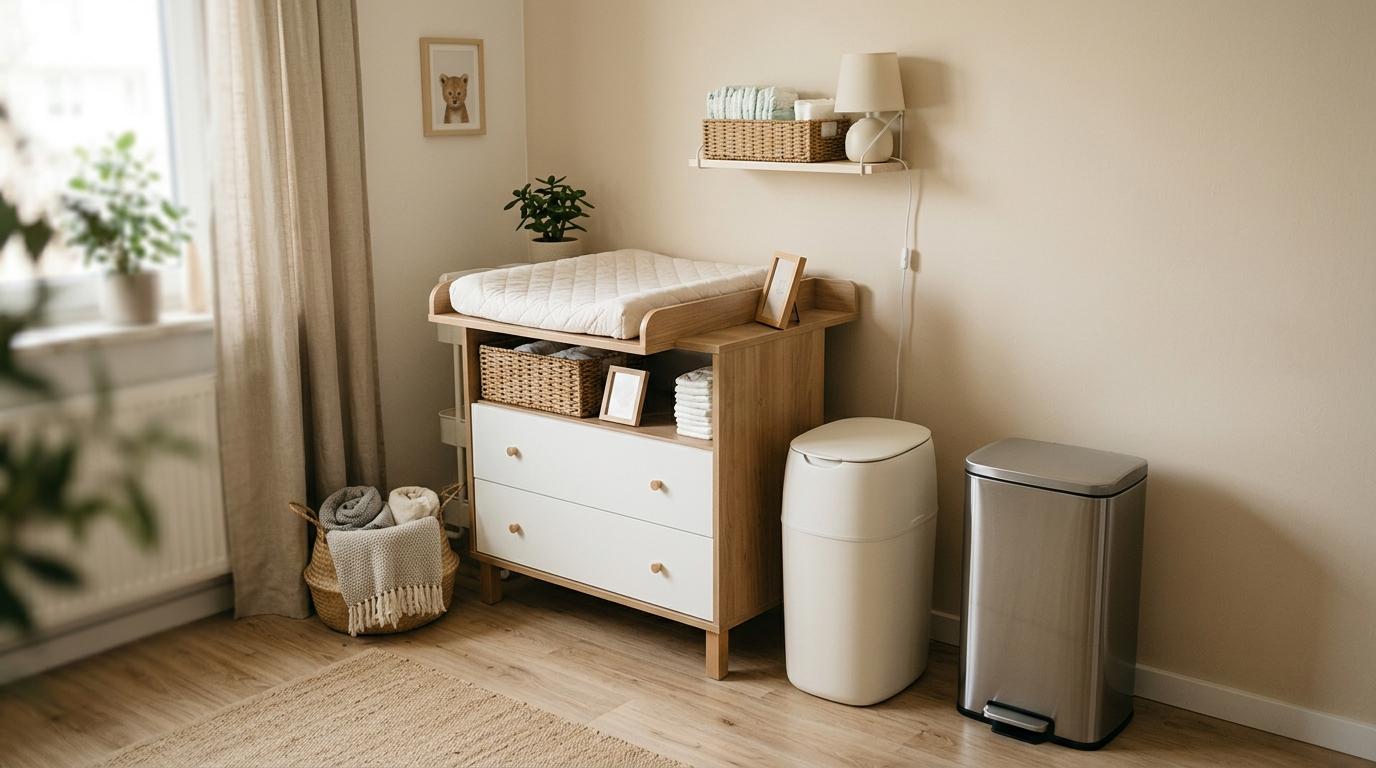
Compared with a regular nursery trash can, a diaper pail usually has a better seal. Depending on the model, it may have a sliding lid, clamp, twist system, rubber seal, child lock, or special diaper pail bags that help trap smell inside.
Some diaper pails are plastic. Some are metal or steel. Some work with regular garbage bags, while others need branded refill bags or cartridges.
A diaper pail does not magically erase diaper smell. It still needs to be emptied. It still needs to be cleaned. And yes, when you open it, you may still get a reminder of what’s inside.
But if diapers are going to sit in the room for more than a day, a diaper pail can make a real difference.
And if the changing station is in your bedroom, that difference can feel very important.
When a Diaper Pail Is Worth It
#A diaper pail is worth it if your main concerns are smell, convenience, or avoiding a trip to the main garbage bin after every diaper change.
You may want a diaper pail if:
- You live in a small apartment. In a compact home, the changing area may be close to your bed, kitchen, wardrobe, or living room. There is not much distance for smells to disappear.
- Your trash is not collected daily. If diapers sit for two or three days, a better-sealed bin helps a lot.
- You live somewhere hot or humid. Heat makes diaper smells stronger, and humidity can make bins feel unpleasant faster.
- Your baby changing station is in your bedroom. Night changes are easier when the bin is right there, but not if the whole room starts smelling like diapers.
- Other people help with diaper changes. Grandparents, relatives, nannies, or household help will find it easier if there is one clear diaper disposal spot.
- You are sensitive to smells. Some people can ignore diaper odor. Some absolutely cannot. If you’re in the second group, a diaper pail may be money well spent.
A diaper pail can be especially useful during the newborn stage because diaper changes are frequent. But many parents find it becomes even more useful later, once the baby starts solids and dirty diapers smell much stronger.
That part catches many first-time parents by surprise.
When a Regular Trash Can Is Enough
#A regular trash can can work perfectly well too. The key is emptying it often.
If you take the trash out every day, diapers usually do not sit long enough to become a major problem. Many families use a regular covered step bin near the changing table and simply clear it daily.
Simple. Affordable. Done.
A regular trash can may be enough if:
- Your building or home has daily garbage collection. This is common in many apartment communities and in many homes in India, where morning trash pickup happens every day.
- You are on a tight budget. A regular bin usually costs less, and standard garbage bags are easy to find.
- You do not want to buy special refill bags. Some diaper pails need specific diaper pail bags, and those costs can add up.
- You take poopy diapers out quickly. Some parents keep wet diapers in the room bin but take heavily soiled diapers straight outside or to the main garbage area.
- You want something useful later. A regular step bin can become a bathroom bin, office bin, or utility bin once the diaper stage is over.
If you choose a regular trash can, do not buy an open bin for diapers. Also avoid loose swing-lid bins if you can.
For diaper disposal, look for three things: a lid, a foot pedal, and a tight close.
The cheapest open bin may seem fine at first, but there’s a good chance it will annoy you within a week.
Diaper Pail vs Regular Trash Can: Side-by-Side Comparison
#Apartment, Humidity, and India-Aware Notes
#Your home setup matters more than the product label.
In a small apartment, diaper smell can travel quickly. If your changing station is in your bedroom or near the living area, a diaper pail can help keep the room feeling fresher.
But if your building has daily door-to-door garbage collection, a regular step bin may be totally fine because the diapers leave the house quickly.
Humidity also makes a difference. In hot, humid weather, bins can start smelling stronger much faster, especially when dirty diapers sit inside for more than a day. Plastic bins may also hold on to odor over time.
If smell is a big concern and your budget allows, a metal or steel bin may be easier to keep fresh than a basic plastic one.
Also think about who will actually use the bin. In many homes, grandparents, relatives, nannies, or hired help may help with diaper changes. A simple system makes life easier for everyone.
If the bin has a tricky twisting motion, a confusing refill system, or a lid that people cannot open quickly, it may become irritating.
Simple is good. Obvious is even better.
Buying Checklist Before You Choose
#Before buying either a diaper pail or a nursery trash can, check these things.
1. Odor Control
#Look for a tight lid and minimal gaps.
For a diaper pail, check whether it has rubber seals, a clamp, a sliding lid, or a sealed bag system. For a regular trash can, avoid open tops and loose swing lids.
Ask yourself one basic question: will smell escape every time I open this?
If the answer is probably yes, keep looking.
2. Bag Compatibility
#This is one of the biggest long-term cost differences.
Some diaper pails require branded diaper pail bags, refill rings, or cartridges. They can be convenient, but they may cost more over the diaper years.
Other diaper pails work with normal kitchen garbage bags. A regular trash can usually works with any standard bag that fits.
Before buying, check:
- Does it need special refill bags?
- Are those bags easy to find where you live?
- How expensive are they?
- How often will you need to replace them?
- Can standard garbage bags fit properly?
It’s not the most exciting thing to check, but future-you will be glad you did.
3. Child Lock or Toddler Resistance
#Your newborn will not open the bin.
Your crawling baby or toddler might.
If the bin will stay in the nursery, bedroom, or play area, a child lock can be useful. Many diaper pails are harder for toddlers to open. Regular trash cans may be easier to get into, especially if the lid is light.
This is not about being dramatic. It is just easier to prevent a mess than clean one from the floor, the wall, and maybe the baby.
4. Space and Footprint
#Measure the space beside your changing table, dresser, or baby changing station.
A tall bin may hold more diapers, but it can feel bulky in a small room. A slim bin may fit better, but you may need to empty it more often.
If you live in an apartment, make sure the lid can open fully without hitting the wall, cot, wardrobe, or changing table.
These small details seem unimportant until you buy the wrong bin and have to deal with it every single day.
5. Cleaning
#Diaper bins need cleaning, no matter which type you choose.
Look for:
- Smooth inner surfaces
- Fewer deep grooves
- A removable liner or easy bag change
- A lid area that is easy to wipe
- No tiny corners where moisture and residue can collect
A bin that is easy to clean is usually better than one with fancy features you never use.
Safety and Hygiene Notes for Diaper Disposal
#Whether you choose a diaper pail or a regular trash can, hygiene habits matter more than the bin itself.
- Use a covered bin when possible. A lid helps contain odor and keeps the diaper area neater.
- Choose hands-free opening if you can. A foot pedal is helpful because you can keep one hand near your baby.
- Never leave your baby unattended on the changing surface. Finish the change first, then deal with the bin.
- Wrap diapers before tossing. Fold the diaper closed using its tabs before putting it in the bin.
- Wash your hands after diaper changes. Hand sanitizer can help in the moment, but soap and water is best once your baby is safe.
- Empty the bin regularly. Even a good diaper pail should not sit full for too long.
- Wipe the bin when needed. If the lid, pedal, rim, or inside gets dirty, clean it sooner rather than waiting for a deep-clean day.
Try to keep your newborn diaper changing setup simple: diapers, wipes, a covered hands-free bin, and a way to clean your hands after.
That is usually enough.
So, Is a Diaper Pail Worth It?
#A diaper pail is worth it if it solves a real problem in your home.
If you have limited ventilation, humid weather, trash that is not collected daily, or a changing station in your bedroom, a diaper pail can make everyday life easier.
It is also helpful if you want one clear place for diaper disposal, especially when other family members or helpers are also changing the baby.
For many parents, the benefit is not just odor control. It is convenience.
You finish the diaper change, drop the diaper in the same place every time, and move on.
That may not sound like a big deal before the baby arrives. But when you are tired, holding a wiggly baby, and doing yet another diaper change, small conveniences matter.
Still, a diaper pail is not mandatory.
A regular trash can can be enough if it has a tight lid, opens hands-free, uses affordable bags, and gets emptied daily.
Both options can work. The real difference is how much effort you want to put into managing smell.
Who Should Skip the Diaper Pail?
#You can probably skip the diaper pail if:
- Your trash is collected every day.
- You are comfortable taking diaper trash out daily.
- You want to avoid refill-bag costs.
- You have space for a covered step bin near the changing area.
- You do not mind taking heavily soiled diapers out sooner.
- You prefer baby gear that can be reused elsewhere in the home.
In that case, buy a good regular step bin instead of the cheapest open bin.
The lid and foot pedal are what make it work.
Final Verdict
#For most parents, the decision comes down to smell versus cost.
Choose a diaper pail if you want better odor control for diapers, especially in a small apartment, humid climate, bedroom nursery, or home without daily trash pickup.
Choose a regular trash can if you empty it daily, want lower running costs, and can buy a covered hands-free step bin with a tight lid.
Both choices are valid.
The best diaper disposal setup is the one you will actually use every day, even when you are tired, holding a baby, and doing the third diaper change before breakfast.