A baby can use a stroller from birth only if the stroller is designed for newborns. That usually means a bassinet, carrycot, or a seat that reclines fully flat and is clearly approved for newborn use. For a regular upright stroller seat, many babies need to wait until around 6 months, when head and neck control is steadier.
That is why parents hear different answers. One family may use a stroller from day one with a newborn bassinet. Another may wait until the baby is ready for an upright seat. Both can be right if the setup matches the baby’s stage and the stroller manual.
This guide explains stroller age, recline, fit checks, safety basics, India-aware buying considerations, and what to check before spending more than you need.
Stroller, pram, bassinet and travel system: what do these words mean?
#In India and many other markets, people often use “stroller” and “pram” loosely. Online listings can be even more confusing. For newborn safety, the setup matters more than the label.
- Pram or bassinet stroller: Usually designed to give a newborn a flat, supported surface.
- Standard stroller seat: Usually meant for older babies who can hold their head and body better.
- Travel system: A stroller frame that may accept an infant car seat, bassinet, or regular seat.
- Reclining stroller: A stroller seat that tilts back. Some recline nearly flat; others only recline partly.
The better question is not just, “What is the right baby stroller age?” It is: Does this exact stroller support my baby’s head, neck, airway and body safely for their current stage?
Newborn vs reclined vs upright stroller readiness table
#Use this as a practical starting point. Always follow the stroller manual because each model has its own minimum age, weight range, recline rules and attachment limits.
Can a newborn use a stroller?
#Yes, a newborn can use a stroller if the stroller is made for newborn use.
Look for one of these:
- A bassinet or carrycot attachment
- A stroller seat that reclines fully flat and is clearly approved for newborns
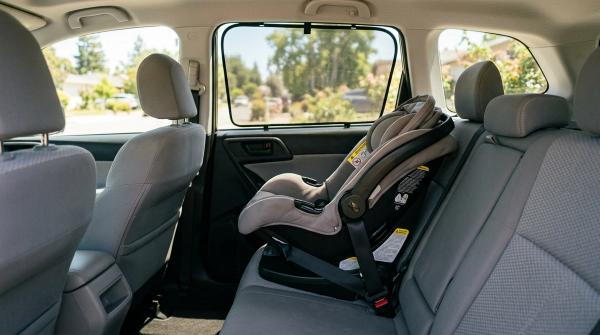
- A compatible infant car seat attached to a travel system, used exactly as the manual says
Newborns have heavy heads compared with their bodies and cannot control their head and neck well yet. If they are placed too upright, their head can fall forward, which may affect their breathing position. That is why a flat or newborn-approved recline is so important.
If you are unsure whether your baby is ready for a raised position, ask your pediatrician and follow the stroller manual. Product photos can make a seat look flatter or more supportive than it really is.
When can baby sit upright in a stroller?
#Many babies are ready for a regular upright stroller seat around 6 months, but age is not the only signal. Look for these readiness signs:
- Baby can hold their head steady without it falling forward.
- Baby does not slump sideways or forward when seated.
- Baby can sit with support and may be close to sitting independently.
- Baby stays well positioned when the stroller moves over small bumps.
- The stroller manual allows your baby’s age, weight and seat position.
If your baby was premature, has low muscle tone, has a medical condition, or you simply feel unsure, ask a pediatrician before moving to an upright stroller seat. Waiting a little longer is usually better than rushing.
Why stroller recline matters
#Stroller recline is not just about comfort. It helps the stroller match the baby’s stage.
For newborns, the safest stroller setup is usually a flat, newborn-approved position. For babies who are gaining head control but are not ready to sit upright, a deep recline can support the head and body better. For older babies, recline is still useful when they get tired during outings.
When checking stroller recline, ask:
- Does it recline fully flat or only partly?
- Does the manual say it is safe from birth?
- Does the recline lock securely?
- Can the baby’s head stay in a safe, open position?
- Is the harness usable in every recline position?
Do not assume “reclining” means “safe for newborn.” Many strollers recline, but not all are designed for newborn use.
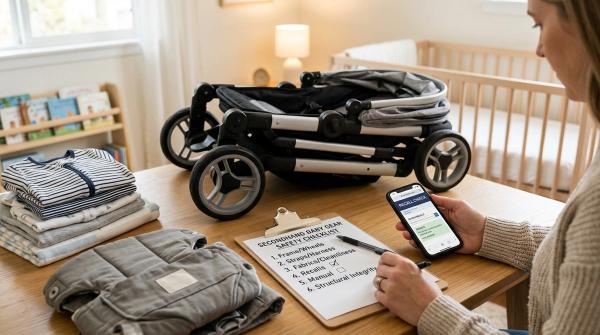
Baby stroller safety checklist
#Before the first ride, and regularly after that, use this checklist.
1. Harness
#Use the harness every time, even for a short walk. A 5-point harness is usually best because it secures the baby at the shoulders, hips and between the legs.
Check that:
- Straps are not twisted.
- Buckles click properly.
- The harness fits snugly, not loosely.
- Baby cannot slide down in the seat.
- The harness works in both reclined and upright positions.
2. Brakes
#Test the brakes before putting your baby in the stroller. Good brakes should lock firmly, be easy for an adult to use, stay locked when you gently push, and not release too easily if touched by a sibling.
Use the brakes whenever you stop, even on flat ground.
3. Recline and seat lock
#The stroller backrest should not slip, drop or shift when pressure is applied. If the recline feels loose, uneven or unstable, do not use it until it has been checked or repaired.
For newborns, confirm that the stroller is actually approved for newborn use. A seat that “almost” lies flat is not always the same as a bassinet or a true newborn-safe recline.
4. Manual, age limits and weight limits
#The stroller manual tells you important details like:
- Minimum age
- Maximum weight and height
- Approved seat positions
- Compatible attachments
- How to fold and lock the stroller
- Whether the seat is safe from birth
Follow these limits even if the stroller looks strong. Overloading can affect balance, brakes, frame strength and stability.
5. Recalls and safety notices
#The US Consumer Product Safety Commission has stroller and carriage safety rules and maintains recall information. If your country has a local consumer safety authority, check that too.
Before using any stroller, confirm the model label, manual, brake function, fold lock, wheels and harness are intact. If the model number is missing or a key safety part is damaged, pause and contact the manufacturer or seller before use.
6. Safe sleep
#HealthyChildren.org, from the American Academy of Pediatrics, advises that babies sleep on a firm, flat, non-inclined surface, on their back.
Babies often fall asleep during walks. If your baby falls asleep in an inclined stroller, car seat, swing or similar device, move them to a safe sleep space as soon as practical. A stroller is useful for outings; it should not replace a crib or bassinet for regular, unsupervised sleep.
7. Stability and tipping
#Do not hang heavy bags from stroller handles. This can make the stroller tip backward, especially when your baby is small.
Use the storage basket only within the manual’s limit. A stroller can feel stable when empty, but balance changes with bags, groceries, uneven roads or a moving toddler nearby.
8. Wheels, frame and folding lock
#Before leaving home, quickly check:
- Wheels are attached firmly.
- No wheel is wobbling.
- The frame opens fully and locks.
- Folding joints are not loose.
- No fabric, strap or toy is trapped in the folding mechanism.
Small issues can become bigger outside, especially on uneven paths, in rain, or when you are handling bags and a baby at the same time.
India-aware stroller buying guide
#A stroller can look perfect in a showroom and still be frustrating in daily life. Before buying, think about where you will actually use it.
Apartments and elevators
#If you live in an apartment, check:
- Elevator width
- Door width
- Lobby space
- Whether you need to carry the stroller up stairs
- How often the lift is crowded or not working
A heavy travel system may feel sturdy, but it can become tiring if you need to fold it often or carry it while holding your baby. For apartment living, easy folding and manageable weight are often more useful than extra features.
Storage space
#Ask one honest question: where will the stroller live?
If you have a narrow entryway, small balcony or shared parking area, look for:
- Compact fold
- Self-standing fold, if available
- Easy-clean wheels
- A frame that fits your car boot, if you drive
Do not buy the biggest stroller just because it looks premium. Buy the one you can store, lift, clean and use without stress.
Heat and ventilation
#For hot weather, look for:
- A good canopy
- Mesh ventilation panels
- Breathable fabric
- A seat that does not trap too much heat
- Easy shade adjustment
Avoid covering the stroller with thick blankets in the heat. It may look like shade, but it can reduce airflow and make the stroller warmer inside.
Monsoon and humidity
#For monsoon use, think about cleaning and drying.
Useful features include:
- Removable seat covers
- Washable fabric
- Quick-drying materials
- Compatible rain cover
- Wheels that handle wet paths better than tiny plastic wheels
After a wet outing, open the stroller and let it dry properly before storing it. This helps reduce damp smell, mould and fabric issues.
Uneven roads and footpaths
#If most walks are inside malls or smooth apartment complexes, a lightweight stroller may be enough.
If you walk on uneven roads, broken footpaths, parks or neighbourhood lanes, pay more attention to:
- Wheel size
- Suspension
- Frame stability
- Brake quality
- How much the stroller shakes on rough patches
Tiny wheels may be fine indoors but uncomfortable outside on rough roads.
What to buy, and what to skip
#You do not need every stroller feature. You need the right stroller for your baby and routine.
Worth considering
#- Newborn-approved bassinet or full-flat recline if you need a stroller from birth
- 5-point harness
- Reliable brakes
- Smooth fold
- Manageable weight
- Good canopy
- Washable fabric
- Storage basket within safe limits
- Wheels suitable for your usual roads
- Clear manual and model details
You can skip if you will not use them
#- Oversized travel systems if you live in a small apartment or use stairs often
- Very heavy models if you usually travel alone with your baby
- Extra accessories that do not suit your climate or routine
- Fancy cup holders, snack trays or add-ons before checking safety and stability
- A second stroller too early, unless your first one truly does not work for daily use
The best stroller buying rule is simple: buy for your real routine, not the perfect routine you imagine.
How to check stroller fit before buying
#If possible, test the stroller in person.
Try this:
- Open and fold it yourself.
- Lift it as if placing it in a car boot or carrying it up one flight of stairs.
- Push it with one hand and two hands.
- Lock and unlock the brakes.
- Check the recline.
- Adjust the harness.
- Measure whether it fits your elevator, doorway and storage space.
- Read the age and weight label.
- Check whether the newborn setup is included or sold separately.
- Confirm the return or service policy.
If buying online, read the manual or product specifications carefully before ordering. Do not rely only on photos.
Common stroller mistakes to avoid
#- Moving baby to an upright seat too early
- Using a stroller without fastening the harness
- Hanging heavy diaper bags from the handle
- Ignoring the manual’s age or weight limits
- Letting baby sleep unsupervised in an inclined stroller
- Buying a heavy stroller without checking lift, stairs and storage space
- Assuming every reclining stroller is safe for newborns
Quick answer: the safest stroller setup by age
#- Birth to 3 months: Bassinet, carrycot or fully flat newborn-approved recline.
- 3 to 6 months: Deep recline if baby has some head control and the manual allows it.
- Around 6 months and older: Upright stroller seat when baby has steady head and neck control.
- Any age: Use the harness, check brakes, follow the manual and check safety notices.
Safety references used
#This guide was written with source-aware wording from CPSC stroller and carriage safety guidance, CPSC recall resources, and AAP/HealthyChildren.org stroller safety and safe sleep guidance. It is general education only, not medical advice. For questions about your baby’s development, head control or stroller readiness, speak with your pediatrician and follow your stroller manufacturer’s manual.