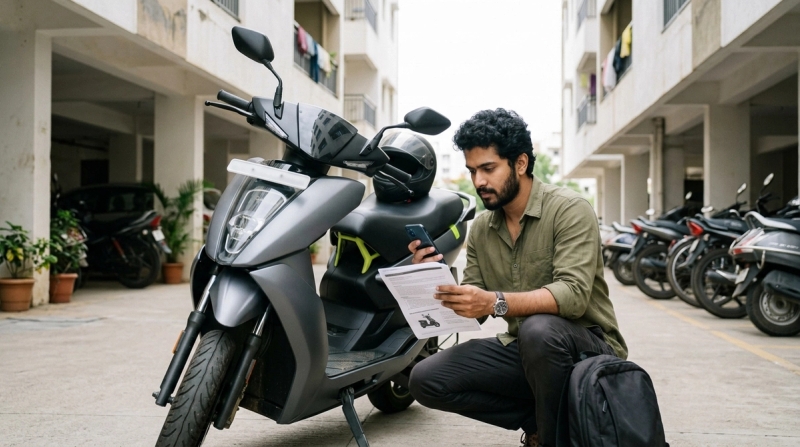
Buying an electric scooter can feel exciting and straightforward at first. You compare the price, range, charging time, boot space, app features and colour options. Then comes the battery warranty — and this is where many buyers quietly switch off.
That is understandable, because warranty language can be boring. But in an electric scooter, the battery is one of the most expensive parts. If it develops a problem outside warranty, the repair or replacement cost can hurt. So before you pay the booking amount or take delivery, it is worth understanding what the battery warranty really means.
Not just the big number in the brochure.
You need to know what is covered, what is excluded, how battery degradation is judged, what service records you must maintain, and what kind of mistakes can weaken your claim.
This guide explains electric scooter battery warranty terms in India in plain language. It covers battery degradation, State of Health or SoH, water damage, charging mistakes, service records, safety warnings, and the exact questions you should ask the dealer before buying.
One important note before we begin: warranty terms can change depending on the brand, model, variant, purchase date, offer period, and warranty plan. Ola, Ather, TVS, Bajaj, Hero, Ampere and other brands publish official warranty pages or warranty booklets. Those documents are the final source for your scooter. Use this article as a practical checklist, not as a replacement for your actual warranty document.
Quick answer: what should you check first?
#Before buying an electric scooter in India, check these five things carefully:
- Battery warranty period: Is it based on years, kilometres, or both?
- Battery degradation clause: At what State of Health, or SoH, will the company consider warranty support?
- Warranty exclusions: Does it exclude water damage, deep discharge, accidents, third-party chargers, unauthorised repairs, or modifications?
- Service records: Are scheduled services compulsory to keep the warranty valid?
- Claim process: Who inspects the scooter, what documents are needed, and how long can the claim take?
The biggest mistake is assuming that a “3-year battery warranty” means every range drop or battery-related complaint will automatically be covered. Most battery warranties cover manufacturing defects and certain failures under normal use. They usually do not cover normal ageing, misuse, water ingress, owner negligence, or work done outside the authorised service network.
Why the battery warranty matters more than brochure range
#Brochure range is easy to understand. Warranty terms are not.
A scooter may advertise a long certified range, modern features, fast charging, and a simple warranty headline. But the real protection is hidden in the details: kilometre limit, battery health limit, exclusions, service requirements, and claim rules.
For a daily commuter, the kilometre limit may matter as much as the number of years. If you ride 40 or 50 km every day, you may finish the kilometre limit much earlier than expected.
If you live in a flood-prone area, water ingress exclusions become very important. If you often travel and leave the scooter unused for weeks, deep discharge rules matter. If you plan to sell the scooter after two or three years, warranty transfer rules may affect resale value.
So, read the warranty before paying. Not after the first problem appears.
1. Understand the basic warranty term: years, kilometres, or both
#Most electric scooter warranties use a dual limit. The warranty may be valid for a certain number of years or a certain number of kilometres, whichever comes first.
That last part is important.
If a battery warranty says 3 years or 30,000 km, it does not mean you get 3 full years regardless of usage. If you cross 30,000 km in 20 months, the warranty may end there. If you ride very little, the time limit may end before the kilometre limit.
When comparing scooters, don’t ask only: “How many years is the battery warranty?”
Ask these questions instead:
- What is the year limit?
- What is the kilometre limit?
- Is the battery warranty different from the scooter warranty?
- Is the charger covered separately?
- Are the motor, controller, display, and other electrical parts covered for the same period?
- Is extended warranty available?
- Does the extended warranty include the battery, or only selected parts?
Warranty terms can vary by brand, model, battery pack, warranty plan, and purchase date. So don’t rely only on an old YouTube review, sales poster, comparison table, or someone else’s purchase experience. Always check the current official warranty document for the exact scooter you are buying.
2. Battery degradation is not the same as battery failure
#All lithium-ion batteries lose some capacity with time and use. This gradual capacity loss is called battery degradation. After a few months or years, you may notice that the scooter gives less real-world range than it did when it was new.
That does not always mean the battery has “failed”.
A battery warranty usually does not promise that your scooter will deliver the same range forever. It may cover battery degradation only if the battery’s State of Health, or SoH, falls below the limit mentioned in the warranty document.
For example, if the warranty says the battery must stay above a certain SoH level during the warranty period, the service centre will usually check the battery with diagnostic tools. They will not approve a claim only because your personal range estimate has reduced.
Your real-world range can drop because of many reasons, including:
- Rider weight
- Riding speed
- Riding mode
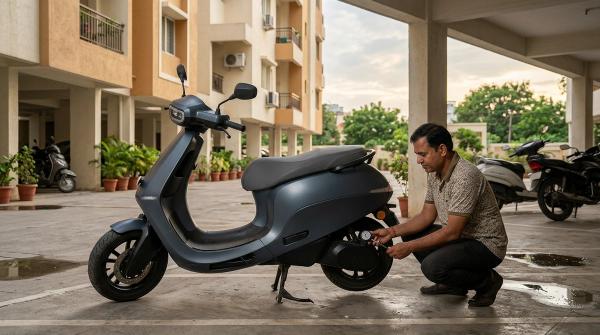
- Tyre pressure
- Traffic conditions
- Weather
- Road quality
- Extra load
- Charging habits
- Battery age
So if you say, “Earlier I got 110 km, now I get 85 km,” that alone may not prove a warranty issue. The authorised service centre will usually look at battery data and diagnostic readings.
What is State of Health, or SoH?
#State of Health, usually called SoH, is a battery health number. It estimates how much usable capacity the battery has compared to when it was new.
In simple terms:
- A new battery should have a high SoH.
- As the battery ages, SoH naturally reduces.
- Warranty support may depend on whether SoH falls below the company’s stated limit.
- The authorised service centre usually checks SoH using diagnostic tools.
Before buying, ask the dealer to show you the written battery degradation clause. Don’t settle for vague replies like, “Battery is fully covered, sir.” Ask clearly: “At what SoH percentage will the battery be eligible for warranty repair or replacement?”
3. Read the exclusions before you feel too comfortable
#Warranty exclusions are the situations where the company may reject a claim. They are usually written in the warranty document, but many buyers read them only after something goes wrong.
Common exclusions may include:
- Water ingress or flood damage
- Accident damage or physical impact
- Use of non-approved chargers
- Unauthorised repairs
- Wiring, software, battery, or electrical modifications
- Tampering with the battery pack
- Not following the owner’s manual
- Missing scheduled services
- Deep discharge due to long storage or neglect
- Improper charging or poor power supply conditions
- Normal wear and tear, including expected battery degradation
The exact list will differ from brand to brand. Always read the warranty booklet for your exact scooter, model, variant, and purchase date.
Water ingress: monsoon riding needs extra care
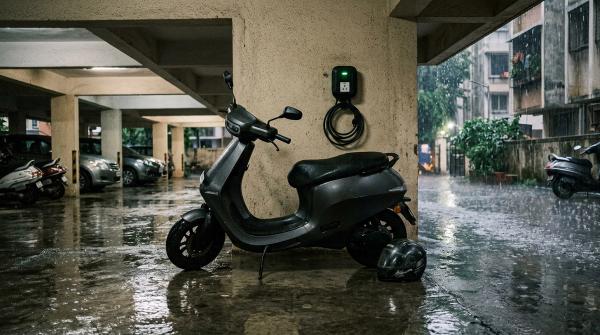
#Most electric scooters are designed to handle normal rain and regular road conditions. But rain resistance does not mean flood resistance.
Your scooter may be fine in normal rain, but that does not mean it can safely go through deep water, flooded streets, waterlogged basements, or pressure washing.
Water can damage battery connectors, wiring, controller units, sensors, the charging port, display, and other electrical parts. If the service centre finds corrosion, moisture marks, or signs of water entry, the warranty claim may be rejected depending on the policy.
Be especially careful with:
- Riding through flooded roads
- Parking in waterlogged streets or basements
- Using high-pressure water near the battery area, charging port, display, under-seat area, or connectors
- Charging the scooter when the charging port is wet
- Leaving the scooter exposed during heavy waterlogging
If your area floods often during monsoon, ask the dealer how the company handles water ingress cases. Also read what the owner’s manual says about rain, washing, and flooded roads.
4. Service records can make or break your claim
#Electric scooters usually need less maintenance than petrol scooters. But less maintenance does not mean no maintenance.
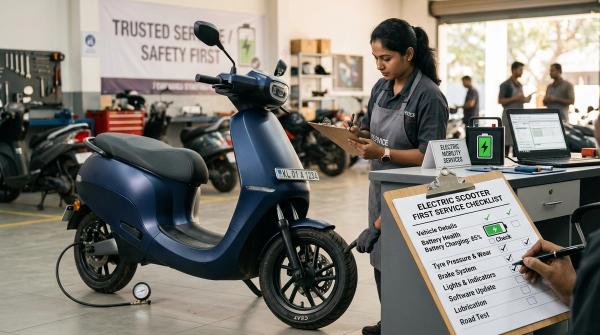
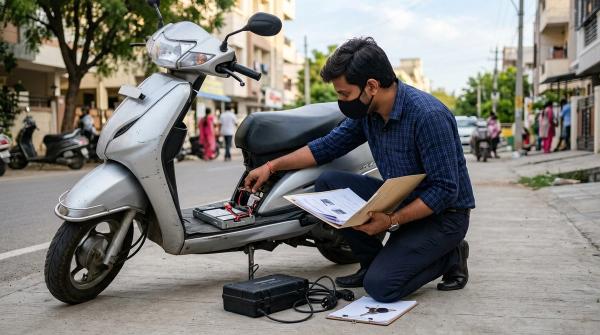
Your EV warranty may require scheduled checks at authorised service centres. These visits may include software updates, brake inspection, battery diagnostics, connector checks, tyre inspection, and general system checks.
If you skip services and later file a battery claim, the company may ask for service records. Missing records can weaken your case. In some situations, they may even affect claim approval.
Keep these documents safely:
- Tax invoice and purchase invoice
- Warranty booklet or digital warranty record
- Registration documents
- Service invoices
- Job cards
- Battery diagnostic reports, if provided
- Roadside assistance records
- Complaint records
- Charging issue reports
- Written communication with the dealer or service centre
Digital records are useful, but don’t depend only on the app. Take screenshots. Save PDFs. Keep emails.
5. Charging mistakes can affect safety and warranty
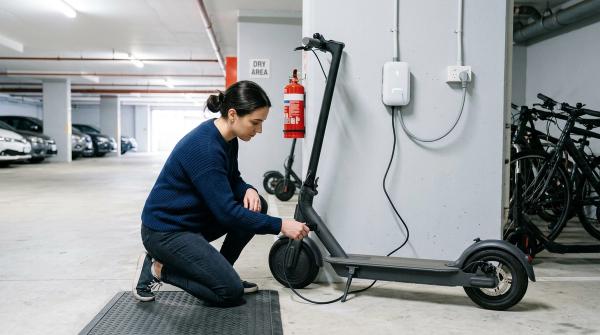
#Charging an electric scooter feels simple. Plug it in, wait, and ride. But charging is also one of the common areas where owners make mistakes.
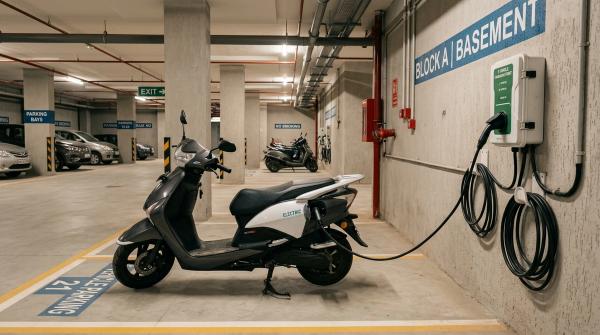
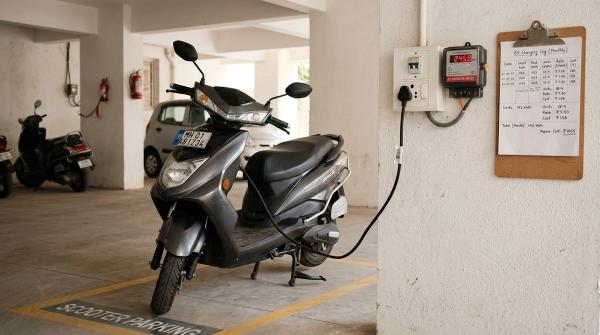
Use only the charger supplied or approved by the manufacturer. If the brand gives instructions for home charging, socket rating, earthing, extension cords, or public charging, follow them properly.
Avoid:
- Cheap third-party chargers
- Damaged charging cables
- Loose wall sockets
- Wet charging points
- Charging in waterlogged areas
- Charging if you notice sparks, smoke, burning smell, or abnormal heat
- Running cables where they can be crushed, stretched, or pulled
- Ignoring repeated charging errors
A small spark while plugging into a socket may not always be serious. But strong sparking, repeated arcing, burning smell, smoke, or unusual heat is not normal.
If charger sparks seem unusual, stop charging. Switch off the wall power if it is safe to do so. Contact the authorised service centre. Do not open the charger. Do not try local repairs. Do not do “jugaad” fixes with plugs, wires, or adapters.
6. Don’t open or repair the battery pack yourself
#This is not only about warranty. It is also about safety.
Do not open the battery pack. Do not try to repair cells. Do not bypass wiring. Do not modify the Battery Management System. Do not ask a local mechanic to “boost” the battery, replace cells, or adjust software.
Lithium-ion batteries store a lot of energy. Mishandling them can cause electric shock, smoke, fire, or further damage. It can also void your warranty.
If you suspect a battery issue, use the authorised service channel only. It may feel slower, but it is the safer route.
7. Safety warnings: when you should stop using the scooter
#Some warning signs should never be ignored. If you notice any of the following, stop using the scooter and contact the authorised service centre or dealer.
Swelling
#If the battery casing, floorboard, or nearby area looks swollen, lifted, warped, or unusually shaped, do not ride or charge the scooter.
Overheating
#If the scooter becomes unusually hot during normal riding or charging, or does not cool down as expected, stop using it and get it checked.
Smoke or burning smell
#If you see smoke, smell burning plastic, notice a chemical smell, or sense any sharp strange smell from the battery area, move away from the scooter and contact help. Do not open the battery pack.
Water ingress
#If the scooter has gone through deep water or was parked in a flooded area, do not charge it immediately. Call the service centre and ask what to do next.
Charger sparks
#If plugging in the charger causes strong sparks, repeated arcing, smoke, heat, or burning smell, stop charging immediately. Switch off wall power if safe. Use only authorised support.
8. What to check in Ola, Ather, TVS, and other warranty documents
#Use the official manufacturer page or warranty booklet for the final answer. Dealer explanations can help, but the written warranty is what matters.
When checking warranty documents from brands such as Ola, Ather, TVS, Bajaj, Hero, Ampere, and others, look for these sections:
- Battery warranty term
- Vehicle warranty term
- Charger warranty term
- Extended warranty eligibility
- Battery health or degradation clause
- What counts as a defect
- What counts as normal wear and tear
- Water ingress exclusions
- Charging instructions
- Storage instructions
- Service schedule
- Claim procedure
- Warranty transfer rules
- Whether warranty applies only to the first owner
- Conditions that can void warranty
- Documents needed for claims
Also check the date of the warranty page or booklet. Terms can change, and an old review may not match the scooter being sold today.
Buyer checklist before paying
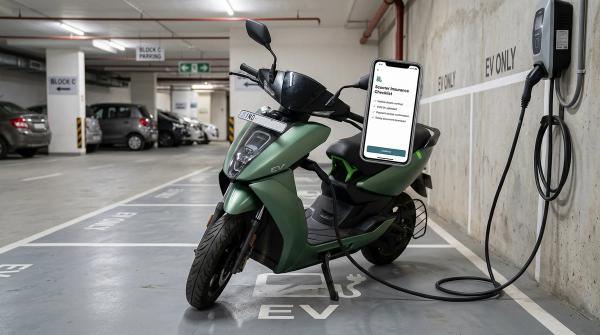
#Use this checklist in the showroom or while speaking with an online sales advisor.
- I have read the official battery warranty terms for this exact model and variant.
- I know the battery warranty period in years.
- I know the battery warranty kilometre limit.
- I understand the warranty may end when either the year limit or kilometre limit is reached.
- I know the battery degradation or SoH threshold, if mentioned.
- I know whether normal range reduction is covered or excluded.
- I have checked water ingress exclusions.
- I have checked charger-related exclusions.
- I know whether using a third-party charger can affect the warranty.
- I know the mandatory service schedule.
- I know where service records will be stored.
- I know what documents are needed for a battery warranty claim.
- I know whether extended warranty is available.
- I know whether extended warranty covers the battery.
- I know whether the warranty is transferable to the next owner.
- I have saved the warranty booklet or official warranty PDF.
- I have not relied only on verbal promises.
Dealer questions to ask before booking
#- What is the exact battery warranty for this model and variant? Ask for both the year limit and kilometre limit.
- Is the battery warranty different from the vehicle warranty? Confirm whether all components are covered for the same period.
- What battery degradation level is covered? Ask for the written SoH clause.
- What happens if my real-world range reduces after one or two years? Ask how the service centre checks battery health.
- What are the main warranty exclusions? Ask specifically about water ingress, charger use, missed service, accident damage, and modifications.
- What charging equipment is approved? Confirm whether you must use only the supplied charger or approved charging points.
- What is the service schedule? Ask how often you must visit the authorised service centre.
- How are service records maintained? Ask whether you will get job cards, invoices, app records, email records, or all of these.
- If the battery claim is approved, what happens next? Ask whether the brand repairs, replaces, or follows another process as per policy.
- Will I get a new or refurbished battery if replacement is approved? Ask for the company’s written policy.
- Is the warranty transferable if I sell the scooter? This can matter for resale value.
- Does extended warranty include the battery? Some extended plans cover only selected parts.
- What happens if the authorised service centre is far from my home? Ask about towing, pickup, roadside assistance, and inspection process.
- Where can I read the current official warranty terms? Ask for the official link or printed booklet.
Red flags while discussing warranty
#Be careful if you hear answers like these:
- “Battery is fully covered, no need to read anything.”
- “Range drop will always be covered.”
- “You can use any charger.”
- “Service is not important for warranty.”
- “Water damage is always covered.”
- “Outside mechanic work does not matter.”
- “We will manage the claim later.”
- “The warranty page is old, but trust us.”
A good dealer should be willing to show you the written terms. If they avoid it, that itself is a warning sign.
What to do if you suspect a battery problem after purchase
#If your scooter shows unusual range loss, charging errors, overheating, smoke, swelling, or warning lights, take it seriously.
Here’s what you should do:
- Stop using the scooter if there is any safety warning.
- Do not open or repair the battery.
- Do not use a third-party charger to “test” it.
- Take photos or videos if it is safe.
- Note the date, time, battery percentage, and issue.
- Contact the authorised service centre.
- Ask for a job card.
- Keep all service reports and diagnostic comments.
- Follow up in writing if the issue repeats.
- Ask the service centre to explain whether the issue is covered under warranty.
For battery degradation concerns, do not depend only on your own range estimate. Ask for an authorised diagnostic check.
Final buying advice
#A good battery warranty is not just a big number printed in the brochure. It is the conditions attached to that number.
Before buying an electric scooter, slow down and read the warranty terms. Check the years, kilometres, battery degradation clause, exclusions, water and charging cautions, service record requirements, and claim process.
Ask direct questions. Save written answers wherever possible.
An electric scooter can be a practical everyday vehicle, especially for city use. But the battery warranty deserves proper attention. Ten minutes with the warranty document can save you confusion, stress, and possibly a rejected claim later.
Internal link suggestions for AllBlogs
#- Link “electric scooter buying guide” to the AllBlogs EV & Everyday Mobility category.
- Link “smart charging habits” to the AllBlogs EV & Everyday Mobility category.
- Link “service records” to a Smart Buying article on keeping vehicle documents.
- Link “extended warranty” to a Smart Buying guide on warranty add-ons.
- Link “monsoon riding tips” to the EV & Everyday Mobility category.
Disclaimer: This article is for general consumer education. Warranty terms, exclusions, service requirements, and claim processes vary by manufacturer, model, variant, location, and purchase date. Always rely on the official warranty document provided for your specific scooter.