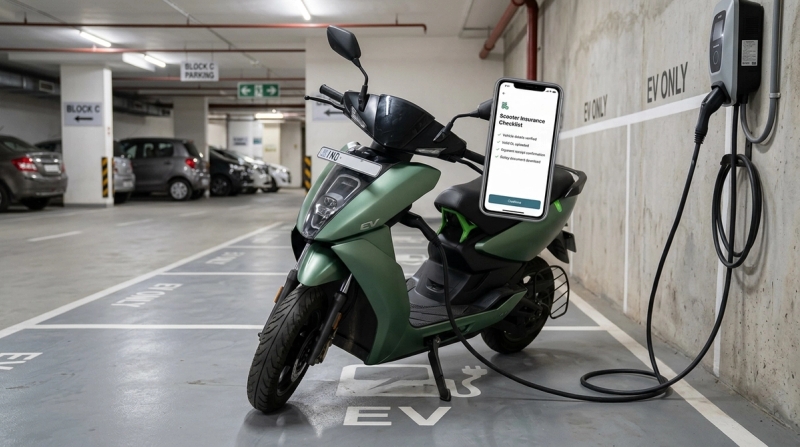
Electric scooter insurance looks simple from the outside.
You buy a policy. You renew it every year. You make sure it says “comprehensive”. Done, right?
Not always.
With petrol scooters, most people worried about dents, theft, accident repairs, and maybe a broken headlight or panel. With electric scooters, the expensive parts are different. The battery pack, motor, controller, charger, wiring, and other electrical components can cost a lot to repair or replace.
And the tricky part? EV damage is not always visible immediately.
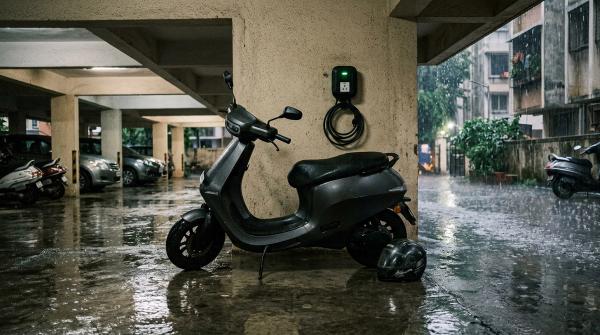
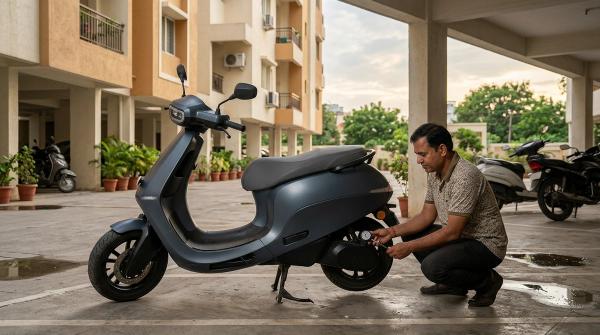
Your scooter may pass through a waterlogged road and seem fine. Two days later, it may refuse to charge. Or the warning light may come on. Or the scooter may shut down suddenly. That is when the policy wording starts to matter.
So if you are renewing electric scooter insurance in India in 2026, don’t just compare the final premium. Check what is actually covered, especially for the battery, charger, motor, water ingress, short circuit, and EV-specific add-ons.
First, get the basic cover right
#Before looking at Battery Protect, EV Shield, or other add-ons, first understand what type of insurance you are buying.
Third-party insurance
#Third-party insurance is mandatory in India. It covers your legal liability if your electric scooter injures someone or damages someone else’s property.
But it does not pay for damage to your own scooter.
So if your scooter is stolen, damaged in an accident, affected by fire, or hit by floodwater, third-party-only insurance will not repair your scooter.
For electric two-wheelers, third-party rates usually depend on motor output and regulator-notified categories. Insurers may differ in service, claim support, own-damage pricing, add-ons, and overall experience, but the third-party portion follows notified rate structures.
Standalone own-damage insurance
#Own-damage, or OD cover, protects your own electric scooter against covered risks such as accident, theft, fire, and certain natural events, subject to the policy terms.
Many electric scooter owners get long-term third-party insurance when they buy the scooter. After that, they renew only the own-damage part every year.
If that is your case, pay attention during renewal.
Your previous add-ons may not automatically continue. Battery Protect, EV Shield, zero depreciation, roadside assistance, consumables, and charger-related cover may need to be selected again.
Comprehensive insurance
#A comprehensive policy combines third-party liability and own-damage cover in one policy.
It is much better than third-party-only insurance if you want protection for your own scooter.
But comprehensive does not mean “everything is covered”.
A comprehensive policy still has exclusions, depreciation rules, deductibles, claim limits, and conditions. It may not automatically cover battery damage due to water ingress, short circuit, consequential loss, charger damage, or repairs done outside the authorised network.
Think of comprehensive insurance as the base. For an electric scooter, the real comparison begins after that.
Why electric scooter insurance needs extra attention
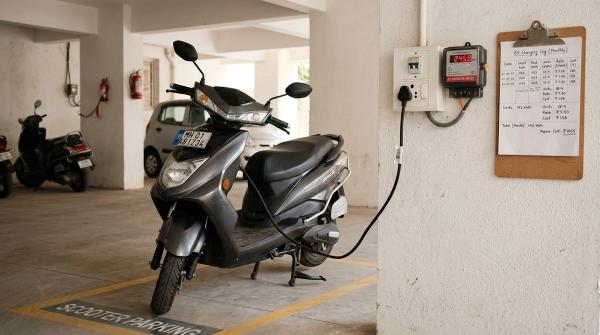
#Electric scooters have fewer moving parts than petrol scooters, but they carry a different type of risk.
The battery is usually one of the costliest components. The motor, controller, charger, wiring harness, sensors, and electronic systems can also be expensive. And unlike a cracked panel, electrical damage may not be obvious at first glance.
For example, imagine this: you ride through a waterlogged road during the monsoon. The scooter works fine that day. Later, it stops charging. The service centre finds water-related damage or a short circuit.
Now the insurer may ask whether this was direct accidental damage, or whether the damage became worse because the scooter was used after water exposure.
That brings us to consequential damage.
Consequential damage means damage that happens as a result of another event, especially if the vehicle was used after the first incident. Many standard motor policies exclude consequential damage unless a specific add-on covers it.
So instead of asking only, “Do I have comprehensive insurance?”, ask: “Does my policy cover battery, motor, charger, controller, water ingress, short circuit, and consequential damage? And what are the exclusions?”
Battery protection add-on: what it usually means
#Insurers use different names for EV-specific battery cover.
You may see names like:
- Battery Protect
- Battery Protection
- EV Shield
- EV Protect
- EV add-on bundle
- Electric vehicle protection cover
The name is not the most important part. The wording is.
A battery protection add-on is meant to cover some battery-related risks that may not be fully covered under a standard motor insurance policy.
Some EV or hybrid add-on wordings mention consequential damage to the battery due to water ingress or short circuit, subject to conditions and exclusions.
Before you buy or renew, check whether the add-on clearly mentions battery or battery pack, water ingress, short circuit, consequential damage, depreciation treatment, labour charges, diagnostic charges, deductibles, claim limits, exclusions for negligence, unauthorised repairs, and continued riding after damage.
Do not rely only on what a salesperson says.
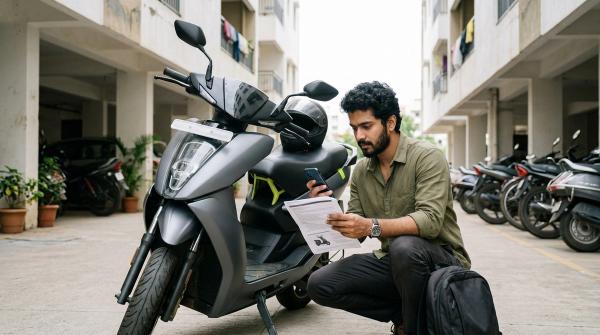
Ask for the policy wording. After payment, check the policy schedule and make sure the add-on is actually listed there.
If it is not written in the policy schedule, it may not help you during a claim.
What is EV Shield in electric scooter insurance?
#EV Shield is usually a broader EV-specific add-on or bundle.
Depending on the insurer, it may include cover for:
- Battery
- Motor
- Controller
- Charger
- Electrical components
- Roadside assistance
- Towing support
- EV-specific accidental damage scenarios
But EV Shield does not mean the same thing everywhere.
One insurer’s EV Shield may be mainly battery-focused. Another may include motor, charger, controller, roadside assistance, and more. Some EV-linked insurance programs may describe these covers differently.
So again, don’t go by the name alone. Read the policy wording.
When comparing EV Shield-type covers, ask whether it covers only the battery or also the motor and controller, whether the charger is covered, whether water ingress and short circuit are clearly included, whether consequential losses are covered or excluded, whether towing is included to an authorised service centre, and whether diagnostic or labour charges are covered.
A slightly cheaper renewal is not useful if the important EV parts are not protected.
Warranty and insurance are not the same thing
#A manufacturer’s battery warranty usually covers manufacturing defects or performance-related issues, subject to warranty terms.
Insurance covers accidental loss or damage, subject to policy terms.
So if your battery has a manufacturing defect, the warranty may apply. But if the battery is damaged in an accident, water enters the battery pack, or a short circuit happens after an insured event, your insurance policy and EV add-ons become important.
A long battery warranty does not automatically replace battery protection in insurance.
Water ingress and short circuit: read this before renewal
#For Indian electric scooter owners, water ingress is not a theoretical risk.
Many riders deal with flooded streets, waterlogged apartment gates, basement parking seepage, heavy monsoon rides, and potholes filled with water.
If water enters the battery pack, motor housing, controller, wiring, or charging system, repair costs can rise quickly.
The big claim question is whether your policy treats the damage as covered accidental damage, or excludes it as consequential damage.
Some EV add-ons specifically cover consequential damage caused by water ingress or short circuit. Others may not.
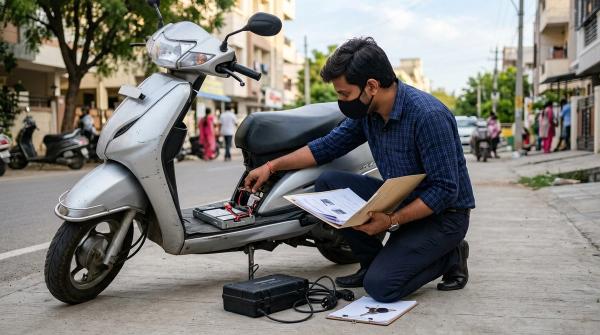
If your scooter has gone through deep water, don’t keep starting it again and again just to check if it works. Don’t put it on charging repeatedly. Don’t open the battery casing yourself.
Report it. Get it inspected. Follow the insurer and authorised service centre process.
Charger cover: don’t assume it is included
#The charger is one part many EV owners forget to check.
You may think, “It came with the scooter, so it must be covered.” Maybe. Maybe not.
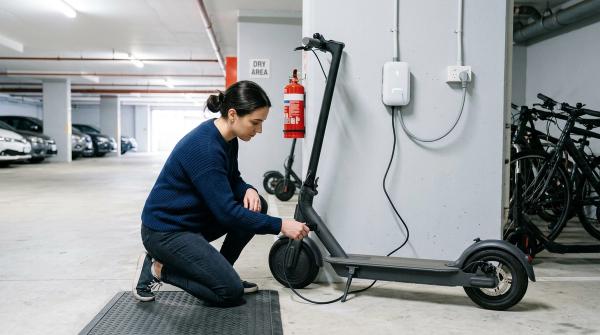
Some policies may cover the charger only in specific situations. Some may treat a portable charger differently from a fixed home charging unit. Some may cover accidental damage but not electrical failure. Some may cover theft only if certain conditions are met.
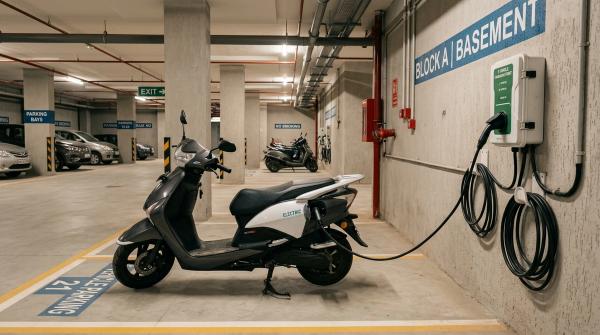
Before renewal, ask whether the portable charger is covered, whether a home charging unit is covered, whether charger damage due to short circuit is covered, whether theft of the charger is covered, whether damage during charging is covered, and whether there are sub-limits.
Do not assume “EV cover” means every charging accessory is automatically covered.
Motor and controller cover: what to check
#The motor and controller are also important because repair costs can be high.
If they are damaged in an insured accident, they may be covered under own-damage insurance, subject to policy terms.
But if the damage is due to water ingress, short circuit, electrical failure, or consequential damage, the claim may depend on EV-specific add-ons.
Ask whether the policy covers hub motor or drive motor damage, controller damage, wiring damage, short circuit-related damage, water ingress-related damage, labour charges, diagnostic charges, and authorised service centre repairs.
Add-ons electric scooter owners should check
#Not every rider needs every add-on.
Someone who rides five kilometres a day in a dry area has different risks from someone who parks in a basement that floods every monsoon.
Still, these add-ons are worth checking before renewal.
Battery protection add-on
#This can be useful if it clearly covers battery-related damage that the base policy may not fully cover.
Pay close attention to water ingress, short circuit, depreciation, and consequential damage wording.
EV Shield or EV-specific protection
#This can be useful if it extends cover to battery, motor, controller, charger, and EV-specific repair situations.
Compare the actual cover, not just the add-on name.
Zero depreciation
#Zero depreciation can reduce depreciation deductions on covered parts during a claim.
But check whether it applies to the EV battery, charger, and electrical components. Some policies may have special rules, limits, or exclusions for these parts.
Roadside assistance
#Roadside assistance is especially helpful for EVs.
It may help if your scooter breaks down, runs out of charge, suffers accident damage, or needs towing.
Check whether towing is included, whether towing to an authorised service centre is included, whether battery discharge assistance is included, whether there are distance limits, and whether assistance is available in your city or usual route.
Return to invoice
#Return to invoice can help in total loss or theft cases, depending on policy terms.
Check vehicle age limits, eligibility, exclusions, and whether electric scooters are treated the same way as petrol scooters.
Consumables cover
#EV repairs can still involve small parts and materials such as clips, fasteners, wiring items, connectors, insulation material, and other consumables.
A consumables add-on may help, but coverage depends on the insurer and repair type.
Renewal checklist for electric scooter insurance in 2026
#Before you click “renew”, take ten minutes and check these points.
- Policy type: Third-party only, standalone own-damage, or comprehensive.
- Vehicle details: Registration number, model, variant, motor output.
- Policy schedule: Policy period, IDV, deductibles, add-ons and insurer details.
- Battery protection: Add-on is listed and wording covers relevant risks.
- EV Shield: Battery, motor, controller, charger and towing terms are clear.
- Exclusions: Water damage, electrical breakdown, unauthorised repairs, continued use.
- Depreciation: Whether zero depreciation applies to EV parts.
- Repair process: Authorised service centre or insurer-approved garage rules.
- Documents: Policy, invoice, RC, licence, service centre and insurer contacts.
- Price: Premium compared with actual coverage, not just cheapest quote.
When should you contact the insurer?
#Contact the insurer as soon as possible after accident, theft, fire, water exposure, suspected battery damage, charging failure after an incident, smoke or burning smell, warning lights, sudden shutdown, or electrical fault.
Also contact the authorised service centre for safe inspection.
This is important because unauthorised repairs, local workshop diagnosis, opening the battery pack, or continued use after damage can complicate both insurance and warranty claims.
Simple rule: Report first. Repair later.
What to do after electric scooter damage
#If your scooter is damaged, documentation helps a lot.
Take photos and videos
#If it is safe, take clear photos and videos before moving the scooter.
Capture the full scooter view, registration number, damaged areas, accident spot, waterlogging if relevant, road condition, charger or visible electrical damage, and any warning lights.
Do not stage anything. Keep it factual.
Keep the policy schedule ready
#The policy schedule proves policy period, vehicle details, IDV, add-ons purchased, deductibles, and cover type.
If Battery Protect or EV Shield is not listed in the schedule, claiming that benefit may become difficult.
Keep the original invoice
#The scooter invoice helps establish purchase date, model, variant, vehicle value, and component details where relevant.
Save a digital copy. Physical papers are easy to misplace.
Get a service report or repair estimate
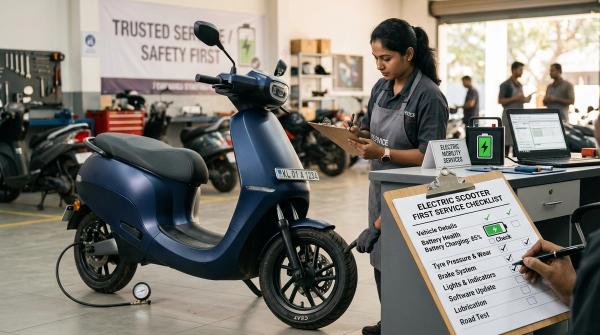
#Ask the authorised service centre for a written report or estimate.
For EV claims, this can be very important because the report may mention whether the damage appears to be due to impact, water ingress, short circuit, battery issue, motor issue, controller damage, or charging-related damage.
Submit the required claim documents
#The insurer may ask for a claim form, policy copy, registration certificate, driving licence, KYC documents, photos, repair estimate, service report, FIR in theft or major accident cases, or other documents depending on the claim.
Requirements vary by insurer and claim type, so follow the process carefully and keep copies of everything you submit.
Common mistakes to avoid
#Assuming comprehensive means complete cover
#Comprehensive is broader than third-party insurance, but it does not automatically cover every EV-specific risk.
Battery damage, charger damage, short circuit, water ingress, and consequential loss may need specific add-ons.
Not checking whether add-ons are active
#A dealer may mention EV Shield during purchase or renewal, but you should check whether it appears in the policy schedule.
If it is not listed, don’t assume it is included.
Ignoring water ingress wording
#If you live in a monsoon-heavy city or park in a basement, water ingress wording is extremely important.
Starting or charging the scooter after suspected damage
#If there is water exposure, smoke, burning smell, warning light, accident damage, or charging failure, do not keep testing the scooter repeatedly.
It can worsen the damage and create claim issues.
Going to a local mechanic first
#For EV battery, motor, controller, charger, and wiring issues, use the authorised service centre route unless your insurer tells you otherwise.
Unauthorised work can create insurance and warranty problems.
Comparing only the final premium
#The cheapest policy is not always the best policy.
Compare the cover, add-ons, exclusions, deductibles, claim support, and repair network.
A simple way to compare two policies
#If you are confused between two electric scooter insurance plans, make a small comparison table.
Check these points side by side:
- Third-party cover
- Own-damage cover
- IDV
- Battery protection add-on
- EV Shield or EV-specific cover
- Water ingress cover
- Short circuit cover
- Charger cover
- Motor and controller cover
- Zero depreciation
- Roadside assistance
- Towing support
- Authorised service centre network
- Deductibles
- Exclusions
- Final premium
Then ask yourself one practical question:
If my scooter’s battery, motor, or charger is damaged in the most likely situation I face, will this policy respond clearly?
For some riders, the main risk is waterlogging. For others, it is daily accident exposure, basement parking, charger damage, or quick towing support.
The right policy is not always the most expensive one. It is the one whose wording matches your real risks.
Related AllBlogs reads
#- Electric Scooter Battery Warranty in India: useful for understanding warranty vs insurance boundaries.
- Electric Scooter Charging Cost in India: useful if you are reviewing total monthly ownership cost.
- Electric Scooter in Rain: useful for monsoon riding, parking and charging safety checks.
Final word
#Electric scooter insurance in India is not difficult, but it does need a closer look.
Start with the basics: third-party, own-damage, or comprehensive.
Then check the EV-specific parts: battery protection, EV Shield, water ingress, short circuit, charger, motor, controller, roadside assistance, depreciation, deductibles, and exclusions.
Most importantly, don’t stop at the renewal price or brochure.
Open the policy schedule. Read the add-on wording. Save your documents. And if something goes wrong, inform the insurer and authorised service centre before repairs begin.
This article is for general information only. Insurance terms vary by insurer and policy wording. Always read your own policy schedule, inclusions, deductibles, limits, and exclusions before buying or renewing. This is not legal or financial advice.