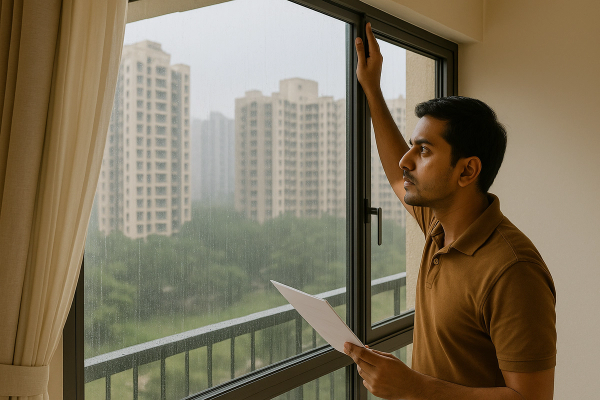
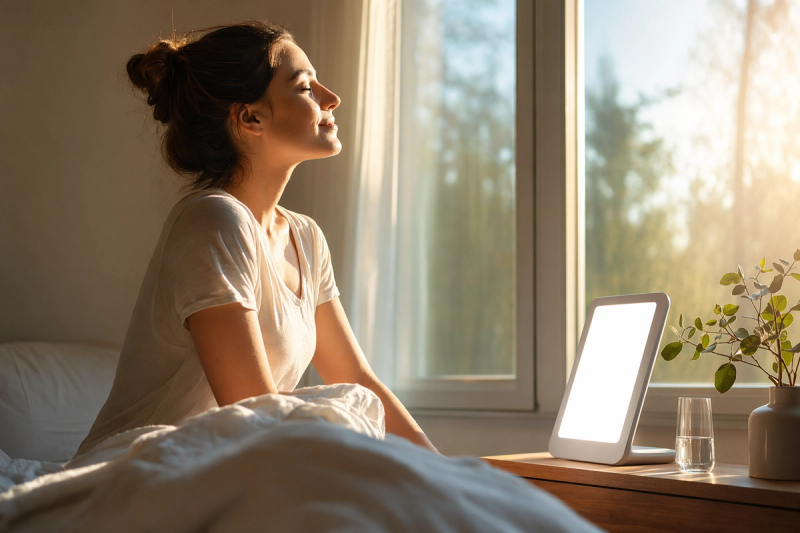
The real question is not “sun or lamp?” It’s timing, consistency, and what your body can actually use
#If sleep has been feeling fragile lately, the whole morning-light thing can sound almost annoyingly simple. Go outside. Get sun. Sleep better. Done, right? Well… sort of, but not quite. Morning sunlight and light therapy lamps both work on the same basic system: your circadian rhythm, the internal timing network that helps regulate alertness, sleepiness, body temperature, hormones like melatonin, and a bunch of other daily patterns you don’t consciously control. But they are not identical tools, and neither one is a magic fix for insomnia, stress, pain, sleep apnea, medication effects, anxiety, depression, menopause symptoms, a newborn in the house, or a bedroom that feels like a noisy toaster oven.
A careful way to think about it is this: morning outdoor light is usually the most natural, low-cost starting point for supporting a steadier sleep-wake schedule. A light therapy lamp can be useful when sunlight is hard to get, especially during darker seasons, very early work schedules, limited mobility, or certain circadian rhythm sleep-wake issues. But the details matter. Too much light at the wrong time can push sleep later. A lamp used too close, too long, or by someone with certain health conditions can be a bad idea. So the useful comparison is less “which is better?” and more “which is safer, realistic, and appropriate for this particular person?”
How morning light talks to your sleep clock
#Your eyes are not just cameras for seeing. They also contain light-sensitive cells that help send timing signals to the brain’s master clock, located in a region called the suprachiasmatic nucleus. That clock uses light, especially bright light in the morning, to help set the day. Research in sleep medicine has consistently shown that light exposure is one of the strongest environmental cues for circadian timing. This is why the American Academy of Sleep Medicine and many sleep clinicians talk so much about regular wake times, morning light, and dimmer evenings when helping people build healthier sleep routines.
Morning light may help your body understand, “Okay, day has started.” Over time, that can support earlier evening sleepiness for some people, especially those whose schedule has drifted late. Evening bright light, including bright overhead lighting and phone or laptop light, can do the opposite for some people. It may delay melatonin timing and make it harder to feel sleepy at the hour you want. That does not mean one glance at a screen ruins your sleep forever. Bodies are more forgiving than wellness headlines sometimes imply. But if your nights are already messy, evening light and stimulation can be one more nudge in the wrong direction.
Light is not a sedative. It does not knock you out. It is more like a timing signal, and timing signals work best when they are repeated gently and consistently.
Morning sunlight: the underrated option people skip because it sounds too basic
#Morning sunlight has a few quiet advantages. First, outdoor light is usually much brighter than typical indoor lighting, even on a cloudy day. A normal office or living room might be a few hundred lux, while outdoor daylight can be thousands of lux or much more depending on weather, season, shade, and time of day. You do not need to stare at the sun, and you should not. The point is simply to be outdoors with light reaching your eyes indirectly. Sunglasses may reduce the circadian signal, though eye safety and comfort matter too, especially for people with light sensitivity or eye conditions.
Second, morning sunlight often comes bundled with other useful habits. You might step outside, walk a little, breathe cooler air, get away from the phone for ten minutes, or make the morning feel less like a panicked sprint into emails. Those extras are not trivial. Sleep is affected by stress load, movement, meals, caffeine, alcohol, bedroom temperature, noise, and mental arousal. Light helps, but it is one piece. A person can get perfect morning sun and still sleep poorly if they are doom-scrolling until 1 a.m., drinking late caffeine, or waking up gasping at night from possible sleep-disordered breathing.
A practical sunlight routine, without turning it into a whole personality
#For many generally healthy adults, a simple starting point is getting outside soon after waking, often within the first hour if possible. Ten to thirty minutes is commonly suggested in wellness and sleep education, but there is no single perfect number for everyone. Cloudy weather, darker skin tone, season, latitude, age, and how much sky you can see all change the amount of light exposure. If you live in a dense apartment block and only see a slice of sky between buildings, a longer outdoor walk may give a stronger signal than standing near a window. Window glass blocks much ultraviolet light and also reduces brightness, so “sitting by a window” is usually not the same as being outdoors for circadian purposes.
- Try pairing morning light with something you already do, like drinking coffee outside, walking a dog, watering plants, or stepping out before the commute.
- Keep it comfortable. No sun-staring, no forcing your eyes open in painful glare, and no skipping sunscreen when UV exposure is relevant.
- If mornings are chaotic, even a short outdoor reset may be more realistic than a perfect routine you abandon after three days.
Light therapy lamps: helpful tool, not just a trendy desk accessory
#A light therapy lamp, sometimes called a bright light box, is designed to deliver a controlled dose of bright visible light. Many devices are marketed at 10,000 lux, often used for about 20 to 30 minutes in the morning, but those numbers depend on the lamp, distance, angle, and purpose. The lamp should usually be placed off to the side or slightly above eye level, according to device instructions, so the light enters your eyes indirectly while you read, eat breakfast, or work. You generally do not stare directly into it. Good lamps are typically UV-filtered, because ultraviolet exposure is not the goal here.
Light therapy has better-established use in seasonal affective disorder and certain circadian rhythm sleep-wake disorders than in vague “I sleep badly” situations. That distinction matters. Someone with delayed sleep-wake phase, for example, may benefit from carefully timed morning bright light as part of a broader plan. Someone with insomnia driven mostly by worry, hot flashes, restless legs, alcohol use, chronic pain, or untreated sleep apnea may not get much from a lamp by itself. And for shift workers, timing can get complicated fast, because the “right” light depends on when you need to sleep and when you need to be alert.
Who should be extra cautious with lamps
#Bright light therapy is not automatically safe for every person just because it is non-drug. It is worth asking a qualified healthcare professional before using a lamp if you have bipolar disorder or a history of mania or hypomania, because bright light can affect mood timing and activation in some people. Also check first if you have retinal disease, significant eye conditions, recent eye surgery, migraines triggered by light, or take medications that increase light sensitivity. Some antibiotics, acne medications, psychiatric medications, and herbal products can make photosensitivity more likely. If light exposure causes eye pain, severe headache, agitation, unusual mood changes, or worsening symptoms, stop and get medical advice.
So which one is “better” for sleep?
#For most people who can access it safely, morning sunlight is the better first experiment because it is free, broad-spectrum, very bright, and easier to combine with normal life. It also does not require buying another wellness gadget. The downside is obvious: weather, winter darkness, safety, work schedules, caregiving responsibilities, disability, air quality, and neighborhood conditions can make outdoor light difficult or unrealistic. Telling someone to “just go for a sunrise walk” can be pretty tone-deaf if they leave for work before dawn, live somewhere icy, or are caring for a child who had a rough night.
A light therapy lamp may be better when consistency is the main problem. If it is dark until 8 a.m., raining sideways, or you work from a windowless room, a lamp can provide a repeatable light cue. It can also be easier to time precisely, which is useful for circadian rhythm work. But lamps cost money, vary in quality, and can be misused. The best choice is often not either-or. Some people use outdoor morning light when available and a lamp during darker months or schedule crunches. Again, if you have medical or mental health conditions, that plan should be checked with a clinician who knows your situation.
| Factor | Morning sunlight | Light therapy lamp |
|---|---|---|
| Brightness | Often very bright outdoors, even on cloudy days | Controlled brightness, commonly marketed around 10,000 lux at a specified distance |
| Cost | Free, aside from time and access | Requires buying a suitable device |
| Consistency | Depends on weather, season, safety, schedule | More consistent indoors when used correctly |
| Extra benefits | May include walking, fresh air, morning routine, less screen time | Convenient for dark mornings, limited mobility, or structured circadian plans |
| Main cautions | UV exposure, heat, glare, unsafe outdoor conditions | Eye strain, headache, mood activation, photosensitivity, wrong timing |
| Best fit | A low-risk first step for many people | A targeted tool when sunlight is limited or timing needs precision |
Timing is where people accidentally sabotage themselves
#Morning light tends to shift the circadian clock earlier, which may help people feel sleepy earlier at night over time. Light late in the evening or during the night tends to shift the clock later, especially if it is bright and close to the eyes. This is why sleep advice often combines morning brightness with dimmer evenings. The combination matters. If you use a bright lamp at 7 a.m. but then sit under intense lights and scroll in bed at midnight, the signals may be fighting each other. Not always, not for everyone, but often enough that it is worth noticing.
Screen-heavy routines are a modern sleep trap partly because they mix light with emotion, novelty, work stress, and endless “just one more” loops. If your phone is the last thing you see and the first thing you reach for, changing light exposure may also mean changing boundaries around attention. For a practical look at reducing digital friction at night, this guide on App Blocker vs Screen Time vs Focus Mode: What Should You Use to Cut Phone Distractions? fits nicely with the sleep conversation. The goal is not to become perfectly disciplined. It is to make the healthier choice less annoying.
A gentle 7-day experiment you can try, if it is safe for you
#If your sleep issues are mild and not linked to alarming symptoms, a short experiment can help you learn how your body responds. Keep it boring, because boring is measurable. Choose a wake time you can keep within about the same window each day. Get morning outdoor light soon after waking, or use a properly designed light therapy lamp according to its instructions if outdoor light is not realistic. Keep evenings a little dimmer. Reduce bright screens close to bed if you can. Track sleep timing, not just sleep quality, because feelings can fluctuate for reasons that have nothing to do with light.
- Pick one wake time for the week, allowing a little flexibility if life requires it.
- Get morning light within the first hour after waking, using outdoor light when possible.
- Avoid using a bright therapy lamp in the evening unless a qualified clinician has specifically advised that timing.
- Write down bedtime, wake time, caffeine timing, alcohol, naps, and how alert you feel in the morning.
- If sleep gets worse, your mood feels unusually elevated or agitated, or you develop concerning symptoms, stop the experiment and seek professional advice.
What about winter, cloudy days, and dark bedrooms?
#Winter is where this topic gets very real. Short days and darker mornings can make it harder for the body to get a strong daytime signal. Some people also notice lower mood or energy during darker months. Bright morning light may support alertness and circadian regularity, and light therapy is commonly discussed for seasonal patterns of mood, but persistent low mood, loss of interest, hopelessness, or thoughts of self-harm need professional support right away. Light routines can be part of care for some people, but they are not a substitute for mental health treatment when treatment is needed.
Cloudy days still count. Outdoor light on an overcast morning is usually stronger than indoor light, though less intense than full sun. If going outside is safe, it may still be worth doing. If your bedroom is extremely dark in the morning, opening curtains right away can help create a gentler transition, but do not rely on window light alone if your goal is a strong circadian cue. On the other hand, a dark bedroom at night is often helpful. Blackout curtains can be great for sleep, as long as you have a way to get bright light after waking.
Light is only one part of the sleep environment
#It is easy to over-focus on light because it feels controllable. Buy lamp, fix sleep. But sleep is annoyingly multi-factorial. Bedroom temperature, noise, bedding comfort, air quality, allergies, pets, alcohol, late meals, reflux, pain, and stress all matter. When traveling, even a strange smell from the air conditioner can make sleep feel lighter or more restless. If that sounds familiar, especially in hotels, this practical piece on Hotel Room AC Smells Musty? What to Do Before Sleep is a useful reminder that sleep hygiene is not just about screens and sunrise. Sometimes it is ventilation, dust, humidity, or feeling comfortable enough to relax.
Also, if you wake up repeatedly choking or gasping, snore loudly with daytime sleepiness, have restless legs that make it hard to fall asleep, experience chest pain, fainting, severe anxiety, major mood changes, or insomnia that persists for weeks despite reasonable changes, it is time to talk with a healthcare professional. Sleep problems are common, but common does not mean harmless. A clinician may consider sleep apnea, thyroid issues, medication effects, depression, anxiety, pain conditions, perimenopause or menopause symptoms, circadian rhythm disorders, or other causes that deserve proper care.
Common mistakes with morning light and light lamps
#The first mistake is expecting instant results. Circadian changes can take days or longer, and sleep quality naturally varies. One bad night does not prove the routine failed. The second mistake is using the lamp whenever you remember, including late afternoon or evening, then wondering why bedtime drifts later. The third is buying a random “sunset mood lamp” and assuming it is the same as a clinically styled bright light box. Decorative lamps may feel cozy, but they may not deliver the intensity needed for circadian effects.
Another mistake is making the routine too intense. More is not always better. Sitting inches from a bright lamp for hours is not a smarter version of light therapy. It is just more likely to cause discomfort. Similarly, forcing outdoor sun exposure in extreme heat, unsafe air quality, or high UV conditions is not necessary. Shade, indirect daylight, a hat, sunscreen, and common sense still apply. The goal is a sustainable morning light signal, not proving toughness to the sky.
Quick reality checks before buying a lamp
#- Look for a UV-filtered light therapy box from a reputable manufacturer, and read the distance instructions carefully.
- Check whether the advertised lux level applies at the distance you will actually sit from it.
- Avoid using a lamp as a self-treatment for severe insomnia, depression, bipolar symptoms, or major schedule disorders without professional guidance.
- If you already get reliable morning outdoor light and your sleep is still poor, the missing piece may not be more light.
Who may benefit most from each approach?
#Morning sunlight may be especially useful for people with irregular wake times, too much indoor time, mild schedule drift, or evenings that have gotten later and later. It can also be a good anchor for people trying to rebuild routine after travel, busy work periods, or a stretch of inconsistent sleep. Light therapy lamps may be useful for people living at high latitudes, dealing with dark winter mornings, working in windowless spaces, or needing a more structured circadian signal. Some people with delayed sleep-wake phase may be advised to use timed morning light, often along with evening dimming and careful scheduling.
For shift workers, the answer is more individual. Morning light after a night shift can sometimes make it harder to sleep during the day, because it tells the body that daytime has begun. Some shift-work strategies use bright light during the work period and sunglasses on the commute home, but this should be tailored carefully. If shift work is seriously affecting sleep, alertness, driving safety, mood, or health, a sleep medicine professional can help create a safer plan. Drowsy driving, in particular, is not something to “wellness routine” your way through.
A balanced daily rhythm that does not require perfection
#If you want the simplest version, it looks like this: brighter mornings, active days, calmer evenings, darker nights. Wake at a fairly consistent time. Get light early. Move your body in a way that fits your ability and health status. Keep caffeine earlier if you are sensitive to it. Dim lights at night. Make the bedroom cool, comfortable, and boring. That is the unglamorous foundation. It may help many people, but it will not solve every sleep issue, and nobody should feel like they failed because their body needs more support.
There is also room for kindness here. Sleep advice can become weirdly moralistic, as if sleeping badly means a person is undisciplined. That is not fair. Caregiving, grief, illness, financial stress, noisy housing, rotating shifts, trauma, hormonal changes, and medications can all affect sleep. Morning sunlight and light therapy lamps are tools, not character tests. Use what is realistic. Skip what is unsafe. Ask for help when symptoms are severe, persistent, worsening, or unusual for you.
Bottom line: start with the sun if you can, use a lamp thoughtfully if you need one
#Morning sunlight is usually the gentler first choice for supporting better sleep timing, especially because it is free and naturally bright. A light therapy lamp can be a smart backup or targeted tool when outdoor light is limited, mornings are dark, or a clinician recommends timed bright light for a circadian issue. The winner depends on access, safety, timing, health history, and whether the rest of the sleep routine is working with or against your body clock.
If sleep problems are mild, experimenting with consistent morning light and dimmer evenings may be a reasonable wellness step. If sleep problems are severe, long-lasting, linked with breathing pauses, major mood symptoms, unsafe sleepiness, pain, or anything that feels off, please involve a qualified healthcare professional. Better sleep is not about chasing the perfect hack. It is about giving your body clearer signals, noticing what changes, and getting proper support when general advice is not enough. For more practical, careful wellness reads, you can browse AllBlogs.in.