Direct answer: In forex markup vs dynamic currency conversion, forex markup is the fee your Indian card issuer charges when you use your card abroad in a foreign currency. Dynamic Currency Conversion (DCC) is when a foreign merchant, hotel, restaurant, payment terminal, or ATM offers to convert your bill into INR at checkout. DCC may feel convenient because you see the amount in rupees, but it can come with its own exchange rate and extra fees. To reduce unnecessary card fees abroad, the safest default is simple: pay in local currency.
Using your Indian debit or credit card abroad feels simple.
You tap. You enter your PIN. You sign if needed. You collect the receipt and move on.
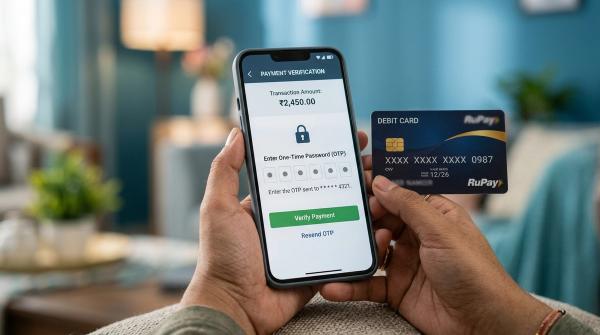
Then one day, the card machine asks:
“Pay in INR or pay in local currency?”
And suddenly, you pause.
INR feels familiar. It feels easier. You know what the number means. But in most cases, choosing INR is not the safer option. It may actually make the transaction more expensive.
This guide explains the difference between forex markup and dynamic currency conversion, how DCC works, why your final card charge may be higher than expected, what to do at foreign ATMs, and how Indian travellers can avoid common payment mistakes abroad.
The simple travel rule: choose local currency
#When a card terminal abroad asks whether you want to pay in INR or the local currency, choose the local currency.
If you are in Thailand, choose THB. If you are in the UAE, choose AED. If you are in Europe, choose EUR where applicable. If you are in the US, choose USD. If you are in Japan, choose JPY.
Do not choose INR just because it looks easier to understand.
When you choose INR abroad, you are usually accepting Dynamic Currency Conversion, or DCC. That means the merchant’s payment provider converts the amount into rupees before the transaction reaches your Indian card issuer.
The problem is that the exchange rate is not set by your bank. It is set by the foreign merchant’s payment provider, ATM operator, or conversion service. That rate may include a markup or additional fee.
When you choose local currency, your card network and Indian issuer handle the conversion according to your card’s terms. You may still pay a forex markup, but that fee is usually mentioned in your issuer’s schedule of charges.
So the short version is:
Abroad, pay in local currency. Decline INR conversion.
What is forex markup?
#Forex markup is the fee charged by your Indian debit or credit card issuer when you use your card for a transaction in a foreign currency.
You may also see it called:
- Foreign transaction fee
- Foreign currency markup
- International usage fee
- Currency conversion fee
Here is what usually happens:
- You make a purchase abroad in the local currency.
- The transaction goes through the card network.
- The foreign currency amount is converted for billing.
- Your Indian card issuer applies its forex markup.
- The final amount appears on your card statement in INR.
The key point is this:
Forex markup is charged by your Indian card issuer, not by the shop, hotel, restaurant, or foreign merchant.
That makes it easier to check in advance. Your bank or card issuer should list this fee in the card’s fee schedule, schedule of charges, or Most Important Terms and Conditions.
The fee can vary from one card to another. Some cards have high markup. Some have lower markup. Some premium or travel-focused cards may offer reduced or zero forex markup.
Do not guess. Check your own card’s terms before you travel.
What is Dynamic Currency Conversion, or DCC?
#Dynamic Currency Conversion (DCC) is an optional service offered by a foreign merchant, hotel, restaurant, payment terminal, or ATM.
It appears when the machine detects that your card is from another country and asks whether you want to pay in your home currency, such as INR, instead of the local currency.
For example, suppose you are in Singapore and your bill is SGD 100.
The terminal may show two choices:
- Pay SGD 100
- Pay the INR equivalent
If you choose the INR option, the merchant’s payment provider converts the bill into rupees immediately. That is DCC.
Visa describes DCC as a service that lets travellers pay in their home currency and may show exchange rate and fee information. Mastercard also says cardholders should be given a choice between local currency and billing currency.
That choice matters.
You are not required to choose INR.
Why DCC can cost more
#DCC feels helpful at first.
You are tired at an airport. You are checking out of a hotel. There is a queue behind you at a restaurant. The machine shows INR, and it feels easier to just accept it.
But that convenience can cost you.
With DCC, the exchange rate is set by the merchant’s payment provider or ATM operator. That rate may include a markup. Sometimes the fee is shown clearly. Sometimes it is quietly built into the exchange rate, which makes it harder to notice.
There is another important point.
Even if the amount is shown in INR, the transaction is still happening at a foreign merchant or foreign ATM. Depending on your card issuer’s rules, your Indian bank may still treat it as an international transaction and apply relevant fees.
So in some cases, you may pay for the foreign-side conversion and still face issuer-side charges.
That is why the practical rule is:
When abroad, pay in local currency. Decline DCC.
Forex markup vs DCC: what is the actual difference?
#The real difference is who converts the money.
With forex markup, you pay in local currency. Your card network and Indian issuer handle the conversion later, and your issuer applies charges according to its terms.
With DCC, the foreign merchant, hotel, restaurant, payment provider, or ATM operator converts the amount into INR at the time of payment.
Both can involve costs. But DCC is often easier to miss because it is presented as a convenience.
A payment terminal may use phrases like:
- “Pay in your home currency?”
- “Guaranteed exchange rate”
- “Pay INR now”
- “Accept conversion”
- “Continue with INR”
- “Let us convert for you”
These phrases do not automatically mean you are getting a better deal.
In most cases, they simply mean DCC is being offered.
Comparison table: forex markup vs DCC vs ATM fees
#What does “pay in local currency” mean?
#Paying in local currency means you ask the merchant, terminal, or ATM to charge your card in the currency of the country you are visiting.
If you are in Japan, pay in JPY. If you are in the UK, pay in GBP. If you are in Indonesia, pay in IDR. If you are in Australia, pay in AUD.
Your Indian card statement will still show the final amount in INR later. You are not avoiding currency conversion completely.
You are simply choosing who does the conversion.
By paying in local currency, you avoid the merchant’s DCC conversion and allow your card network and issuer to process the transaction under your card’s regular international usage terms.
Where travellers commonly run into DCC
#DCC is especially common in places where tourists are paying quickly and may not read every screen carefully.
Be extra alert at:
- Hotel check-in and checkout counters
- Airport shops
- Duty-free stores
- Restaurants in tourist areas
- Car rental desks
- Museum and attraction counters
- Foreign ATMs
- Taxi or ride payment terminals
- Retail stores with handheld card machines
- Tourist markets and souvenir stores
A staff member may say:
“Would you like to pay in rupees?”
Or:
“This shows the final INR amount.”
That can sound helpful, but you can simply say:
“Please charge me in local currency.”
If the terminal gives you a choice, select the local currency yourself. Do not let the cashier choose INR for you unless you have clearly decided to accept DCC.
What Indian travellers should know before using cards abroad
#Indian debit and credit cards can be used abroad, subject to FEMA rules and your issuer’s terms. RBI FAQs support the use of Indian cards abroad under applicable FEMA and card issuer conditions.
In practical terms, check these things before leaving India:
- Whether your card is enabled for international use.
- What limits apply to international POS, online, and ATM transactions.
- What fees your issuer charges for foreign transactions, cash withdrawals, and currency conversion.
- Whether your card has separate controls for tap, swipe, online, POS, and ATM usage.
You can usually check these settings through:
- Your bank’s mobile app
- Net banking
- Card control settings
- Official customer care
- Your card’s schedule of charges
Do not assume every Indian card will work everywhere.
Some cards have international usage switched off by default. Some have low international limits. Some may work at shops but not at ATMs. Some may require separate activation for online international payments.
It depends on your issuer and card settings.
Checklist before using a card abroad
#Use this checklist before your trip and while making payments overseas.
Before you travel
#- Check your issuer’s fee schedule. Look for forex markup, foreign transaction fee, international ATM withdrawal fee, and cash advance charges if using a credit card for ATM withdrawals.
- Enable international usage if needed. Turn on international POS, ATM, or online usage only as required.
- Set sensible limits. Keep limits high enough for your trip, but not unnecessarily high.
- Carry more than one payment option. A second card and some local cash can help if one card fails.
- Save bank contact details. Keep your bank’s official helpline, card blocking option, and dispute process handy.
- Know your card network. Visa and Mastercard acceptance can vary depending on the place, so a backup card helps.
- Read SMS and app alerts. They help you spot wrong-currency charges, duplicate transactions, or failed payments quickly.
At checkout abroad
#- Choose local currency. If asked INR or local currency, choose local currency.
- Decline DCC. Do not accept “guaranteed INR conversion” unless you have checked it and consciously want it.
- Read the terminal screen. Do not tap too fast. Those few seconds matter.
- Check the receipt. It should show the local currency if you declined DCC.
- Ask for a void if needed. If the merchant selects INR without asking, request cancellation and a fresh charge in local currency.
- Keep receipts. They are useful if you need to dispute a wrong currency, duplicate charge, or failed transaction.
What if a merchant chooses INR without asking?
#Ask them to cancel or void the transaction and run it again in the local currency.
Stay polite, but be clear:
“I did not choose INR. Please void this and charge me in local currency.”
Mastercard says cardholders should receive a choice between local currency and billing currency. If you were not given a choice, keep the receipt and contact your issuing bank promptly if the charge settles incorrectly.
Do not rely only on a verbal promise from the shop, hotel, or restaurant.
Keep:
- The payment slip
- The invoice
- The cancellation receipt, if any
- Any written confirmation from the merchant
These small records can become very useful later, especially if you need to raise a dispute.
What if an ATM offers conversion?
#Foreign ATMs can also offer DCC.
You may see messages such as:
- “Accept conversion”
- “Continue with guaranteed rate”
- “Withdraw in INR”
- “Let us convert for you”
- “Proceed with home currency”
If the ATM gives you the option, decline the conversion and continue in local currency.
Remember, ATM withdrawals abroad can still involve other charges, such as:
- Foreign ATM operator fee
- Your issuer’s international cash withdrawal fee
- Currency conversion fee
- Cash advance charges, if using a credit card
DCC is only one part of the total cost.
For safety, use ATMs in secure, well-lit locations. Prefer ATMs inside or attached to banks, airports, hotels, malls, or established public areas. Shield your PIN and check your alerts after withdrawal.
What to do if a charge is wrong, duplicated, or failed
#Travel payments can get messy.
A terminal may freeze. A hotel may block a pre-authorised amount. A restaurant may accidentally charge twice. An ATM may show a failed withdrawal while your phone still receives a debit alert.
Do not panic, but do not ignore it either.
Act quickly and keep records.
Preserve proof
#Keep:
- Card charge slips
- Merchant invoices
- ATM receipts
- Cancellation or void slips
- SMS alerts
- App notifications
- Emails from the merchant
- Screenshots of disputed transaction details
Contact the merchant first, if practical
#If you are still at the location and the merchant can reverse or void the charge, ask them to do it immediately.
Get written proof. A cancellation receipt, email, or printed slip is much better than someone saying, “It will be fixed later.”
Contact your bank promptly
#If the wrong charge appears, a duplicate does not reverse, or a failed transaction settles, contact your card issuer through official channels.
Use the bank’s dispute, chargeback, fraud reporting, or card support process.
Explain clearly:
- Date and location of transaction
- Merchant name
- Amount shown
- Currency charged
- What you selected on the terminal
- Whether the transaction failed, duplicated, or was forced into INR
- What proof you have
The sooner you report it, the easier it is to create a clean record.
A simple example
#Imagine you are in Dubai and your restaurant bill is in AED.
The card machine asks:
- Pay in AED
- Pay in INR
If you choose INR, DCC applies. The restaurant’s payment provider converts the amount and shows you a rupee figure. That exchange rate may include its own fee or markup.
If you choose AED, the transaction goes through in local currency. Your Indian issuer and card network handle the conversion according to your card terms. Your issuer may apply a forex markup, but that fee should be listed in its schedule of charges.
So the better default choice is:
Pay in AED. Not INR.
The same logic applies in most countries.
Choose the currency of the place where you are spending.
Common mistakes to avoid
#Mistake 1: Choosing INR because it feels safer
#Seeing INR feels clear, but it does not mean the rate is better. It usually means DCC is being offered.
Mistake 2: Assuming a zero forex markup card blocks DCC
#A low or zero forex markup card can help with issuer-side fees. But it does not stop a foreign merchant or ATM from offering DCC.
You still need to choose local currency.
Mistake 3: Ignoring ATM screens
#Many travellers are careful at shops but rush through ATM screens. Read every screen. Decline ATM conversion when it is offered.
Mistake 4: Throwing away receipts
#Receipts are useful if the wrong currency is charged or a transaction is duplicated. Keep them until your card statement is settled and checked.
Mistake 5: Not checking issuer terms before travel
#Two Indian cards can have very different international fee rules. Check before you fly, not after you return and wonder why your card bill is higher than expected.
Related AllBlogs guides to read next
#- Airport Currency Exchange vs ATM Abroad: Best Cash Choice
- Credit Card Annual Fee vs Joining Fee vs Renewal Fee: What to Check
- Credit Card Billing Cycle in India: Statement Date, Due Date and Payment Checklist
- Debit Card Payment Failed but Money Debited? India Refund Checklist
Bottom line
#For Indian travellers, the main difference in forex markup vs dynamic currency conversion is control.
With forex markup, your Indian card issuer applies fees according to its published terms. With DCC, the foreign merchant, hotel, restaurant, payment provider, or ATM operator converts the bill into INR using its own exchange rate and fee structure.
So when the screen asks INR or local currency, choose local currency.
It is simple, repeatable, and usually the safest way to avoid unnecessary card fees abroad.