A stuffy room does not always need an air purifier.
That is probably the most useful thing to know before spending money. If a room feels stale, heavy, sleepy, or “closed in,” the first thing to think about is usually ventilation. In plain English: the room may need fresh air.
Opening a window can quickly lower built-up CO2 and push out stale indoor air, as long as the outdoor air is reasonably clean and the weather, noise, and safety situation make it practical.
The CO2 monitor vs air purifier decision comes down to what is actually wrong with the room:
- Buy an NDIR CO2 monitor if you want to know when the room needs fresh air.
- Buy a HEPA air purifier if your problem is dust, pollen, smoke, pet dander, or PM2.5.
- Open a window when outdoor air is decent and you need quick ventilation.
For many homes, the best answer is not one gadget. It is better habits first, then the right device if you still need one.
The Short AnswerBuy a CO2 monitor if: the room feels stale, sleepy, heavy, or closed-in, and you want to know when to ventilate.Buy an air purifier if: dust, pollen, smoke, pet dander, or fine particles are the main issue.Open a window if: outdoor air is decent and you need to clear stale air or built-up CO2.Best setup: use a CO2 monitor to guide ventilation, and use a HEPA air purifier when particle pollution is the problem.
This guide is for general information only and is not medical advice. If you have asthma, severe allergies, breathing symptoms, dampness, mold concerns, or safety worries, check official health guidance and speak with a qualified professional. Always verify product specifications before buying any air quality device.
Why a Stuffy Room Is Not Always an “Air Purifier Problem”
#A stuffy room can mean a few different things.
Sometimes it means the air is dusty. Sometimes it means the room is too warm. Sometimes it means there is not enough fresh air coming in. And sometimes it is a mix of all three.
This is where people often buy the wrong product.
An air purifier filters the air that is already inside the room. A good HEPA purifier can help with dust, pollen, smoke particles, pet dander, and PM2.5. But it does not bring in fresh air. And a normal consumer HEPA air purifier does not remove carbon dioxide.
That matters because people breathe out CO2 all day and night. In a closed bedroom, home office, classroom, or small study room, CO2 can build up if there is not enough ventilation.
So yes, you can have an air purifier running and still feel like the room is stale.
The purifier might be working perfectly. It is just solving a different problem.
A better question than “Which device is best?” is:
What am I actually trying to fix?
Who This Guide Is For
#This guide is for regular people trying to make a sensible buying decision before spending money.
It is especially useful if you:
- Work in a closed-door home office and feel sluggish after a few hours.
- Wake up in a bedroom that feels heavy or stale.
- Rent a flat or apartment and cannot change the HVAC system.
- Have kids studying or sleeping in small rooms.
- Live near traffic, dust, pollen, or smoke and are unsure when to open windows.
- Are comparing an air quality monitor vs air purifier and do not want to buy the wrong thing first.
It is also for anyone who wants a practical indoor air quality checklist, not a list of random product recommendations.
Who Should Avoid Buying, At Least for Now
#You may not need a CO2 monitor or air purifier right away if:
- You already get regular fresh air through open windows or good cross-ventilation.
- The room mainly feels stuffy because it is hot.
- A fan, shade, or cooling habit would solve the problem.
- You expect an air purifier to lower CO2. It will not.
- You expect a CO2 monitor to clean the air. It only measures.
- You are dealing with dampness, visible mold, or ongoing moisture problems.
- You are worried about carbon monoxide, gas leaks, or combustion safety.
That last point is important: a CO2 monitor is not a carbon monoxide alarm or a gas leak detector. Those are different safety devices.
CO2 Monitor vs Air Purifier vs Open Window: What Each One Actually Does
#Let’s keep this simple.
1. Open Window: Best Free Fix for Stale Air
#Opening a window is ventilation. It brings in outdoor air and helps push stale indoor air out.
That can be the fastest and cheapest way to freshen up a room.
Best for:
- Lowering built-up CO2.
- Reducing stale, heavy air.
- Clearing some indoor odors.
- Improving stuffy room ventilation quickly.
Avoid if:
- Outdoor air quality is poor.
- There is wildfire smoke, heavy traffic pollution, construction dust, or high pollen.
- Outdoor heat, cold, humidity, or noise makes it impractical.
- Security or safety is a concern.
An open window is not perfect every day. But when the weather is fine and outdoor air is acceptable, it is usually the simplest place to start.
2. CO2 Monitor: Best for Knowing When to Ventilate
#A CO2 monitor does not clean the air.
What it does is show you when CO2 is rising, usually in parts per million, or ppm.
That is useful because you may not notice stale air right away. Often, you only realize something is off after you already feel tired, foggy, or uncomfortable. A monitor gives you a number instead of leaving you to guess.
Best for:
- Home offices.
- Bedrooms.
- Study rooms.
- Small rooms with closed doors.
- Renters who cannot upgrade ventilation.
- People who want better ventilation habits.
Avoid if:
- You want a device that removes dust, pollen, or smoke.
- You already keep windows open with good airflow most of the day.
- The product does not clearly state the sensor type.
For CO2, the key spec to look for is an NDIR CO2 sensor. More on that below.
3. Air Purifier: Best for Particles
#An air purifier pulls room air through filters and pushes it back out.
A good HEPA air purifier is useful when particles are the main problem.
Best for:
- Dust.
- Pollen.
- Pet dander.
- Smoke particles.
- PM2.5.
- Homes near pollution sources.
- Rooms where opening windows brings in too much dust or pollen.
Avoid if:
- Your only issue is stale, closed-room air.
- You are trying to lower CO2.
- You will run it with windows wide open all the time.
- Replacement filters are too expensive for your budget.
A purifier can make the air feel cleaner when particles are the issue. But it cannot replace ventilation.
Quick Comparison: CO2 Monitor vs Air Purifier vs Open Window
#Open window
- Helps with: CO2, stale air, some odors and ventilation.
- Does not do: filter outdoor dust or pollen.
- Best for: fast, free fresh air.
- Avoid if: outdoor air is polluted, smoky, dusty, too hot, too cold or unsafe.
CO2 monitor
- Helps with: showing when CO2 is high.
- Does not do: clean air.
- Best for: knowing when and how long to ventilate.
- Avoid if: you need particle filtration.
Air purifier
- Helps with: dust, pollen, smoke particles, PM2.5 and pet dander.
- Does not do: lower CO2.
- Best for: particle pollution and allergens.
- Avoid if: your main problem is poor ventilation.
The short version:
Ventilation removes stale air. A monitor tells you when to ventilate. A purifier filters particles.
What to Check Before Buying
#Before buying anything, check these practical details.
1. Room Size
#Room size matters most for air purifiers.
A small purifier in a large living room will not do much. Before buying, check the room size rating and CADR, which stands for Clean Air Delivery Rate. The purifier should be matched to the room where you will actually use it.
For a CO2 monitor, room size still matters, but in a different way. A small closed room with one or two people can get stale much faster than a larger, better-ventilated space. The monitor helps you see that pattern.
2. Ventilation
#Ask yourself:
- Can the window open?
- Is there cross-ventilation?
- Does the door usually stay closed?
- Does the room feel stale after sleeping or working?
- Is outdoor air usually acceptable?
If you can open a window safely and outdoor air is decent, try better ventilation habits first. You may not need to buy anything right away.
Or you may only need a CO2 monitor to help you work out when and how long to ventilate.
3. PM2.5 and Particle Pollution
#PM2.5 means fine particulate matter. Smoke, exhaust, dust, and other tiny particles can contribute to PM2.5 levels.
If your problem is outdoor pollution getting inside, an air purifier is more relevant than a CO2 monitor.
Many air purifiers include PM2.5 sensors and auto modes, but read the specs carefully. A PM2.5 sensor is not the same thing as a CO2 sensor.
4. Filters
#For air purifiers, look closely at the filter type.
A HEPA air purifier is designed to capture fine particles. Some products use terms like “HEPA-type” or “HEPA-like,” which may not mean the same thing as a clearly specified True HEPA filter.
Also check:
- Filter replacement cost.
- Filter availability in your country.
- How often filters need replacing.
- Whether the purifier uses proprietary filters.
A cheap purifier can become expensive if replacement filters cost too much or are hard to find. This catches a lot of people out.
5. Noise
#Noise matters more than people think.
If the purifier is for a bedroom or home office, check the decibel rating, especially on sleep mode or low speed. A purifier that is too loud will probably get switched off, and then it is not helping at all.
For a CO2 monitor, noise is usually not the issue. Display brightness, alarms, and beep settings matter more, especially in a bedroom.
6. Sensor Type
#For CO2 monitors, sensor type is the big one.
Look for an NDIR CO2 sensor, which stands for Non-Dispersive Infrared. This is the type you want for actual CO2 measurement.
Be careful with cheaper devices that advertise “eCO2” or estimated CO2. These may estimate CO2 from other signals instead of directly measuring it. That can be misleading if your main goal is knowing when the room needs fresh air.
For air purifiers, built-in sensors are usually focused on particles such as PM2.5. Do not assume an air purifier measures CO2 unless the specifications clearly say so.
Best For / Avoid If Guidance
#Buy a CO2 Monitor If
#- You often feel sleepy or foggy in a closed room.
- You want to know when to open a window.
- You are trying to improve home-office comfort.
- You share a bedroom or small room.
- You want to understand patterns before buying a purifier.
- You can change your habits based on the readings.
Avoid a CO2 Monitor If
#- You expect it to clean the air.
- You need help with dust, pollen, smoke, or pet dander.
- You are not willing to act on the readings.
- The product does not clearly say it uses an NDIR CO2 sensor.
Buy an Air Purifier If
#- Dust builds up quickly.
- You have pollen or pet dander concerns.
- Smoke or PM2.5 is a regular issue.
- Opening the window brings in dirty air.
- You want filtration while windows are closed.
- You can afford replacement filters.
Avoid an Air Purifier If
#- Your room only feels stale because of poor ventilation.
- You want to lower CO2.
- You plan to keep windows wide open while running it.
- The room size rating is too small.
- Filter replacements are unclear or too expensive.
Rely on an Open Window If
#- Outdoor air is clean enough.
- Weather is reasonable.
- Noise and safety are not problems.
- You need quick relief from stale air.
- You can create cross-ventilation.
Avoid Relying Only on an Open Window If
#- Outdoor air is smoky, dusty, polluted, or full of pollen.
- The weather is extreme.
- Security is a concern.
- You need particle filtration indoors.
A Practical Setup for a Stuffy Bedroom or Home Office
#Here is a simple way to think about it.
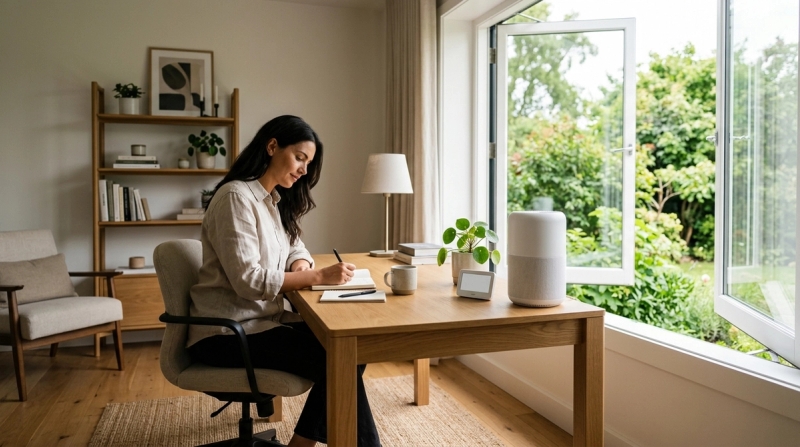
If the room feels stale after the door has been closed for a while, start with ventilation. Crack the window or open the door, if that is safe and practical.
If the room improves quickly, poor airflow and built-up CO2 were probably part of the problem.
If you want proof, add an NDIR CO2 monitor. Watch what happens when you close the door, sit in the room, sleep overnight, or open a window. The numbers will show you when the room needs fresh air.
If opening the window brings in dust, pollen, smoke, or pollution, that is when a HEPA air purifier becomes useful.
A common routine might look like this:
- Ventilate when outdoor air is acceptable.
- Close the window when you have had enough fresh air or outdoor conditions worsen.
- Run the purifier to reduce particles indoors.
This is why the “open window vs air purifier” debate is not really one or the other. They solve different problems.
Step-by-Step Indoor Air Quality Buying Checklist
#Use this before you spend money.
Step 1: Name the Main Problem
#Ask yourself what you are actually noticing.
- Stale, sleepy, heavy air? Think ventilation and CO2.
- Dust, pollen, smoke, or pet hair? Think air purifier.
- Both? You may need ventilation habits plus filtration.
- Damp, musty, mold-like smell? Do not treat this as a normal purifier purchase. Look into moisture problems and official guidance.
Step 2: Test the Free Fix
#Before buying, try the simplest thing.
Open a window or door for a short time if outdoor air is acceptable. If the room feels better, ventilation is probably important.
If outdoor air is poor, do not force the window-open habit. That is where the decision gets more careful.
Step 3: Decide Whether You Need Measurement
#Buy a CO2 monitor if you want to know:
- How quickly CO2 rises.
- Whether your bedroom gets stale overnight.
- When to open the window.
- How long ventilation takes to help.
- Whether closed-door work sessions are affecting comfort.
Choose a monitor with an NDIR CO2 sensor.
Step 4: Decide Whether You Need Filtration
#Buy an air purifier if you need help with particles.
Check:
- Room size rating.
- CADR.
- HEPA filter details.
- PM2.5 sensor, if included.
- Noise level.
- Filter replacement cost.
- Filter availability.
Step 5: Match the Device to the Room
#Do not buy for the whole house unless the device is rated for that use.
Most people are better off solving the room they use most, such as:
- Bedroom.
- Home office.
- Child’s study room.
- Living room.
Step 6: Plan the Habit, Not Just the Purchase
#A device only helps if you use it properly.
For example:
- Watch the CO2 monitor during work or sleep.
- Open a window or door when the room becomes stale or readings rise.
- Close the window if outdoor dust, pollen, or smoke is a concern.
- Run the HEPA air purifier when particle filtration is needed.
- Replace filters on schedule.
It sounds obvious, but this is the part people often skip. The habit matters as much as the device.
Common Mistakes to Avoid
#Mistake 1: Buying an Air Purifier to Lower CO2
#This is the big one.
A HEPA filter captures particles. CO2 is a gas. A normal consumer air purifier will not solve high CO2 in a closed room.
If CO2 is the issue, you need ventilation.
Mistake 2: Buying a CO2 Monitor That Does Not Actually Measure CO2
#Look for an NDIR CO2 sensor in the specifications.
Be careful with vague “air quality” monitors that focus on VOCs, PM2.5, or estimated CO2. They may still be useful for some things, but they are not the same as a proper CO2 monitor.
Mistake 3: Ignoring Outdoor Air
#Opening a window can be the best free fix, but not when outdoor air is bad.
If you live near smoke, heavy traffic, construction dust, or high pollen, ventilation needs more judgement.
Mistake 4: Running a Purifier With Windows Wide Open
#If the window is wide open, the purifier is constantly trying to clean incoming outdoor air.
For particle control, purifiers usually make more sense when the room is mostly closed.
Mistake 5: Buying Too Small
#A tiny purifier in a large room will disappoint you.
Always check the room size rating and CADR before buying.
Mistake 6: Forgetting Filter Costs
#Filters are not optional.
If replacement filters are expensive, unavailable, or unclear, think twice before buying the purifier.
Mistake 7: Chasing One Perfect Device
#A monitor, purifier, and window are not really competitors.
They do different jobs. The best choice depends on whether your problem is stale air, particle pollution, or both.
So, What Should You Buy?
#If you are unsure, do not buy anything today.
Try ventilation first. Open a window or door when outdoor air is acceptable. If the room improves, you learned something useful for free.
If the room often feels stale and you want a smarter habit, buy an NDIR CO2 monitor. It will tell you when ventilation is needed instead of leaving you to guess.
If your main issue is dust, pollen, smoke, pet dander, or PM2.5, buy a properly sized HEPA air purifier.
If you have both problems, use both strategies:
- Ventilate to reduce CO2 and stale air.
- Filter particles when windows are closed.
That is the practical answer. Do not expect one device to do every job. Use the right tool for the specific air problem in your room.