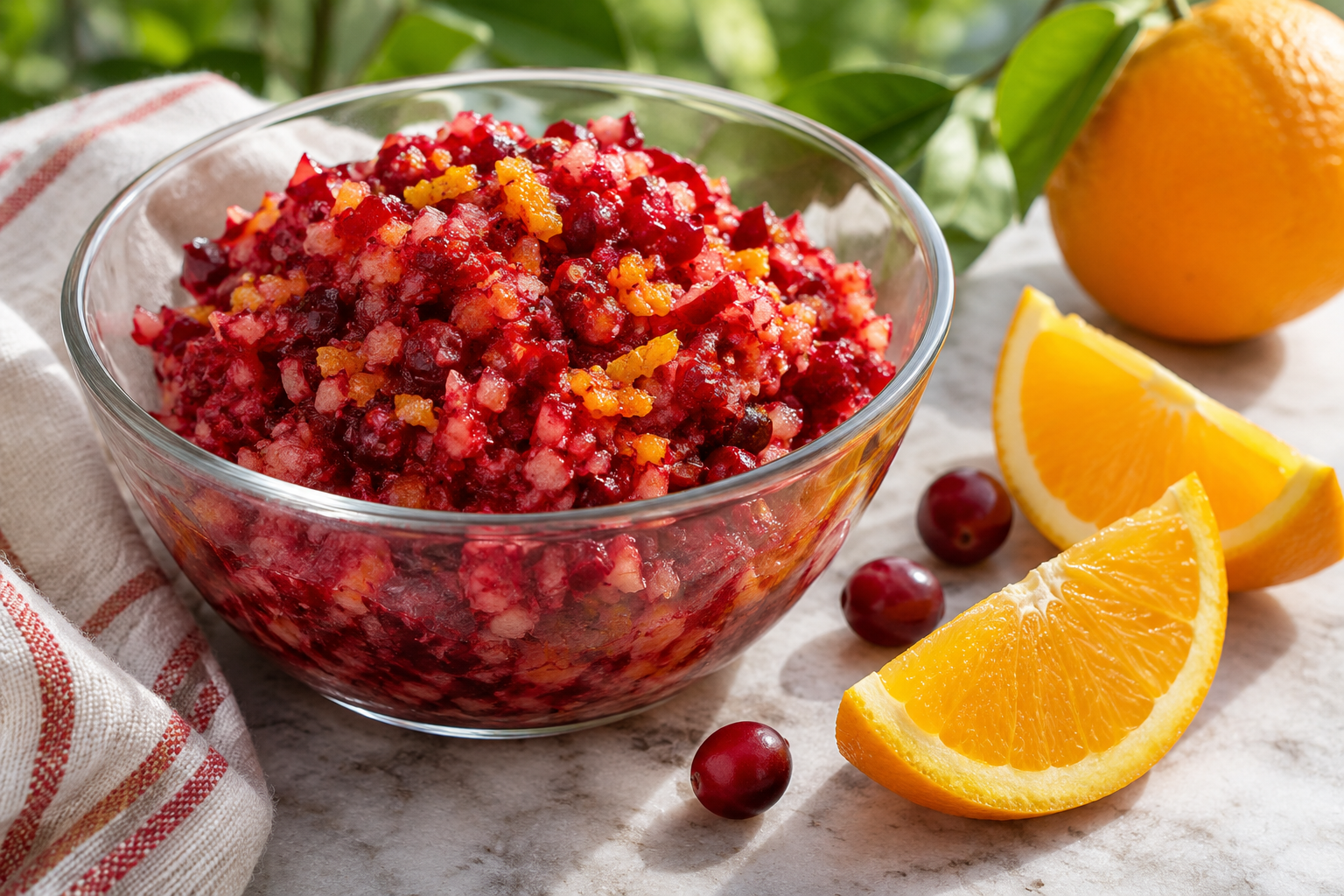
I’d make cranberry orange relish before I started cooking dinner. You chop the raw berries and seeded orange together, stir in sugar and put the bowl in the fridge. It leaves the stove free, and you can taste it again before a single spoonful reaches the table.
This is the fresh, chopped kind. You’ll still see flecks of peel and little pieces of cranberry. If your family is expecting a smooth sauce that sets as it cools, put the two dishes in different bowls and let people choose.
Use the whole orange for a reason
#An orange gives you juice and sweetness. Its peel gives the relish the flavour you still notice when you eat a spoonful with roast turkey or a buttery side. Wash the orange under running water, cut it into wedges and pick out the seeds. Keep the peel for this method.
I’d check the first wedge before cutting the rest. If the layer of white pith is unusually thick and you’re sensitive to bitterness, choose another orange if you can. Taking the peel off entirely changes the character of the recipe. A recipe written for just zest and juice gives you a better starting point if that’s what you prefer.
Look through the berries as you rinse them and discard any visibly spoiled ones. Drain them well. You already have orange juice in the bowl, so there’s no need to bring more water along from the colander.
Chop in batches and stop to look
#Divide both fruits between the batches so the processor can reach them evenly. Use short pulses. Once most of the mixture looks like a coarse, spoonable chop, stop the machine and take a look. A single large strip of peel can survive at the side of the bowl after the rest is ready. Lift it out, cut it smaller and return it if you need to.
If your bowl is small, make an extra batch. Keeping the pieces even is easier than packing in all the fruit and letting the blade run until the largest wedge disappears.
| What’s in the bowl | What I’d do |
|---|---|
| Small red pieces and fine orange flecks | Stop chopping and stir in sugar. |
| A few long strips of peel | Remove those pieces and chop them finer. |
| A smooth or foamy mixture | Stop processing and use it as a softer relish. |
| Juice at the bottom after chilling | Stir first, then use a slotted spoon if the plate needs less liquid. |
Taste it with what you plan to serve
#Start at the lower end of the recipe’s sugar range. Stir it through, refrigerate the bowl and taste again with a clean spoon before making a large adjustment. A cold bite of cranberry on its own tells you the tartness, but a little relish on a forkful of stuffing tells you how it works at dinner.
If you think the whole bowl needs more sugar, take a spoonful out and adjust that first. A small sample is easier to compare. Once you like the balance, make a measured addition to the bowl and stir thoroughly. Keep the tartness that made you want relish alongside the richer dishes in the first place.
If a guest wants a sweeter condiment, offer another option at the table. You can also keep a portion of the relish on the sharper side before sweetening the rest. Two small bowls are easier to manage than trying to guess which version everyone expects.
Make it ahead without making more work
#I’d use a container with a lid and clear a spot in the refrigerator before I started cutting oranges. Keep the relish chilled while you work on other dishes. Put out a small serving bowl and refill it from the refrigerated supply if people want more. That keeps the whole batch from sitting on the table through dinner and clearing up.
A day-ahead plan is useful because the work that needs a knife and a processor happens when you have space. On the day, stir, taste and spoon out what you want. For a potluck, use a sealed container and keep it cold in transit. Carry the serving spoon separately if that makes packing easier.
Ocean Spray also gives freezing as a storage option. I’d freeze in portions that make sense for the way you eat it. A little tub is easier to thaw in the fridge for a sandwich or a cheese plate than a big block you have to thaw all at once. Give it a stir after thawing, since the texture can be softer and some juice may collect.
Let a spoonful do the work
#Try it on the side of a plate first. A small, sharp bite between forkfuls is plenty. If it’s going on a sandwich, drain the spoon before you spread it so the bread doesn’t get wet. It also works next to a simple cheese plate if you want to use a few spoonfuls without reheating dinner.
The part I’d keep flexible is the serving size, not the chop. Get the consistency right in the processor, chill the bowl and decide how much you need when you know what else is on the table.
Plan the bowl around the rest of dinner
#If I’m serving a rich meal, I want the relish cold and the rest of the plate warm. I’d keep the cold bowl in the fridge until the serving spoons are out. That gives me one less thing to worry about while I’m checking a roast or getting a tray out of the oven.
Say you have six people coming, and two don’t usually eat cranberry sauce. You could put a little relish out in a shallow bowl so people can see the texture. A large serving bowl makes the same quantity look like the last scrapings of a dish, and encourages you to add more than you need. A small bowl that you can refill is an easier fit.
Think about what else is sweet on the table. If you have candied sweet potatoes or a sweet glaze on the main course, a sharper relish can be useful. If the rest is mostly savoury and the berries are particularly tart, taste the cold relish with one of those foods before adjusting it. You only need a small bite to tell whether it goes together.
Work with the orange you bought
#I’d cut the orange across a wedge before committing the entire fruit. You can see the size of the seeds, the amount of white pith and whether the flesh is juicy. You can also smell the peel at that point. A big orange gives you more orange in the bowl than a small one, so the recipe’s sugar range matters more than any exact sweetness you expected from a photo.
Cut the seeded wedges smaller if you’re using a compact chopper. Thin slices of peel are easier for the blade to pick up when they start out small. Use an appliance suited to the task and stop it before checking the mixture. If you’re doing several batches, stir them together before tasting. The first batch may have more cranberry than the last even when you divide the fruit by eye.
If a spoonful is bitter, check whether you’re hitting one large piece of peel. Pick out a few obvious strips and try again. If the whole batch tastes bitter, try a small amount with a sweeter dish before adding a large amount of sugar. Sugar can take the edge off, but it won’t turn a full bowl of chopped orange peel into cranberry sauce.
Set up a short timeline
#| When | What I’d do |
|---|---|
| Before you start | Clear a fridge shelf and find a lidded bowl. |
| As you prep | Rinse and drain the berries, wash the orange, and remove the seeds. |
| After chopping | Stir the batches together and use the lower amount of sugar first. |
| Before dinner | Stir, taste cold and fill the serving bowl. |
| After dinner | Put the chilled reserve away and portion anything you plan to freeze. |
This order is useful when a chopping board needs to do more than one job. Prepare the fruit on a clean board and keep it away from raw meat and its utensils. When I’m planning a large meal, I’d finish the relish and move it out of the kitchen work area before getting the roast ready.
When you serve the relish a second time, take a clean spoon to the container. I’d keep the portion that has been on the table separate from the untouched refrigerated portion. Follow normal cold storage guidance for cut fruit, and keep it cold if you’re carrying it to someone else’s house. The sugar is there for taste. It doesn’t make the relish shelf-stable.
Give leftovers a specific job
#Plan one meal for the leftover relish before deciding how much to keep. For sandwiches, spoon a little onto a plate first and leave the extra liquid behind. For a bowl of plain yoghurt, stir just a teaspoon into the top and taste. For a cheese board, use a separate spoon so the fruit stays out of the other dishes and guests can take what they want.
If I only wanted enough for one table, I’d still keep the basic fruit ratio. It’s easier to measure the whole recipe and freeze a small portion than to guess at the amount of peel and juice in half an orange. The useful check after thawing is the same one you made before dinner. Stir, look at the liquid and taste it with the food you’re serving.