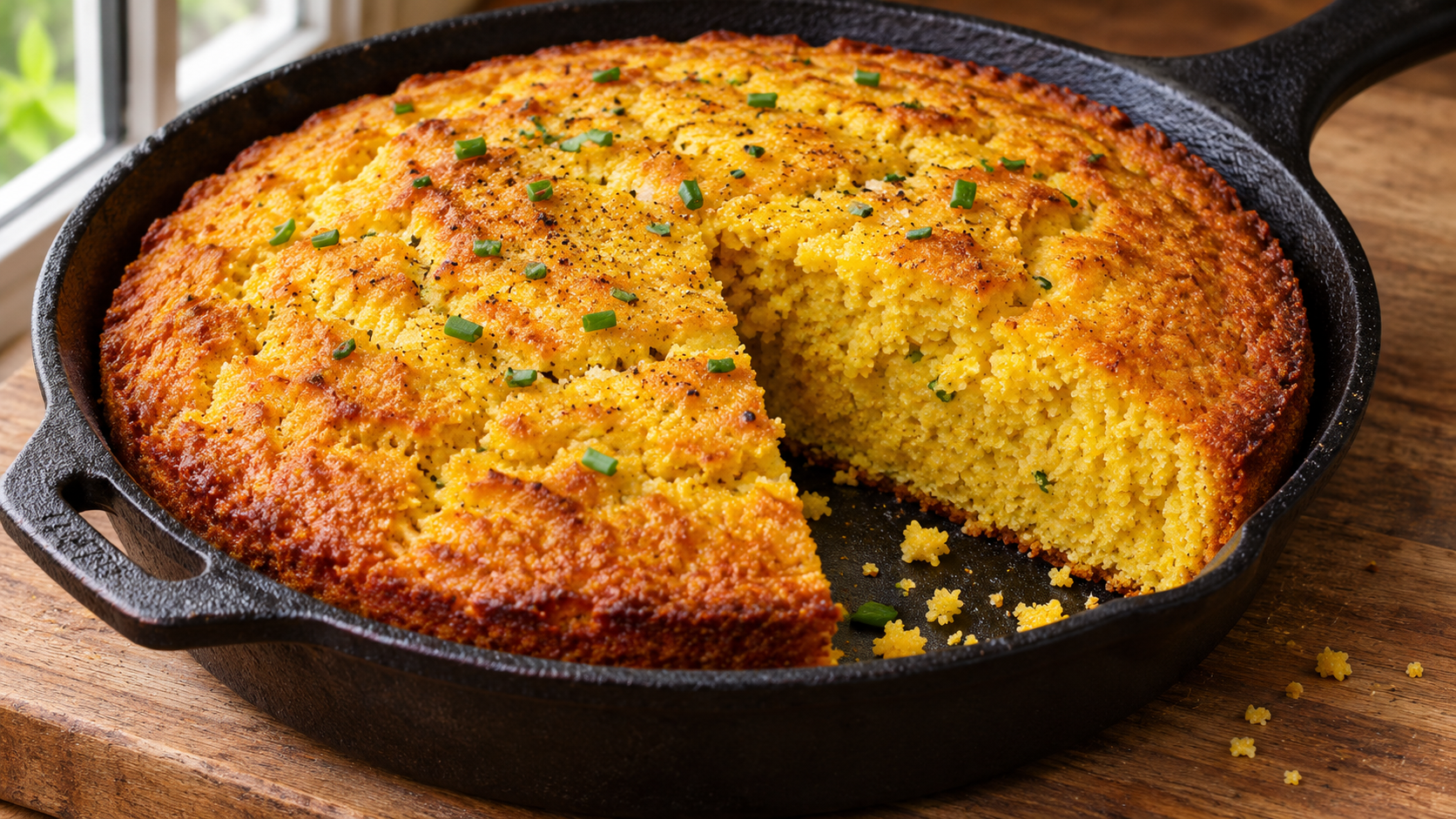
I’d make this skillet cornbread savoury and use a hot cast iron pan for a browned edge. Get the skillet heating while you measure the cornmeal and buttermilk, then mix the batter when the oven is ready. By the time the bread goes in, the work should feel like two bowls and one careful pour.
Imagine there’s a pot of chilli on the stove and dinner is otherwise done. You can give the cornbread the oven without asking the rest of the meal to wait around. That’s the version I want here. It should hold together when you lift a wedge, and the edge should have a little more bite than the middle. If you’d rather have something sweeter, decide that before measuring. A cornmeal cake is a perfectly good thing to bake, and it has its own balance of flour, fat and sugar.
The bag of cornmeal comes first
#The recipe card uses mostly whole cornmeal and a little plain flour. Sheri Castle’s skillet recipe for King Arthur Baking is the basis for that balance. The flour helps the bread hold together even with a coarser meal. If you scoop from a bag that says cornmeal mix, stop and read the label. A mix can already contain flour, salt and raising agents. The quantities in the card assume plain meal.
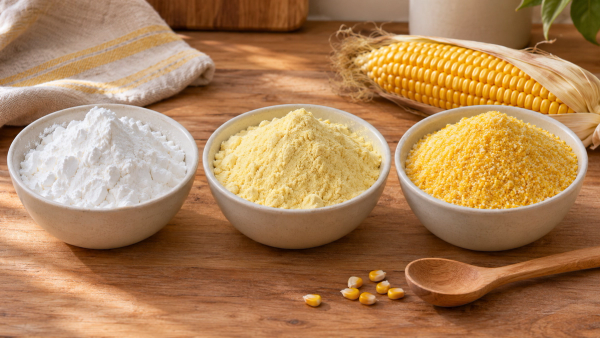
The colour is less important to me here than the grind. Yellow and white cornmeal can both make cornbread. You’ll get a more obvious grain with coarse meal, while a fine meal gives a smoother crumb. If you’re choosing a bag without much information, I’d start with a grind that visibly has some texture without pieces as large as grits. When a recipe was written with a particular meal, do the first bake with something close before changing three other ingredients around it.
Cornstarch has a different job. It can thicken a sauce, but a scoop of it cannot stand in for a scoop of cornmeal here. Names vary by shop and country, and “corn flour” on its own doesn’t always tell you which product is inside. Read the ingredients and look for ground maize sold as meal. You should be able to see the difference between a grainy meal and a powdery starch before either goes into the bowl.
A scale saves some measuring guesswork. Even a cup of coarse meal can settle differently depending on how it was filled. Get everything measured before you heat the pan if this is your first go. Looking for the half-teaspoon measure is a small problem when the skillet is cold.
Choose the taste before the batter
#I’d leave sugar out of this batch. It makes sense next to chilli, greens or beans, and people can put a little honey on their own piece if they want it. Cornbread recipes are different across households and regions. A sugar-free skillet bread is one useful version, and a sweet batch is a choice you can make for another meal.
Think about the fat the same way. The documented version uses bacon drippings, which bring their own flavour. If you need a version without bacon, use a neutral cooking oil suitable for the oven temperature as an adaptation. Choose it before the skillet goes in so you aren’t guessing how much fat you need when the pan is already hot. A strongly flavoured oil can make itself heard even next to the corn.
Use liquid cultured buttermilk and shake the carton before measuring. The slight tang makes sense in a savoury bread, and its acidity works with the baking soda in this formula. Keep the baking powder too. They’re both there for a reason, and replacing one with a full extra spoon of the other is a poor way to diagnose a loaf that came out flat.
Only have plain milk? I’d use a cornbread recipe written for it. You can sour milk for some bakes, but the thickness can differ from cultured buttermilk. If this is your first batch in a new skillet, using the listed buttermilk gives you one fewer thing to figure out when you cut it.
Set the pan up before it gets hot
#A 9- to 10-inch cast iron skillet gives the batter a reasonable depth and a broad surface against the hot metal. Set it in the oven as it preheats. Check there’s space to lift it out using two dry mitts. On the counter, clear a sturdy heatproof surface where you can put it flat.
I’d check how the handle faces before the pan goes in. A long handle pointing into the workspace is easy to brush past later, especially when somebody else comes in to stir the chilli. Once the pan’s on the counter, a dry mitt set near it is an easy reminder that the handle is still hot. Keep any towel or mitt well away from exposed oven heat.
If all you have is a suitable metal baking tin, you can make the batter in that. Follow the maker’s temperature and preheating instructions, and expect a different edge. The pan may heat and cool faster than cast iron, and the batter depth may change as well. I’d start checking the centre sooner if the tin spreads the batter into a thinner layer. I wouldn’t preheat an empty glass or ceramic dish for this method.
A bigger skillet can look like an upgrade on paper. For the same batter, though, a 12-inch skillet spreads it thin. That gives you less soft middle and a different bake. If what you want is a wedge that can be split and buttered, look for a pan close to the stated size. The bigger pan makes more sense for a recipe written for it.
Mix when the oven is ready
#Keep the dry ingredients in one bowl and the buttermilk and egg in another. Whisk the dry bowl first so the raising agents are spread through the meal. Beat the egg into the buttermilk. You’ll see any streak of egg more easily there than once it’s buried in the cornmeal.
As soon as the oven and skillet are ready, combine the bowls and fold until you’ve picked up the dry pockets at the bottom. The batter can look a little uneven. Pass the spoon along the base once to check for a clump before you decide it needs more mixing. Small bumps from the cornmeal will still be there.
I’d bring the bowl and a scraper next to the heatproof surface before lifting the skillet. Pour close to the pan and keep your hands clear of the fat. It may sizzle. You don’t need to chase the sound or tip the pan around to spread the batter. Put the skillet back in the oven once it’s in, using the mitts again even if the handle looks like any other handle.
If dinner has slipped by half an hour and you haven’t combined the bowls, there’s no hurry. Leave them separate and keep the egg mixture chilled until you need it. Once mixed, I’d bake promptly. A batter waiting on the counter adds an avoidable variable, and it keeps a very hot pan waiting while you sort out dinner.
Read the wedge from the edge inward
#Near the end of the bake, look for colour around the edge and a centre that feels set. A pick inserted in the middle can help you tell a few moist crumbs from a streak of wet batter. Test the centre because that’s usually where a deep batch takes longest to finish. If the top looks ready but the middle still moves, give it more time and check again.
When the bread comes out, I’d get it onto a rack or board once it can be handled safely. A cast iron skillet holds heat, so leaving a thin batch in it for a long while can make the edge firmer than you wanted. A rack also gives steam somewhere to go. If serving at the table from the skillet, put it on a proper trivet and remind people about the handle.
The first cut tells you something useful. If the outside is good and the middle pulls away in crumbs, check whether the batch was overbaked or the meal was coarser than the formula expected. A bread can have a coarse grain and still hold when you lift a wedge. If it’s dry all the way through, butter will help at the table, but start with bake time and pan size before adding more fat to the next batch.
A pale edge with a cooked middle usually sends me back to the oven and pan setup. Was the cast iron in there while the oven heated? Did the pan sit out while you mixed? It’s easier to change one of those details than to push a second bake past done in the hope of more colour.
If the slice feels heavy, check the date of the raising agents and make sure you measured both. Also look at the bottom of the mixing bowl. A lump of flour left there means one part of the batter got a different share of the ingredients, and stirring the next batch a little more evenly may fix it without extra mixing time.
When the rest of dinner is using the oven
#Suppose the chilli is warming on the stove, but there’s a tray of vegetables already in the oven at a much lower temperature. I’d finish those first and let the oven come up to the temperature in the card. A tray of roasted vegetables can sit while you bake the bread. Leaving the skillet at a lower temperature just to fit two dishes on the same timetable makes it harder to get that edge.
On a busy evening, I’d measure everything dry earlier and set the bowl aside. Keep the buttermilk and egg refrigerated until needed. When the skillet goes into the oven, set out the board and the mitts. That leaves a short stretch of actual work. If the meal is ready early, let people start on the chilli and bring the cornbread out when the middle has set. It’s easier than serving a loaf that has coloured before it’s cooked.
Put it on the table while the edge still matters
#For chilli or beans, I’d cut wedges and keep the bread on the side. You get the crunch on the first bite and can crumble the rest into the bowl yourself. For a lighter dinner, a wedge with butter and a plate of greens is enough of a side. The first time through, keeping the serving simple helps you decide how you actually want the bread to taste.
If you want to add cheese or peppers, I’d bake the plain one first. A small handful of a dry addition is easier to plan than a heap of wet vegetables. Drain and dry anything that comes out of a jar. Once a batch gets wetter or thicker, give the centre extra attention. I’d choose a cornbread recipe written for fresh corn if I had a lot to use.
For another meal, let the bread cool before wrapping it so condensation doesn’t soften it straight away. A wedge warmed in an oven or toaster oven has a better shot at recovering its edge than a piece heated in a microwave. If one corner has gone a little dry, split the wedge and toast the cut side. That can make a good base for beans the next day.
I’d keep the first batch simple enough to tell what the cornmeal and skillet are doing. When the wedge holds in your hand, the middle is still tender, and the darker edge breaks first, you’ve got a useful baseline. The next time you put a pot of chilli on, you’ll already know which pan to reach for.