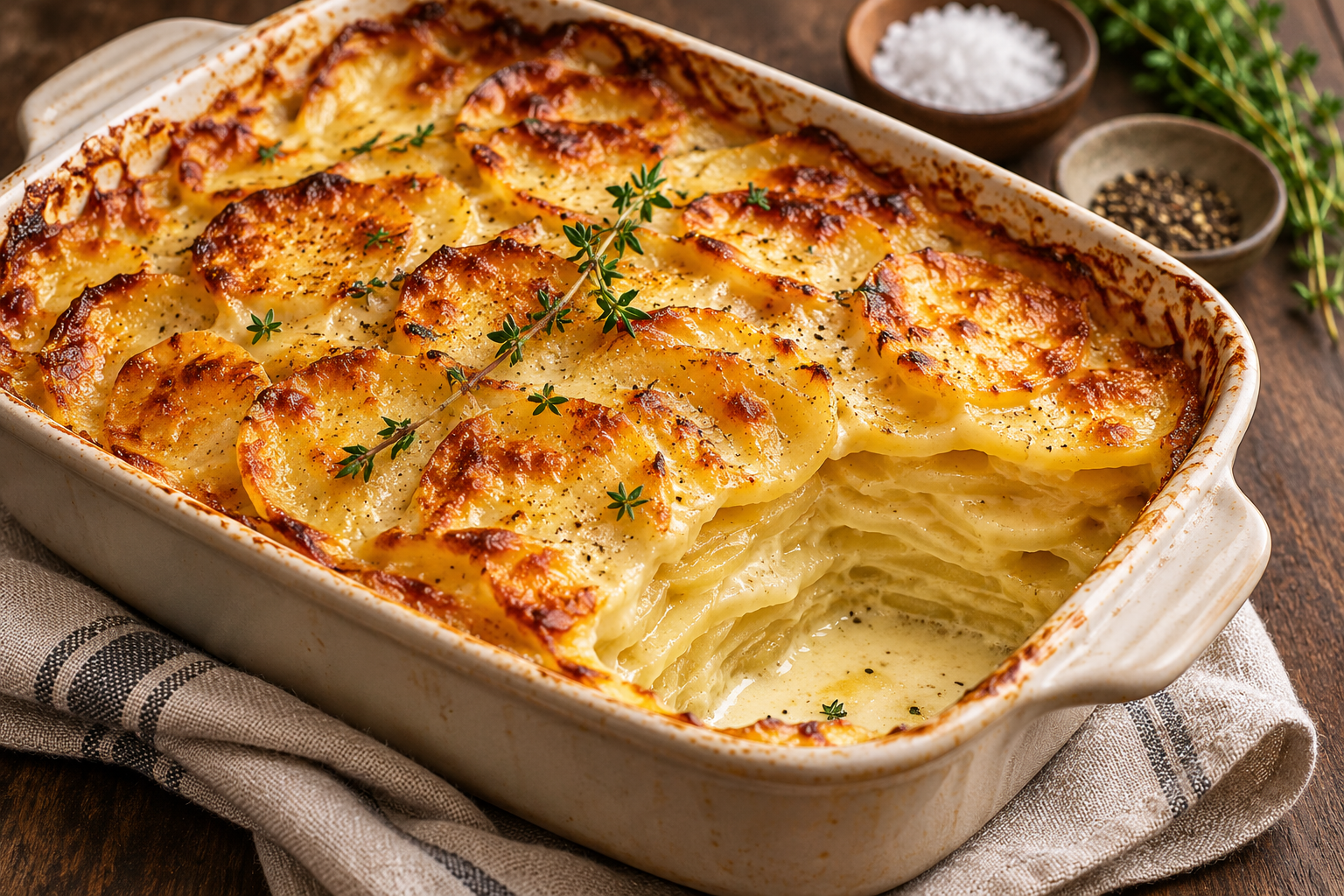
Slide a thin knife through the centre before you take the dauphinoise out of the oven. If it goes all the way to the bottom easily and the cream is bubbling at the edges, the potatoes are ready. A golden top can look done while a slice halfway down still has a little crunch.
This dauphinoise potatoes recipe uses thin slices, a short simmer in garlic cream and a wide dish. The simmer gives the potatoes a head start. The dish keeps the middle close enough to the heat to catch up with the edges. Gruyère is optional. The plain version is good when you want the potato and garlic to lead.
The potatoes matter more than the cheese
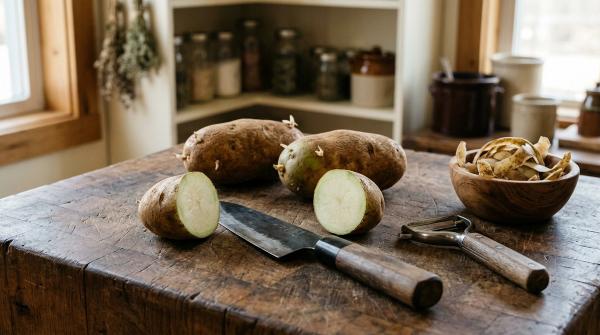
#The recipe uses King Edward or Maris Piper. If you live somewhere those names are hard to find, look for a floury potato sold for baking or roasting. The thing you're buying is a potato that gives easily once cooked and can still be sliced into layers. Pick evenly sized potatoes if you can. Cutting one potato at a time is easier when they hold steady on the board and the slices end up roughly the same width.
Aim for 3 to 4 mm thick. That is thick enough to lift a slice out of the cream without tearing it, and thin enough for the short simmer to make a difference. Cut a few slices and hold them next to each other. If each is a different thickness, slow down and adjust before working through the rest.
A mandoline can help as long as you use the guard. A sharp knife and a stable board are fine. Trim a small flat side from a potato that keeps rolling away.
Keep the sliced potatoes together and use them soon after cutting. There's no need to rinse away the surface starch in this method. As you transfer them to the cream, unfurl any slices that clump together. Two stacked slices come out of the pan looking cooked on the outside while the faces that were stuck together had less contact with the hot cream.
Dauphinoise uses potatoes sliced into cream or a mixture of cream and milk. Recipes called scalloped potatoes can start with a flour-thickened milk sauce, and recipes called potato gratin vary with the cook and region. The terms can overlap. Here the cream and the potatoes do the work, and a little cheese on the top is a choice. If you've made scalloped potatoes with a roux before, you can leave the flour in the cupboard for this one.
Give the potatoes a head start on the stove
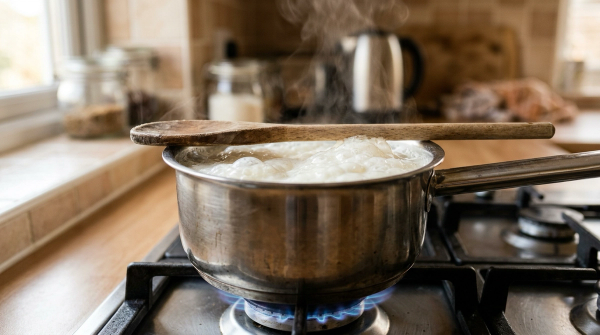
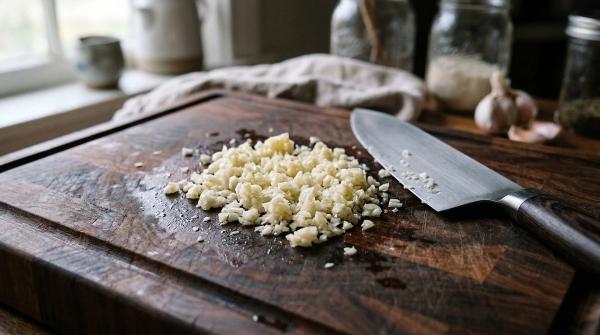
#The recipe card adapts Paul Merrett’s Good Food method. Warm the cream and milk with peeled garlic cloves in a pan big enough to stir and lift the potatoes. The garlic goes into the liquid so you get a little in every spoonful, even if the layers are uneven.
When the mixture begins to simmer, add the sliced potatoes and bring it back to a gentle simmer. The recipe card uses about three minutes at that stage. If the pan goes quiet when cold potatoes go in, let it come back to the simmer before you judge how far the slices have cooked.
Use a spoon to separate slices gently. You can try lifting one near the end. It should bend a little without breaking apart. It still has an oven stage ahead of it. This is a useful time to taste a little of the cream on a clean spoon and check the seasoning. If the potatoes go into the dish with bland cream, a good brown top won't season the middle afterwards.
Use a slotted spoon to move the potato slices from the saucepan. It'll be easier to work out how much cream you need when you can see the height of the stack. A few overlapping layers are enough. Fit the slices together where you can, then tuck little slices into gaps instead of building a mound in the centre.
Choose a dish for the depth you want to cook
#A wide, shallow ovenproof dish helps you keep the stack around 5 cm or 2 inches. That's the depth of the potatoes, so leave room above for the cream to bubble. If your baking dish tapers at the bottom, check where the first few layers will sit. The advertised size at the rim may make it sound bigger than the working area.
There's a simple way to pick between two dishes. Imagine the same eight potatoes spread across each base. In a small deep dish, they'll stack high and the middle will take longer to soften. In a broad dish, you'll have a good area of browned top for the number of portions. If neither dish works for the full batch, split it between two suitable dishes and check them individually. They can finish at different times.
Pour the hot cream over slowly. Stop when it has run into the layers and you can see a little cream at the surface. A difference in the size of eight potatoes can change how much liquid fits. If you're pouring in the last of the pan because it's there, stop and look at the dish first. A loose pool of cream above the sliced potatoes makes it harder to judge the finished texture.
If you want Gruyère, scatter it in a light layer. You should still be able to make out the top potato slices underneath it. The exposed edges colour nicely. For a table where some people prefer it plain, you can put cheese on one half. If the separation matters for dietary reasons, use separate dishes. If someone needs the dish to be vegetarian, check the cheese's rennet or leave the cheese off.
Check the middle before calling it done
#Bake at 190°C conventional or 170°C fan. Start checking at about 30 minutes. Look for bubbling at the edges and a top that has coloured, then test the centre with a thin knife. Try another spot near the centre if the first test went straight through a gap between slices. The knife should glide through the potato itself without a hard catch.
If the middle is still firm and the top already looks done, loosely cover the dish with foil and give the potatoes more time. A dark corner tells you how hot that corner got. A knife through the thickest stack tells you whether the whole portion is ready.
If the centre is tender and the surface is still pale, you can give it a few more minutes uncovered and watch it closely. How long you can do that depends on how fast the dish is already bubbling and what colour you want.
| What you notice | What to do with it |
|---|---|
| Brown top but firm slices underneath | Cover loosely and give the centre longer. For the next batch, check the slice thickness and dish depth. |
| One portion is soft and another still bites back | Test the thick side again and bake until it is tender. Spread the layers more evenly next time. |
| Thin cream pooling around tender slices | Give the hot dish time to settle before serving. Next time, pour in just enough liquid to reach the top layer. |
| The top pulls away with the first scoop | Cut across it with a knife before lifting portions with a wide spoon. |
A slight wobble when you set the dish down is fine. The cream is still hot and moving between the layers. Let the dish sit for about 10 minutes before cutting portions. If you're taking a serving to the table and it helps to keep the layers together, use a wide spoon or spatula that supports the whole piece. The first portion is usually easier when you've cut two sides and loosened it from the wall.
Make the oven schedule work for dinner
#Suppose you want to serve at seven and a roast is using the oven at a temperature close to the one for the potatoes. Aim to have the gratin out around 6:50, with some extra time built in for the knife test. You could get it in around 6:10 or 6:15, provided the oven has space for both dishes and your main recipe allows it. That leaves 35 to 40 minutes before the potatoes need to come out.
Start the stove step before that deadline. You can then finish a salad or green beans while the dish rests.
If the main dish needs the oven much hotter or cooler, work through the oven temperatures before committing to a serving time. A tray of roast vegetables that shares the same temperature is easy to do alongside if there is room. If you need two different temperatures, make the potatoes first or choose a side you can cook on the stove. A finished main and a deep gratin with a firm centre give you very few good options at the last minute.
Because the dish is rich, a pile of greens with a little lemon or a sharp salad is usually enough alongside it. Roast chicken, mushrooms or lentils all give you something different to eat between forkfuls of potato.
A shallow dish also gives you a better chance of serving each person a bit from the top. If the potatoes are for a potluck, give the dish a rest before you try to portion it. Bring a wide serving spoon that reaches the bottom of the pan.
The next time you make the recipe, write down the dish you used and the point at which the knife first went through the whole stack. That tells you more about repeating dinner in your kitchen than an extra five minutes added to every recipe you've tried.