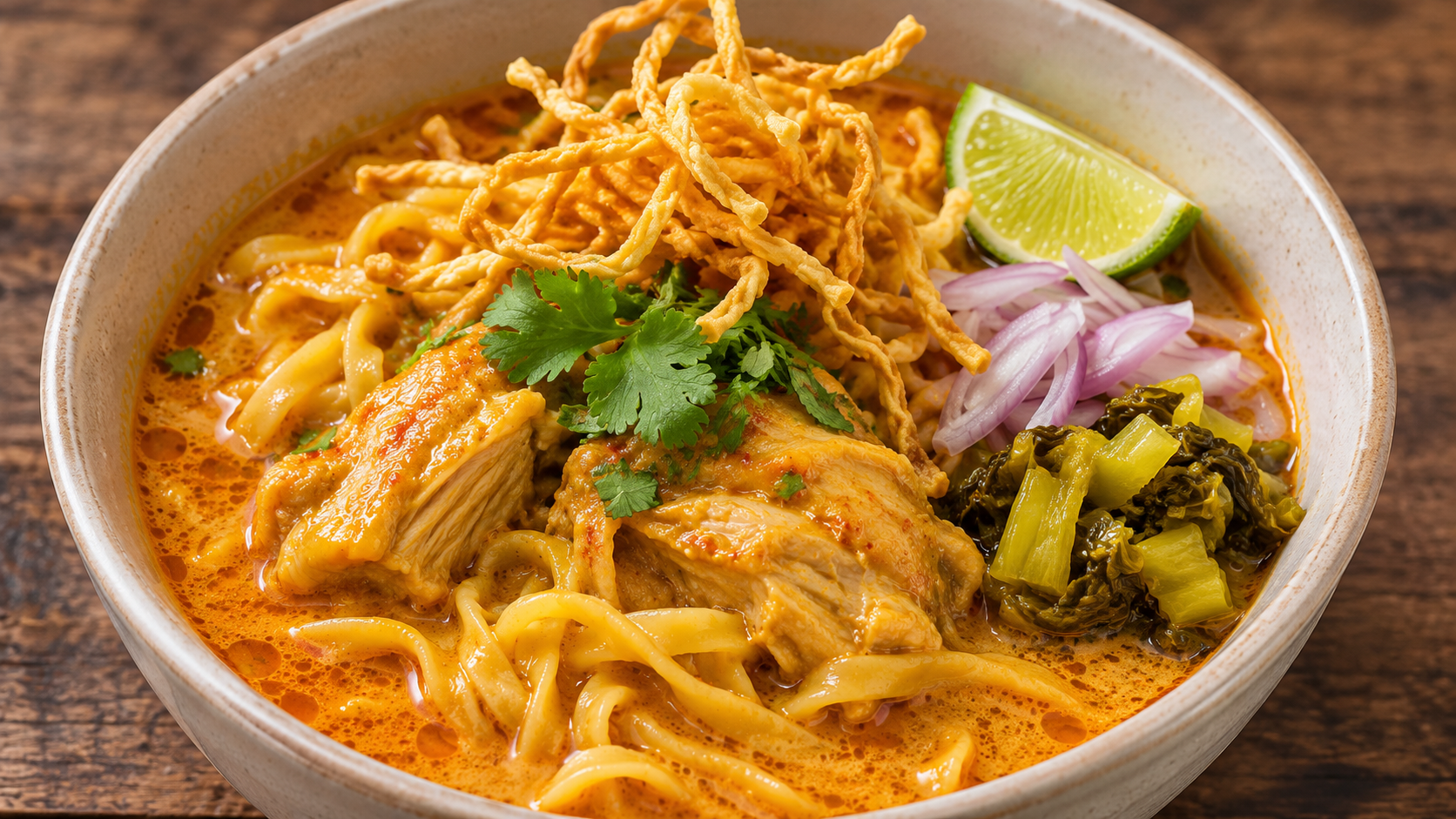
I’d use a good red curry paste for chicken khao soi at home and put the extra effort into the bowl itself. Keep the curry rich enough to coat the noodles, cook the soft noodles separately, and add the crisp ones when you’re about to eat. A squeeze of lime and a spoonful of pickled greens make that last minute at the table count.
Imagine four bowls lined up and the chicken is already simmering. There’s a temptation to put everything in the pot and be done with it. I’d use that time to slice the shallots and get the noodle water going. Then people can take a spoonful of broth, add what they like and still hear the topping break on the first bite.
What I’d keep when making it at home
#This is chicken khao soi in the Northern Thai style, often called khao soi gai. The part I’d preserve is the way it’s eaten. There are soft egg noodles in a coconut curry broth, with chicken and a little heap of crisp noodles over the top. Lime, shallots and pickled mustard greens sit beside the bowl or go on in small amounts. Each does a different job as you eat.
The recipe card uses shop-bought Thai red curry paste, curry powder and a little turmeric for a home version. Northern Thai versions can use a different spice paste and more involved preparation. If you enjoy making a paste from dried chillies and whole spices, choose a recipe that walks through that from the start. This one makes room to cook on an ordinary evening, especially if the toppings are ready to go.
Taste the broth before dressing the first bowl. Lime and pickles will change it. I’d leave some room for each person to decide how sharp and salty their bowl should be.
At the shop, read the paste and the noodles
#Red curry pastes can be quite different from one jar to the next. Check the label for heat level and the amount it recommends for a can of coconut milk. Start at the lower end in the card if the paste is unfamiliar or you’re sharing dinner with someone who likes it mild. You can cook a little more paste separately and stir it in later. Once the full amount is in, changing the heat means changing the volume or the rest of the seasoning.
I’d get an unsweetened full-fat canned coconut milk. That gives the broth body without needing a separate thickener. Sweetened coconut products are easy to mistake for the right tin when the labels are unfamiliar, so check the ingredients. If the coconut milk has separated in the can, that’s expected. Stir it or use some of the thicker part with the paste, then add the rest to the pot.
Fresh flat egg noodles are a good choice for the soft part, and dried egg noodles can work by their own packet directions. They’ll differ in weight and cooking time. Buy enough for four bowls based on the package, then choose a separate crisp topping. Those instructions matter more than copying the weight of a fresh pack and measuring out the same weight of dried noodles.
For allergies, I’d check the paste before building the meal around it. Some pastes include shrimp ingredients and the fish sauce contains fish. Egg noodles usually contain egg and may contain wheat. Crispy noodles can have different ingredients from the plain ones. If a guest has an allergy, check the actual labels and avoid assuming that a garnish or a jar without visible seafood is suitable.
Give the paste a little time in the pot
#Start with a small amount of neutral oil in a pot with enough room for the broth and chicken. Stir the paste over moderate heat and watch how it changes. It should become fragrant and easy to move around. If it dries on the base or sticks as soon as it goes in, lower the heat and loosen it with a little of the coconut milk. Scrape along the bottom as you stir.
I’d add the curry powder and turmeric briefly, with a spoon ready for the coconut milk. Fine spices can catch quickly in a dry pan. The point of this step is to get the spices into the fat and milk so the flavour is even across the broth. If you see little orange droplets later, that can happen as the coconut and paste cook together. Small droplets alone don’t tell you the sauce has gone wrong.
Add the remaining milk and stock, then bring the pot to a gentle simmer. I prefer bite-size pieces of boneless thigh for this plan because you can lift them out with the noodles and a spoon. Bone-in thighs or drumsticks are used in many versions. If that’s what you buy, allow a different cooking time and check the thickest part away from bone. Keep the simmer steady rather than trying to guess readiness from the surface.
Use a thermometer to make sure the chicken reaches 165°F (74°C). Once it’s done, use a clean spoon to check the broth. The fish sauce and sugar in the card are starting points. If your paste or stock is already quite salty, use less fish sauce. Add the sugar a little at a time if the spice needs rounding out. The amount you use depends on the pot in front of you.
The noodles have two jobs
#I’d boil the soft noodles in their own water near the end, drain them well and put them straight into the bowls. If they sit in the curry while the rest of dinner comes together, they absorb liquid and keep softening. A separate pot also lets you drain off the noodle water instead of adding it to a broth you’ve already balanced.
The crispy noodles can be made by frying a separate portion of suitable noodles, as in the published Northern Thai recipe methods. For this card I’d buy ready-fried noodles. Check that they’re crisp and intended to be eaten as sold. A block of dried noodles destined for boiling is a different product. Ready-fried strips are especially handy if cooking alone and trying to watch the curry at the same time.
Leave the topping in a dry bowl until serving. If you place it over the noodles before the broth goes in, the ladle can soak everything. I’d pile it up at one side so some strands sit above the liquid and you can break off a little with each bite. If you’re serving at the stove in batches, keep the garnish near the bowls and add it one serving at a time.
There’s no need to match the shape of the soft and fried noodles exactly if you’ve bought them separately. Aim for a topping you can pick up with a spoon or chopsticks in small pieces. Long, stubborn strips can be broken up just before serving. Keep some back for anyone who wants a second helping.
Build the first bowl and adjust from there
#Start with a small pile of drained noodles. I’d ladle in some broth, then add the chicken. Try a spoonful from the side of the bowl. If the spoon only picks up noodles, pour in a little more broth. Leave space at the top so there’s still somewhere to put the crisp noodles and a squeeze of lime.
The shallots can be thinly sliced so a little goes a long way. I’d chop the pickled mustard greens small enough to get a bit in a spoonful. Drain them first so you can add the amount of pickle you want. Lime wedges can sit on the side. Add a squeeze to the first bowl and taste before deciding whether the whole serving needs more.
Pickled mustard greens are worth looking for in a shop that carries Southeast Asian groceries. If I couldn’t find them, I’d keep the lime and shallots and use a little drained tart pickled cabbage as an optional substitute. It gives acidity and texture. It will taste different, especially if it’s strongly spiced or sweet. A spoonful on one edge is a better first try than stirring a lot into the communal pot.
Set out chilli oil only if people want more heat. I’d let them add it themselves. If you’re making the dinner mild for the group, a bowl with its own splash of chilli oil is easy to handle. Heat from a paste cooked into the full pot is harder to control for people with different preferences.
If the broth feels off, fix one thing
#If it tastes rich but flat, try a squeeze of lime in a spoonful first. If that wakes the spoonful up, serve with more lime. If it still seems bland, the pot may need a little fish sauce. I’d do those checks separately so I can tell whether the issue is acidity or seasoning.
If the broth is thin, scoop a little onto a spoon after the chicken is cooked and check how it coats. You can take the chicken out briefly and let the broth reduce gently, then return it. Taste after reducing because the salt concentrates too. When the curry is already salty, simmering it down is the last thing I’d reach for. Add a small amount of unsalted liquid and check it again after stirring.
If it’s too spicy, unsweetened coconut milk or unsalted stock can help dilute it. Coconut milk keeps more body. Stock makes a lighter bowl. I’d start with a small pour and keep the chilli oil off the table for that serving. If you add a lot of liquid all at once, you’ll have to find the seasoning again.
If the noodles are soft and the topping has gone limp, the broth may be fine. Look at when the bowls were assembled. The next serving will have more contrast if the cooked noodles meet the broth just before it leaves the kitchen and the crisp ones go on last. Cook only what you need for the first round if you know people will eat at different times.
When the bowls are arriving at different times
#Say two people are ready to eat and the others won’t be home for dinner yet. I’d pour two bowls and keep the remaining portions separate. Cook the second round of soft noodles later, or refrigerate the unused cooked noodles promptly if you’ve already boiled them. The toppings can stay in their own containers. Keep the shallots and pickles chilled and the dry crisp noodles in their packet. One pot of curry then serves both sittings without asking the first diners to wait or leaving the second group with noodles that have been soaking for an hour. Reheat chilled portions thoroughly before assembling.
Save the pot and finish another bowl later
#If I’m making a second dinner from this, I’d save the curry with the chicken in its own shallow container. Keep cooked noodles and toppings separate, and store the crisp noodles dry as directed on their packet. Refrigerate the perishable parts promptly at 40°F (4°C) or colder. Under U.S. guidance, that means within two hours, or within one hour above 90°F (32°C).
Reheat the broth and chicken to 165°F (74°C) before serving the next bowl. Stir gently and check the chicken as well as the broth. If it has thickened, check the consistency before adding a little unsalted stock. Freshly boiled noodles are the easiest way to get the texture back if you kept some uncooked.
I’d put the lime, shallots and pickles out again, even for one bowl. The curry can be made ahead. The few things you add just before eating are what make the next bowl feel like a meal you’ve just put together.