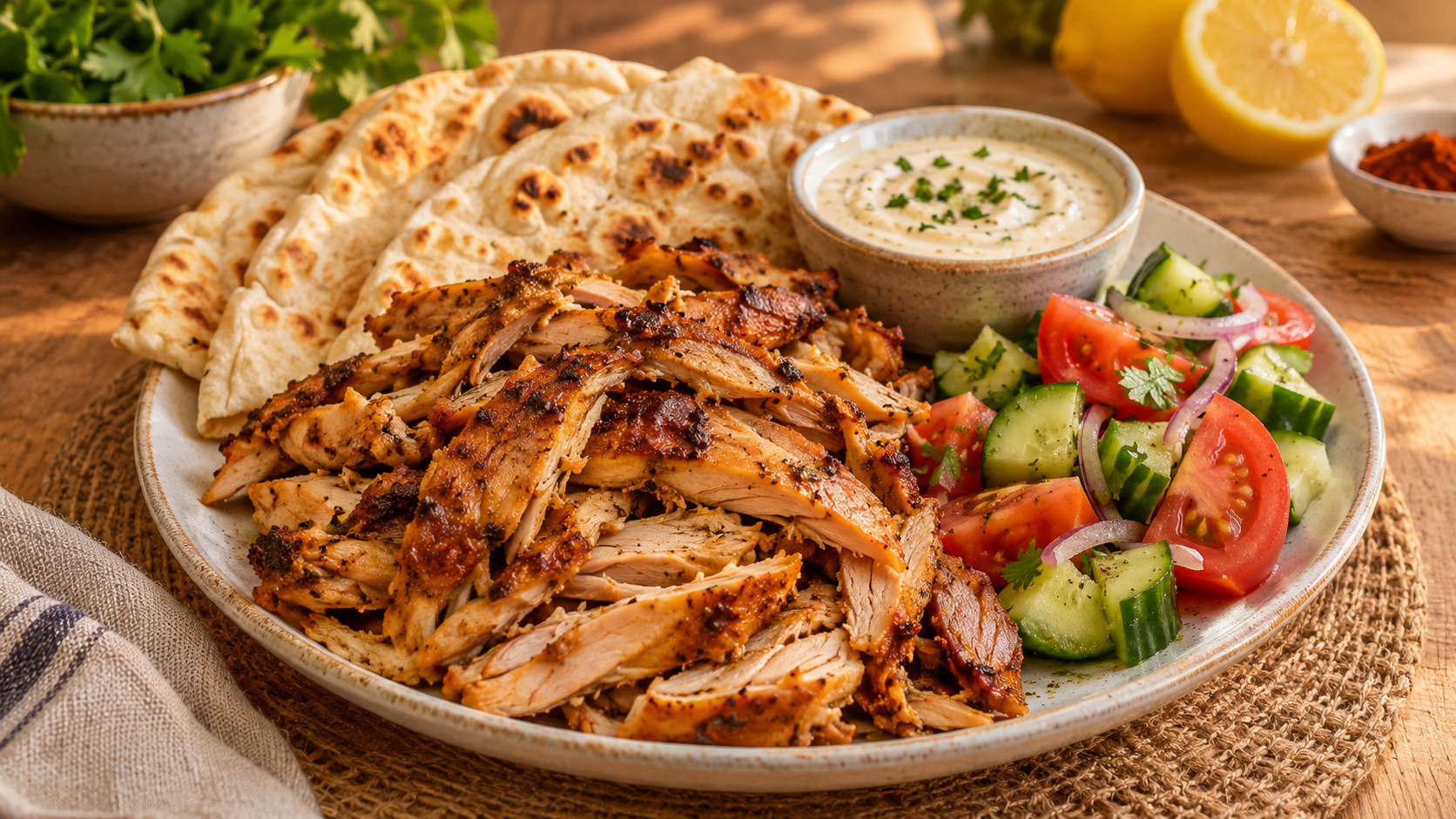
Oven chicken shawarma will not be the same as meat carved from a vertical rotisserie. A home oven cannot copy that setup. It can still give you deeply seasoned chicken with browned edges and thin, juicy slices if you use thighs, give the marinade time to work, and let a thermometer—not guesswork—decide when it is done.
That is the honest version. This recipe is an oven method for a shawarma-style meal at home. It is not trying to pass off a sheet pan as a street-side spit. The full ingredient list and instructions are in the recipe card; the rest of this guide is about the choices that make the difference.
If I were cooking this on a weeknight, I would marinate the chicken ahead if possible, then keep the rest of the meal deliberately simple. I would choose one sauce, one fresh salad element and either bread or rice. The chicken already brings plenty of flavour. A long list of extra sides can make the meal feel harder than it needs to be.
Why chicken thighs are the easier choice
#Boneless, skinless thighs are more forgiving than breast meat. They have enough fat to stay tender while the edges brown, and they handle a yogurt-and-spice marinade without drying out quickly. That matters because oven shawarma needs some high heat to get colour before the chicken loses its moisture.
Breast meat can work, especially if that is what you prefer. Cut it into similarly sized pieces, do not over-marinate it, and check the temperature early. It needs a little more attention because it has less room for error.
Keep the pieces fairly large for roasting. If you cut raw chicken into thin strips before it goes in the oven, the pieces can dry before they brown. Roast the thighs whole or in large pieces, rest them briefly, then slice them thinly. The cutting happens after the chicken has kept its juices, not before.
What the marinade is doing
#The marinade has four jobs: season the chicken, add gentle tang, help the surface brown, and give the spices time to settle in. Yogurt gives a little acidity and helps the spices cling. Lemon makes the flavour brighter. Oil helps the surface roast instead of looking dry. Garlic and warm spices carry the shawarma-style character.
You do not need a cupboard full of rare powders. Cumin, coriander, paprika, turmeric, cinnamon, allspice or a similar warm spice, black pepper, garlic, lemon and salt make a solid starting point. The amounts in the recipe are balanced for an everyday batch, but there is room to move depending on what you like.
Do not keep adding every spice because more feels more authentic. That usually turns the marinade muddy. You should be able to taste chicken, lemon, garlic and sesame sauce later, not only a wall of powdered spice.
How long should it marinate?
#Give the chicken enough time for the seasoning to settle in, but do not leave it sitting in a very acidic marinade for days. A few hours in the fridge is useful. Overnight is convenient when the lemon is moderate. If you are cooking soon, coat the chicken well and let it sit while the oven heats; the meal will still work, just with less depth.
Keep raw marinating chicken covered and chilled. Put it on the counter only when you are ready to roast it. The marinade that touched raw chicken stays with the chicken in the pan; do not save it as a sauce unless it is fully cooked as part of the dish.
Roast for colour, then check the centre
#Use a hot oven and a large enough pan. Crowding is the enemy here. When chicken pieces are packed tightly, they release steam and cook in their own moisture. The result may be tasty, but it will be pale and soft around the edges.
Spread the pieces with a little room between them. If you are doubling the recipe, use two pans rather than piling everything onto one. Let the surface brown before you move the chicken around. Once it is cooked through, rest it briefly so the juices settle, then slice thinly across the grain.
Colour is useful, but it is not a safety test. Use a food thermometer in the thickest part of the chicken and cook poultry to 165°F or 74°C. That is the number to trust. If the chicken has good colour but is not there yet, return it to the oven. If it has reached the safe temperature but the exterior needs more colour, use a short, closely watched finish under a grill or broiler rather than leaving it to dry out.
The tray setup I would use
#I would line the pan only if the lining can handle the oven temperature and still let the chicken brown. Heavy parchment can make cleanup easier, but it should not bunch around the chicken or lift toward a heating element. A bare metal sheet pan, lightly oiled, gives good contact and makes it easy to spread the pieces out.
I would keep the pan on a middle rack for most of the cooking. Starting under a broiler is tempting because the marinade smells good quickly, but it is an easy way to burn garlic and spices before the middle cooks. The better order is roast first, check the temperature, then use intense top heat for a very short finish only if the chicken needs more colour.
Slice it thinly after resting
#Resting is a small step that makes the plate look better and eat better. Cut into chicken immediately and the juices run across the board. Give it a short pause, then slice with a sharp knife into thin strips.
For more browned edges, spread the slices back on the hot pan for a brief finish. This is optional, but it is a useful home-oven move. The chicken gets some of the uneven crispness people enjoy in shawarma without needing to overcook the whole pieces from the start.
Do not confuse charred spices with proper browning. A blackened tray full of garlic bits tastes bitter. If the pan is burning before the chicken is cooked, your oven may be running hot, the marinade may have too much sugar, or the rack may be too close to the top element.
Build the meal around contrast
#Chicken shawarma is more satisfying when the rich, warm chicken meets something cool, sharp and fresh. You do not need to make every possible side. Pick a few things that give contrast.
For a wrap
#Warm flatbread until pliable. Spread on a yogurt-tahini sauce, then add chicken, crunchy lettuce or cabbage, tomato, cucumber and something pickled if you have it. Keep the sauce inside the wrap rather than pouring it over everything at the end. It is easier to eat and the bread stays together longer.
For a rice bowl
#Use rice, bulgur or another grain as the base. Add chicken, a spoonful of sauce, chopped cucumber and tomato, herbs, and a sharp pickle or lemony salad. This is a good option when you want the leftovers to pack well. Keep the sauce separate until serving if you want the vegetables to stay crisp.
For a salad plate
#Use a generous amount of greens, cucumbers, tomatoes and herbs, then add warm chicken and pita on the side. A tahini-yogurt sauce can become the dressing if you thin it with a little water and lemon. Taste it before pouring; tahini can thicken quickly.
A quick sauce that earns its place
#Plain yogurt, tahini, lemon, garlic and salt make a sauce that suits this chicken without stealing the show. Start with a modest amount of garlic. Stir the tahini and yogurt together before adding lemon and water. If the mixture tightens, add water a little at a time until it is spoonable.
The sauce should taste slightly brighter than you think it needs to in the bowl. Once it is inside a wrap with chicken and bread, that brightness settles down. If you make it too thick, it sits in blobs. If you make it too thin, it runs out of the wrap. Aim for something that slowly falls from a spoon.
If tahini is not available, a simple lemon-yogurt sauce still works. It will be different, not wrong. Better to make one clear, balanced sauce than force a substitute that nobody likes.
The spice profile I would keep balanced
#I would think of cumin and coriander as the base, paprika and turmeric as colour and warmth, and cinnamon or allspice as the background note. Garlic, lemon and black pepper keep the mix from tasting dusty. Salt makes the flavours readable.
If I wanted heat, I would add chilli separately rather than making the entire batch hot by default. That lets the roasted chicken stay useful for wraps, bowls and leftovers. A spoonful of chilli sauce or sliced fresh chilli can go to the people who want it, while everyone else still gets the flavour of the chicken.
I would also avoid calling a home spice blend the one authentic formula. Shawarma changes across places and kitchens. This version makes a practical flavour profile for an oven meal, and it is better to say that plainly than turn a spice list into a history lesson.
The usual problems and how to fix them
#The chicken is pale
#The pan may be crowded, the oven may not be fully hot, or the chicken may have been turned too soon. Next time, use a larger pan and give the pieces room. For the batch you have, slice it and use a quick high-heat finish while watching closely.
The chicken is dry
#This usually comes from using very lean pieces, cutting them too small before cooking, or relying only on time instead of a thermometer. Use thighs if you can. Keep pieces larger. Remove chicken as soon as it reaches the safe internal temperature, then rest it before slicing.
The flavour is only on the outside
#The marinade needs time and enough salt. Season the chicken all over, not just on the visible top. A short marination is still useful, but if you know dinner is tomorrow, marinate it in the fridge tonight.
The marinade burns
#Small garlic pieces and thick yogurt can catch at very high heat. Scrape off heavy clumps before roasting, use a little oil on the pan, and keep the pan in the middle of the oven rather than under the top element from the start. Brown the chicken first; use the broiler only as a final touch.
The wrap falls apart
#This is often a filling problem, not a bread problem. Use less filling than you think, keep wet ingredients controlled, and fold the bottom edge up before rolling the sides over. A warm, pliable flatbread helps more than a stiff, cold one.
Make-ahead without making dinner sad
#You can marinate the chicken ahead, make the sauce ahead, and chop the vegetables ahead. Store everything separately. Roast the chicken close to serving if you can, because that is when the browned edges are best.
Leftover chicken is useful for bowls, sandwiches and salads. Reheat it gently in a hot pan with a small splash of water or a little oil. Do not keep cooking it until it is crisp again; that is how yesterday's tender thigh becomes dry today. Add fresh cucumber, herbs or sauce after reheating so the meal feels newly assembled.
Keep the promise realistic
#This oven method is not about pretending your kitchen has a vertical rotisserie. It is about getting the parts that translate well at home: well-seasoned chicken, enough heat for browning, thin slices, a cool sauce and fresh contrast around it.
Once you understand those parts, the recipe becomes flexible. Use a wrap one night and a bowl the next. Adjust the lemon or spice level for your table. Just keep the thermometer close and let the chicken, not the clock, tell you when it is ready.