Start mujadara with the onions. They have the longest job, and the ones that go into the pot need time to turn a deep gold. While they cook, give the lentils a head start and soak the rice. By the time the onions are ready, most of your work is done. A separate handful of thin fried onions goes on top just before you eat.
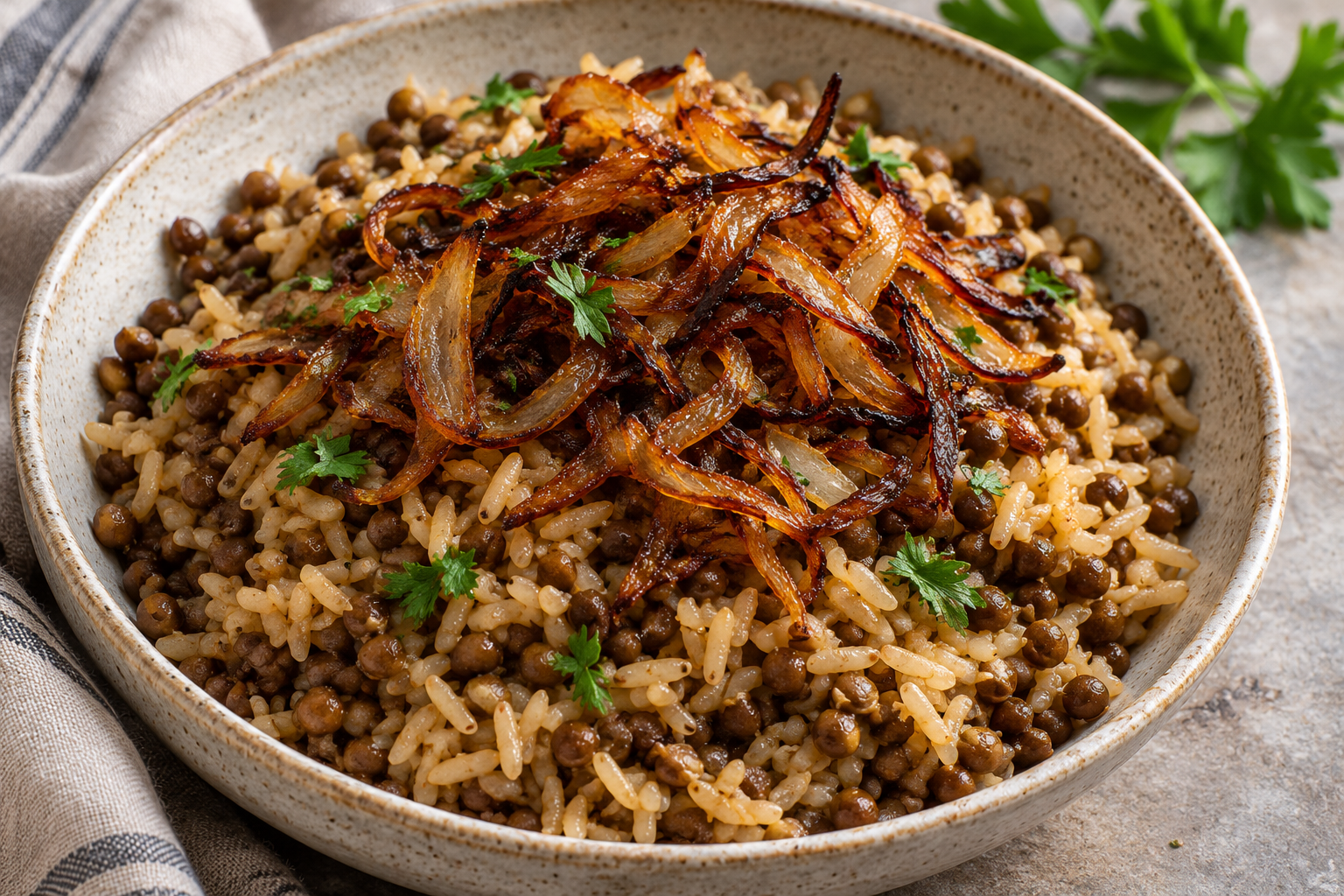
Mujadara is a family of Middle Eastern lentil dishes. In this rice version, you want to be able to see the grains and the lentils when you spoon it into a bowl. The onions cooked into the pot should almost disappear into the rice. The onions on top should still crunch.
If you have time for only one onion step, cook the diced onions into the rice. That’s where most of the flavour in the pot comes from. The card adapts Suzy Karadsheh’s method for doing both.
Buy lentils that will hold their shape
#Small black lentils are a useful choice for this recipe. Brown or green lentils can also work if you judge them as they cook. Look for whole lentils. The split red kind softens and breaks down quickly, which is useful for soup and gives this dish a different texture. If you’re working out what you have in the cupboard, the guide to lentil types and texture explains the difference.
Sort through the dried lentils for any small debris and rinse them. Bring them to a simmer in their own saucepan. Give them about 10 to 12 minutes for the black lentils used here, then take one out and let it cool enough to bite. It should be partly tender with some firmness left. It will cook again with the rice. Waiting for a fully soft lentil now makes it harder to keep it whole later.
Older or larger lentils can run behind the clock. If they still feel hard all the way through, simmer for a little longer and check again before you drain them. This small correction is easiest in the saucepan. Once the rice and lentils are in the same pot, you have one heat setting and two ingredients that need to finish together.
Use long-grain white rice for the stated method. Give it a rinse, soak it for 10 to 15 minutes, then drain well. A mesh strainer helps you leave the soaking water behind. The final pot has its own measured water. If you add the rice with the soak water still sloshing around it, you've changed that amount. Brown rice and bulgur are better handled with a recipe that starts with them, since their cooking times and liquid needs are different.
Cook the onions twice, for two different jobs
#Dice two yellow onions for the base and start them in the wide pan you will use for the final pot. Add a little salt and give them room to cook. At first they will look like a big pile. Stir as they lose water and settle.
Later, keep an eye on the bits beside the wall of the pan and turn them back into the onions. You want a deep golden brown across the pan, so lower the heat if the edges get dark while most of the onion is still pale.
Allow around 40 minutes and follow the colour. There is quite a stretch between soft onion and the brown you want for the base. If you're tempted to stop when they start looking translucent, try another few minutes and look again. The longer cooking gives the rice the flavour that can get lost if you start by boiling everything together. If the pan smells burnt, scraping those bits into the water can carry that taste through the entire batch.
While the rice and lentils cook, slice the last onion into thin rings and fry it separately if you want the topping. Start with a small piece of onion in the oil to check that it bubbles. Fry a small batch and let the rings spread out. A pile of onions cools the oil and makes it harder for the slices to dry and crisp at the same pace.
Take them out as they become deeply golden and drain them on a paper towel-lined plate. Give the second batch its own room even if the first batch shrinks down to very little.
If you have one burner available, do the fried onions first and keep them aside, then start the base. If you prefer to cook one thing at a time, fry the topping while the cooked rice and lentils rest. Give the topping longer if you need several batches. Keep the two onions apart at the end. Spooning the hot lentils over the crisp ones before dinner softens them. Scatter them on each bowl as it goes to the table.
Get the rice and lentils to finish together
#When the diced onions are brown, add the measured fresh water carefully. It will be going into a hot, oily pan. The liquid picks up the soft brown onion and makes a cooking base for the rice. Tip in the drained rice and partly cooked lentils with the cumin, pepper and a little more salt. Reduce to low, cover and give the pot about 15 to 20 minutes.
Leave the lid alone until you are near the first check. If it is still visibly wet near the end of the suggested window, give it a little longer before fluffing. For the doneness check, try a grain of rice and a lentil from the middle. You want the rice tender and the whole lentils soft enough to eat, with no puddle on the bottom.
If there is no liquid left and a few grains are still distinctly hard, a modest splash of hot water and a little more covered time can help. Add a little at a time so you can see what changes.
Once both are cooked, take the pan off the heat and let it sit covered for about 10 minutes. Open it just before serving. Lift and turn a spoonful gently instead of stirring it all hard. Some of the onion will look like a fine coat on the rice. The lentils should still be separate enough to pick out in the spoonful.
| How the first bowl turned out | What to change on the next batch |
|---|---|
| The rice is soft but the lentils have a hard middle | Give the lentils more time in their separate pan and bite one before draining. |
| The lentils broke apart by the time the rice was tender | Use whole lentils and stop the first simmer while they are still a little firm. |
| The rice tastes mild and looks pale | Let the diced onions brown further before adding water, and taste for salt after cooking. |
| The fried rings went soft after serving | Fry a shallower layer, drain the rings and wait until serving to put them on the rice. |
Build the meal around the bowl
#Give yourself about as much time for the onions as you do for the rest of the meal. If dinner is at seven, you might start the diced onions about 5:45. While they're on, rinse the lentils and set up the rice to soak.
If the base is brown around 6:25, you have time for the short simmer with water, around 20 minutes of covered cooking and the ten-minute rest. Leave more slack the first time your pan is doing this. Colour and tenderness get the final say.
While the pot rests, chop cucumber and tomato, add lemon and set out the fried onions. Plain yogurt is good on the side if you eat dairy. A spoonful of lemony cucumber salad or some pickled turnip gives you the same chance to take a sharp, cool bite between spoonfuls. If you want a bigger dinner, add roasted vegetables or a plate of greens. The mujadara can stay in the middle of the table with the other bowls within reach.
You may see the name written as mujaddara or moujadara, and you may be served a version made with bulgur or a softer mix of lentils and rice. The proportions and onion treatment vary from cook to cook. The useful way to think about this version is as a bowl of distinct grains with a lot of flavour from the base and a crisp finish. It is a good one to learn if you already keep dried lentils and rice in the cupboard.
If you have extra, put the leftover topping aside before you chill the rice and lentils. Portion the rice and lentils into shallow containers so they cool quickly. The UK NHS advises refrigerating cooked rice within one hour and eating it within 24 hours. If you reheat a portion, do it once and get it steaming hot throughout. Add the fried onions and salad when you serve it again.