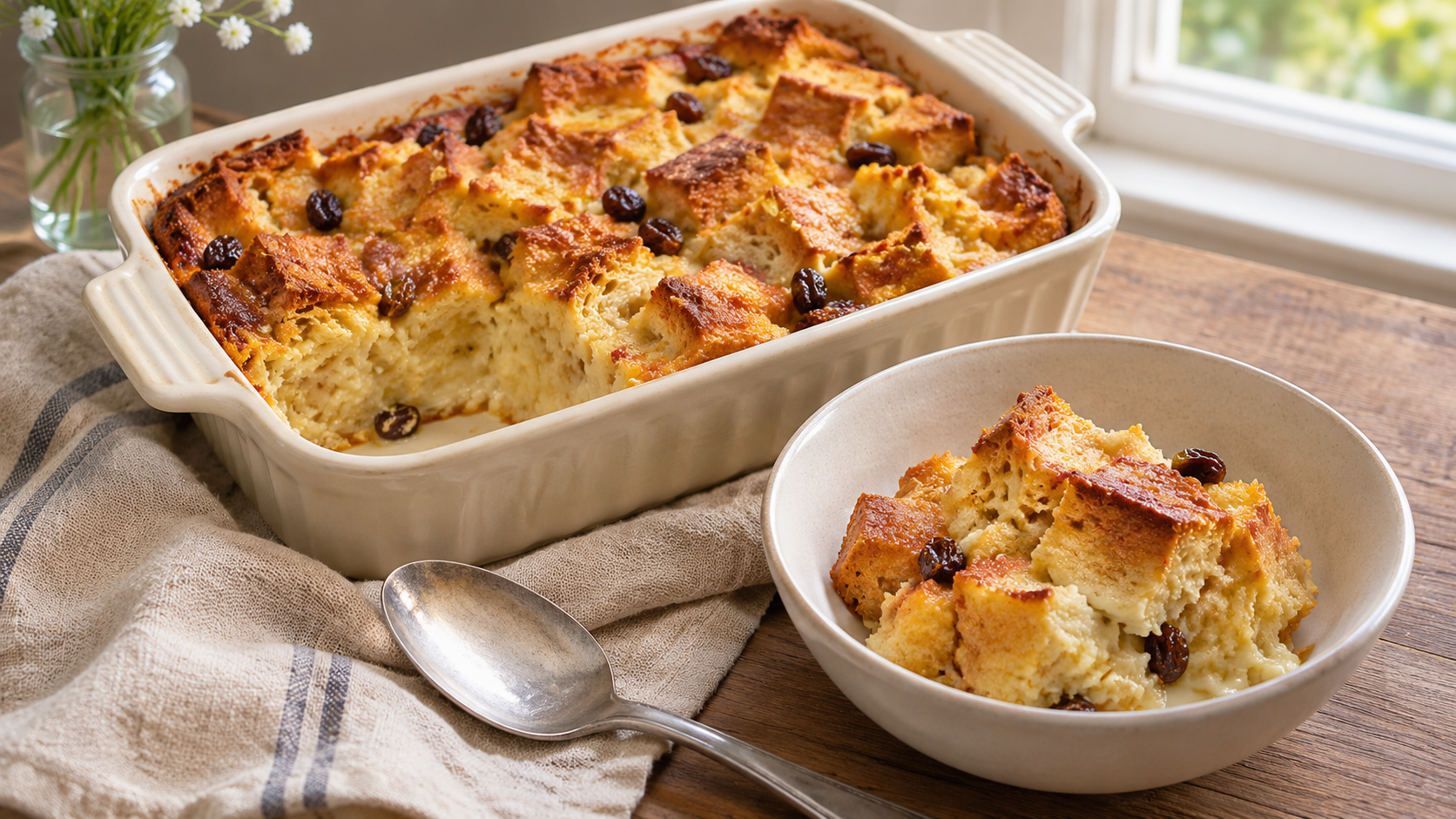
Give the bread enough custard to soak through, then bake until the middle has set and the top has browned. You want a moist centre with no loose egg mixture hiding underneath the golden cubes.
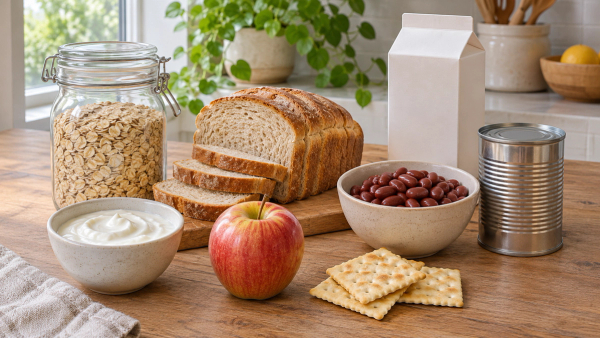
I'd look at the bread before deciding on dessert. A few rolls from yesterday and the last piece of a white loaf can make a good pudding, provided they're still sound. Once you've cut them up, it helps to think about how much bread you actually have rather than how full the bag looked.
This is the cubed, vanilla-and-raisin kind of bread pudding. The recipe card after the FAQs adapts Nagi Maehashi's bread and butter pudding, with six to eight servings. The chunks give you little browned edges above a softer filling, so there's something to judge besides the colour of the top.
That leftover loaf still needs a check
#Slightly stale bread has a useful place here. It holds together as you fold it through the custard. Fresh bread can work too; handle it with a lighter touch so you keep some of the pieces instead of stirring them into a paste.
Stale and spoiled are different things. If you find mold on the bread, discard it. Cutting around the patch doesn't make a porous loaf suitable, and the oven isn't a way to rescue it. I'd rather make a smaller dessert from sound bread than build a whole dish around a questionable piece.
Plain white bread is a straightforward starting point because it lets the vanilla and custard lead. Soft rolls can join it. If you're combining leftovers, check each piece before cutting and keep any strong savoury flavour out of this sweet batch.
A very dry loaf with a thick, hard crust needs another decision. If you can barely tear or cut it, don't expect the short soak in this recipe to soften it in the same way as yesterday's sandwich loaf. Choose a preparation written for that hard bread, or use a more suitable loaf for the pudding.
You can keep ordinary crusts. They're part of the browned, uneven surface. If one section is much tougher than everything else, trim that section rather than automatically removing all the crust from the whole batch.
Measure the pieces without packing them down
#Bread is awkward to measure because two loaves can fill the same cup and weigh different amounts. This recipe uses heaped cups of cubes. I'd keep that measure rather than assume a cup of soft rolls weighs the same as a cup of dense bread.
Cut or tear the bread into roughly equal pieces, then fill your measuring cup without crushing them. A heap of loose cubes and a cup of compressed bread are different quantities. Use the same approach as you work through the batch.
This is worth checking before you make the custard. If you start whisking and then realise you have much less bread than expected, it's tempting to pour everything in anyway. You can end up cooking a different proportion of custard and bread from the one you intended.
For a half batch, halve the whole ingredient list. That means half the bread and raisins as well as half the dairy, sugar and butter. Beat the three eggs together, then use half of that beaten mixture; it is easier to divide than trying to choose one egg and estimate half of another.
Keep the unused beaten egg refrigerated and use it promptly in another cooked preparation. Wash the bowl and utensils that touched raw egg before using them for serving.
I would scale the recipe on paper first. Once the bread is wet, you can't put half of it back in the cupboard, and guessing at extra milk makes it harder to understand the finished texture.
For that half batch, the butter has two jobs: 20 g goes into the custard and 15 g goes over the top. Write those separately beside your four heaped cups of bread. It saves you melting one combined amount and trying to work out what is left after the custard is already mixed.
Whisk the custard before the bread goes in
#Mix the eggs and the remaining custard ingredients into an even liquid before adding the cubes. Scrape around the bowl so you don't leave a pocket of sugar at the bottom or streaks of egg white along one side.
The melted butter should have cooled before it joins the egg mixture. Keep the butter for the topping separate so you don't accidentally use all of it in the bowl. Setting out two small dishes is a simple way to make that distinction visible while you cook.
Vanilla and cinnamon provide the flavour in this version. If your bread already contains dried fruit or spice, account for that when choosing a recipe. A strongly flavoured loaf can change the dessert even when its volume matches the card.
Fold in the bread and raisins, bringing the lower cubes up through the liquid. Then stop and give the mixture the short soaking period specified in the card. You want contact with the custard throughout the bowl, rather than a layer of dry bread sitting on top.
Other bread puddings use longer soaking times. Susan Reid's maple walnut version, for example, uses a different custard and a longer rest before baking. That doesn't mean every bread pudding needs the same wait. Match the bread, quantities and method within the recipe you've chosen.
Check a cube before adding more liquid
#Lift a larger piece from near the top and press it with your spoon. Look for a dry centre that hasn't touched enough custard. If it needs more contact, fold that piece down and bring some of the wetter bread up.
A little custard between soaked cubes is expected in this mixture. A dry mound above untouched liquid suggests that you need to mix with care. Those are more useful observations than deciding that the bowl looks untidy.
If you have added far too much bread, don't keep pouring milk over it by eye. You would also be changing the balance of egg and dairy. Return to the measured quantities, or choose a scaled batch you can assemble consistently.
Give the pudding a dish it can cook in
#The card calls for an ovenproof dish of about 2.5 litres. That capacity leaves room for the mixture without forcing the soaked bread into a tall mound. Check the size before the custard is ready, especially if the dish has thick walls or sloping sides.
Spread the mixture across the base. Tuck many of the exposed raisins below the surface so they don't take the full oven heat while the custard cooks. Leave the bread's upper edges uneven; you don't need to flatten the pudding into a smooth sheet.
For a smaller batch, choose a smaller dish as well. Half the mixture in the original broad dish makes a thinner pudding; the same mixture in a narrow, deep bowl makes a thicker one. Neither change gives you the original baking conditions.
Compare the depth the food will occupy in each dish. For a half batch, around half the working base area is a useful starting point for a similar depth. Still check the centre as it cooks; changing the dish can change the baking time.
Use the temperature in the recipe card and your bakeware's handling instructions. A different recipe may call for ramekins or a water bath. Keep those instructions with that recipe rather than adding another technique halfway through this one.
The top can be ready before the custard
#Begin checking within the card's baking window. Look for browned bread on the surface and a middle that has set while staying moist. The inside can move a little as you nudge the dish, but it shouldn't flow like uncooked custard.
Check under a central piece of bread with a small knife or spoon. The toasted corners at the edge get more direct heat, so they can't answer the question for the middle of the dish.
For the safety check, use a food thermometer in the egg mixture near the centre. US food-safety guidance gives 71°C or 160°F for egg dishes. Texture and colour help you judge the dessert; the thermometer gives you a more dependable temperature check.
If you can see loose egg mixture, continue baking and check again. If the top is getting too dark, protect it loosely with foil while the centre finishes. Don't press foil down onto the bread or use a hot serving dish as a reason to assume the middle is hot enough.
| What you notice | What it may mean | What to do |
|---|---|---|
| Dry cubes above a wet lower layer | Some bread missed the custard during assembly | Next time, fold and inspect the larger cubes before filling the dish. |
| Golden edges, liquid middle | The centre needs more cooking | Keep baking, protect the surface if needed and check the centre temperature. |
| Dark raisins on the surface | Too much dried fruit was exposed | Tuck more raisins into the soaked bread before the next bake. |
| A set pudding that seems softer straight from the oven | The custard is still very hot | Let it rest for a few minutes before spooning portions. |
Don't keep baking a set pudding just because you want it to cut like cake. A bread pudding can stay soft and spoonable. The short rest makes serving easier without requiring you to dry out the custard.
Decide how you want to serve it
#Imagine you're making this after a small Sunday lunch. You can have the bread cut and the other ingredients measured before you begin the meal. Whisk and soak when you're ready to bake, leaving the final centre check enough room in your plans.
If you assemble it earlier, keep the raw egg-and-dairy mixture covered and refrigerated. Don't leave the dish on the counter through lunch while waiting for oven space. A cold assembled pudding may need a different baking time, so use its centre rather than an exact promised serving minute.
At the table, I would offer one accompaniment in a separate jug or bowl. Cream, custard or ice cream lets everyone choose the amount they want. You can taste the pudding itself before adding another sweet sauce.
Spoon the first portion from an edge and reach down to include some custardy bread as well as the browned top. Divide the remaining portions with that same balance in mind. Otherwise the first bowl can get most of the crisp pieces while the last gets only the softer middle.
For a plain vanilla version, omit the raisins without changing the bread and custard. For a more substantial flavour change, use a recipe developed for maple syrup, chocolate or fruit. Those ingredients can alter the sweetness and liquid balance as well as the flavour.
Put tomorrow's portion away while you're clearing up
#Treat bread pudding as a cooked egg-and-dairy dish. Divide leftovers into shallow containers and refrigerate promptly, within two hours of cooking, or within one hour in conditions above about 32°C. Keep the fridge at 4°C or below.
A simple conservative plan is to follow the UK Food Standards Agency's advice to use refrigerated leftovers within 48 hours or freeze them sooner. This is a household storage recommendation, not a claim that the pudding has passed a shelf-life test.
Store cream and custard separately, following their package instructions. It is easier to reheat a portion of pudding when you haven't poured cold cream across the whole remaining dish.
Heat only what you intend to eat. US government food-safety guidance gives 74°C or 165°F for reheated leftovers; check the centre of the portion. A microwave can heat unevenly, so follow its instructions and check beyond the first hot edge. The Food Standards Agency advises reheating leftovers once.
Keep the portion you plan to save plain until serving. You can add cold cream after reheating, instead of reheating a bowl that already has cream or ice cream mixed through it.