Cornflour and cornstarch can be the same ingredient, but corn flour can also mean something quite different. In British and many Indian recipes, cornflour usually means the fine white starch used to thicken sauces; in US recipes, corn flour often means finely milled maize.
So before replacing one with the other, check the packet and the job it needs to do. A spoonful of starch in a sauce and a bowl of maize flour in a dough are not interchangeable just because both come from corn.
Two different ingredients share the same name
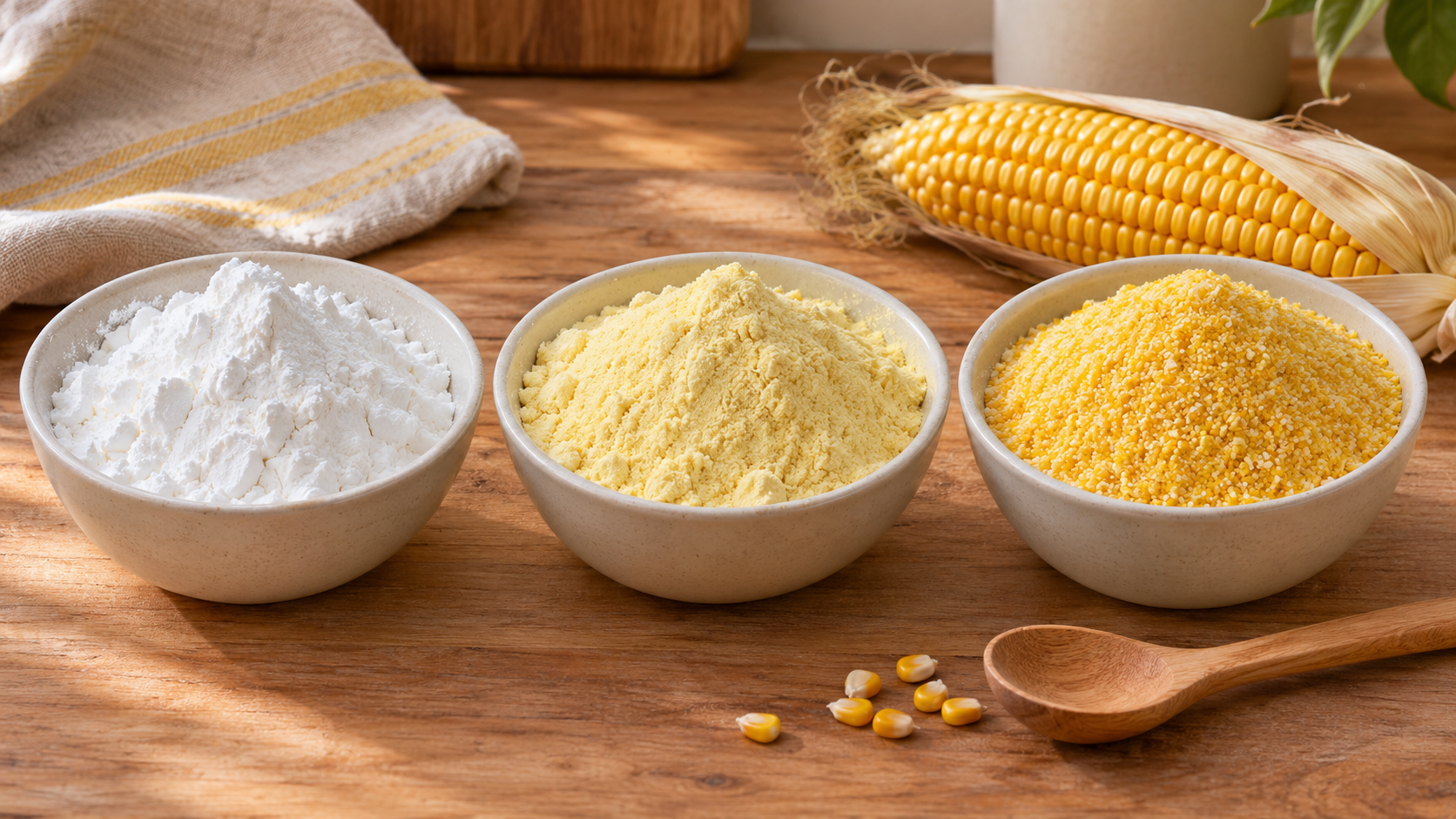
#The main distinction is between grain flour and extracted starch. Maize flour is made by milling corn into flour. Depending on the product, it can retain the whole grain or be processed differently. It contributes corn flavour and the substance of the grain to a recipe.
Cornstarch is the starch separated from corn and sold as a very fine powder. Its usual role is to change texture: thickening a sauce, helping a coating or forming part of a baking mixture. It is not simply an extra-fine version of whatever maize flour you have in the cupboard.
Think about the amount in the recipe. If corn is the main dry ingredient, its flavour, milling and dough behaviour matter. If a small quantity is stirred into a larger amount of liquid near the end, the recipe may be asking for starch. That is a useful clue, although the actual ingredient description should decide.
The space in the name is not reliable enough to settle the question. Imported packets, recipe translations and different brands do not always use “cornflour” and “corn flour” consistently. Read beyond the front of the bag.
What the names usually mean by country
#In a British recipe for gravy or a fruit filling, cornflour commonly means what a US packet calls cornstarch. Food Network's ingredient reference explains this regional naming difference. It also distinguishes fine maize flour from the coarser meal used in other preparations.
India has a similar practical trap. White cornflour sold for soups, sauces and coatings can be corn starch. Brown & Polson's Indian product description explicitly describes its cornflour as starch from corn. That does not make it the same ingredient as makki atta for a maize-flour roti.
US corn flour is often a fine cornmeal-like flour rather than the white thickening starch. A manufacturer such as Bob's Red Mill sells a whole-grain corn flour separately from its cornstarch. Those products are useful examples of the distinction, not a rule that every shop must use identical wording.
| Wording or context | What it commonly indicates | What still needs checking |
|---|---|---|
| British cornflour for a sauce | Extracted corn starch | Ingredients and recipe method |
| Indian white cornflour for soups | Usually maize starch | The actual packet, not colour alone |
| US corn flour | Finely milled maize flour | Whole-grain status and milling |
| Makki atta or maize flour | Ground maize for a grain-based preparation | Texture and the intended recipe |
| Cornmeal | Ground corn with a more noticeable grain | Fine, medium or coarse grade |
| Masa harina | Treated corn flour for particular doughs | Intended tortilla or tamale use |
These are starting points. A recipe's country helps explain the name, but the packet in your hand still needs to match the recipe in front of you.
Read the packet before using the recipe
#Start with the ingredient list. “Corn starch” or “maize starch” points toward the extracted thickener. “Whole grain corn” or a description of milled maize points toward flour. If the wording is unclear, look for the manufacturer's explanation rather than guessing from a product photo.
Next, read the suggested uses. A packet describing sauces, custards or soups is giving you different information from one describing cornbread or maize dough. Suggested uses are not a replacement for the ingredients, but the two should make sense together.
Then check texture and colour as supporting clues. A fine white powder may be starch, while a yellow flour may be ground maize. But corn comes in different colours, and milling varies. White maize flour exists, so colour cannot prove that a powder is cornstarch.
Keep the original label when transferring an ingredient into a storage jar. Write its full name and intended use on the jar, or keep a photograph of the package. “Corn flour” on a plain container may leave you with exactly the same confusion a month later.
If you are buying online, inspect the back-of-pack image and exact product description. A search result can group different products under a similar name. Do not assume that the first result for the recipe's wording is the right purchase.
For dietary restrictions, check the complete product information separately. Knowing that the main ingredient is corn does not establish how it was handled, whether other ingredients are present, or whether the finished dish meets someone's requirements.
Choose by the job: thickening, coating or baking
#Thickening a sauce or filling
#If a recipe calls for a small amount of cornstarch mixed with cool liquid before adding it to a hot sauce, use the extracted starch. This mixture helps disperse the powder before heating thickens the liquid. Dropping dry powder straight into a hot pot can leave lumps.
Use the recipe's quantity and heating instructions as the starting point. Different liquids and intended textures need different amounts. A glossy stir-fry sauce, a spoonable custard and a firm filling are not aiming for the same finish.
Starches also differ in how they tolerate prolonged heating, acidity or freezing. Do not treat every pale thickening powder as a direct swap. If you need an alternative, choose guidance for that specific dish and starch rather than applying one universal ratio.
Maize flour may add body to some dishes, but it brings grain material and flavour as well. It will not automatically produce the smooth finish intended by an extracted-starch slurry. That matters when you want a delicate sauce rather than a corn-flavoured preparation.
Coating food before cooking
#Here the answer is more recipe-dependent. A starch coating can help create a particular crisp surface, while maize flour or cornmeal can bring a more noticeable corn flavour and grain. Neither is a universal upgrade over the other.
Look at the rest of the coating mixture. If it combines starch with another flour, replacing the starch changes the balance. If it deliberately uses cornmeal for crunch, an equally weighted scoop of fine white starch removes the grainy texture the recipe intended.
For a first attempt, follow a method written for the ingredient you have. Once you understand the result, a small variation is easier to judge. Changing the flour, coating thickness and cooking method together makes it much harder to know why the food turned out differently.
Baking a batter or dough
#In baking, the dry ingredients are part of a structure, not just a way to absorb extra liquid. Corn flour may contribute flavour and a fine grain texture, while starch can play a different role within a flour blend. Replacing the main flour with cornstarch is a substantial change.
An American cornbread recipe asking for corn flour is not normally asking you to use a large amount of white sauce thickener. Equally, a biscuit recipe asking for a small quantity of British cornflour may be using starch deliberately. Read the full method before weighing anything.
Do not try to solve an ingredient mismatch by adding liquid until the mixture “looks right.” A batter can look plausible before baking and still set differently. Find a recipe designed for your product when the corn ingredient makes up a significant part of it.
Cornmeal, makki atta and masa harina are different checks
#Cornmeal and fine maize flour belong to the ground-grain side of this comparison. The milling difference can be visible and noticeable in the finished food. A coarse grain needs a preparation that allows for that texture; a finer flour cannot always reproduce it.
Polenta is another word worth checking carefully. A product sold for quick-cook polenta and an ordinary bag of cornmeal may need different liquid amounts and cooking times. Use the directions for the actual product rather than combining a convenient timing from one packet with a ratio from another recipe.
Makki atta is the relevant maize-flour term in many Indian kitchens. A makki roti preparation is asking the grain flour to become part of the dough. A white starch sold for thickening soup will not do that same job merely because it also says cornflour.
Masa harina needs a separate decision. It is made from corn that has undergone alkaline treatment before being dried and milled. That treatment is part of why it behaves differently in particular doughs. It is not simply a different brand name for ordinary corn flour.
If a tortilla recipe calls for masa harina, buy a suitable masa product or choose another complete recipe. Do not assume that cornstarch, untreated maize flour and masa harina become interchangeable after adding more water. Their shared crop does not mean shared dough behaviour.
What to do if you bought the wrong packet
#First, stop before adding it to the whole dish. Identify the product properly, then decide whether to change the recipe or save the ingredient for another use. A small delay is usually easier than trying to remove the wrong flour from a finished mixture.
Imagine a British sauce recipe asking for cornflour, but you have bought a yellow whole-maize flour. This is an illustrative situation. If you need the intended smooth starch-thickened sauce, obtain the right starch or use a documented alternative thickener for that sauce.
Do not keep adding the maize flour in the hope that enough of it will recreate cornstarch. You may make the sauce thicker while also making it grainier and more corn-flavoured. Thickness alone does not prove that you have reproduced the intended result.
Now reverse the situation: you want to bake a maize-flour bread but only have white cornstarch. Keep the starch for a recipe that uses it and choose a different bread. That is a more reliable decision than inventing a replacement for the main grain ingredient.
If the wrong ingredient is already in a small portion, assess it separately where practical. Cook it appropriately before tasting. Raw flour is not a safe tasting ingredient, and the absence of raw egg does not make raw batter safe.
Once the whole mixture has changed, be realistic about rescue. A sauce can sometimes become a different acceptable dish, but an unsupported adjustment should not be presented as a guaranteed fix. Avoid wasting more ingredients simply to defend the original plan.
Measure the right ingredient and keep it dry
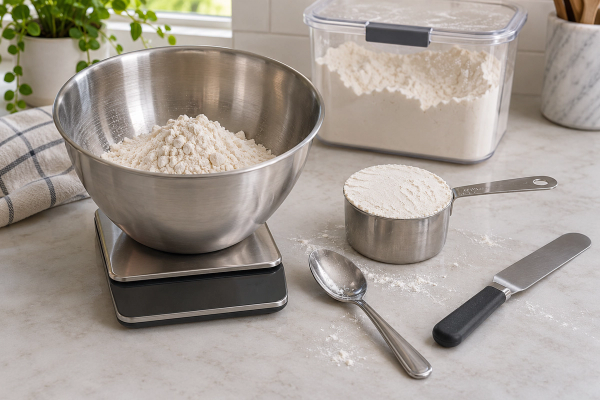
#After establishing the identity, use the measurement system specified by the recipe. Weighing helps you repeat an amount, but equal grams of different ingredients are still different ingredients. A scale cannot make whole maize flour behave like extracted starch.
Volume measures add another variable. Different powders and flours have different densities, and the way they fill a cup matters. Manufacturer weight charts are useful for their stated products; they are not permission to apply one flour's cup weight to every other powder.
For a starch slurry, mix it smooth in the cool liquid specified, stir it again if it has settled, and add it as the recipe directs. Judge the final texture after the required heating. Adding more powder before the first addition has worked can overshoot the result.
Store the product according to its package, protected from moisture and contamination. Use a clean, dry scoop and close the container properly. Whole-grain flour and extracted starch do not necessarily have identical storage characteristics, so keep their dates and instructions with them.
If an ingredient has deteriorated, do not use a recipe as a way to hide that problem. Follow the package guidance and discard a product with signs that make it unsuitable. Correct naming does not override basic ingredient care.
A simple way to read an unfamiliar recipe
#Before shopping, identify where the recipe comes from, what the corn ingredient contributes and what quantity it uses. Then match those clues to a clearly described product. Country, ingredient list and cooking purpose should point in the same direction.
For a sauce, ask whether the recipe needs a fine starch thickener. For a bread or roti, ask which grain flour and milling it expects. For tortillas, establish whether it specifically requires masa harina. For polenta, check the product type and cooking directions.
If those answers conflict, clear up the ingredient before starting. You do not need a cupboard full of similar powders. You need the right product for the job, with enough information left on the packet to recognise it next time.