Almost everyone buying their first electric car hits the exact same week-one pressure: the dealership sales desk or a flashy online forum tells you that you must immediately spend a thousand dollars or more installing a dedicated Level 2 home wallbox and possibly upgrading your electrical service panel before bringing the car home.
Hold on before booking hardware and concrete drilling on day one. Whenever a first-time buyer asks me whether they actually need a Level 2 charger at home, I tell them to ignore generic brochures and run fifteen minutes of overnight commute math first. Half the people stressing about fast home hardware drive forty kilometers a day and park for twelve hours a night—meaning a proper dedicated household socket handles every normal week quietly at zero hardware markup. The other half live in freezing winters, drive heavy daily mileage, share one socket between two EVs, or depend on narrow four-hour off-peak electricity windows where slow portable charging simply falls behind.
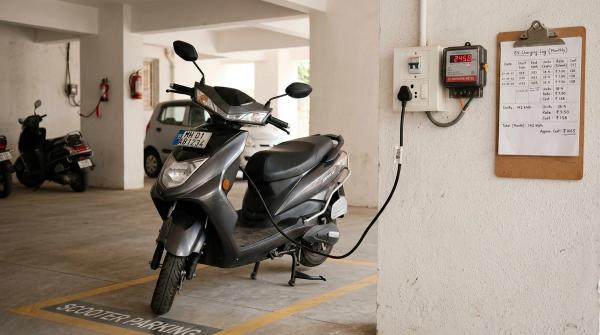
And because Allblogs readers live across different electrical grids, notice something huge that US-centric guides always miss: portable outlet charging in a 120V North American garage delivers half the power of a proper 230V residential socket in India, the UK, Europe, or Australia. Once you plug your own local voltage, nightly parking window, and car's onboard limit into one straight calculation, the answer shows up right on paper.
Level 1 vs Level 2 at a glance (including 230V global homes)
#Charging speed at home boils down to simple electrical math—watts delivered per hour (volts multiplied by amps) multiplied by how many hours the car stays parked, minus modest charging losses. Notice how differently "basic portable plug" vs "dedicated wallbox" compares depending on which country's electrical wall runs behind your car:
| Setup Type | Typical Power Output | Real Energy Added in 10 Hours | Rough Overnight Range Added | Installation Requirement |
|---|---|---|---|---|
| Level 1 120V North America (12A continuous) | About 1.2 to 1.4 kW | About 10 to 12 kWh | About 35 to 45 miles (55 to 75 km) | Dedicated 120V grounded outlet |
| UK / EU 230V 3-pin granny cord (10A) | About 2.3 kW | About 19 to 21 kWh | About 65 to 85 miles (105 to 135 km) | Inspected dedicated domestic socket |
| India 230V 15A/16A portable socket | About 2.3 to 3.3 kW | About 20 to 29 kWh | About 120 to 180 km | Heavy-duty grounded 16A socket + MCB |
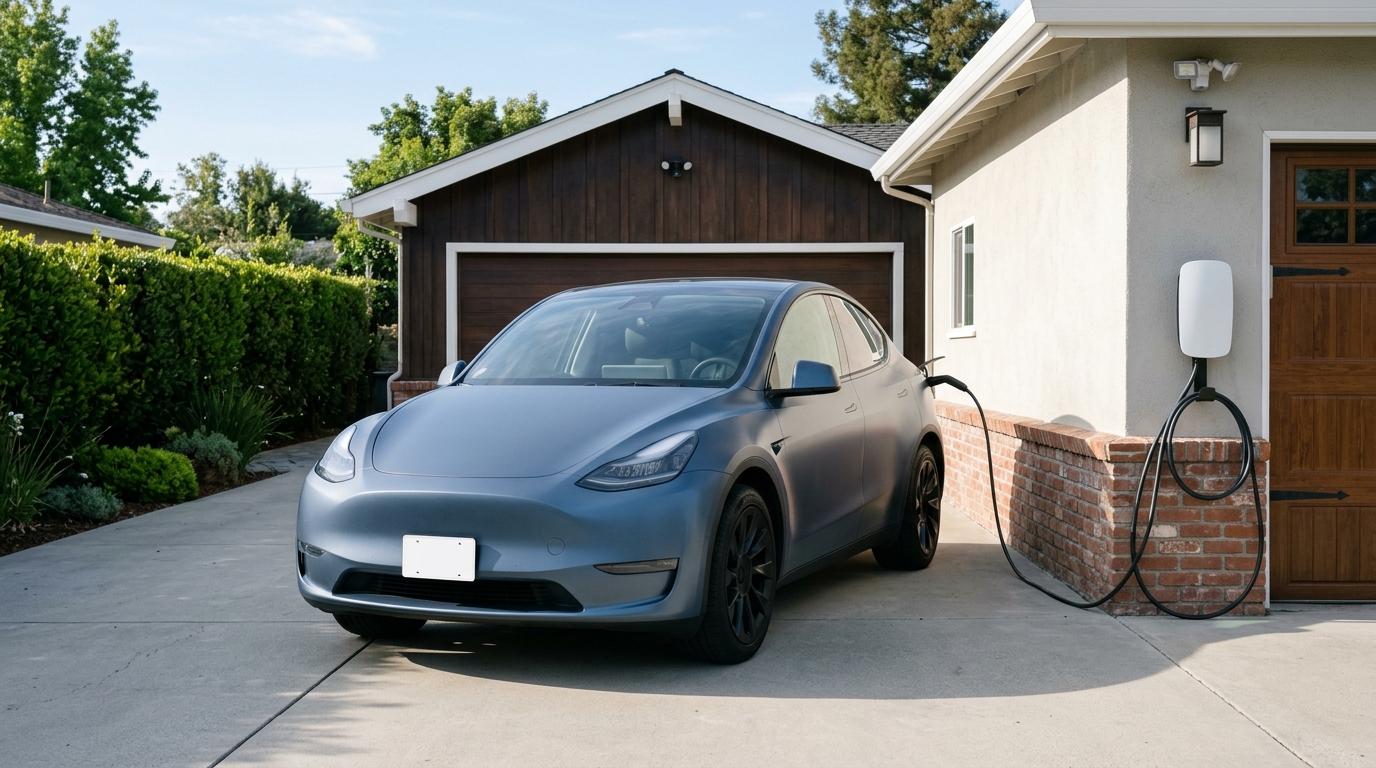
| North America 240V Level 2 wallbox (32A–48A) | About 7.6 to 11.5 kW | Full 60–85 kWh recovery | Full pack overnight | Hardwired or heavy NEMA 14-50 circuit |
| UK / India / AU 230V AC Wallbox (32A) | About 7.0 to 7.4 kW | About 62 to 68 kWh | Full mid-size pack in 6–9 hours | Dedicated 32A circuit, RCD protection, load check |
Notice immediately why US drivers run out of patience with Level 1 faster than drivers in 230V homes. A North American 120V NEMA 5-15 wall socket safely tops out around 1.44 kW (only about 1.1 to 1.2 kW actually reaching the battery after electronics overhead), adding roughly 3 to 5 miles of range per hour depending on vehicle size. Meanwhile, a properly grounded 230V 15A/16A India socket delivering 3.0 to 3.3 kW pushes more than double that speed—comfortably recovering a full city-car battery over one weekend sleep without touching a permanent wallbox unless driving longer loops daily.
Before confusing home ownership with apartment curbs, keep scope clear: if you rent an apartment with zero usable socket near your parking spot at all, this is not a Level 1 vs Level 2 decision yet—start with our guide on owning an electric car without home charging using public or workplace schedules.
Why onboard car limits and winter cold change the box math
#Even drivers who read specs carefully get tripped up by two real-world variables hardware makers rarely print in big friendly print on box covers: what your car actually accepts, and how much electricity vanishes just keeping systems awake in winter or summer.
Your car's onboard charger decides the ceiling
#Both Level 1 portable cords and Level 2 AC wallboxes feed alternating current (AC) to your car—the vehicle's built-in onboard charger converts that AC power into direct current (DC) before it enters the battery cells. That means the slower number between your wall unit and your car's onboard rectifier always wins.
Consider how that works in practice: UK Energy Saving Trust explicitly reminds drivers that actual AC home speed never exceeds the vehicle's onboard limit. Look at entry-level compact EVs or plug-in hybrids sold in India or budget European trims: quite a few compact cars and most plug-in hybrids come fitted with 3.3 kW or 3.7 kW AC onboard chargers. Bolt a pricey 7.4 kW (or 11 kW) wallbox next to a 3.3 kW-capped vehicle, and the car quietly sips 3.3 kW anyway—zero speedup on that driveway until you replace the car years later. Check your exact model trim sheet before paying extra strictly for raw wallbox amperage.
Parasitic overhead losses favor Level 2 slightly on efficiency
#Here is an honest electrical nuance worth knowing: when an EV charges, computers, cooling pumps, and battery management electronics stay awake drawing roughly 200 to 400 watts the entire time the car stays plugged in—plus extra heater power if the pack sits outdoors below freezing.
Think through a hypothetical winter night in a 120V North American driveway:
- At 1.4 kW from a 120V cord, 300 W of awake computer load plus mild battery warming can swallow 20 to 30 percent of incoming wall energy during cold weather—meaning very slow cold-garage charging pays noticeably higher billed kWh overhead and recovers far fewer overnight miles.
- At 7.2 kW on a 240V Level 2 wallbox, that exact same car finishes the job five to six times faster, turning electronics back off early and delivering roughly 85 to 90 percent wall-to-battery efficiency on milder days—saving wasted standby watts and letting the battery finish warming only once.
For gentle 50 km daily summer commutes on a 230V 3.3 kW plug, parasitic differences barely change your monthly electricity bill by a couple cups of coffee. For icy driveways in Minnesota, Ontario, or high-mileage winter routines, faster 240V Level 2 noticeably outperforms slow 120V trickle plugs.
Do the overnight commute math before ordering hardware
#Forget guesswork—run your exact daily routine through two clearly labelled hypothetical driver profiles using realistic numbers (18 kWh per 100 km, or roughly 3.4 miles per kWh for a mid-size crossover, allowing roughly 15 percent wall-to-battery AC charging overhead):
Hypothetical Commuter A: 40 km (25 miles) daily round trip, parked 11 hours
#Daily driving takes roughly 7.2 kWh out of the pack, needing roughly 8.5 kWh from the wall.
- On a North American 120V Level 1 plug (drawing roughly 1.4 kW from the wall and storing about 1.2 kW into the battery): 11 hours overnight delivers roughly 13.2 kWh net—completely covering Tuesday's commute plus leaving excess reserve for weekend errands. You can safely skip buying a wallbox on day one if your dedicated grounded 120V outlet already sits clean and reachable.
- On a UK 230V 2.3 kW or India 3.3 kW dedicated socket: 11 hours adds 20 to 29 kWh—more than three times Commuter A's daily burn every single night.
Hypothetical Commuter B: 115 km (72 miles) daily highway loop, parked 9 hours
#Daily driving eats roughly 21 kWh out of the battery, plus an occasional late dinner reducing tonight's parking window to seven hours.
- On a North American 120V Level 1 plug: 7 hours adds barely 8 kWh net—leaving Commuter B 13 kWh behind every single evening until Friday forces an annoying extra stop at an expensive public highway DC fast charger. When you do lean on highway DC fast stops mid-week during cold seasons, check our guide on EV battery preconditioning before fast charging so winter fast charges do not drag out.
- On a 7.2 kW–7.4 kW Level 2 wallbox: 7 hours delivers 45+ kWh comfortably—starting every single morning effortlessly back at Commuter B's daily target (say 80 percent) well before morning alarms go off.
When Time-of-Use utility tariffs flip the math
#There is one situation where a smart Level 2 wallbox pays for itself even on shorter daily commutes: overnight off-peak electricity plans. Many utilities across North America, the UK, Europe, and some Indian time-of-day tariffs cut late-night EV rates sharply during a tight 4-to-6-hour window (say midnight to 5:00 AM). A slow 1.4 kW or 2.3 kW plug can barely push 7 to 13 kWh inside five cheap hours, forcing spillover into pricey peak daytime tariffs—whereas a programmable 7 kW wallbox dumps 35 kWh strictly during those discounted hours every night cleanly.
Dedicated Wallbox vs Standard Household Socket Safety
#Never treat continuous multi-hour automotive charging like plugging in a phone charger or weekend lawn trimmer. Drawing 12 to 15 continuous amps for ten straight hours finds every weak screw, tarnished spring clip, thin wire splice, or damp junction box inside older residential wiring.
Both US DOE AFDC guidance and Indian society EV safety practice come back to strict, unglamorous electrical boundaries:
- Zero daisy-chained household extension cords or multi-plug power strips: generic domestic extensions are built for short portable tools, not continuous 10-hour thermal soak; voltage drops across loose adapter contacts generate dangerous heat right at the socket faceplate. For shared housing, basement rules, and why extension cords melt, review our apartment and extension-cord charging safety rules—even though written for two-wheelers, the thermal socket lessons apply doubly to heavy passenger cars!
- Dedicated branch circuit for regular home sockets: if relying regularly on a 120V outlet (Level 1) or a 16A socket in India/UK/AU, have a licensed electrician verify the outlet sits on its own dedicated breaker without sharing heavy loads like a microwave, chest freezer, or garage space heater that trip circuits overnight.
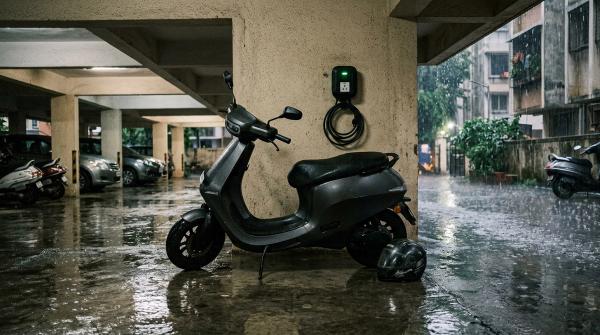
- Outdoor protection matters: as US DOE AFDC explicitly states, charging an EV outdoors in rain is normal and safe only when using outdoor-rated enclosures and properly weatherproofed equipment—never dangle indoor charger bricks inside puddles or prop cardboard over wet connectors.
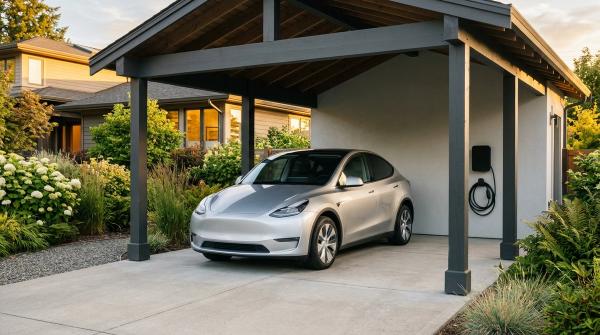
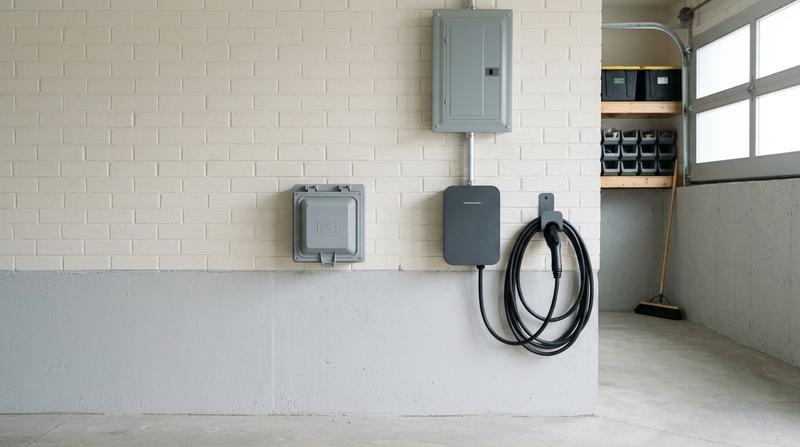
- Hardwired vs heavy plug-in 240V outlets: in 240V North American garages, if choosing Level 2, experienced electricians routinely favor direct hardwired wallboxes over plug-in NEMA 14-50 dryer outlets for daily continuous EV draw. Budget consumer-grade 14-50 dryer receptacles were never engineered for daily plugging and heavy 40A thermal runs, whereas hardwiring cuts out an exposed plug contact and allows clean 48A smart configuration where panel service permits. (If preferring a plug-in charger for portability when renting, verify an industrial-grade EV-rated heavy receptacle gets fitted.)
- Proper residual-current protection and earthing: UK and Indian 230V setups require proper earthing checks and Type-A/Type-B RCD/RCCB earth-leakage protection matching manufacturer specs so fault currents cut cleanly within milliseconds rather than turning metal car frames hazardous.
Never install heavy breakers, pull wires, open main panels, or swap socket faceplates as a weekend DIY project unless qualified and licensed under local electrical code. Paying a certified electrician for two clean hours prevents four-figure melting damage or home insurance disputes.
When a Level 2 wallbox pays back—and when it is overkill
#Lay the decision straight out without showroom upsells:
Stick cleanly with an inspected portable Level 1 or 230V socket if:
#- Your realistic daily commute fits easily inside an overnight recovery window with room to spare (under 35 to 40 miles in North America on 120V, or under 100 to 130 km in 230V countries on a tested dedicated 10A to 16A line).
- You live in a short-term rental where drilling conduit or upgrading utility sanctioned load is messy or refused by the landlord.
- You own a plug-in hybrid (whose tiny 12–20 kWh pack fills overnight on Level 1 effortlessly anyway) or a car with a 3.3 kW AC onboard charger ceiling.
- You have steady cheap workplace charging three days a week so home only handles light weekend top-ups.
Invest in a dedicated Level 2 (240V / 7kW–7.4kW) wallbox if:
#- You commute long distances daily, work rotating shifts with tight 6-hour sleep turnarounds, or need full overnight range confidence across cold winters.
- Two EVs share one single home parking driveway and leapfrog nights regularly.
- Your utility gives deep overnight EV off-peak discount windows (such as four-hour midnight tariffs) where slow trickle cords cannot catch up in time.
- Your car takes full advantage of 7 kW to 11 kW onboard AC speeds and rebates or utility charger credits shrink hardware and permit costs meaningfully.
Five questions to ask a licensed electrician before buying hardware
#Do not buy a boxed wall charger off an online flash sale and hand it blindly to whoever quotes cheapest. Ask a licensed local electrician these five sharp questions during a brief panel walk-through first:
- Does my existing service panel—or sanctioned load connection in 230V flats and houses—hold enough spare amperage headroom to support a continuous 32A or 40A dedicated circuit safely, or would a smart load-management device let me run Level 2 without a pricey service-panel upgrade?
- If I just want to start with a dedicated single-outlet portable charger (120V 20A circuit or a heavy-duty 16A grounded 230V box), can you pull clean conduit once sized nicely for a future wallbox upgrade later?
- For my setup, do you recommend direct hardwiring inside sealed conduit vs an industrial EV-rated receptacle—and which specific earth-leakage breaker (RCD/GFCI) does local electrical code require?
- Finally, think practically about parking ergonomics before drilling: does the mounting wall reach your car's specific charge-port corner cleanly without stretching tight cables across walkways or pinching beneath garage doors?
- Are local utility charger credits, smart charger qualification lists (for instance, ENERGY STAR certified units in the US or smart-tariff compliant units in the UK), or meter upgrades required before hooking it up?
Get clear answers on your overnight miles and your panel's real capacity first. Once those two facts line up, choosing between a simple inspected socket and a dedicated Level 2 wallbox takes ten calm minutes—not guesswork or wasted hardware money.