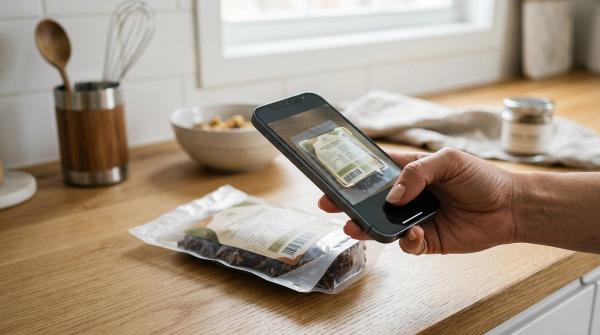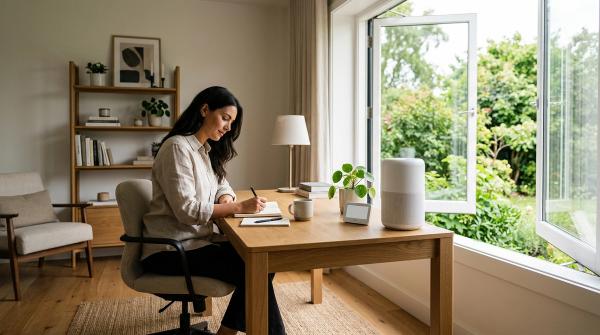
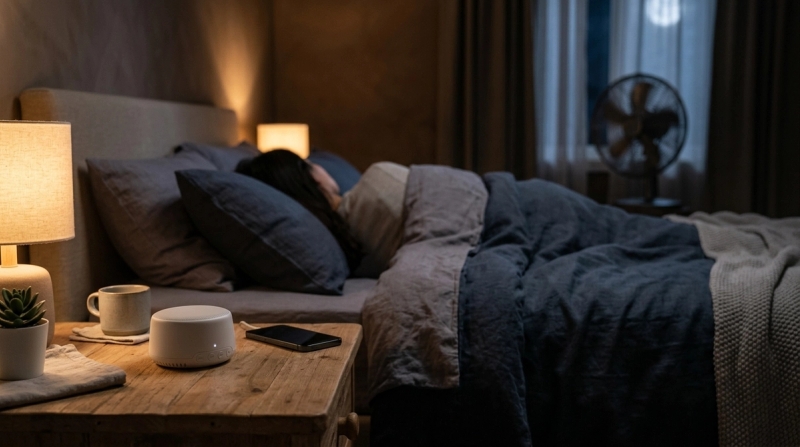
If you’re trying to sleep through traffic, noisy neighbours, a snoring partner, or the random clunk of someone’s door at midnight, you don’t always need the fanciest gadget. Buy a white noise machine for steady nightly bedroom use, use an app for testing or travel, choose a fan if you also need airflow, and buy nothing yet if you have not tested whether sleep sounds actually help.
Short answer: white noise machine vs app vs fan
#Here is the quick decision:
- White noise machine: Best for nightly bedroom use, keeping your phone away, and steady sound. Avoid if you only need it occasionally or want a free option.
- Phone app: Best for travel, testing sounds, and low-cost setup. Avoid if notifications, battery drain, or scrolling in bed is a problem.
- Fan: Best for warm rooms, airflow, and simple mechanical noise. Avoid if you sleep cold, need portability, or want more sound control.
- No purchase yet: Best for mild or rare noise, testing first, or fixable room issues. Avoid if noise wakes you often and you need something reliable.
A good rule of thumb:
Buy a white noise machine for your bedroom, use an app when you travel, use a fan if the room is hot, and don’t buy anything until you know sound masking actually helps.
Who this guide is for
#This guide is for people who want a practical answer without building an entire sleep “system.”
You might be trying to deal with:
- Traffic outside your window
- Loud neighbours
- Thin hotel walls
- A partner who snores
- Random building noises
- Dogs barking, doors closing, lifts, or hallway noise
- Trouble sleeping in unfamiliar places
It’s also for anyone comparing white noise machine vs app vs fan and wondering whether a dedicated device is actually worth it, or whether the phone already sitting on the nightstand can do the job.
Related AllBlogs reads:
- Sleep Mask vs Blackout Curtains vs Sunrise Alarm
- Earplugs vs Sleep Earbuds vs White Noise for Travel
- Red-Eye Flight Sleep Kit: Rest Better Without Pills
This isn’t medical advice, and it’s not about treating a sleep disorder. It’s a buying guide for noise masking for sleep, which simply means using a steady background sound to make sudden noises feel less noticeable.
What to think about before buying anything
#Before you order a white noise machine, pay for an app, or drag a fan into the bedroom, it helps to get clear on what you’re actually trying to fix.
1. What kind of noise are you trying to cover?
#Not all noise is the same.
Sharp, sudden sounds like doors slamming, traffic horns, people talking in the hallway, or dogs barking are often easier to soften with steady background noise.
Lower sounds, like bass music, heavy footsteps, or some types of snoring, can be harder to mask. For those, you may prefer something deeper, like pink noise or brown noise, instead of bright, hissy white noise.
The best sound for sleep is not always the one that sounds nicest in a 10-second preview. It’s the one that helps cover the specific noise that keeps waking you up.
2. Do you want your phone next to your bed?
#A white noise app can be genuinely useful. But it also means your phone is part of bedtime.
For some people, that’s fine. They turn on sleep mode, start the sound, and leave it alone.
For others, the phone becomes the problem. You wake up, check the time, see a notification, open one app, then somehow it’s 3:42 a.m. and you’re reading something you don’t even care about.
If your phone already interferes with your sleep routine, a separate white noise machine is probably the cleaner choice.
3. Do looping sounds bother you?
#Some apps and cheaper sound machines use short audio tracks that repeat.
A lot of people never notice. But if you do notice, it can become impossible to ignore. Once your brain catches the loop, the sound stops feeling relaxing and starts feeling annoying.
If that sounds like you, look for longer tracks, better-quality apps, non-looping options where available, or a mechanical sound machine. A fan can also be a good option because it creates real physical sound rather than playing a repeated recording.
4. Do you actually want airflow?
#A fan is not just a sound machine. It changes the feel of the room.
That’s great if your bedroom is hot, stuffy, or uncomfortable. You get airflow and background noise at the same time.
But if you sleep cold, share the bed with someone who hates drafts, or only want the sound, a fan can become irritating fast.
If you’re pointing the fan at a wall just to hear it, you may be happier with a white noise machine.
5. Is this for home, travel, or both?
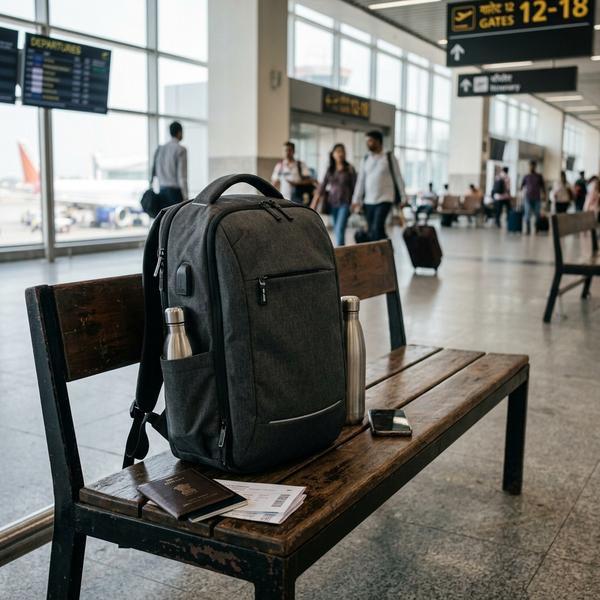
#A bedside white noise machine makes sense if you use it most nights at home. You plug it in, leave it there, and it becomes part of the routine.
A phone app is easier for hotels, flights, guest rooms, and packing light.
If you travel often, the best choice may not be the nicest home setup. It may simply be the option you’ll actually bring with you.
The full comparison: white noise machine vs app vs fan
#The right choice usually comes down to four things:
- Sound quality
- Convenience
- Control
- How it affects your room and bedtime routine
Here’s how each option works in real life.
Option 1: Dedicated white noise machine
#A white noise machine is a separate device made to play steady sleep sounds.
Some models use digital audio through a speaker. Others are mechanical and use an internal fan to create sound without blowing air around the room.
What it does well
#A dedicated machine is usually the best fit if you want the same simple setup every night.
It sits on your nightstand, stays plugged in, and does one job. You don’t have to unlock your phone, open an app, silence notifications, worry about battery life, or resist the urge to scroll.
Many machines also have easier bedside controls than a phone. You can adjust the volume quickly, and some models let you choose between white noise, pink noise, brown noise, rain, ocean, fan sounds, or other background sounds.
Mechanical models are especially nice for people who hate obvious loops. Since the sound is created by a physical part inside the machine, it can feel more natural and less repetitive than a short audio track.
What it does not do well
#A white noise machine is still another thing to buy, plug in, clean around, and find space for.
It can take up room on a small nightstand. It may need a wall outlet. And if you travel a lot, it’s less convenient than using your phone.
Also, not every white noise machine sounds good. Some cheaper models can be harsh, tinny, or strangely artificial. A dedicated machine can be worth it, but it still needs to be a decent one.
Best for
#- Nightly home use
- People who want their phone out of the bedroom
- Light sleepers who like a consistent routine
- Shared bedrooms where simple controls matter
- Anyone who hates notification interruptions
- Creating a more stable sleep environment
Avoid if
#- You only need noise masking occasionally
- You’re not sure sleep sounds help you yet
- You travel light and don’t want another device
- You need a no-cost solution right now
Option 2: White noise app
#A white noise app turns your phone or tablet into a sleep sound machine.
It’s often the easiest way to try noise masking before buying anything else.
What it does well
#Apps are flexible.
You can test white noise, pink noise, brown noise, rain, waves, fan sounds, forest sounds, and all kinds of ambient tracks without buying a separate device.
They’re especially useful for travel. If you’re in a hotel, on a long flight, or sleeping in someone’s guest room, your phone is already with you. Pairing an app with headphones or a small speaker can be enough in many situations.
Apps are also great for figuring out what you actually like. Maybe white noise feels too sharp. Maybe rain sounds lovely for five minutes but annoying after an hour. Maybe brown noise is exactly right.
An app lets you learn that before spending money on a machine.
What it does not do well
#The main problem is simple: your phone is still your phone.
Notifications can interrupt the sound unless you set up Do Not Disturb or sleep mode properly. Battery drain can be annoying if you forget to plug it in. And the screen can become a temptation if you wake up during the night.
Phone speakers also vary a lot. Some are fine for soft background sound. Others sound thin, sharp, or too small for the room.
If you want fuller sound that fills the bedroom more comfortably, a dedicated machine may feel better.
Best for
#- Travel
- Hotels and flights
- Testing sleep sounds before buying a machine
- Tight budgets
- Minimalists who don’t want another gadget
- Comparing white, pink, and brown noise
Avoid if
#- You check your phone too much at night
- You forget to silence notifications
- Your phone battery is unreliable
- You dislike keeping electronics near your bed
- Your phone speaker sounds weak or harsh
Option 3: Fan noise for sleep
#A regular fan is the classic sleep-noise option.
Plenty of people love fan noise for sleep because it’s steady, familiar, and mechanical. It doesn’t feel like a “sleep product.” It’s just a fan.
What it does well
#A fan gives you two things at once: sound and airflow.
If your bedroom is warm, that can be perfect. You get a more comfortable room and a steady background hum at the same time.
Because the sound comes from the fan itself, there’s no digital loop to notice. No app. No subscription. No sound library. No settings menu. Just turn it on and go to sleep.
For a lot of people, that simplicity is the whole appeal.
What it does not do well
#A fan is not very precise.
You can usually change the speed, but that changes both the sound and the airflow. If you need more sound, you may also get more wind. If you want less airflow, you may lose the noise level that was helping you.
Fans can also be bulky, dusty, and awkward in small rooms. And unless it’s a small portable fan, it’s not something most people want to pack for travel.
Best for
#- Hot sleepers
- Warm or stuffy bedrooms
- People who already like fan sound
- Rooms that need airflow anyway
- Anyone who wants simple mechanical noise
Avoid if
#- You sleep cold
- You share a room with someone who hates airflow
- You need precise volume or tone control
- You have limited floor or table space
- You want something easy to pack
Option 4: Buy nothing yet
#This option is underrated.
You may not need a white noise machine, app subscription, or fan if the noise only bothers you once in a while.
Before spending money, try a simple test for a few nights. Use a free or basic sound option. Keep the volume moderate. If possible, place the sound source between you and the noise.
Then pay attention to what happens.
Do you fall asleep faster? Wake up less? Feel less irritated by sudden sounds? Or does the background noise become one more thing bothering you?
If it helps, then buying a dedicated machine may make sense. If it doesn’t help, the problem might be the volume, the placement, the type of sound, or the kind of noise you’re dealing with.
Best for
#- Occasional noise
- Temporary renovation or travel noise
- People unsure whether noise masking works for them
- Anyone trying not to buy stuff they don’t need
Avoid if
#- Noise wakes you often
- You’ve already tested sleep sounds and they help
- You need a reliable nightly setup
- Your current workaround is causing new problems, like phone distractions
Quick buying checklist
#Use this simple sleep sound machine buying guide before choosing.
Choose a white noise machine if:
#- You need noise masking most nights
- You want your phone away from the bed
- You prefer a dedicated device with simple controls
- You want better volume control than a phone speaker
- Notifications or battery issues keep causing problems
Choose a white noise app if:
#- You want to test sounds first
- You travel often
- You don’t want to buy another device yet
- You need something quick and portable
- You’re comfortable managing phone settings at night
Choose a fan if:
#- Your room is warm
- You want airflow and sound together
- You already sleep well with fan noise
- You don’t need precise sound options
- Portability does not matter
Choose no purchase if:
#- The noise is rare
- You haven’t tested sleep sounds yet
- A simple room change might fix the problem
- You’re not sure what kind of sound works for you
Common mistakes to avoid
#Mistake 1: Buying a machine before testing sounds
#A white noise machine can be a good buy, but it’s not magic.
If you’ve never tried sleep sounds before, test a few first. You may find that white noise feels too sharp, rain is too distracting, or brown noise feels calmer.
That small bit of trial and error can save you from buying the wrong thing.
Mistake 2: Ignoring audio loops
#In the white noise app vs machine debate, looping matters more than people think.
Some people never notice a repeating track. Others notice it once and then hear it all night.
If you’re loop-sensitive, look for longer tracks, higher-quality apps, or mechanical sound options.
Mistake 3: Forgetting phone notifications
#If you use an app, set your phone up properly.
Turn on Do Not Disturb or sleep mode. Check your alarm. Make sure calls, messages, app alerts, and low-battery sounds won’t interrupt you.
A white noise app is not very helpful if your phone becomes the thing that wakes you up.
Mistake 4: Using a fan when you don’t actually want airflow
#A fan is great when you need cooling. It’s less great when you only want sound.
If you keep turning it away from the bed, blocking the air, or waking up cold, a sound machine is probably the better fit.
Mistake 5: Setting the volume too high
#Noise masking does not mean blasting sound across the room.
The goal is to reduce the contrast between silence and sudden noise. Start lower than you think you need, then adjust slowly.
If the sound itself becomes annoying, it may be too loud, the wrong tone, or in the wrong spot.
So, what should you buy?
#If you want one practical recommendation, choose based on your main problem.
For regular bedroom use, buy a dedicated white noise machine. It’s the easiest long-term setup because it does not depend on your phone.
For travel, use a white noise app. It’s portable, flexible, and easy to use in hotels, flights, and unfamiliar rooms.
For warm rooms, use a fan. It makes sense when airflow is part of the solution.
For occasional noise, choose no purchase yet. Test first, then buy only if noise masking clearly helps.
That’s the real answer to white noise machine vs app vs fan. The best choice is not always the fanciest one. It’s the one that solves your actual sleep problem without creating a new one.