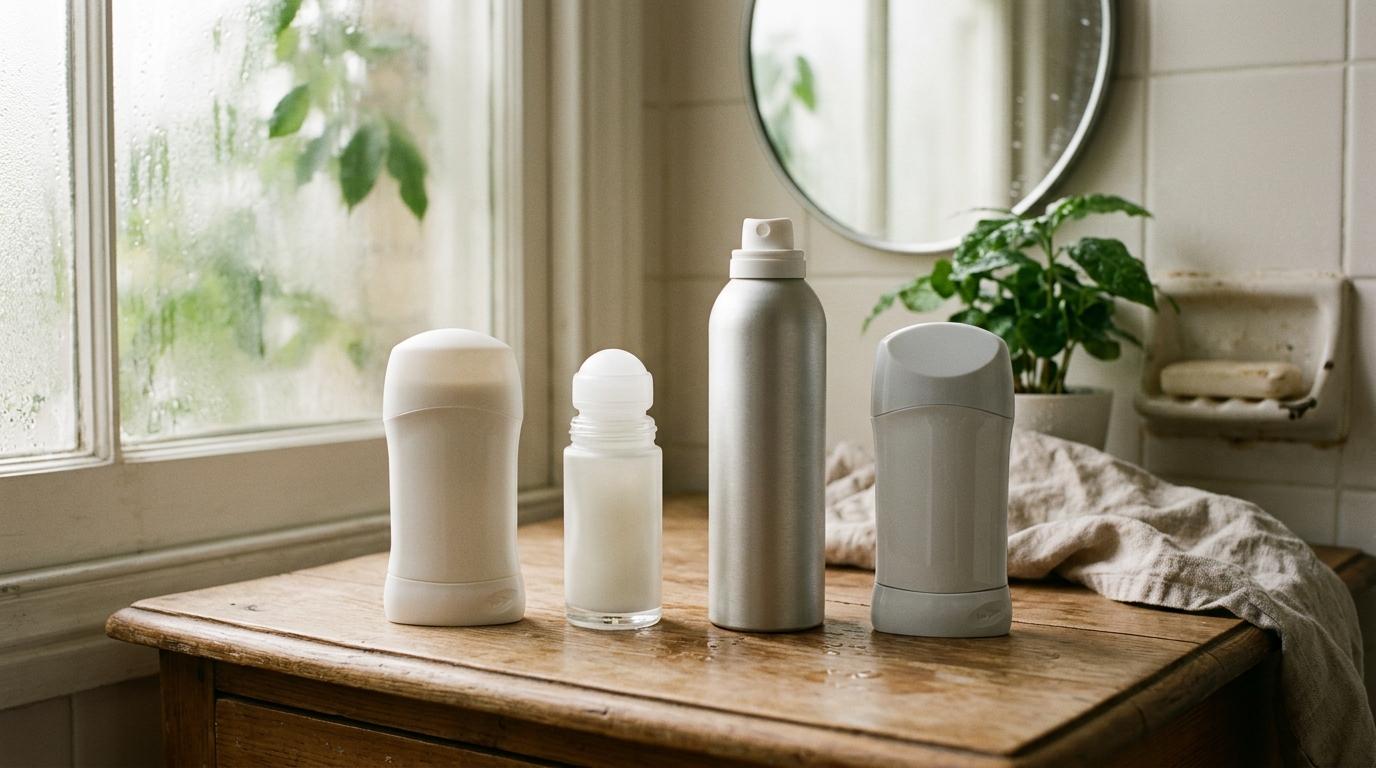
Hot, sticky weather has a way of making deodorant feel a lot more important than usual. One humid commute, one crowded train ride, or one rushed walk to work, and suddenly the deodorant aisle becomes a serious decision.
But here is the simplest way to think about it:
If you are worried about sweat, buy an antiperspirant.If you are worried about odor, buy a deodorant.If you just want a quick freshen-up, use a body spray.
The format matters, of course. Sticks, roll-ons, and sprays all feel different and fit different routines. But the first thing to check is whether the product is made for sweat, odor, or just fragrance.
Quick answer: what should you buy?
#For hot, humid commutes:Go for an antiperspirant stick. It usually feels dry, is easy to apply, and works well when you need to get dressed quickly.
For targeted odor control:Choose a roll-on deodorant if you like precise application and do not mind giving it a minute to dry.
For travel or gym bags:A solid stick is usually the safest bet. It is less likely to leak and easier to pack than liquids or aerosols.
For quick freshness:Use a body spray when you want a light scent refresh after commuting, working out, or traveling. Just do not expect it to stop heavy sweating.
For office days or events:If sweat marks are the issue, choose an antiperspirant. If you mainly want to smell fresh, a deodorant may be enough.
Walk into any deodorant aisle and it gets confusing fast. Stick, roll-on, spray, gel, invisible, sport, 48-hour, aluminum-free, sensitive skin, fresh scent, no white marks. It feels like a lot when all you really want is to not feel sweaty and uncomfortable by lunchtime.
So let’s make it easier.
The best choice depends on three things:
- Whether you need sweat control or odor control
- How you like the product to feel
- Where and when you plan to use it
First: deodorant vs antiperspirant
#This is the part that trips a lot of people up.
A deodorant helps with body odor. It does not stop you from sweating. It works by helping reduce or cover the smell that happens when sweat mixes with bacteria on your skin.
An antiperspirant helps reduce sweat. Most antiperspirants use aluminum-based active ingredients that temporarily reduce sweating in the area where you apply them.
So a stick is not automatically stronger than a roll-on. A spray is not automatically weaker than a stick. Those are just formats.
You can find:
- Deodorant sticks
- Antiperspirant sticks
- Deodorant roll-ons
- Antiperspirant roll-ons
- Deodorant body sprays
- Some antiperspirant sprays, depending on the label
For hot, humid days, the label matters just as much as the type of product.
Deodorant stick vs roll-on vs body spray
#1. Deodorant stick or antiperspirant stick
#A stick is the classic solid deodorant format. You swipe it directly onto your underarms, and it usually feels dry or nearly dry right away.
That is why sticks are so popular for mornings. You can apply one, get dressed, and leave without standing around waiting for your underarms to dry.
They are also easy to keep in a work bag, gym bag, or suitcase. No leaking, no mist in the air, and no complicated application.
Who should buy a stick?
#A stick is a good choice if:
- You want something that feels dry quickly.
- You get dressed right after applying deodorant.
- You commute in hot or humid weather.
- You want something easy to pack.
- You prefer direct underarm application.
- You want antiperspirant protection in a simple format.
If sweat is your main problem, look for a stick labeled antiperspirant. If odor is your main concern, a deodorant stick may be enough.
Who might not love a stick?
#A stick may not be your favorite if:
- You often wear black or dark clothing.
- White marks on clothes drive you mad.
- Your skin gets irritated by rubbing.
- Some solid formulas feel too thick, chalky, or gritty to you.
Not every stick leaves marks, but some do. If residue is a big concern, look for words like invisible, clear, or anti-white mark on the label.
2. Roll-on deodorant or roll-on antiperspirant
#A roll-on uses a liquid or gel formula with a little rotating ball at the top. It gives you neat, controlled coverage and is easy to apply exactly where you want it.
The trade-off is that it usually feels wet at first.
That does not make it bad. It just means you need to give it a little time to dry before putting on tight, dark, or delicate clothes.
Who should buy a roll-on?
#A roll-on is a good choice if:
- You like precise application.
- You do not want spray floating around the room.
- You prefer a liquid or gel feel.
- You want something compact for your bag.
- You are happy to wait a minute before getting dressed.
Roll-ons can work really well as part of a morning routine. Apply it, then brush your teeth, do your hair, or get your bag ready while it dries.
Who might want to skip roll-on?
#A roll-on may annoy you if:
- You are always rushing in the morning.
- You hate the feeling of wet underarms.
- You put on tight clothes right after applying.
- You need something quick and discreet to use on the go.
Roll-ons are not difficult to use, but they are less convenient when you are already sweaty, damp, or late.
3. Body spray
#Body spray is usually more about fragrance and freshness than serious sweat control. It is a scented mist you can use when you want to feel a bit fresher, especially after travel, a workout, or a long day.
It has its place, but it is easy to expect too much from it.
A body spray might help you smell better for a while, but unless the label clearly says it is an antiperspirant, it will not do much for sweat.
Who should buy a body spray?
#Body spray is a good choice if:
- You want a quick refresh during the day.
- You like wearing a light scent.
- You want something to use after commuting or working out.
- You do not need serious sweat control.
- You already use deodorant or antiperspirant and want an extra freshness boost.
Think of body spray as a bonus product, not your main protection on a very hot day.
Who should avoid body spray?
#Body spray may not be ideal if:
- You need sweat control.
- Strong fragrance bothers you.
- You are sensitive to scented products.
- You use products in small or poorly ventilated spaces.
- You travel carry-on only and do not want to deal with liquid or aerosol rules.
Sprays are quick and easy, but they also spread into the air. That can be irritating for some people, especially in bathrooms, locker rooms, cars, or shared spaces.
What works best in real life?
#For a hot office commute
#Choose an antiperspirant stick or antiperspirant roll-on.
If sweat patches are what you are worried about, deodorant alone probably will not be enough. You need something labeled antiperspirant.
A stick is usually easier if you get ready quickly. A roll-on can work just as well if you give it time to dry.
For travel days
#Choose a solid stick.
It is the easiest option to pack, especially if you do not want anything leaking in your bag. Roll-ons are compact, but they are still liquids. Sprays may come with airline or aerosol restrictions, so check the rules before you pack them.
For workouts
#Use deodorant or antiperspirant before your workout, depending on what you need.
Afterward, a body spray can help you feel fresher, but it is not a replacement for washing when you get the chance. It also will not undo heavy sweat or odor on its own.
For events
#Choose based on your outfit.
If you are wearing something fitted, dark, or delicate, look for low-residue or invisible formulas. If sweat marks would make you uncomfortable, choose an antiperspirant. If you are also wearing perfume or cologne, go light with body spray so the scents do not compete.
For everyday low-sweat days
#A deodorant stick or roll-on deodorant may be all you need.
Not everyone needs antiperspirant every day. If you do not sweat much and mainly want odor control, a regular deodorant can be the simpler choice.
What to check before buying
#1. Does it say deodorant or antiperspirant?
#This is the most important thing to check.
- Deodorant: Helps with odor.
- Antiperspirant: Helps reduce sweat.
- Deodorant + antiperspirant: Helps with both.
Do not choose based on format alone. A stick can be deodorant only. A roll-on can be an antiperspirant. A spray can be mostly fragrance.
2. How does it feel when it dries?
#For hot weather, comfort matters.
- Sticks usually feel dry the fastest.
- Roll-ons can feel wet at first.
- Sprays often dry quickly but may smell stronger.
If you hate sticky or damp underarms, this may decide the product for you.
3. Does it leave residue?
#If you wear black, navy, or fitted clothes often, look for formulas that mention:
- Invisible finish
- No white marks
- Clear gel
- Low residue
- Anti-white mark
No product is perfect on every fabric, but choosing with your wardrobe in mind helps.
4. Does it contain alcohol?
#Some sprays and roll-ons use alcohol to help them dry quickly. That can feel fresh, but it may sting, especially after shaving.
If your skin is sensitive, look for terms like:
- Alcohol-free
- Sensitive skin
- Fragrance-free
- Dermatologist-tested
If you react easily, patch testing a new product is a smart idea.
5. How strong is the fragrance?
#Heat can make fragrance feel stronger. Something that smells clean and fresh at home can feel overwhelming on a crowded train, bus, plane, or lift.
If you are sensitive to scent, choose a mild or fragrance-free option.
6. Will it survive your bag?
#Think about where you will keep it.
- Stick: Easy to pack and less likely to spill.
- Roll-on: Compact, but still a liquid.
- Body spray: Quick to use, but bulkier and may have travel restrictions.
If your bag sits in a hot car, locker, or sunny spot, also think about whether the product could melt, leak, or get messy.
Related AllBlogs guides
#If you are building a simple heat-friendly routine, you may also find these useful:
- Sunscreen Stick vs Lotion vs Spray: Best SPF Format
- Anti-Chafing Shorts vs Balm vs Powder: What Should You Buy?
- Solid Perfume vs Rollerball vs Travel Atomizer: Which One Should You Buy?
- Office Commute Heat Safety in India: Essential Checklist
Common mistakes to avoid
#Mistake 1: Buying deodorant when you need antiperspirant
#If you are sweating through your clothes, deodorant is not designed to fix that. Look for antiperspirant on the label.
Mistake 2: Expecting body spray to stop sweat
#Body spray can smell nice and feel refreshing, but it is not sweat protection unless it clearly says antiperspirant.
Mistake 3: Applying it to damp skin
#Deodorant and antiperspirant work best on clean, dry skin. If your skin is wet from the shower or already sweaty, the product may not apply properly.
Mistake 4: Getting dressed before roll-on dries
#Roll-on needs a short drying window. If you put your shirt on too soon, the fabric can wipe some of it away.
Mistake 5: Using too much
#More product does not always mean better results.
Too much stick can transfer to clothing. Too much roll-on can stay wet. Too much spray can become overpowering fast.
Mistake 6: Ignoring irritation
#If a product keeps causing stinging, itching, redness, or discomfort, stop using it. Your skin may be reacting to fragrance, alcohol, baking soda, or another ingredient.
Try a gentler formula, and if irritation continues, ask a healthcare professional or dermatologist for advice.
Final takeaway
#For hot, humid days, choose by problem first and format second.
If you want to reduce sweat, buy an antiperspirant stick or roll-on. If you mostly want odor control, a deodorant stick or roll-on may be enough. If you want a quick scent refresh after commuting, traveling, or working out, keep a body spray handy.
The best choice is not the trendiest one. It is the one that fits your sweat level, your skin, your clothes, and the way your day actually goes.