Used furniture can be a fantastic deal. It can also become an expensive mistake if you bring home something that smells bad, wobbles, hides pests, or costs more to fix than it was worth.
Quick answer: before you pay, check the frame, smell, seams, drawers, underside, water damage, missing parts, true repair cost, and measurements for your room, doorway, stairs, elevator, and vehicle. If the piece smells musty, shows pest signs, has swollen boards, feels unstable, or needs repairs that cancel out the savings, walk away.
Quick Used Furniture Buying Checklist
#Use this short checklist before buying second-hand furniture:
- Structure: Avoid cracked frames, serious wobbling, sagging seats, broken joints, and unstable legs.
- Smell: Skip strong smoke, mold, mildew, pet urine, or damp storage odor.
- Pests: Check seams, cushion gaps, drawer corners, undersides, screw holes, and cracks in wood.
- Material: Solid wood is usually safer used than swollen particleboard or MDF.
- Water damage: Look for bubbling, warping, stains, flaking, soft spots, and swollen bottom edges.
- Size: Measure the item, room, doorways, stairs, elevator, and vehicle.
- Real cost: Add delivery, cleaning, repairs, hardware, tools, and your time.
If the piece is clean enough, sturdy, the right size, and still affordable after all that, it may be worth buying.
Who This Is For
#This guide is for anyone shopping for used furniture from online marketplaces, thrift stores, estate sales, garage sales, resale shops, moving sales, or local sellers.
It is especially useful if you are:
- Furnishing a first apartment
- Renting and trying to avoid buying everything new
- Setting up a dorm room or student apartment
- Replacing one or two pieces on a budget
- Looking for solid wood furniture without paying new prices
- Shopping online first, then inspecting in person
- Trying to avoid pests, odors, hidden repairs, and moving problems
Used furniture can absolutely be worth it. But the deal only works if the piece is safe, clean, sturdy, and realistic for your space.
What to Check First
#Before you get pulled in by the style or price, check these basics.
1. Does the listing show enough detail?
#Good listings usually show the front, sides, back, legs, corners, inside drawers, and any visible damage. If photos are dark, blurry, cropped, or taken from far away, ask for better ones before traveling.
Be careful with vague phrases like “good condition,” “needs a little TLC,” “minor wear,” or “easy fix.” One seller may mean a few scratches. Another may mean swollen boards, missing knobs, and drawers that barely move.
2. Can the seller answer basic questions?
#Ask:
- What are the exact measurements?
- Is it from a smoking home?
- Were pets around it?
- Are there stains, smells, or pest issues?
- Is anything broken, loose, missing, repaired, or replaced?
- Has it been stored in a garage, basement, shed, balcony, or damp area?
The seller does not need to write a long reply, but they should answer clearly. If they dodge simple questions or refuse close-up photos, treat that as a warning sign.
3. Is the structure actually solid?
#Structure matters more than appearance. Scratches, dull finish, dated handles, and small dents can often be fixed. A cracked frame, broken spring system, split joint, or swollen board is a much bigger problem.
When you inspect the item, test it like you plan to use it. Sit on it. Open every drawer. Wiggle the legs. Look underneath. Press the corners. Do not just glance at it and hope for the best.
4. Does the total cost still make sense?
#A low price is not always a good deal. Add the item price, pickup or delivery cost, cleaning supplies, repair materials, replacement hardware, tools, and your time.
A cheap dresser can quickly become a costly project if you need primer, paint, sanding pads, drawer slides, knobs, and a rented vehicle.
Buy Used, Buy New, or Skip?
#Some used furniture is a smart buy. Some is better purchased new. Some should be skipped even if it is free.
Buy used when:
- The frame is sturdy and stable.
- The item is clean enough for your standards.
- There are no pest signs or strong odors.
- The material is durable, such as solid wood or a well-built frame.
- The total cost after pickup, cleaning and minor repairs is still lower than buying new.
Buy new when:
- Hygiene matters more than savings, such as with mattresses, pillows or soft bedding.
- You need a warranty, exact size, or matching pieces.
- You cannot inspect the used item properly before paying.
- A cheap new item is safer than a risky used one with hidden damage.
Skip when:
- The item smells like smoke, mold, mildew, or urine.
- You see pest signs in seams, drawers, cracks, or undersides.
- Particleboard or MDF is swollen, crumbling, or warped.
- The frame is cracked, sagging, or unsafe.
- Delivery and repairs cancel out the savings.
A free item is not really free if it brings pests, odors, repair bills, or moving problems into your home.
Good Items to Buy Used
#Used furniture is often worth considering for solid wood dining tables, wooden chairs, dressers, bookshelves, coffee tables, side tables, nightstands, benches, and sturdy desks.
Older wood furniture can be surprisingly well made. Look for solid frames, heavier construction, smooth drawers, and damage that is mostly cosmetic.
Items Often Better New
#Buying new is usually safer for mattresses, pillows, soft bedding, heavily upholstered pieces with unknown history, warranty-dependent items, and furniture that must match exactly.
Soft furniture can hold smells, stains, allergens, and pests deep in the foam or fabric. Sometimes the risk is not worth the savings.
Items to Skip
#Walk away from upholstery that smells like smoke, mold, mildew, or urine; furniture with pest signs; swollen particleboard; sofas with broken springs; dressers with warped drawers; and anything that costs more to move and fix than it is worth.
Step-by-Step Used Furniture Inspection Checklist
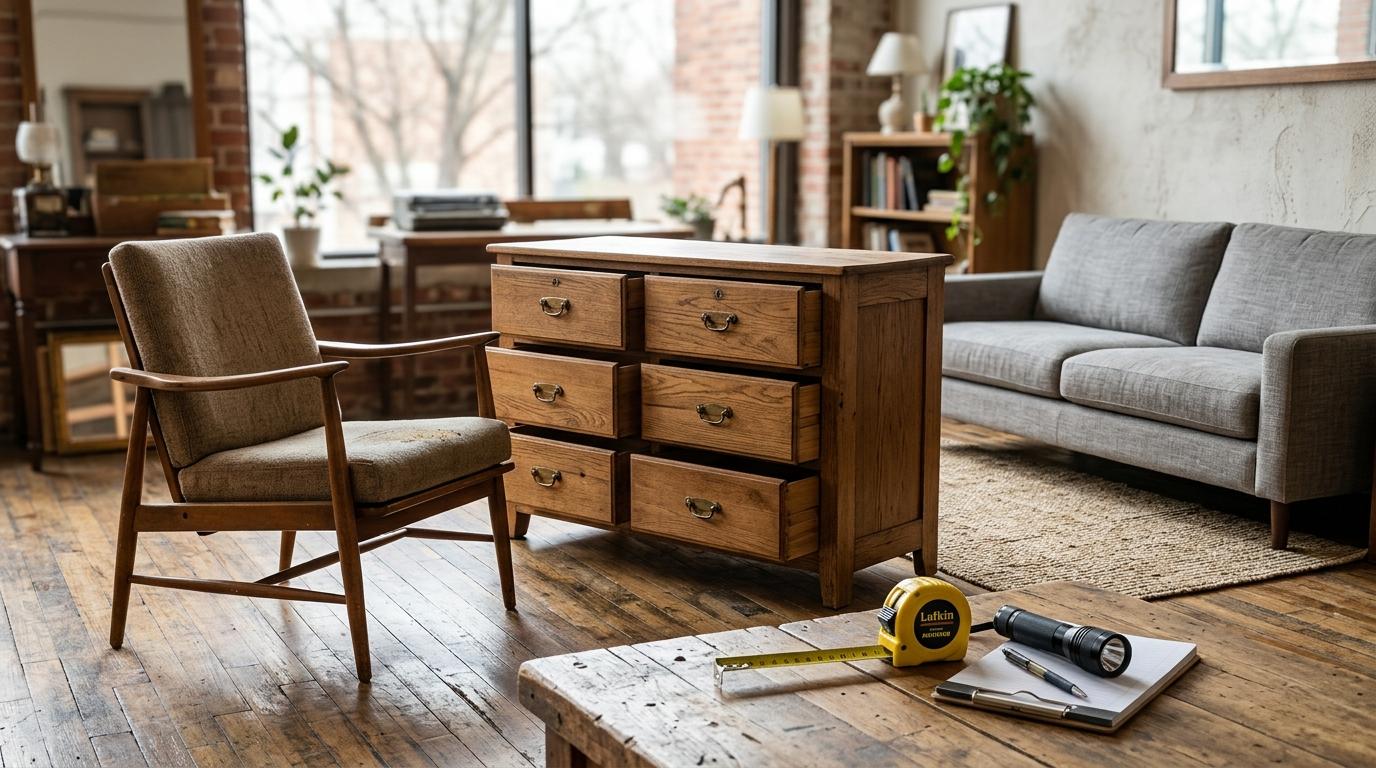
#Bring a measuring tape and a flashlight. If possible, inspect the furniture in daylight or a well-lit space.
1. Measure Before You Leave Home
#Measure the spot where the furniture will go, your doorway, hallway, stair turns, elevator doors, and vehicle space.
For sofas, tables, dressers, and tall cabinets, measure depth too. A piece can fit in your room but still fail at a tight stairwell turn.
Ask yourself:
- Can I lift this safely?
- Do I need another person?
- Will the seller help load it?
- Do I need straps, moving blankets, or a dolly?
- Is delivery available?
- Does the delivery cost cancel out the savings?
2. Check the Frame and Stability
#Look and feel for wobbling, cracking sounds, sagging, leaning, loose joints, split legs, broken supports, uneven feet, and bad repairs.
For tables, press gently on the corners and sides. A loose screw may be easy. Heavy rocking, twisting, or visible cracks are more serious.
For chairs, sit carefully and shift your weight. If the chair creaks loudly, spreads at the joints, or feels unsafe, skip it unless you know how to repair it properly.
For cabinets, bookshelves, and dressers, check whether the piece stands straight. Leaning, bowing, or separated panels can mean the structure is already failing.
3. Inspect Used Wooden Furniture
#Check legs, feet, corners, joints, drawer tracks, back panels, bottom edges, and the underside.
Look for Water Damage
#Water damage often appears near the bottom of dressers, cabinets, shelves, and tables. Watch for swollen edges, bubbling veneer, warped panels, flaking surfaces, dark stains, soft spots, crumbly areas, and musty smells.
Solid wood can sometimes be cleaned, dried, sanded, or refinished. Swollen particleboard or MDF is different. Once it expands, it usually does not return to normal. In most cases, swollen particleboard is a reason to skip the piece.
Check Every Drawer
#Open every drawer. Check whether it slides smoothly, sticks, drops when opened, has a sagging bottom, separates at the corners, smells odd, or has damaged tracks.
Look at back corners too. Dovetail joints can be a sign of better construction. Missing hardware is not always a dealbreaker, but replacing a full set of handles can cost more than expected.
4. Used Sofa Buying Checklist
#A used sofa needs stricter inspection than a wood table because fabric and foam can hide odors, stains, pests, and frame problems.
Sit on Every Section
#Check whether you sink too far, one side feels lower, springs poke, the frame shifts, or the sofa squeaks loudly. A sagging frame or broken spring system can cost more to fix than the sofa is worth.
Smell the Fabric
#Smell near seat cushions, back cushions, armrests, seams, base fabric, and hidden corners. Be cautious with smoke, mustiness, mold, pet urine, and damp storage odor. Deep smells in foam and fabric are hard to remove completely.
Look Underneath
#If safe, tilt the sofa slightly or use a flashlight to check the dust cover, wooden frame, staples, seams, corners, leg attachments, pest signs, water stains, and broken supports.
5. Check for Pests
#Pest checks are essential, especially with upholstered furniture, drawers, beds, and anything stored in a garage, basement, shed, or damp space.
Use a flashlight and inspect seams, tufts, cushion gaps, under cushions, behind buttons, drawer corners, back panels, underside fabric, wood cracks, staple lines, screw holes, and joints.
Watch for tiny dark spots, rust-colored stains, shed skins, white eggs, insect casings, live bugs, and fine dust or debris in small holes. If you see anything suspicious, do not buy it.
6. Check Smell and Cleanliness
#Avoid furniture with strong smoke odor, mildew smell, mold smell, pet urine smell, damp storage smell, or chemical cover-up smell.
Perfume, sprays, and fresh paint can sometimes hide odors. That does not automatically mean the item is bad, but it does mean you should slow down and inspect more carefully.
For hard furniture, smell inside drawers and cabinets. For upholstery, remember that foam absorbs odor. If it smells strong during pickup, it may still smell strong at home.
7. Look for Repairs, Paint, and Hidden Damage
#Some repaired furniture is fine. The issue is when repairs hide serious problems.
Look for fresh paint, uneven stain, thick spray paint, new fabric over old fabric, glue marks, extra screws, tape residue, mismatched legs, patched corners, and reinforced panels.
Fresh paint is not automatically bad, but it can hide water damage, mold, cracks, or sloppy repairs. Check the underside, back, joints, and bottom edges extra carefully.
8. Check Missing Parts and Hardware
#Check for missing knobs, loose handles, broken hinges, missing shelf pegs, cracked wheels, missing screws, bent pulls, damaged sliders, missing sofa legs, and loose table leaves.
For vintage furniture, original hardware can be hard to match. If one handle is missing, you may need to replace the whole set.
9. Recalculate the Real Price
#Before paying, add the asking price, pickup or delivery cost, cleaning supplies, paint, primer, sanding pads, glue, clamps, knobs, fabric cleaner, and replacement parts.
A cheap item can still be a bad deal if it takes too much money, time, and energy to make it usable.
Best For and Avoid If
#Best For
#Used furniture is best for budget-conscious buyers, renters, students, first-apartment buyers, upcyclers, and anyone who can accept small cosmetic flaws in exchange for stronger materials or lower prices.
It is especially worth it when the piece is structurally sound and only needs cleaning, small touch-ups, or new hardware.
Avoid If
#Avoid used furniture if you cannot inspect it before paying, do not have safe transport, have strong allergies to smoke or pets, are buying upholstery with unknown history, see pest signs, smell strong odors, or need something perfect and under warranty.
Also be careful with cheap flat-pack furniture that has already been assembled, moved, taken apart, and moved again. It may not survive one more move.
Second-Hand Furniture Red Flags
#Watch for:
- “Needs a little TLC” with no clear explanation
- Seller avoids close-up photos
- Heavy wobbling or frame movement
- Cracked wooden joints
- Sagging sofa seats
- Strong smoke, mold, mildew, or urine smell
- Swollen particleboard or MDF
- Peeling veneer over damaged boards
- Dark stains inside drawers or under cushions
- Pest signs in seams, drawers, or undersides
- Fresh paint that may be covering damage
- Missing hardware that is hard to replace
- Item too large for your doorway, stairs, elevator, or vehicle
- Repair cost higher than the savings
One red flag does not always mean reject the piece. But pests, strong odors, major structural damage, and swollen boards are usually walk-away problems.
Mistakes to Avoid
#Paying Before Inspecting
#Do not pay in full before seeing and testing the furniture in person. Photos can hide stains, smells, broken frames, water damage, and size problems.
Forgetting to Measure Your Vehicle
#A table can fit your dining room and still not fit in your car. Measure your trunk, back seat, truck bed, or rented van before pickup.
Ignoring Stairs, Elevators, and Doorways
#The tightest point is what matters. Check stair turns, elevator doors, hallway corners, and the front door frame. Do not assume you can make it work.
Shopping Only by Price
#The cheapest item is not always the best deal. A sturdy $80 dresser can be better than a $20 dresser that needs paint, hardware, drawer repair, and hours of work.
Assuming Smells Will Go Away
#Some smells fade. Others stay. Smoke, mildew, and pet urine can sink deep into fabric, foam, and wood.
Ignoring Pest Signs
#Do not talk yourself into buying something suspicious because it is stylish or cheap. If you see possible pest evidence, leave it there.
Natural Next Reads on AllBlogs
#If you are comparing other second-hand or home-buying decisions, these AllBlogs guides may help:
- Buying a Second-Hand Phone in India: IMEI, Battery, Bill and Scam Checks
- Refurbished Laptop vs Used Laptop: Which One Should You Buy?
- Small Apartment Work From Home Setup: Desk & Focus Tips
- Top OLX Alternatives in Gujarat to Buy and Sell Used Items Online
Final Takeaway
#The best used furniture deal is not just the cheapest listing. It is the piece that fits your space, fits your budget, feels sturdy, smells clean, shows no pest signs, and does not become a repair project the moment you bring it home.
Take a flashlight. Take measurements. Ask clear questions. Inspect slowly. And if something feels wrong, skip it. There will always be another chair, dresser, table, or sofa.