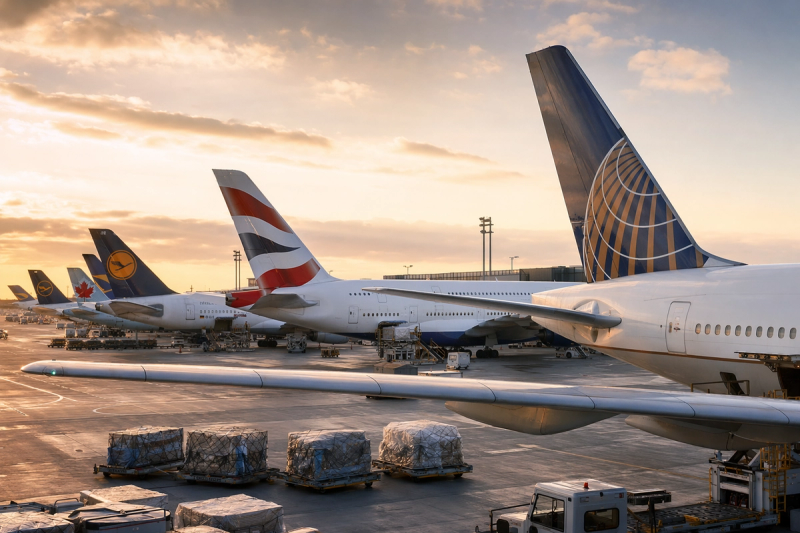
Codeshare flights sound fancy, but honestly they confused me badly at first
#The first time I properly noticed a codeshare flight was on a Delhi to Bali trip, routed via Singapore. I had booked from one airline’s website, paid in rupees, got a nice clean e-ticket in my inbox, and thought bas ho gaya. Then at Delhi airport, the departure board showed a different airline name. My ticket said one thing, the aircraft had another logo, and the check-in counter staff was like, “Sir, please go to the operating airline counter.” I stood there with my trolley, one suitcase, one overstuffed backpack, and that classic Indian airport anxiety where you start checking passport, ticket, wallet, all again for no reason.
That, in simple words, is where codeshare flights enter the drama. A codeshare flight is when one airline sells a seat on a flight that is actually operated by another airline. So your booking may say Air India, British Airways, Emirates, Qatar, Lufthansa, Singapore Airlines, or whoever, but the plane may belong to their partner airline. It’s not a scam, it’s not a mistake, and no, you don’t need to panic like I did near Gate 8 at T3. Airlines do this all the time to offer more routes without flying their own aircraft everywhere.
For Indian travellers, codeshares are super common on international routes. You may book from India to Europe, US, Australia, Japan, or even smaller cities in Southeast Asia, and one leg might be operated by a partner airline. It can also happen inside India sometimes, but you’ll notice it more when there’s a connection abroad. The confusing part is not the flying. Flying is normal. The confusion is check-in, baggage allowance, seat selection, meals, lounge access, and who to call when something goes wrong. That’s the stuff nobody explains properly until you’re already at the airport sweating in your hoodie.
So what exactly is a codeshare flight?
#A codeshare is basically a partnership arrangement between airlines. One airline is the “operating carrier”, meaning they actually run the flight, provide the aircraft, crew, boarding gate, safety instructions, and all that. The other airline is the “marketing carrier”, meaning they sell the flight under their own flight number. So you might see AI 1234 operated by Lufthansa, or BA 5678 operated by Qatar Airways, something like that. The exact airline names will depend on the route and partnership.
The easiest way to understand it is this: the airline whose plane you board is the operating airline. The airline whose website you booked from or whose flight number appears on your ticket may be the marketing airline. Sometimes both are same. Sometimes not. And when they’re not same, welcome to codeshare land.
On booking sites, codeshare flights are usually marked with tiny text like “Operated by XYZ Airlines.” Please don’t ignore that line. I used to ignore it earlier because I was only looking at price, departure time, baggage, and whether the layover was humanly possible. Big mistake. That small “operated by” line tells you where to check in, whose baggage rules may apply, what aircraft you may actually get, and sometimes even what kind of service to expect. Like, if you booked expecting one airline’s food and entertainment but the operating airline is different, don’t be shocked later.
My simple rule now: before paying for any international ticket, I zoom in on the words “operated by”. It saves so much airport confusion, trust me.
Codeshare flight vs connecting flight, because these two are not the same thing
#This is where many people mix it up. A codeshare flight is about airline partnership. A connecting flight is about your journey having more than one flight. You can have a direct codeshare, a connecting codeshare, a normal connecting flight with same airline, or some mad combination of all three. It sounds like airline maths, I know, but once you see it on a ticket, it becomes clearer.
For example, Mumbai to London non-stop could be sold by Airline A but operated by Airline B. That’s a codeshare, but not a connecting flight. Now Mumbai to London via Doha, where Mumbai-Doha is operated by one airline and Doha-London by another partner airline, that’s both a connection and possibly a codeshare. And connections bring their own headache: transit security, checked baggage transfer, duty-free liquid rules, boarding pass for next leg, visa requirements in some cases, and whether you have to collect bags or not.
Btw, if you’re carrying perfume, liquor, or any duty-free liquid during an international connection, please read the rules properly. I’ve seen people lose expensive bottles at transit security because they assumed duty-free means free from all rules. It doesn’t. This guide on Duty-Free Liquids on Connecting Flights: Rules is useful exactly for that kind of situation, especially when your codeshare itinerary also has a connection and extra screening in between.
Where do you check in for a codeshare flight?
#Most of the time, you check in with the operating airline. Not always in every weird edge case, but as a practical airport rule, go to the counter of the airline that is actually flying the plane. If your ticket says “operated by Singapore Airlines”, look for Singapore Airlines check-in counters. If it says “operated by Lufthansa”, go there. If you are at Delhi T3 or Mumbai T2, the big display screens near entrance usually show flight numbers and counter rows. Check both flight number and destination, because codeshare numbers can be different from what’s on the airport board.
This happened to me at Bengaluru once when my ticket had one flight number but the airport screen showed another one more prominently. I felt like the flight had vanished. Actually it was the same aircraft, just listed under the operating airline’s number. The staff explained it in two minutes, but those two minutes felt like I had booked a ticket to the wrong country. So now I always save two things: the marketing airline PNR and the operating airline PNR, if available.
Online check-in can also be slightly tricky. Sometimes the airline you booked with will redirect you to the operating airline’s website. Sometimes your PNR doesn’t work there, and you need the partner booking reference. Sometimes the ticket number works. Sometimes nothing works and you just check in at airport like it’s 2009. Don’t lose your mind. It’s normal, especially on partner bookings issued by travel portals. But do try online check-in 24 to 48 hours before departure, depending on the airline’s window, because seat choice and document verification can be smoother.
- Check the words “operated by” on your ticket before leaving for airport.
- Try online check-in on the operating airline website, not only the airline you booked from.
- Carry passport, visa documents, return ticket, hotel booking, and any transit documents in one folder. I still use a boring plastic folder, no shame.
- Reach early for international codeshare flights. Three hours is not overacting, especially from Delhi, Mumbai, Bengaluru, Hyderabad, Chennai or Kochi during peak season.
Baggage allowance on codeshare flights: the part where Indians get most stressed
#Let’s be honest. For Indian travellers, baggage is not just baggage. It is gifts, snacks, pressure cooker sometimes, pickles wrapped in ten layers, clothes for relatives, and that one extra packet your aunty gives at the last minute saying “bas chhota sa hai”. So baggage rules matter. In codeshare flights, the baggage allowance printed on your ticket is your first reference. But if multiple airlines are involved, rules can differ by route, ticket type, frequent flyer status, and sometimes by which airline is considered the most significant carrier for the journey.
Usually, if your ticket is one single booking from origin to final destination, your checked bag can be tagged all the way through, even if airlines change in between. For example, Kochi to Frankfurt via Delhi on partner airlines may allow through-checking if both flights are on the same ticket and the airlines have baggage agreements. But never assume blindly. Ask at check-in: “Is my bag checked through to final destination?” Then look at the baggage tag. The final airport code should be printed there. If you’re going to Toronto, it should show YYZ. If Singapore, SIN. If Paris, CDG. Learn your airport code, it’s actually useful.
Where people get caught is separate tickets. Suppose you booked Chennai to Dubai on one airline and Dubai to Istanbul on another airline separately because it was cheaper. That is not the same as a protected codeshare connection. You may need to collect baggage, clear immigration if required, check in again, and meet visa rules. If the first flight is delayed, the second airline may not help much because they don’t see it as one journey. Cheap can become expensive very quickly. I’ve done this once to save money and spent the entire first flight praying to every god that we land on time. Not peaceful at all.
Cabin bag rules can change with the operating airline
#One more small but painful thing: cabin baggage. Your ticketing airline may allow 8 kg, the operating airline may say 7 kg, or they may be strict about laptop bag size. Low-cost partner segments can be even more strict. At Indian airports, cabin bag weight checking is inconsistent, honestly. Some days nobody bothers, other days they weigh everything like you are smuggling bricks. Abroad, especially on certain Asian and European routes, they can be stricter.
I now pack assuming the stricter rule. One cabin trolley, one personal item, and no heroic “it will adjust” attitude. Also keep medicines, documents, chargers, one pair of clothes, and basic toiletries in cabin bag. If your checked bag misses a connection, you won’t be stuck wearing the same T-shirt for two days. Been there, not cute.
Seat selection: why your favourite window seat may not show up
#Seat selection on codeshares is weird. Sometimes when you book, the website lets you choose seats immediately. Sometimes it says seat selection unavailable. Sometimes you choose a seat but later the operating airline changes aircraft and your seat disappears. And sometimes the marketing airline shows a seat map that doesn’t match the actual plane. It’s not always the airline being useless, though it does feel like that at 1 am when you are trying to get 22A.
The best way is to use the operating airline’s manage booking page. Enter the partner PNR or ticket number and see if seat selection opens. If it doesn’t, call customer care or wait for online check-in. Paid seats like extra legroom, front rows, preferred seats, and sometimes even normal window or aisle seats depend on operating airline rules. If you have status with one airline alliance, benefits may or may not carry smoothly. Star Alliance, oneworld, and SkyTeam have their own systems, but real life still has glitches. Airport staff can help, but only if seats are available.
For families travelling from India with kids or elderly parents, don’t leave seats to chance. I know we all try to save that ₹1,500 or ₹3,000 seat fee, but if sitting together matters, pay early or call the airline. On long flights, being separated is irritating. On a 14-hour flight, it is full emotional damage. Also, if you need wheelchair assistance or special meals like Jain meal, Hindu vegetarian, diabetic meal, child meal, or no-onion-no-garlic type request, add it as early as possible. Codeshare systems don’t always pass these requests perfectly, so reconfirm with the operating carrier.
Boarding pass, terminal, and flight number confusion
#Codeshare tickets can show multiple flight numbers for the same physical flight. Your boarding pass usually shows the operating airline flight number, but sometimes it may also mention the marketing number. Airport boards generally prioritise the operating airline. So if your ticket says AI-something but the airport screen shows LH-something to Frankfurt, don’t panic. Match destination, departure time, and “operated by” airline.
Terminal changes are another thing. In India, bigger airports have multiple terminals and airlines may operate from different ones. Delhi domestic has T1, T2, T3, while international is mostly T3. Mumbai has T2 for international and many domestic full-service flights, but always check. Bengaluru’s terminal situation has also changed over time with T1 and T2 operations, so don’t rely on old WhatsApp advice from cousin. Check airline SMS, airport website, or your booking before starting. During festive rush like Diwali, Christmas-New Year, summer holidays, and long weekends, airport roads and entry queues can be painful. Leave early. Indian traffic doesn’t care about your boarding time.
Meals and service: don’t assume it’ll be like the airline you booked
#This is a small expectation thing. If you booked through Airline A because you like their food or entertainment, but the flight is operated by Airline B, then Airline B’s aircraft, crew, meal style, and seat layout will apply. On one codeshare sector, I expected Indian-style vegetarian meal because I booked from an Indian carrier’s site. What came was fine, not bad, but more international veg than ghar-wala veg. My mother would have called it “thoda bland”. Since then, I always pre-select meal if the route is long.
Indian vegetarian travellers should be a little careful. Don’t assume “veg” means the same thing everywhere. If you are strict about eggs, onion, garlic, Jain food, or halal, choose the correct special meal code where available and confirm it. Carry some backup snacks too, but follow destination rules. Homemade thepla is a lifesaver on many trips, but fresh fruits, seeds, dairy, and meat items can be restricted in many countries. Don’t argue with customs officers. It never ends well.
Lounge access and frequent flyer benefits on codeshare tickets
#Lounge access is one of those benefits that sounds simple until you’re standing outside a lounge and the receptionist is scanning your boarding pass with a doubtful face. On codeshare flights, lounge access can depend on operating airline, cabin class, frequent flyer status, alliance rules, credit card tie-ups, and airport policy. Business class on a partner-operated flight usually gives lounge access as per the operating airline or alliance arrangement, but there are exceptions. Premium economy doesn’t always mean lounge. A co-branded card may work only at selected lounges, not everywhere.
Also, arrival lounge access is a totally separate thing. Just because you landed after a long flight doesn’t mean you can walk into any lounge and shower like a movie hero. Some airports and airlines allow arrival lounge access for certain passengers, many don’t. If this matters after a red-eye flight, check rules before booking. I found this piece on Can You Use an Airport Lounge After Landing? helpful because it explains why arrival access depends on more than just your ticket looking fancy.
For miles, always add your frequent flyer number before travel and keep boarding passes until miles credit. Codeshare miles can post based on marketing airline or operating airline rules, booking class, fare type, and alliance. Sometimes cheap fare classes earn very little or nothing. I know, rude. But that’s how airline loyalty programs are. If miles matter to you, check earning rules before booking, not after flying.
What if your codeshare flight is delayed or cancelled?
#This is where things get slightly messy. At the airport, the operating airline handles the actual flight. So if your flight is delayed, boarding gate changes, or bags are delayed, speak to the operating airline staff first. But for ticket changes, refunds, rebooking before travel, or if you booked through a travel agent, you may need to contact the airline or agency that issued the ticket. Basically, airport problem equals operating airline. Ticket money problem equals ticketing airline or agent. Mostly.
If your entire itinerary is on one ticket and a delay causes you to miss a connection, the airlines usually have responsibility to rebook you to your final destination, subject to rules and local regulations. If you booked separate tickets, you are more exposed. Travel insurance helps, especially for international trips. I used to skip insurance for short trips thinking nothing will happen. Then one baggage delay and one missed connection taught me humility. Now I buy it, especially for Europe, US, Canada, Australia, Japan, or any trip with prepaid hotels and internal flights.
Keep screenshots of your ticket, boarding passes, baggage tags, delay messages, and receipts. If you have to claim hotel, meals, taxi, or insurance later, proof is everything. Don’t rely only on email because airport Wi-Fi can act like it has personal issues with you.
Transit, visa, and security checks: Indian passport holders should double-check
#For Indian passport holders, transit rules can make or break an itinerary. A codeshare may look smooth on paper, but if your connection requires changing airports, collecting baggage, or passing immigration, you may need a visa. Some countries allow airside transit under certain conditions, some require transit visas depending on your passport, destination, airline, terminal, or whether you hold visas for US, UK, Canada, Schengen, etc. These rules change, so always check official airline and embassy guidance before travel.
One common mistake is booking a cheap itinerary with an overnight layover without checking whether you can leave the airport. If you cannot enter the country without visa, you may be stuck airside, and not all airports are comfortable overnight. Some have transit hotels, sleep pods, paid lounges, or quiet zones. Prices vary a lot, but as a rough idea, airport hotels and transit hotels can be anywhere from around ₹4,000 to ₹15,000+ per night depending on city and season. Sleep pods or short-stay rooms may be cheaper for a few hours, maybe ₹1,000 to ₹5,000 equivalent, but availability is limited. Check live rates because airport pricing changes like mood swings.
Accommodation near Indian airports is generally easy now. Delhi Aerocity has everything from budget-ish business hotels to luxury ones, usually not cheap but convenient. Mumbai near T2 has hotels in Andheri, Marol, and near the airport road. Bengaluru airport area has hotels but city is far, so don’t casually book Indiranagar for a 6 am flight unless you enjoy stress. Hyderabad airport has good access and some stay options nearby. For long layovers, I prefer airport-side hotels even if they cost more. Sleep is also a travel expense, yaar.
Best time to book and fly codeshare routes from India
#Codeshare flights run year-round, so there isn’t a “best month” in the normal destination sense. But there are better times to book and easier times to fly. For international trips from India, fares often rise around school holidays, May-June summer break, Diwali period, Christmas-New Year, and university intake seasons for countries like US, UK, Canada, Australia, and Europe. If your route involves partner airlines, compare both airline websites. The same operating flight may be sold by two or three airlines at different prices, with different baggage and change rules.
Shoulder seasons are nicer if your destination allows it. For Europe, spring and autumn are usually more comfortable than peak summer. Southeast Asia depends on monsoon patterns, but flights around long weekends get expensive fast. Middle East routes can be cheaper in hotter months, though sightseeing outside may feel like standing near a tandoor. For family trips, book earlier if you need good connection times and seats together. Last-minute deals exist, but they’re not something I’d bet my annual leave on.
One trend I’ve noticed among Indian travellers is more people choosing mixed-airline itineraries because they want better fares or better timings. Online travel apps make it look effortless, but read the fine print. Same PNR or separate PNR? Baggage included or extra? Airport change? Overnight transit? Refundable or not? These boring details decide whether your trip starts happily or with you arguing at a counter at 3:30 am.
My personal checklist before booking a codeshare flight
#Over time, I’ve made a small checklist. Not a fancy spreadsheet, though I admire people who do that. Mine is more like notes app plus screenshots. Before I pay, I check who operates each leg, baggage allowance, layover time, visa/transit needs, terminal, seat selection cost, meal options, and cancellation rules. If travelling with parents, I also check wheelchair request and minimum connection time properly. Indian parents will say “hum manage kar lenge” and then you’ll be running across a giant airport with two cabin bags and one shawl falling off your shoulder.
- First, I check the operating airline for every sector, not just the airline selling the ticket.
- Second, I compare baggage rules on the ticket and operating airline site. If confused, I call or chat with airline support and save the response.
- Third, I check if the connection is protected on one ticket. Separate tickets only if layover is long and visa situation is clear.
- Fourth, I try seat selection on the operating carrier website. If it fails, I don’t panic, but I note it for online check-in.
- Fifth, I screenshot everything: e-ticket, PNR, ticket number, baggage allowance, visa docs, hotel address, travel insurance. Old-school but works.
Small mistakes I made, so maybe you don’t have to
#My biggest mistake was assuming the airline I paid is the airline I will deal with everywhere. Not true. Another mistake was ignoring the partner PNR. For one trip, I couldn’t select seats because I kept entering the wrong reference number on the operating airline website. I blamed the website for half an hour. Website was not great, okay, but I was also being dumb.
I’ve also under-estimated transit time. On paper, 1 hour 20 minutes looks okay if airline sells it. In real life, if you land at a massive airport, bus gate, security queue, and next gate is far, it becomes a mini-marathon. If you’re travelling with kids, elderly parents, or first-time international travellers, choose longer layovers. Two to three hours is comfortable for many international connections, though some airports need more and some need less. Short layovers are exciting only for YouTube travel vlog titles, not for normal people with cabin bags.
Another thing: don’t pack valuables in checked luggage. Ever. Jewellery, electronics, documents, house keys, medicines, chargers, keep them with you. Codeshare or not, bags can get delayed. If it’s a wedding trip and you’re carrying outfits, split clothes between bags if travelling as a couple or family. One lost bag should not ruin the full shaadi look.
Quick example: reading a codeshare ticket like a normal person
#Let’s say your itinerary says: Delhi to Zurich, Flight AI 7701, operated by SWISS. Then Zurich to Rome, operated by SWISS. You may have bought the ticket from Air India or a travel portal, but at Delhi airport you’ll likely look for the SWISS check-in counter for the first flight. Your aircraft, seats, meals, cabin crew, and boarding rules will be SWISS. Your ticket may still show an Air India codeshare number. If your bags are checked to Rome, the tag should show FCO as final destination. If you have Star Alliance status, some benefits may apply, but exact perks depend on fare and airline rules.
Another example: you book Mumbai to New York through an airline website, with one leg operated by a partner from Doha, Abu Dhabi, Dubai, London, Frankfurt, or Istanbul. The first airline may issue your ticket, but each airport experience follows the operating airline. If US pre-clearance, security checks, transit rules, or baggage recheck applies, follow the airport and operating carrier instructions. Don’t go only by what your friend did on another route. Routes differ.
Final thoughts: codeshares are useful, but read the ticket properly
#I actually like codeshare flights now. They give more route options, better connection choices, and sometimes better fares. From India, they’re almost unavoidable if you travel internationally beyond major hubs. But they reward people who read details. Not obsessively, just enough. Check operating airline, check-in counter, bags, seats, meals, transit, and support contact. That’s it. Once you understand the system, a codeshare flight is not scary at all.
If you’re booking one soon, take five extra minutes before payment and read the boring lines. Those boring lines are where the useful stuff hides. And at the airport, if confused, ask staff politely. Most of them have answered the same codeshare question thousand times and they’ll guide you. Don’t feel silly. We’ve all been that person staring at the departure board wondering why our flight number is missing.
Anyway, that’s my very Indian, slightly overpacked, slightly paranoid take on codeshare flights. Hope it helps you avoid my mistakes and travel with less tension. For more practical travel explainers and real-trip style guides, I keep finding good reads on AllBlogs.in, so maybe browse there before your next booking too.