The Brussels Sprouts Revolution: From Boiled Bitterness to Shattered Crunch
#For decades, Brussels sprouts held an unfortunate reputation as the most dreaded vegetable on the dinner table. Generations of home cooks were subjected to pale, sulfurous, waterlogged spheres boiled into mushy submission. That unpleasant culinary memory was not the fault of the vegetable; it was the inevitable consequence of flawed cooking chemistry.
When cruciferous brassicas are boiled or steamed in water, their cellular walls rupture, releasing volatile sulfur compounds known as glucosinolates and isothiocyanates. Without intense, dry surface heat to caramelize natural sugars, these bitter compounds dominate the flavor profile.
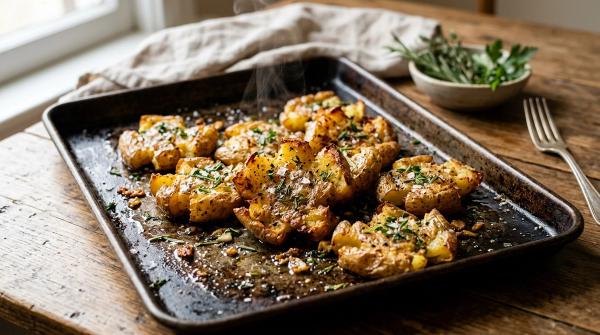
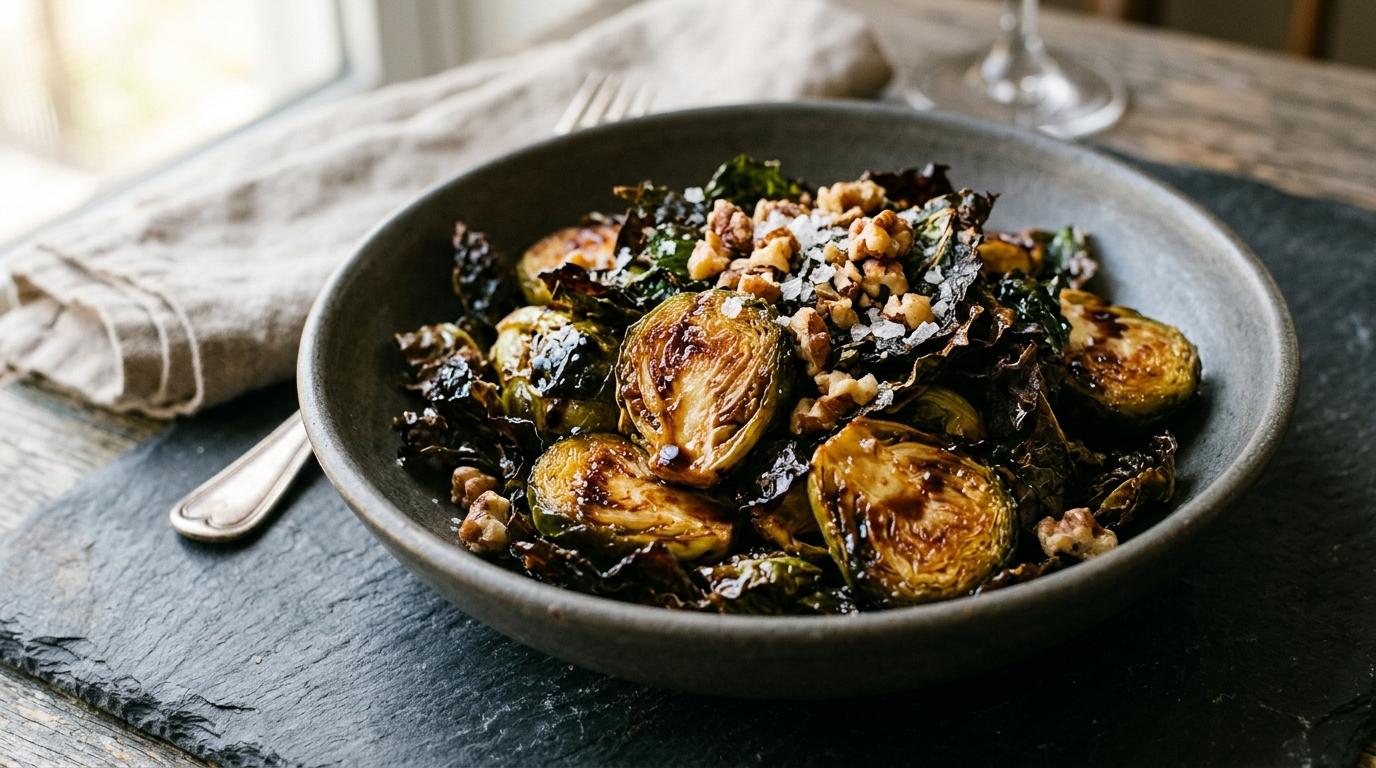
Over the past decade, however, culinary science and high-heat roasting triggered a massive brassica renaissance. Restaurants transformed Brussels sprouts into one of the most celebrated appetizers on modern menus by achieving an addictive textural contrast: shattered, chip-crisp outer leaves with charred mahogany edges wrapped around a meltingly tender, naturally sweet core.
While standard home ovens can produce respectable roasted sprouts, they often struggle with consistency. Conventional ovens rely on radiant heat and gentle air movement, requiring 35 to 45 minutes on a preheated baking sheet. If the pan is crowded, escaping steam collects around the vegetables, causing the bottoms to stew before the tops crisp.
This is where the air fryer becomes the ultimate vegetable-cooking tool. By concentrating high-velocity convection air around a perforated basket, an air fryer strips away surface moisture instantly, shallow-fries each delicate leaf in microscopic oil droplets, and delivers restaurant-quality crunch in under 15 minutes.
The Food Science of Crisping: Why Brussels Sprouts Turn Soggy
#To understand how to make Brussels sprouts truly crispy, you must examine what happens at a microscopic cellular level when high-velocity heat meets dense vegetable tissue.
Brussels sprouts are roughly 86% water by weight. In culinary physics, water is the mortal enemy of crispiness. As long as liquid moisture resides on the surface of a vegetable, the temperature of that surface cannot exceed the boiling point of water (100°C or 212°F). The Maillard reaction—the complex chemical cascade between amino acids and reducing sugars that produces golden-brown browning, complex nutty aromas, and savory depth—requires temperatures between 140°C and 165°C (280°F to 330°F).
When home cooks place damp Brussels sprouts into an air fryer or oven, three consecutive stages occur:
- Evaporative Stall: The applied thermal energy is entirely consumed by boiling off surface water into steam. During this phase, zero browning occurs. The vegetable steams internally, turning the cellular structure soft and mushy.
- Cell Wall Collapse: If the steaming phase lasts too long, internal pectin dissolves, and the dense leaves lose their crisp structural integrity, producing a limp, leathery mouthfeel.
- Maillard Caramelization: Only after every molecule of surface water has evaporated can the vegetable surface heat rise above 140°C. At this point, natural fructose and glucose react with plant proteins to form savory melanoidin pigments and crispy, blistered crusts.
The goal of air frying is to shorten the evaporative stall to less than two minutes. When dry sprouts are coated in high-smoke-point oil and subjected to intense circulating convection air, surface moisture flash-evaporates immediately. The oil traps heat directly against the cut faces and delicate outer leaves, creating jagged, blistered, chip-like crunch while insulating the interior so it stays tender and sweet.
Pre-Cooking Preparation: Halving, Trimming, and the Golden Loose-Leaf Strategy
#The difference between mediocre sprouts and extraordinary sprouts begins on the cutting board. Proper knife work and moisture control establish the foundation for uniform texture.
Step 1: The Moisture Purge
#Wash your Brussels sprouts thoroughly in cold water to remove field dirt, but do not cut them yet. Once washed, spread them across a clean lint-free kitchen towel and roll them dry. For maximum crispiness, let them sit on the counter for 10 minutes so surface moisture evaporates completely. Never put wet sprouts into a bowl with oil; water repels oil, leaving dry patches that burn and wet patches that steam.
Step 2: Stem Trimming
#Examine the base of each sprout. Slice off only the dry, oxidized brown tip of the stem—roughly 1 to 2 millimeters. Do not trim too aggressively into the core. The dense central stem acts as the structural anchor holding all the overlapping leaves together. If you cut off the entire stem base, the sprout will disintegrate into loose foliage.
Step 3: The Lengthwise Halve
#Slice each sprout directly in half lengthwise, cutting straight through the center of the stem from base to tip. Halving creates two crucial architectural advantages:
- Flat Surface Area: It exposes a wide, flat cut surface that can lay directly against the hot basket or conduct radiant heat, producing a flat, deeply caramelized crust.
- Heat Penetration: It cuts the distance heat must travel to reach the center in half, ensuring the dense interior cooks through at the exact moment the exterior reaches peak crunch.
Step 4: Harvest the Loose Leaves
#As you trim and slice, numerous loose outer leaves will naturally separate onto the cutting board. Many cooks make the mistake of discarding them. Keep every single one of them. These separated leaves are the crowning glory of this dish. In the air fryer, they dehydrate and fry within 6 to 8 minutes, transforming into paper-thin, crispy vegetable chips that provide textural contrast against the heartier halved sprouts.
The Air Fryer Convection Advantage: Oil Ratios, Temperature, and Basket Airflow
#An air fryer is essentially a miniaturized, supercharged convection oven. A high-wattage heating element situated directly beneath a high-RPM fan pushes turbulent hot air downward through the food and upward through the perforated basket. This intense airflow strips the boundary layer of cooler, moist air that naturally blankets cooking vegetables, accelerating heat transfer exponentially.
However, harnessing this convection power requires dialing in three critical variables:
1. Oil Selection and Coating Ratio
#Can you make crispy Brussels sprouts in an air fryer with zero oil? Scientifically, no. Without oil, the rushing hot air simply desiccates the outer leaves, turning them into dry, brittle, bitter husks resembling dry autumn leaves.
Oil serves three indispensable functions: it conducts heat directly into the leaf surface, dissolves fat-soluble flavor compounds, and promotes the Maillard reaction. For one pound (450 grams) of Brussels sprouts, the ideal ratio is exactly 2 tablespoons (30 milliliters) of oil. 
Choose a fat with a high smoke point:
- Extra Virgin Olive Oil: Imparts rich, fruity, peppery notes and browns beautifully at 190°C (375°F).
- Avocado Oil: Neutral flavor profile with an exceptionally high smoke point (270°C / 520°F), ideal if your air fryer runs hot.
- Rendered Bacon Fat or Duck Fat: For decadent, savory depth, substitute half the olive oil with warm liquid bacon fat.
Toss the sprouts and loose leaves in a large bowl with your hands for at least 30 seconds. Do not just drizzle oil over the top; massage the oil so it penetrates between the curved overlapping leaf layers.
2. The 190°C (375°F) Sweet Spot
#Many air fryer recipes recommend blasting vegetables at 205°C (400°F). For Brussels sprouts, this is a mistake. 
Because Brussels sprouts possess a dense, compact core surrounded by paper-thin outer leaves, cooking at 400°F creates a severe thermal gradient: the exterior leaves burn into bitter black carbon before the dense core has softened. 
Roasting at 190°C (375°F) provides the perfect thermal equilibrium. It allows heat sufficient time to soften the core’s dense cellulose fibers while steadily crisping the exterior over a 12 to 15-minute window.
3. Basket Airflow and the Single-Layer Rule
#Air fryers depend entirely on open air circulation. If you dump two pounds of sprouts into a small four-quart basket, they will pile three layers deep. The circulating air will only reach the top layer, while the bottom layers steam in trapped moisture.
Ensure your sprouts sit in a loose, mostly single layer with space between them. If you are cooking more than one pound, cook in two separate batches. Tossing two consecutive crisp batches takes far less time than trying to rescue one soggy, overcrowded batch.
The Two-Stage Balsamic Honey Glaze: Why You Must Never Glaze Before Cooking
#One of the most frequent mistakes made by home cooks is tossing vegetables in balsamic vinegar, honey, maple syrup, or brown sugar before putting them into the air fryer.
The food science explains why this fails:
- Sugar Burning Point: Table sugar, honey, and concentrated fruit sugars begin to caramelize at 160°C (320°F) and scorch into acrid, bitter black carbon at 175°C (350°F).
- Vinegar Evaporation: Balsamic vinegar is primarily water and acetic acid. Coating raw sprouts in vinegar introduces liquid acidity that halts crisping and boils off before the vegetable cooks.
If you coat raw Brussels sprouts in balsamic honey glaze and air fry them at 190°C for 14 minutes, the sugars will burn into a bitter, charred crust within the first 6 minutes, filling your kitchen with acrid smoke while the interior of the sprout remains raw.
The professional culinary technique is a two-stage application:
- Stage 1 (Dry Roast): Air fry the sprouts seasoned only with oil, salt, black pepper, and garlic powder. This allows the raw vegetable starches and natural sugars to brown cleanly without interference from external sweeteners.
- Stage 2 (Post-Cook Toss): While the sprouts are roasting, reduce balsamic vinegar and honey together in a small pan until thick and glossy. The moment the blistered, piping-hot sprouts exit the air fryer, transfer them to a warm bowl, drizzle with the glaze, and toss gently. The residual surface heat of the freshly fried sprouts instantly absorbs the warm syrup into its blistered crevices without burning a single grain of sugar.
Tested Recipe: Crispy Air Fryer Brussels Sprouts with Balsamic Honey Reduction
#This tested recipe yields four side-dish servings with an ideal ratio of shatter-crisp loose leaves, golden-charred flat cut faces, and sweet, tender centers.
Ingredients
#- Fresh Brussels Sprouts: 1 lb (450g), washed, thoroughly dried, stems trimmed, and halved lengthwise (keep all loose leaves)
- Extra Virgin Olive Oil or Avocado Oil: 2 tbsp (30ml)
- Kosher Salt: 1/2 tsp (fine sea salt: use 3/8 tsp)
- Freshly Cracked Black Pepper: 1/4 tsp
- Garlic Powder: 1/2 tsp
- Smoked Paprika: 1/4 tsp (optional, adds subtle smoky aroma and reddish-golden hue)
- Aged Balsamic Vinegar: 2 tbsp (30ml)
- Pure Honey or Pure Maple Syrup: 1 tbsp (15ml)
- Toasted Walnuts or Pecans: 1/4 cup, roughly chopped (for crunchy finish)
- Flaky Sea Salt (Maldon style): 1/2 tsp, to finish
Step-by-Step Cooking Method
#- Thorough Drying: Wash your sprouts, roll them in a clean kitchen towel, and let them dry on the counter for 10 minutes. Trim the bottom 1 millimeter of the stem, halve lengthwise through the core, and save all loose leaves in a large bowl.
- The Oil Emulsion Toss: Add 2 tablespoons of oil, kosher salt, black pepper, garlic powder, and smoked paprika to the bowl. Toss with your hands for 30 seconds until every leaf glimmers with a thin sheen of oil.
- Preheat the Air Fryer: Set your air fryer to 190°C (375°F) and preheat for 3 minutes. Preheating ensures that the moment the sprouts touch the basket, conductive heat begins searing the cut faces immediately.
- Load the Basket: Tip the seasoned sprouts into the basket. Distribute them evenly. Tuck loose leaves beneath or between halved sprouts so the intense convection fan does not blow them into the upper heating element coils.
- Air Fry for 12 to 15 Minutes: Slide the basket in and cook at 190°C (375°F). At the 7-minute mark, pull the basket out and give it a vigorous shake. You will notice the flat cut surfaces turning golden and loose leaves turning deep green and crisp.
- Prepare the Glaze: While the sprouts finish cooking, combine 2 tablespoons of balsamic vinegar and 1 tablespoon of honey in a tiny saucepan over low heat. Simmer gently for 2 to 3 minutes until reduced by one-third into a glossy, pourable syrup. Alternatively, whisk aged syrupy balsamic glaze and honey in a small bowl.
- Toss and Finish: At 13 to 14 minutes, check the sprouts. The edges should be deep mahogany and crisp, and a pairing knife should slide smoothly into the thickest core. Dump the hot sprouts immediately into a serving bowl, drizzle with the warm balsamic honey reduction, and toss once or twice. Scatter toasted walnuts and flaky sea salt over the top and serve immediately.
Air Fryer Timing & Temperature Matrix Across Sprout Sizes
#Not all Brussels sprouts are uniform in size. Cooking times vary depending on whether you purchase tiny marble-sized autumn sprouts or large, dense winter cultivars. 
The following table details recommended air fryer adjustments based on sprout diameter:
| Sprout Size & Diameter | Preparation Cut | Air Fryer Temperature | Total Cooking Time | Halfway Shake Point |
|---|---|---|---|---|
| Small (Under 1 inch / 2.5 cm) | Halved lengthwise | 190°C (375°F) | 10 to 12 minutes | At 6 minutes |
| Medium (1 to 1.5 inches / 3.5 cm) | Halved lengthwise | 190°C (375°F) | 13 to 15 minutes | At 7 minutes |
| Large (Over 1.5 inches / 4 cm) | Quartered lengthwise | 185°C (365°F) | 14 to 16 minutes | At 8 minutes |
| Shaved / Ribboned Leaves | Shredded on mandoline | 180°C (350°F) | 6 to 8 minutes | At 4 minutes |
| Frozen Whole Sprouts | Cooked from frozen, whole | 200°C (400°F) | 18 to 22 minutes | At 9 and 14 minutes |
Several crucial culinary observations emerge from this matrix:
- Quartering Oversized Sprouts: If your grocery store only sells large Brussels sprouts the size of golf balls, do not halve them. Quarter them lengthwise through the core. If left as large halves, the outer leaves will scorch before heat can penetrate to the center.
- Shaved Sprout Chips: If you shred Brussels sprouts thinly using a mandoline or food processor slicing disc, drop the temperature to 180°C (350°F). Shaved sprouts cook in just 6 to 8 minutes and yield an ultra-light, crispy brassica slaw that pairs exceptionally well with grated pecorino cheese.
- Frozen Adjustments: If using frozen Brussels sprouts, never thaw them first. Thawing releases internal water that turns the sprouts to mush. Cook directly from frozen at 200°C (400°F) to force rapid moisture sublimation.
Flavor Variations: Elevating the Classic Glaze
#Once you have mastered the foundational crispy air fryer technique, you can customize the flavor profile to complement any main course:
- Crispy Pancetta or Bacon: Dice 3 strips of thick-cut bacon or 60 grams of pancetta into small lardons. Toss raw bacon directly with the sprouts in the air fryer basket. As the bacon renders its fat, the sprouts fry in hot pork fat, while the bacon bits crisp simultaneously.
- Aged Parmesan and Lemon Zest: Omit the balsamic honey glaze. Immediately after air frying, toss the piping hot sprouts with 1/3 cup of finely microplaned Parmigiano-Reggiano, fresh lemon juice, and finely grated lemon zest. The cheese melts into the crisp ridges, creating a savory umami crust.
- Hot Honey and Toasted Sesame: Substitute standard honey with habanero or chili-infused hot honey. Finish with toasted white sesame seeds and a dash of toasted sesame oil for an Asian-inspired sweet-heat profile.
- Pomegranate Arils and Goat Cheese: Toss the glazed sprouts with 3 tablespoons of fresh ruby-red pomegranate seeds and crumble 2 ounces of fresh creamy goat cheese or feta over the warm bowl just before serving. The tart burst of pomegranate cuts through the rich caramelized brassica notes.
Troubleshooting Common Mistakes: Burned Leaves, Raw Cores, and Smoke Issues
#Even with an air fryer, small oversights can compromise the final dish. Here is how to diagnose and correct common issues:
- Problem: Loose Leaves Fly into the Heating Element and Smoke: Air fryer fans generate strong air currents. Lightweight loose leaves can lift off the basket floor and touch the red-hot heating coil above, creating smoke and burning.
- Solution: When loading the basket, place the heavier halved sprout halves on top of the loose leaves to weigh them down during the first 5 minutes until they wilt and settle.
- Problem: Sprouts Are Limp and Soggy Instead of Crispy:
- Solution: The sprouts were damp before oiling, too little oil was used, or the basket was overcrowded. Ensure the sprouts are completely dry, use a full 2 tablespoons of oil per pound, and cook in batches so hot air circulates uninhibited.
- Problem: Bitter, Sulfurous Aftertaste:
- Solution: Bitterness occurs when the sprouts are undercooked (failing to caramelize natural sugars) or scorched at excessive heat. Ensure the cut faces achieve a deep mahogany brown color, and always balance the natural brassica bitterness with acid and sweetness (such as the balsamic reduction and honey in this recipe).
- Problem: The Air Fryer Smokes During Cooking:
- Solution: Excess oil or bacon fat dripping into the bottom collection pan below the basket can smoke when hit by high heat. Add 2 tablespoons of water to the bottom drawer beneath the perforated basket before cooking. The water catches falling fat droplets and prevents them from smoking.
With clean knife preparation, proper temperature control, and post-cook glazing, your air fryer will transform humble Brussels sprouts into an irresistible, shattered-crisp centerpiece that disappears from the table in minutes.