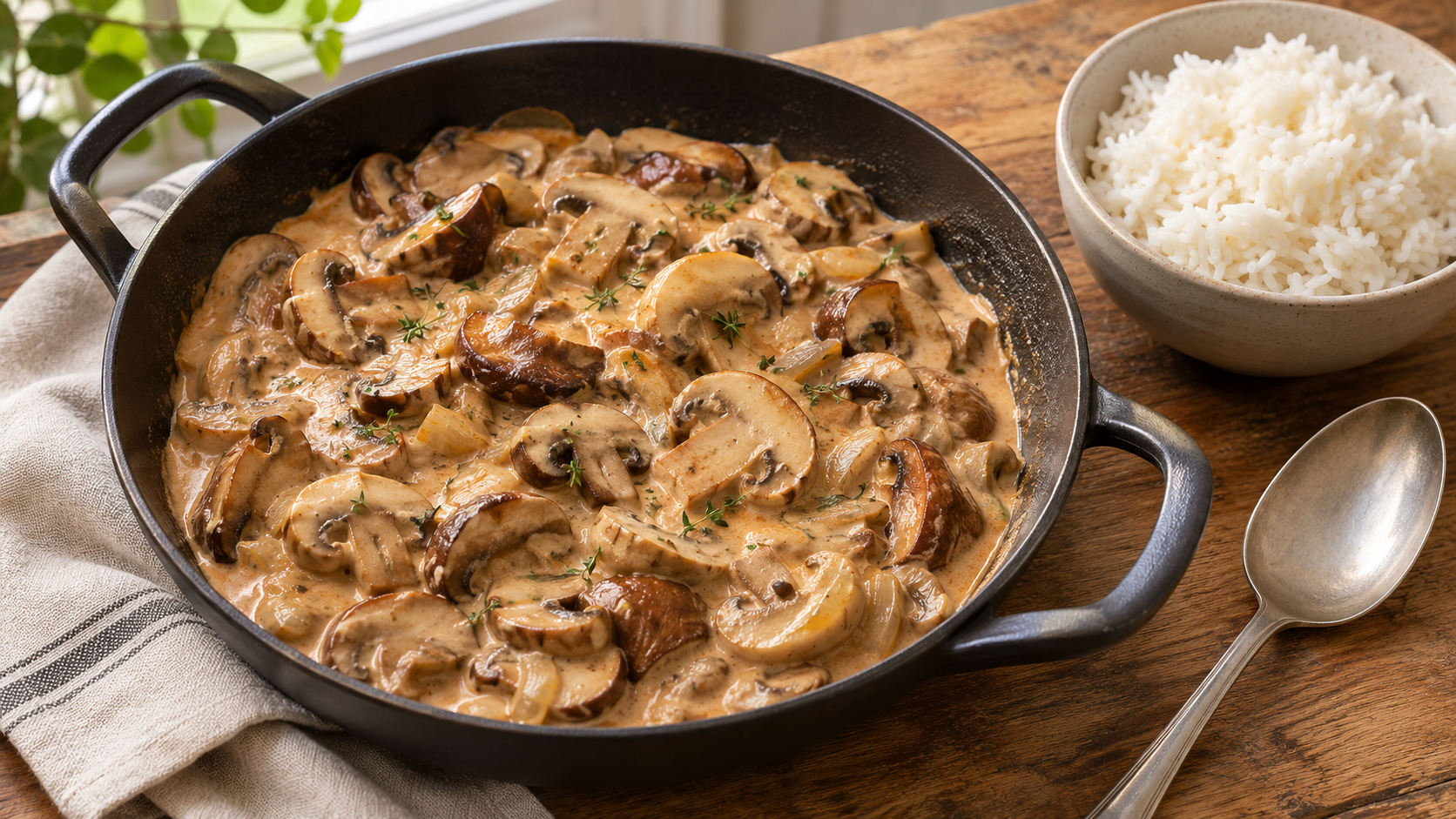
Brown the mushrooms before finishing the stroganoff sauce, and give the soured cream a gentle finish. Stir it in over low heat or off the heat, then warm the sauce without bringing the pan back to a hard boil.
There is a point in a mushroom pan when everything looks wetter than you expected. The slices have shrunk, the bottom has filled with juice, and you still have stock waiting beside the stove. I'd pause there. Adding the rest of the liquid now makes it harder to get the browned flavour you wanted.
This recipe uses fresh mushrooms, onion, paprika and thyme, with a flour-thickened stock and soured-cream sauce. The card after the FAQs adapts the British Dietetic Association's four-portion version. The useful part of making it at home is being able to check each stage before moving to the next.
Choose mushrooms you can cut and cook together
#Button and chestnut mushrooms are a sensible starting point. They're easy to find in many shops, and you can slice them to a similar thickness. You don't need an expensive mixed box to make this dinner worthwhile.
If you do use a mixture, think about the pieces on your chopping board. A thick chunk of a large cap and a thin slice of a small button won't cook at the same rate. Cut with the finished spoonful in mind, keeping pieces large enough to recognise under the sauce.
Other cultivated varieties can add different textures. Shiitake, for example, may need their tough stems removed. Don't treat every part of every mushroom as interchangeable just because it fits in the pan.
I'd start with cultivated mushrooms sold for cooking, especially while you're getting used to the sauce. The button-and-chestnut mixture in the card gives you a clear starting point without needing to learn several unfamiliar varieties at once.
Clean them just before cooking. You can wipe off dirt with a damp paper towel or give them a quick rinse in cool water, then dry them. The Mushroom Council allows both approaches; choose the one that removes the dirt from your mushrooms.
What matters for the next stage is what reaches the pan. A bowl of freshly rinsed slices still dripping with water gives you more liquid to deal with. Let the excess drain and dry the surfaces before you begin.
Make room before you turn up the heat
#Choose a wide pan that gives the slices contact with its base. A small saucepan can hold the ingredients, but holding them isn't the same as giving them room to brown.
If the mushrooms make a deep pile, use batches. That can feel slower when you're hungry, yet it gives you a clearer view of what is happening. You can see the liquid reduce and the edges colour instead of stirring through a crowded heap.
The recipe starts by softening the onion. If your pan won't hold the mushrooms comfortably after that, move the softened onion to a bowl while you cook the mushrooms in batches, then bring everything together for the sauce stage. Keep the garlic from scorching while you're waiting on another batch.
Follow the pan manufacturer's heat guidance, particularly with non-stick cookware. You want enough heat to cook and colour the mushrooms; you don't need a smoking empty pan as proof that you're doing it properly.
Move the slices so you can check the underside, then let them cook. Constantly lifting every piece makes the job more tiring without telling you much more. Look at a few representative slices and the liquid at the bottom.
When the mushrooms release water, give that stage time. A little moisture in the finished dish is fine. You're waiting for a loose puddle to reduce enough that the slices can take on colour before you add stock.
The sauce starts before the cream
#Once the onion, mushrooms and garlic are ready, stir through the paprika. Watch this short stage so you don't leave the spice against one hot patch while the rest of the pan sits untouched.
Use the paprika specified in the card. Hot, sweet and smoked paprikas can give very different results. If a jar is unfamiliar, read its label before using it as though it were the mild paprika you had last time.
The flour goes in before the stock. Work it through the mushrooms and onion so you don't have one dry mound waiting to become a lump. Then add the measured stock while stirring and loosening the browned bits from the base.
Let the sauce cook and thicken at this stage. You still have room to reduce it before the soured cream joins the pan. If you leave all the reduction until after adding the dairy, you'll be trying to thicken and protect the cream at the same time.
I would check the stock before adding extra salt. Cubes, cartons and homemade stock vary, and a sauce that tastes balanced while thin can taste saltier after it reduces. The card uses vegetable stock, so the complete ingredient list stays suitable for a vegetarian meal.
Some stroganoff recipes add Worcestershire sauce. This version leaves it out. If you follow a recipe that includes it, choose a formulation explicitly suitable for whoever is eating, and check the stock as well.
Give the dairy a gentler finish
#Turn the heat down before stirring in the soured cream. You can take the pan off the heat for that addition, as Good Food's mushroom stroganoff method recommends. Stir it through until the sauce looks even.
Return the pan to gentle heat only as needed to warm everything. Watch for the difference between a little movement at the edges and vigorous bubbling across the whole surface. The finished sauce needs to be hot, without a rolling boil.
If it looks too thick at this point, loosen it with a small splash of water or stock, stir and reassess. Add a little at a time so you keep control of the texture. Using more salty stock also changes the seasoning, so taste again before serving.
If it looks too thin, avoid turning the finished creamy pan up hard in a rush. Let it warm gently and accept a looser sauce if necessary. For the next batch, do more of the mushroom-moisture and stock-reduction work before the cream.
Have something ready to put under it
#Rice, mashed potatoes and egg noodles all work as different ways to serve the sauce. Choose the side before cooking the mushrooms, because each has its own preparation time. The card gives you the stroganoff; follow your chosen side's packet or recipe instructions separately.
For a simple dinner, I would make the rice first or have its cooking under way while I prepare the mushrooms. That leaves the last few minutes for the sauce, when it's useful to stay near the pan.
If you prefer noodles, work backwards from their cooking time and have a colander ready. Don't finish the creamy sauce and then leave it bubbling while you search for a saucepan and wait for water to boil.
You can serve the mushrooms over the side or keep them in separate dishes. Serving separately makes it easier to share different amounts of sauce and to store any leftovers without the side absorbing most of the liquid.
Imagine two people eating now and two portions going away for another day. Spoon out the portions for storage before the serving dish has spent the whole meal on the table. You don't need to reheat tomorrow's rice or noodles along with today's whole pan.
Diagnose the part that needs changing
#There are several ways a stroganoff can miss the texture you wanted. Adding more cream to all of them isn't a useful first response.
| The problem | Check this first | A more useful next step |
|---|---|---|
| Pale, wet mushrooms | Was the pan crowded when the stock went in? | Let moisture reduce before the sauce stage next time; use batches if needed. |
| Lumps in the stock sauce | Did flour collect in one dry patch? | Stir flour through the cooked ingredients before gradually adding stock. |
| Sauce looks grainy after cream | Did the pan return to a vigorous boil? | Lower or remove the heat and stir gently; don't keep boiling in an attempt to smooth it out. |
| Sauce is too salty | What stock did you use, and how far did it reduce? | Test a small spoonful with a little water before diluting the entire pan. |
| Thick sauce and ready-to-eat mushrooms | Is the side still uncooked? | Loosen gently as needed and reconsider the side's timing for the next meal. |
If the sauce has separated, you may still decide to eat it, provided it was handled and cooked safely. Appearance alone doesn't tell you that food is safe, and a smooth-looking sauce isn't a substitute for correct storage either.
For seasoning corrections, use a small bowl first. Put in a spoonful of sauce, add a little of the proposed adjustment and taste. If it makes the sample worse, you haven't changed dinner for everyone.
Doubling the ingredients also changes the pan problem
#A double batch needs twice the mushrooms, but your pan still has the same base area. Treat that as a reason for more batches or another suitable pan. Don't expect twice the ingredients in one crowded vessel to follow the same stage times.
Scale the flour, stock and cream together. Doubling only the cream because you want more sauce changes the balance, and it may leave the mushroom flavour further in the background than you intended.
For a half batch, measure the sauce ingredients before you begin. It is easy to halve the mushrooms and then use a whole stock cube out of habit. Prepare the required amount of stock and taste the sauce before any final seasoning.
Say there are two of you eating tonight and you don't want another container in the fridge. Half the card gives you 125 g chestnut mushrooms and 150 g white mushrooms, with 100 ml each of stock and soured cream. The flour becomes half a tablespoon, or one and a half teaspoons. Use proper measuring spoons for that small amount.
I'd write the halved list beside the chopping board, including the onion, garlic, oil, paprika and thyme. Then I'd choose the pan by the mushrooms spread across its base. A smaller batch doesn't automatically need the smallest saucepan in the cupboard; you still want room for the slices to colour.
The moment that needs attention is the cream finish. Have the bowls and cooked side ready before you stir it in. You can spend a little longer getting the mushrooms right without feeling rushed by two empty plates waiting beside a finished sauce.
If cooking ahead is more convenient, you can prepare the mushroom-and-stock stage, chill it safely and add the soured cream when finishing the meal. Bring the stored base thoroughly back to temperature, then lower the heat for the dairy. That keeps the reduction work separate from the last creamy stage.
Save leftovers with safety ahead of texture
#Divide the cooked stroganoff into shallow containers and refrigerate promptly. Keep it at 4°C or below, within two hours of cooking, or within one hour when conditions exceed about 32°C.
A conservative household plan is to use refrigerated leftovers within 48 hours, following UK Food Standards Agency guidance, or freeze them sooner. Label the container so another person knows when you cooked it. Store the side separately and follow any stricter requirements it has.
Reheat only the portion you plan to eat. US government food-safety guidance recommends 74°C or 165°F for leftovers. Use gentle heat and stir so the middle heats through; a little liquid can help loosen a thick refrigerated sauce.
The cream may separate during reheating. You still need the food to reach a safe temperature, even when protecting its smoothness would be easier at a lower one. The Food Standards Agency advises reheating leftovers once, which is another reason to store individual portions.
If you freeze a finished portion, expect the creamy texture to change. Thaw it in the fridge and reheat it thoroughly. Freezing the mushroom base before adding the dairy gives you another option when planning a future batch.