If you order risotto at an average restaurant outside northern Italy, you often receive a dense, heavy heap of rice bound together with half a cup of heavy whipping cream. That dish might taste rich, but it is not risotto. Authentic Italian risotto contains zero heavy cream, zero cream cheese, and zero cornstarch slurries. The luxurious, velvety texture that coats every grain comes purely from physics and chemistry: extracting surface starches from short-grain rice through controlled mechanical agitation and emulsifying those starches with simmering broth, ice-cold butter, and aged Parmigiano-Reggiano off the heat.
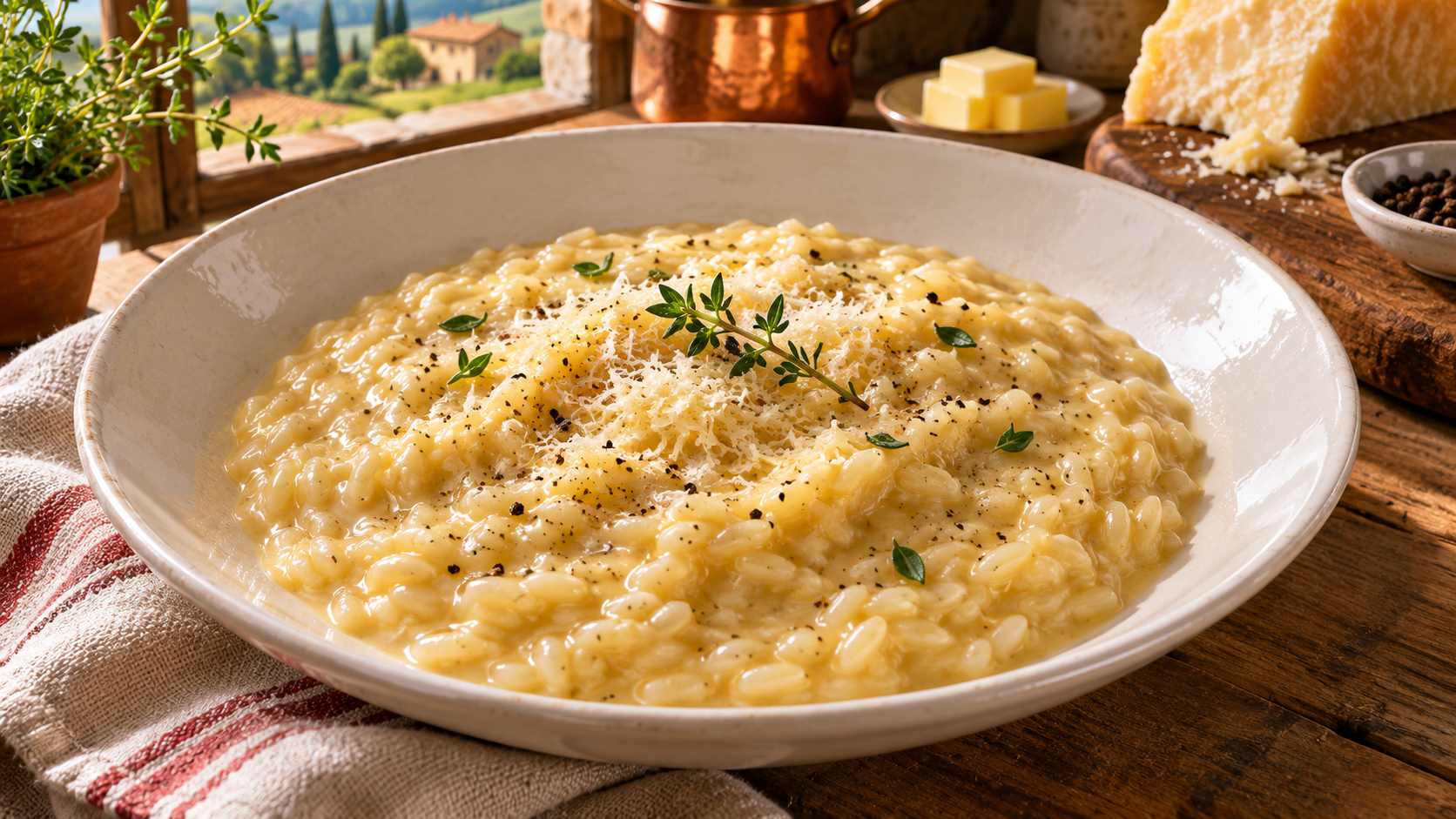
When done right, a spoonful of risotto is light, glossy, and fluid. The grains remain individually distinct with a delicate al dente bite at the core, while the sauce flows like a gentle wave when you tilt your warm ceramic plate. Achieving this balance in your home kitchen does not require culinary school training, but it does demand respect for six core mechanical phases: grain selection, gentle aromatic sweating, dry grain toasting, hot acid deglazing, active broth incorporation, and the finishing emulsion known as mantecatura.
This masterclass breaks down every single phase from grain anatomy to final plating, so you can produce restaurant-grade risotto on demand using standard kitchen cookware.
The Golden Rule: Why Cream Destroys True Risotto
#The greatest misconception in home Italian cooking is that creamy dishes require liquid cream. Adding cream to risotto is a shortcut used by hurried banquet kitchens to mask broken emulsions and overcooked, blown-out rice grains.
When you pour dairy cream into a pan of simmering rice, heavy dairy fats coat your tongue, dulling the subtle sweetness of the grain, the crisp acidity of the white wine, and the complex savory depth of your simmering stock. Worse, the heavy fat conceals whether the rice starch has actually gelatinized properly.
Authentic risotto relies instead on starch gelatinization and physical emulsification. As specific high-starch rice varieties rub against each other during cooking, amylopectin molecules slough off the exterior of each grain into the hot liquid. When you violently agitate that starchy suspension with chilled butter and finely grated cheese at the very end of cooking, the milk solids and fats suspend permanently in the starchy water. The result is an emulsion identical in structure to a classic French beurre blanc or Roman cacio e pepe sauce: naturally velvety, glossy, and never heavy on the palate.
If you remember only one rule from this guide, make it this: keep the cream carton in the refrigerator. True creaminess is built mechanically in the pan.
Rice Anatomy: Carnaroli vs Arborio vs Vialone Nano
#You cannot make authentic risotto with regular long-grain white rice, jasmine rice, or basmati. Long-grain rices are rich in amylose, a rigid linear starch that keeps cooked grains dry, fluffy, and separate. Risotto requires Italian superfino or semifino rice varieties packed with amylopectin, a branched starch that gelatinizes quickly and dissolves into simmering cooking liquid.
Three Italian cultivars dominate traditional risotto cooking:
- Carnaroli (The Undisputed King): Widely considered the finest risotto rice in Italy by professional chefs. Carnaroli grains are slightly longer and contain a higher ratio of amylose within their firm interior core alongside a heavy coating of amylopectin on the surface. This unique balance makes Carnaroli exceptionally forgiving: it releases abundant starch for a creamy sauce while resisting overcooking, maintaining a firm al dente backbone even if held over heat an extra two minutes. If you have the choice, always buy Carnaroli.
- Arborio (The Accessible Classic): The most widely available risotto rice in global supermarkets. Arborio has large, round, pearly grains that shed surface starch very quickly, producing an intensely creamy sauce in a relatively short cooking window. However, Arborio has a softer interior core and absorbs liquid rapidly. It passes from perfect al dente to soft, mushy porridge in less than sixty seconds of inattention.
- Vialone Nano (The Venetian Specialty): A small, rounded semifino grain grown primarily in the lowlands of Verona and the Veneto region. It absorbs more than twice its weight in liquid while holding its shape tenaciously. Northern Italian cooks prize Vialone Nano for delicate seafood, spring herb, and vegetable risottos because it yields an exceptionally light, flowing texture that never feels starchy or heavy.
When shopping, check the box for the Italian grading mark "Superfino" or "Semifino" and confirm the harvest year if printed. Old rice grains that have sat in dry storage for years dry out internally, cracking during the toasting stage and releasing uneven bursts of starch that make your cooking liquid murky.
The Equipment Setup: Pan Geometry and Utensils
#Before lighting your burners, your kitchen setup must be configured for seamless workflow. Risotto is an active cooking process that gives you no time to hunt for a ladle or search for your cheese grater midway through cooking.
- The Cooking Vessel: Use a wide, heavy-bottomed stainless steel or enameled cast-iron sauté pan (or traditional Italian risottiera) measuring 10 to 12 inches across with straight, 3-inch sides. A wide base allows the rice grains to spread in an even, shallow layer no more than two grains deep, ensuring uniform heat transfer. Avoid deep, narrow stockpots, which trap heavy steam and crush the delicate grains under their own weight.
- The Broth Saucepan: Keep a 2-quart saucepan filled with your simmering broth on the burner immediately adjacent to your risotto pan. Broth added to risotto must be simmering hot (roughly 190°F to 200°F). Pouring room-temperature or cold broth onto hot rice drops the pan temperature instantly, shocking the grains, arresting starch gelatinization, and prolonging cooking times.
- The Utensil: Use a sturdy flat-edged wooden spoon or a specialized Italian risotto spoon with a central hole (cucchiaio da risotto). The hole allows rice grains and hot broth to circulate freely through the spoon without mashing delicate kernels against the sides of the pan. Avoid sharp metal whisks or silicone spatulas that scrape without agitating.
The Broth Foundation: Clarity and Temperature Control
#Because rice absorbs nearly three times its dry weight in liquid, the flavor of your finished risotto reflects the exact flavor of your stock. If your stock is bitter, overly salty, or artificial, your risotto will taste bitter, salty, and artificial.
- Chicken Broth: For meat, mushroom, or rich autumn vegetable risottos, a clean, unroasted chicken broth made with chicken backs, leeks, celery, and a light carrot soffritto is the gold standard. Strain it until crystal clear and keep the salt level low; remember that as the broth reduces during 20 minutes of simmering and combines with aged salty cheese at the end, salinity compounds dramatically.
- Vegetable Broth: For delicate spring pea, asparagus, or saffron risottos (like traditional Risotto alla Milanese), use a light vegetable court-bouillon made by simmering onions, fennel fronds, celery, and leek tops in water for 30 minutes. Avoid strong brassicas like broccoli or sulfurous turnips, which impart a harsh cabbage aroma to sweet rice.
- Seafood Broth: When cooking seafood risotto, prepare a light fish fumet using white fish carcasses and shrimp shells simmered for no more than 25 minutes.
Keep the stock at a gentle, rolling simmer throughout the entire process. If you notice the broth boiling vigorously and evaporating rapidly, turn the heat down to low and clamp a lid on the saucepan.
The 6 Essential Stages of Authentic Risotto
#Cooking authentic risotto follows a disciplined sequence. Each stage triggers a specific physical change in the rice starch, and skipping or rushing any single stage compromises the final texture.
1. The Soffritto (Gentle Aromatic Sweating)
#Finely mince half a sweet yellow onion or two large shallots into tiny 1/8-inch dice (brunoise). The pieces should be roughly the same size as an individual grain of raw rice so they melt seamlessly into the finished sauce rather than creating crunchy interruptions.
Heat two tablespoons of neutral olive oil or unsalted butter in your wide sauté pan over medium-low heat. Add the minced shallot or onion along with a tiny pinch of salt to draw out moisture. Sweat the aromatics gently for 4 to 5 minutes until completely translucent, glossy, and soft.
Do not let the onion brown. Browning produces caramelized sugars and dark specks that discolor the pale, milky canvas of classic risotto and introduce bitter notes that clash with the clean sweetness of the rice.
2. The Tostatura (Dry Grain Toasting)
#Once the aromatics are soft, push them gently to the perimeter of the pan and pour your dry, unwashed Carnaroli or Arborio rice directly into the center. Never wash risotto rice; washing strips away the crucial surface starch powder that forms your sauce later.
Increase the heat to medium. Stir the rice constantly for 2 to 3 minutes, coating every single grain in the hot cooking fat. This stage is known in Italian as tostatura.
The goal of tostatura is not to brown or fry the rice, but to heat the grains until the outer starches gelatinize slightly and form a protective, translucent shell around each kernel. You will know tostatura is complete by three clear sensory indicators:
- The edges of the grains turn translucent, leaving a visible, chalky-white pearl in the dead center.
- The grains make a distinct, dry, clicking sound against the stainless steel or enamel as you stir.
- You can place the back of your hand one inch above the grains and feel intense, radiant heat, while a nutty, toasted grain fragrance fills your kitchen.
3. The Sfumatura (Acidic Wine Deglazing)
#With the pan blazing hot and the grains thoroughly toasted, immediately pour in half a cup of bone-dry, un-oaked white wine (such as Pinot Grigio, Sauvignon Blanc, or dry Italian Verdicchio). The pan will hiss violently as steam erupts; this rapid evaporation is called sfumatura.
Stir vigorously with your wooden spoon, scraping up any starch sticking to the bottom of the pan. The alcohol boils off in seconds, leaving behind bright tartaric acid and fruity aromatics that cut through the natural richness of the starch and butter.
Continue stirring until the wine has evaporated completely and the bottom of the pan is dry. If you leave raw wine liquid in the pan, its sharp alcohol bite gets trapped inside the rice grains as they swell.
4. The Active Broth Incorporation (Agitated Ladle Mechanics)
#Turn the burner to medium so the pan maintains a lively, steady simmer. Ladle just enough simmering hot broth into the pan to barely submerge the rice grains—usually two standard 4-ounce ladles.
Now begins the active cooking phase, which takes between 15 and 18 minutes depending on your rice variety.
Contrary to popular cooking myths, you do not need to stand over the pan stirring mechanically like a robot without stopping for 20 minutes. However, you cannot walk away from the stove either. Authentic risotto requires intermittent, vigorous stirring. Every minute or two, stir the pan in wide figure-eight patterns for 30 to 45 seconds, making sure your spoon reaches into the corners of the pan.
This mechanical friction accomplishes two things: it prevents the grains from scorching against the bottom metal, and it physically rubs the swollen amylopectin starches off the grain surfaces into the simmering liquid.
Wait until the broth has been almost entirely absorbed before adding the next ladle. You know it is time for more broth when you drag your wooden spoon across the bottom of the pan and the parted rice holds a clear channel for one to two seconds before slowly flowing back together.
Add one ladle of simmering broth at a time, allowing the rice to absorb it steadily. Never drown the rice in all your broth at once; flooding the pan boils the rice passively like soup, preventing the grains from rubbing together to create starch emulsion.
5. Checking for Al Dente (The Core Test)
#Around the 14-minute mark of broth additions, start tasting individual rice grains every 60 seconds.
Perfect risotto rice should feel creamy and soft on the tongue initially, but when your back teeth bite down through the center of the grain, you should encounter a distinct, pleasant resistance—a firm toothsome core that the Italians call il dente.
If the center of the grain feels hard, chalky, or powdery, the rice needs more time and another ladle of broth. If the grain collapses into complete softness with zero resistance, it is overcooked. The ideal moment to pull the pan off the burner is when the chalky white core has shrunk to a tiny pinpoint no larger than a grain of sand.
At this exact moment, turn off the heat completely and remove the pan from the hot burner. Stir in one final splash (about 2 to 3 tablespoons) of hot broth so the rice is slightly wetter than you think it should be.
6. Mantecatura (The Off-Heat Fat Emulsion)
#This is the defining technique of authentic Italian risotto. Mantecatura comes from the Spanish word manteca (butter), and in Italian culinary tradition, it means to beat cold fat into a hot preparation to create a glossy, unified emulsion.
Let the pan rest off the heat, undisturbed, for exactly one minute. This brief rest lets the surface temperature drop slightly below boiling point so the butter fats melt gently rather than separating into clear oil.
Now add your finishing elements:
- Ice-Cold Butter: Cut unsalted, high-fat butter into small 1/2-inch cubes and keep them in the refrigerator right until this second. Add 2 to 3 tablespoons of these ice-cold butter cubes directly on top of the warm rice. The stark temperature difference between the hot rice and cold fat is essential: it forces the butter fat droplets to disperse evenly into the hot starch liquid before they can melt into liquid grease.
- Freshly Grated Parmigiano-Reggiano: Scatter half a cup of 24-month aged Parmigiano-Reggiano (finely grated on a microplane) over the butter. Never use pre-grated bagged cheese containing anti-caking starches.
Using your wooden spoon, stir and whip the rice with rapid, circular motions. As you stir, flick the pan back and forth with your other wrist, tossing the rice upward in rolling waves against the curved sides of the pan.
Within 45 seconds of continuous whipping, magic happens in the pan: the melting cold butter, dissolved cheese proteins, hot broth, and sloughed rice starches lock together into a thick, glossy, velvet-like sauce that coats every single grain. Taste the risotto immediately and adjust seasoning with a tiny pinch of fine sea salt and freshly cracked black pepper.
| Cooking Stage | Primary Objective | Heat Level | Duration | Key Sensory Indicator |
|---|---|---|---|---|
| Soffritto | Sweat minced shallots/onions gently in fat | Medium-Low | 4-5 mins | Translucent and soft; zero browning or color |
| Tostatura | Dry-toast rice grains to seal starch core | Medium | 2-3 mins | Translucent edges; clicking sound; nutty aroma |
| Sfumatura | Deglaze pan with dry white wine | Medium-High | 1-2 mins | Violent steam hiss; wine completely evaporates |
| Broth Additions | Extract amylopectin starch via agitation | Medium | 15-18 mins | Gentle simmer; spoon parts clear channel in pan |
| Rest Phase | Equalize temperature before fat addition | Off Heat | 1 min | Surface bubbling stops; pan cools slightly |
| Mantecatura | Emulsify starch with cold butter and cheese | Off Heat | 1-2 mins | Glossy wave-like sauce; rich velvet sheen |
The All'Onda Test: How to Plate and Serve
#In northern Italy, traditional risotto must be served all'onda, which translates literally to "on the wave."
When you tilt your sauté pan, the risotto should not sit like a stiff, upright mountain of mashed potatoes, nor should it pool like a watery soup with rice sinking to the bottom. It should flow slowly and gracefully across the pan in a soft, undulating wave.
To plate authentic risotto:
- Use wide, shallow, warm ceramic rimmed bowls or plates. Never use deep, narrow soup bowls, which trap interior steam and continue cooking the rice grains until they turn to mush at the table.
- Spoon two generous ladles of risotto into the dead center of the warm plate.
- Hold the plate flat with both hands and firmly tap the bottom of the plate against the palm of your hand or a folded kitchen towel on the counter.
- A properly emulsified risotto will instantly spread itself out across the entire surface of the plate in a perfectly even, level, mirror-like sheet. If your rice remains piled in a mound, your emulsion is too dry; stir in two tablespoons of hot broth next time. If clear broth separates and forms a watery moat around the edge of the rice, your mantecatura broke or you added too much liquid without sufficient agitation.
Garnish minimally with a light grating of fresh Parmigiano-Reggiano, a few drops of high-grade extra virgin olive oil, and freshly cracked black pepper. Serve immediately. Risotto waits for no one; from the moment mantecatura finishes, you have roughly five minutes of peak velvety perfection before the starches set.
Common Risotto Failures and Quick Kitchen Fixes
#Even experienced home cooks encounter textural flaws when first learning the nuances of starch emulsion. Here is how to diagnose and correct common risotto problems:
- The Risotto Is Heavy, Dry, and Stiff: This happens when you allow the pan to absorb too much broth before pulling it off the heat, or when you let the plated dish sit too long. Fix it immediately before serving by placing the pan back over low heat for 30 seconds and vigorously whipping in 3 to 4 tablespoons of simmering hot broth until the sauce loosens into a flowing wave.
- The Rice Grains Are Mushy and Blown Out: This occurs when you use old or broken Arborio rice, over-stir during the early stages, or cook beyond the 20-minute threshold. Unfortunately, blown-out rice cannot be made firm again. If this happens, do not throw it away: spread the overcooked risotto on a baking sheet to cool completely in the refrigerator, shape it into balls around cubes of mozzarella, dredge in egg and breadcrumbs, and fry them into crispy arancini.
- The Sauce Looks Greasy and Separated: This happens if you perform mantecatura over an active burner or use warm, melted butter instead of ice-cold cubed butter. High heat breaks the delicate fat-in-water emulsion, releasing pure yellow oil. To rescue a breaking emulsion, pull the pan completely off the heat, splash in two tablespoons of cold water or cold broth, and whip vigorously with your wooden spoon to re-emulsify the fats.
- The Risotto Tastes Bland Despite Adding Cheese: Risotto requires careful salt calibration. If your broth was completely unsalted, the rice grains absorb water without seasoning, leaving the interior of each grain flavorless even if the outer sauce is salted. Always lightly season your simmering stock from the beginning so the grains absorb flavor as they swell.
Mastering authentic risotto is one of the most rewarding milestones in classic home cooking. Once you understand that true creaminess is a product of rice starch physics, hot broth agitation, and cold butter mantecatura rather than a carton of heavy cream, you can produce endlessly varied, restaurant-quality Italian risottos year-round.