Shakshuka is one of those rare dishes that looks impressive, tastes complex, and takes very little technical effort once you know how to handle the heat. 
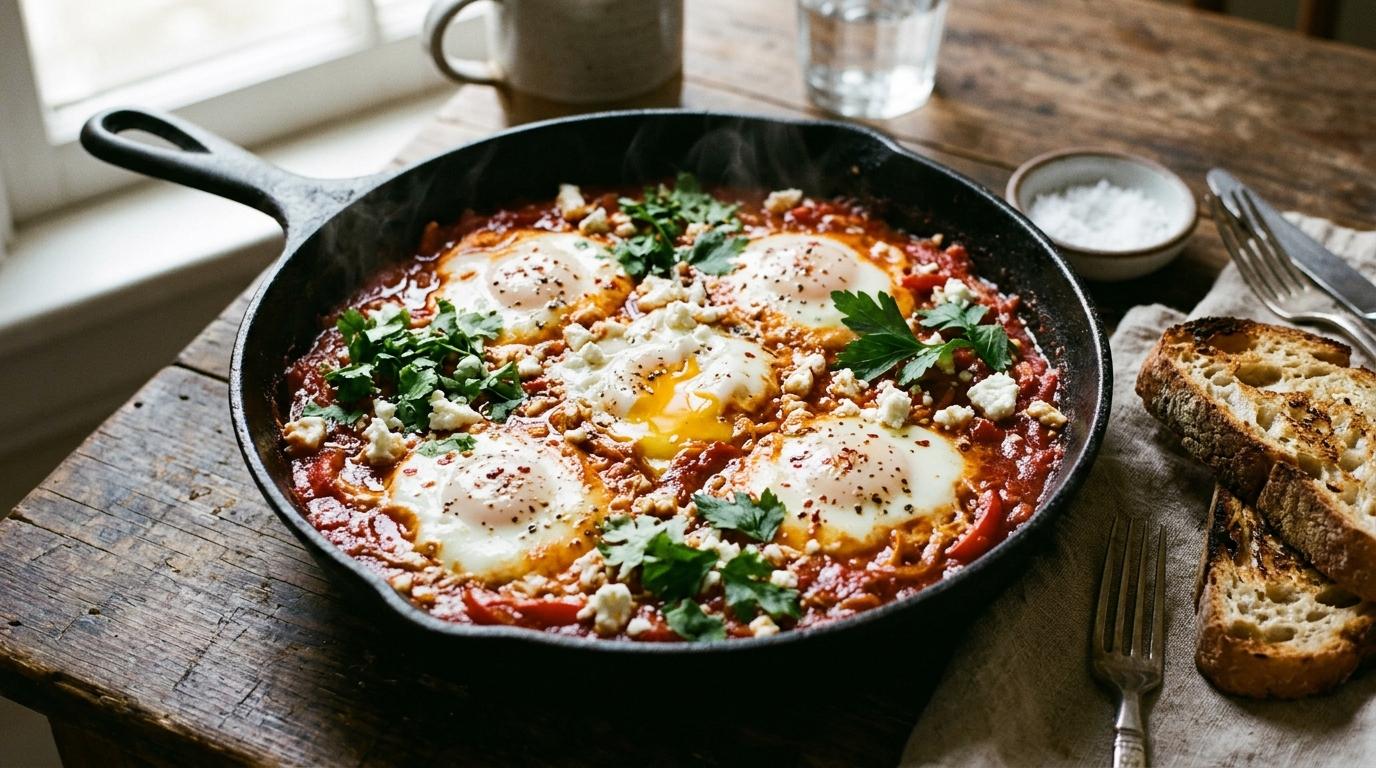
Originally hailing from North Africa and popularized across the Mediterranean and Middle East, it has become a global brunch staple for good reason. A rich, spicy sauce made from sweet bell peppers, onions, garlic, and simmered tomatoes acts as a warm bed for fresh eggs that are gently poached until the whites are tender and the yolks are liquid gold.
Yet many people who make shakshuka at home run into frustrating issues. The tomato sauce turns out watery and harshly sour. The eggs slide around and sink to the bottom of the pan, burning onto the metal. Or worse, the egg yolks cook completely solid before the translucent whites have a chance to set.
Here is the straightforward food science behind building a balanced, savory tomato base and poaching eggs to runny perfection in a single skillet.
What Is Real Shakshuka: Origins and Why the Technique Matters
#The word shakshuka comes from an Arabic dialect meaning "a mixture" or "shaken up." While food historians trace its origins to Ottoman Tunisia, Libya, and Morocco, the dish spread rapidly across the Levant and Israel, where it evolved into an everyday breakfast and dinner icon.
At its core, traditional shakshuka is built on a Maghrebi cooked salad known as matbucha, which is a slow-simmered reduction of roasted peppers, tomatoes, garlic, and oil. The key word here is reduction.
Real shakshuka is not a soup, and it is not eggs swimming in marinara sauce from a jar. It is a thick, jammy, unctuous sauce where the liquid has been reduced enough that when you press a spoon into the surface, the indentation holds its shape without immediately filling back up with runny water.
If your sauce is thick and properly caramelized before you add the eggs, the rest of the recipe is almost impossible to get wrong.
The Flavor Foundation: Sweet Peppers, Onions, and Spices
#The biggest mistake beginners make with shakshuka is rushing the vegetable base. 
Canned tomatoes naturally contain high levels of citric acid and malic acid. If you just dump canned tomatoes into a pan with quickly softened onions and simmer them for ten minutes, the sauce will taste sharp, sour, and one-dimensional.
The antidote to tomato acidity is not dumping white sugar into the pan; it is the natural caramelization of sweet bell peppers and onions.
Why Bell Peppers Need 15 Minutes
#Raw bell peppers and yellow onions are packed with natural fructan and glucose sugars. When you cook them slowly in extra virgin olive oil over medium heat for 12 to 15 minutes, their moisture evaporates and their cellular structure softens. 
The natural sugars concentrate and gently brown, producing deep sweetness and savory depth. This caramelized pepper foundation completely neutralizes the harsh bite of the tomatoes, giving the finished sauce a rounded, rich flavor without needing added sweeteners.
Use a combination of red and yellow bell peppers for the best visual contrast and sweetness. Green bell peppers are picked unripe and have a slightly bitter, grassy flavor that does not caramelize nearly as well.
The Core Four Spices
#Authentic shakshuka gets its distinctive warmth from an aromatic spice blend bloomed directly in hot oil:
- Ground Cumin: Earthy, warm, and slightly nutty. Cumin is the dominant flavor backbone of authentic shakshuka.
- Smoked Spanish Paprika (Pimentón): Adds a mild smoky depth that mimics the traditional wood-fired ovens where shakshuka was historically cooked.
- Ground Coriander: Citrusy and floral, balancing the heavy earthiness of cumin.
- Harissa Paste: A North African chili paste made from roasted red peppers, baklouti peppers, garlic, and caraway seeds. A single tablespoon adds complex, gentle heat and acidity that cuts through rich egg yolks. If you do not have harissa, a pinch of crushed red pepper flakes or cayenne pepper works as a substitute.
Always add your ground spices to the softened peppers and onions before pouring in the tomatoes. The fat-soluble flavor compounds in cumin and paprika bloom and release their essential oils in hot olive oil within sixty seconds. Dumping dry spices into a watery tomato sauce later leaves them tasting raw and dusty.
Why Tomato Selection Makes or Breaks the Sauce
#Because tomatoes make up more than half of the dish by volume, the quality of your canned tomatoes matters immensely.
- Whole Peeled San Marzano Tomatoes (The Best Option): Grown in the volcanic soil near Mount Vesuvius in Italy, authentic San Marzano plum tomatoes have thicker flesh, fewer seeds, lower acidity, and higher natural sweetness than standard round tomatoes. Buy whole peeled tomatoes and crush them by hand in a bowl before adding them to the skillet.
- Standard Whole Peeled Plum Tomatoes (Great Everyday Choice): Any quality brand of whole canned plum tomatoes will yield a rich sauce. Crushing whole tomatoes leaves pleasant, rustic chunks of tomato meat throughout the sauce.
- Crushed Canned Tomatoes (Good in a Pinch): Crushed tomatoes work well, though they produce a smoother, less textured sauce.
- Diced Canned Tomatoes (Avoid for Shakshuka): Commercial diced canned tomatoes are treated with calcium chloride, a firming agent designed to prevent the cubes from breaking down in the can. In shakshuka, diced tomatoes refuse to melt into a cohesive sauce and stay unpleasantly rubbery.
The Egg Technique: Getting Silky Whites and Liquid Runny Yolks
#The universal frustration when cooking shakshuka is the egg problem: how do you get the clear egg whites to cook until firm and opaque while keeping the yellow yolks completely liquid and runny?
To solve this, look at egg protein physics:
Egg white (albumen) consists of roughly 90% water and 10% protein. The proteins in egg whites begin to set (coagulate) at 62°C (144°F) and become firm at 80°C (176°F). 
Egg yolks, by contrast, are denser in fats and proteins; they begin thickening at 65°C (149°F) and turn completely solid and chalky once they surpass 68°C (155°F). That gives you a very narrow temperature window of only about 3 degrees Celsius where the whites are set but the yolks stay liquid.
Here is how you control that window effortlessly:
The Spoon Well Technique
#Never crack eggs flat onto the surface of the sauce. If you do, the loose outer egg white runs across the top of the skillet in a paper-thin layer that overcooks in two minutes, while the yolk sinks to the bottom of the pan and sticks to the metal floor.
Instead, take the back of a large spoon and press 5 or 6 deep indentations into the thickened sauce, spaced evenly apart. 
When you crack an egg into a well, the thick tomato sauce cradles the egg like a nest. The sauce surrounds the sides of the white, conducting gentle, buffered heat around the egg without exposing the yolk to direct metal contact.
Crack each egg into a small ramekin first rather than cracking it directly into the skillet. This lets you inspect the egg for shell fragments and slide it into the sauce well smoothly without puncturing the delicate yolk membrane.
The Steam Dome Method
#If you leave the skillet uncovered on the stovetop, heat only reaches the eggs from below. By the time the conductive heat from the simmering sauce travels all the way up through the egg white to cook the top layer, the bottom of the yolk has already turned hard and rubbery.
The fix is simple: cover the skillet with a tight-fitting lid.
Covering the pan traps escaping steam. Water vapor circulates above the eggs at roughly 65°C to 70°C, condensing on the top of the egg whites and gently poaching them from above while the simmering sauce cooks them from below.
With the lid on over medium-low heat, large eggs reach the sweet spot in 5 to 7 minutes. Watch the whites carefully: the exact second the transparent jelly turns fully white and opaque, take the pan off the heat. When you gently shake the skillet, the egg yolks should jiggle like set custard.
Cast Iron vs Stainless Steel: Cookware Comparison
#While shakshuka can be made in almost any wide skillet, the cooking vessel you choose changes how heat is delivered to the eggs:
| Cookware Material | Heat Retention | Egg Cooking Control | Table Presentation | Reactivity Note |
|---|---|---|---|---|
| Heavy Cast Iron | Exceptional | Gentle, buffered heat transfer | Keeps sauce sizzling at table | Needs well-seasoned patina for tomatoes |
| Enamelled Cast Iron | Exceptional | Uniform, non-reactive simmering | Beautiful presentation, easy cleanup | Perfect balance of heat and acid resistance |
| Stainless Steel | Moderate to High | Responsive to quick heat adjustments | Clean culinary look | Can stick if not thoroughly oiled |
| Nonstick Skillet | Low | Safe egg release, poor fond browning | Poor heat retention at table | Less caramelization on peppers and onions |
A 10-inch or 12-inch heavy skillet provides the best surface area. It gives you enough room to reduce the vegetables quickly and comfortably fits 5 to 6 eggs without crowding.
Toppings and Cheeses: Feta, Herbs, and Textures
#Once the skillet is off the heat, finishing garnishes provide crucial temperature, fat, and texture contrasts against the hot, acidic sauce:
- Crumbled Greek Feta: Traditional sheep-and-goat milk feta adds salty, briny creaminess that melts slightly against the hot tomato sauce without turning stringy. Scatter it over the skillet immediately after pulling the lid off.
- Fresh Herbs: A generous scattering of finely chopped fresh flat-leaf parsley and cilantro (coriander) cuts through the rich egg yolk and adds vibrant herbal freshness.
- Creamy Dairy Alternatives: If you do not have feta, dollops of thick labneh, whole-milk Greek yogurt, or soft goat cheese work wonderfully. For a dairy-free version, top with diced ripe avocado and pickled red onions.
- Toasted Pine Nuts or Sesame Seeds: Lightly toasted pine nuts or a sprinkle of za'atar seasoning add a pleasant crunchy texture that contrasts against the tender eggs and jammy peppers.
The Best Bread for Dipping and Sopping
#Eating shakshuka with a fork and knife misses the entire point of the dish. Shakshuka is designed to be eaten communal-style straight from the skillet using bread as your primary utensil.
You need bread with enough structural density and crust to scoop up a heavy payload of spiced sauce and runny yolk without dissolving:
- Warm Pita Bread: Soft, pocketed, and flexible. Traditional and easy to tear into scoops.
- Crusty Sourdough Boule: Thick, toasted slices of country sourdough provide an incredible sour crunch that pairs naturally with the rich tomato reduction.
- Jewish Challah: Sweet, pillowy, eggy bread that absorbs sauce like a sponge.
- Crusty Baguette or Ciabatta: Sliced on an angle and lightly toasted with olive oil to provide sturdy dipping vessels.
Make-Ahead Meal Prep and Storage Guidelines
#One of the greatest features of shakshuka is that the tomato-pepper sauce base can be made entirely in advance, making it the ultimate weekday power breakfast.
How to Meal Prep the Base (Matbucha)
#Cook the onions, peppers, garlic, spices, and tomatoes exactly as directed until thick and jammy, but do not add the eggs.
Let the sauce cool to room temperature, transfer it to an airtight container or glass mason jar, and store it in the refrigerator for up to 4 days, or freeze it in portioned containers for up to 3 months.
When you want a quick breakfast or dinner:
- Spoon 1 to 2 cups of cold sauce into a small skillet.
- Heat over medium until bubbling hot throughout.
- Press wells into the sauce, crack in your eggs, cover with a lid, and poach for 5 minutes.
- You get a piping hot, restaurant-quality meal on the table in under ten minutes with almost zero morning cleanup.
Storing and Reheating Leftover Shakshuka
#Once eggs have been poached into the sauce, leftovers become tricky because reheating cooked egg yolks in a microwave or oven will turn them hard, rubbery, and sulfurous.
If you have leftover shakshuka with eggs, store it in an airtight container in the refrigerator for up to 2 days. 
To reheat, place the skillet or heat-safe dish over very low heat on the stovetop, cover loosely, and warm just until the sauce is hot. Accept that the yolks will cook through slightly upon reheating. Alternatively, eat the chilled leftovers cold or at room temperature smeared over toast—it tastes surprisingly delicious like an egg salad on spiced tomato jam.
Frequently Asked Questions
#How do you cook the egg whites fully without hardening the yolks?
#The most effective technique is steam dome poaching. Simmer your sauce until it is thick, make deep indentations with a spoon, crack the eggs directly into the wells, and immediately cover the skillet with a tight-fitting lid over low heat. The trapped steam circulates at 65°C to 70°C, quickly coagulating the thin layer of egg white covering the yolk in 5 to 7 minutes without heating the dense yolk past its 68°C hardening point.
Why is my shakshuka sauce too acidic, and how do I fix it?
#Excess acidity comes from either rushing the pepper and onion cooking or using low-grade canned tomato puree. Slow-cooking the bell peppers for at least 15 minutes releases natural caramelized sugars that balance the citric acid in the tomatoes. If your sauce still tastes sharp after simmering, stir in 1/2 teaspoon of honey, brown sugar, or balsamic vinegar, or add a pinch of baking soda to neutralize excess acid.
Can you make the shakshuka tomato sauce base ahead of time?
#Yes. The spiced tomato and pepper sauce base (matbucha) actually tastes better when made 1 to 2 days ahead because the cumin, paprika, garlic, and tomato flavors meld together in the refrigerator. Store the cooked sauce in an airtight container for up to 4 days or freeze for up to 3 months. When ready to eat, simply reheat the sauce in your skillet until bubbling, make your wells, crack in fresh eggs, and poach.
What is the best bread to serve with shakshuka?
#Thick, crusty bread with an open crumb structure is essential for scooping up the spiced tomato sauce and rich runny yolk. Traditional choices include warm pita bread, fluffy Jewish challah, or thick slices of toasted sourdough. Avoid soft sandwich bread, which dissolves into soggy mush under the weight of the hearty sauce.