If your checking account shows a current balance and an available balance, start with the available balance when deciding what you can use right now. Then subtract payments you have already committed to but the bank has not shown yet. The available figure is a useful starting point, not a promise that spending every dollar of it cannot lead to a declined payment or an overdraft.
This guide covers US checking accounts. Banks and credit unions may use labels such as present, ledger or posted balance, and they may process transactions differently. If your app's definitions differ from the examples here, use your institution's account agreement and transaction details.
The two numbers answer different questions
#Your current balance usually describes the money recorded in the account after transactions have posted. Some institutions call this the ledger balance. A transaction that has only been authorized may not be part of it yet.
Your available balance estimates what the institution currently lets you use. It may reflect a debit-card authorization before the final charge posts, and it may exclude some recently deposited money while a hold applies. Depending on the bank, some pending credits may increase it. That is why available and current balances can move at different times.
| What you see | What it usually tells you | What it may miss |
|---|---|---|
| Current or ledger balance | The account's posted record under that bank's rules | Card holds and payments not yet posted |
| Available balance | Funds the bank currently shows as usable | Checks you wrote, future bills, some transactions that have not reached the bank, or a changed final card amount |
| Pending transaction list | Activity the bank knows about but has not finalized | The final amount, posting order, or every payment you have authorized elsewhere |
These are descriptions of transaction stages, not three separate piles of money. A $40 card purchase can lower available balance while leaving current balance alone. When the $40 finally posts, current balance falls; available balance should not fall by another $40 for the same purchase. The pending hold and posted debit are two stages of one payment.
The exact label matters. One bank may update a “present” balance during the day while another updates “current” after overnight processing. Read your app's balance explanation before trying to force its numbers into a universal formula.
A worked example: what is actually left for a new purchase?
#Imagine a US checking account with a $1,200 current balance at the start of the afternoon. You used your debit card for $75 of groceries and paid a $40 restaurant bill before adding a $10 tip. Both initial card amounts are authorized but have not posted. The app shows $1,085 available after those two authorizations. A $300 rent-related automatic debit is due tomorrow, but the biller has not sent it to the bank.
For this hypothetical example, the bank's visible available balance already accounts for the $75 grocery authorization and the $40 restaurant authorization. The $1,200 current balance is still based on posted transactions. The extra $10 tip and tomorrow's rent debit have not yet reached the displayed available figure.
Now do the planning calculation:
| Item | Planning effect |
|---|---|
| Bank's displayed available balance | $1,085 |
| Rent debit already scheduled but not yet shown | Subtract $300 |
| Tip beyond the visible restaurant authorization | Subtract $10 |
| Money deliberately kept for other known bills or a buffer | Subtract your chosen amount |
Before any extra buffer, this leaves $775 for new commitments. It is a planning figure, not an amount guaranteed by the bank. If you need a $600 car repair tomorrow, you might still hold back more for another bill or for uncertainty about when a deposit arrives. You should not subtract the $75 groceries and $40 restaurant authorization a second time because they are already reflected in the $1,085 available balance. If your bank has not reflected one of them, the calculation changes.
This example is more useful than simply taking the smaller of two displayed balances. It asks which spending is already in the bank's figure and which spending still exists only in your own calendar, receipts or checkbook.
Why available balance is lower
#A debit-card purchase is authorized but has not posted
#At the register, the bank may approve an amount and reduce what it shows as available. The merchant later submits the final charge. During that gap, the current or ledger balance may still show the earlier posted amount. A “pending” line is evidence that the bank knows about the authorization; it does not mean the final debit has completed.
The final amount can differ. A restaurant tip may be added after the initial authorization. A hotel, rental business or fuel seller may use an authorization that is different from the final bill. If a hotel hold is the confusing item, the separate Allblogs guide to a hotel card hold versus a final charge explains that specific case. For everyday checking, the practical point is to keep the expected final amount in your own record until it posts.
A check deposit appears but some funds are on hold
#Depositing a check and being able to use all its funds are different events. Your app may show the deposit in account activity or current balance while an availability hold keeps some of it out of available balance. The timing depends on the deposit type, when you made it, the institution's policy and any permitted exceptions. Mobile check deposit can have a different timetable from a deposit made at a branch.
Look for an availability date or hold notice in the deposit detail. If it is missing and you need the funds for an upcoming payment, ask the bank when the specific deposit is available. Do not treat a visible “deposit received” line as permission to spend the full amount.
A bank hold or adjustment needs an explanation
#Other restrictions can also lower available funds. The app may show a separate hold or adjustment, or it may show only the balance difference. Do not assume every gap is a card payment or every hold is a bank error. Compare amounts and dates first. If the numbers still do not fit, contact your bank through its app, card or statement and ask which transaction or restriction explains the difference.
Can available balance be higher than current balance?
#It can, depending on how the bank counts a pending credit or makes a deposit available before the posted record catches up. The Consumer Financial Protection Bureau describes available balance as generally reflecting certain available pending deposits as well as pending debits. That does not mean every pending deposit is spendable.
Check the deposit's available amount and date, not just whether its line appears. A payroll deposit, an incoming transfer and a photographed check can have different processing rules. A notice from your employer or sender that money is “on the way” is not the same as your bank making it available. If your available balance seems unusually high after an incoming payment, read the bank's explanation rather than assuming the increase is permanent.
The same caution works in reverse. A returned deposit or corrected posting can change the balance again. The goal is to know what your institution has actually made available, and to keep your own record of what you still owe.
What neither number may show yet
#An app can only show what has reached the bank and what its system chooses to display. These commitments may be missing even when the available balance looks comfortable:
- A check you wrote that the recipient has not deposited.
- A rent, utility, insurance or subscription debit scheduled for a future date.
- A bill-pay instruction that has not posted.
- A card tip or final amount that exceeds the amount currently pending.
- A merchant transaction that did not create a visible authorization.
- A fee that your account terms allow but has not yet posted.
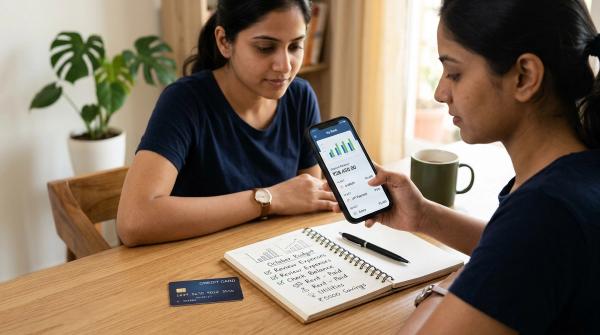
The FDIC advises keeping a record of checks, debit purchases, deposits, ATM withdrawals, automatic payments and fees because the online balance may not reflect them all. This does not require a complicated budget app. A notebook, simple spreadsheet or the bank's own transaction notes can work if you update it when you commit to a payment.
Think of available as the bank's latest usable-funds view and your own record as the list of commitments the bank may not know about yet. You need both views when money is tight. A scheduled debit can arrive earlier in the day than you expected, and a promised incoming payment may arrive later.
A five-minute check before an important payment
#Start with the bank app, then compare it with what you have already agreed to pay. This is especially useful before rent, a large purchase or a day with several automatic debits.
Read the labels and the last update time
#Open the checking account itself, not a summary that combines accounts. Note the current and available balances, and whether the screen says transactions are pending. Refresh the app if it looks stale. Your bank's definitions and processing timetable take priority over a generic definition.
Match visible pending items to your receipts
#For each pending card item, match merchant, date and amount. Ask whether the final amount could change, such as after a tip. Make a note of any authorization that has disappeared without a final posting; it may have expired, but the merchant may still present a charge later under the account terms. Avoid treating a disappearing hold as newly earned money.
Check deposits separately
#If a recent deposit is central to your plan, open its detail and find the available amount or release date. If the app gives no clear answer, ask the bank. Do not build a payment plan around the part of a check that is still held.
Add the payments that have not appeared
#Look at your calendar and receipts: upcoming automatic debits, bill pay, checks, recurring subscriptions and any final card amount above the authorization. Subtract those from the displayed available balance only if they are not already included in it. Double-counting a visible pending debit makes your plan unnecessarily restrictive; ignoring an invisible bill can make it dangerously optimistic.
Leave room for uncertainty
#Choose a buffer based on your own upcoming bills and how predictable your cash flow is. There is no universal dollar amount or percentage that makes an account safe. A low-balance alert can help you notice movement, but an alert is not a substitute for checking scheduled payments. If you cannot tell whether a large bill will clear, ask your bank about the exact account and processing rules before relying on the balance.
When the numbers still do not make sense
#First check whether the difference matches one or more pending items or a deposit hold. Use the exact transaction details, not a guess from the amount alone. A $100 difference might be a purchase, a temporary hold, several smaller items or a restricted part of a deposit.
If you still cannot explain it, save a dated screenshot of the balance and transaction list, plus any relevant receipt or deposit notice. Contact the bank using the phone number on your card or statement or the bank's own app. Ask:
- What is included in the current balance, and what is included in available balance for this account?
- Which pending debit, deposit hold or other restriction explains the difference?
- When does the bank expect the item to post or the hold to be released, and can the final amount change?
- Are there scheduled or presented items that are not displayed as pending?
- Which balance and transaction timing does this account use when deciding whether to pay or return an item and whether a fee applies?
Write down the answer and any case number. If a charge is unfamiliar or looks unauthorized, tell the bank that clearly and use its official reporting process. Do not send a full account number, password, PIN or one-time code to someone who contacts you unexpectedly about a “balance fix.”
A positive available balance is not a fee guarantee
#This is the point many short explanations miss. A debit purchase can be authorized when enough funds appear available, while another payment posts before the card purchase settles. The CFPB has described cases where this timing produces an unexpected overdraft fee. One major US bank also states that an item shown as pending against a positive balance may still be returned if funds are insufficient during nightly processing. Your bank's terms decide how it handles your account; the displayed figure alone cannot answer every fee question.
US rules distinguish optional overdraft coverage for ATM and one-time debit-card transactions from other payment types. Opting out of that coverage can change whether those transactions are generally approved with an overdraft fee, but it does not make every check, automatic bill or fee issue disappear. Review your account's overdraft and nonsufficient-funds terms if this is a recurring problem.
The useful habit is simple: use available balance as the starting number, reconcile what is pending, and reserve money for what has not appeared yet. Current balance helps explain the posted record. Your own payment list helps explain the rest. When those three views disagree, get the bank's account-specific explanation before making a large new commitment.