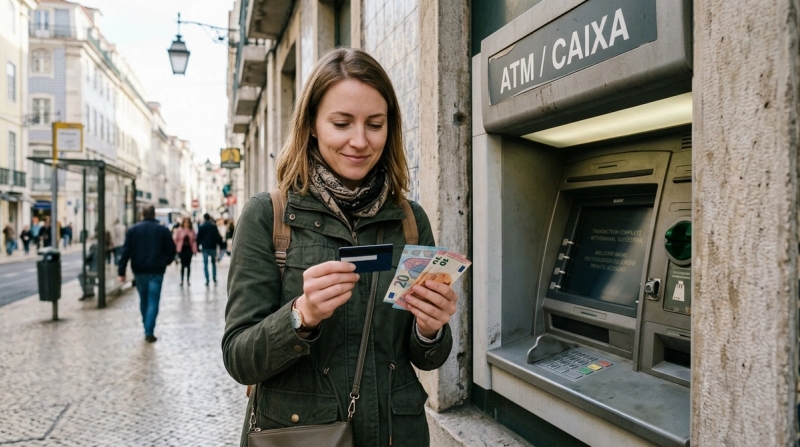
A credit card cash withdrawal abroad can feel harmless in the moment. You are in a new country, you need cash, there is an ATM right there, and your credit card works.
But that quick withdrawal can become surprisingly expensive.
The reason is that an ATM withdrawal on a credit card is usually treated as a cash advance, not as a regular card purchase. That changes everything. Instead of just paying for something and clearing your bill later, you are borrowing cash from your credit limit.
And that can bring several charges at once:
- A cash advance fee
- Cash advance interest from the day you withdraw the money
- A foreign transaction fee or forex markup
- A local ATM operator fee
- Extra cost if you accept Dynamic Currency Conversion, also called DCC
The tricky part is that many of these costs are not obvious while you are standing at the ATM. You may only notice the full impact later, when the transaction settles or your card statement arrives.
Of course, you may still need physical cash when you travel. Not every place accepts cards. Small taxis, local buses, street food stalls, markets, tips, public toilets and family-run guesthouses may still be cash-first.
So the real question is not, “Will I need cash abroad?” You probably will.
The better question is: what is the cheapest and safest way to get that cash?
This guide explains how credit card ATM withdrawals abroad work, why they cost more, how to avoid the dynamic currency conversion ATM trap, and what to check before you travel.
Why Credit Card ATM Withdrawals Abroad Cost More Than Purchases
#Using your card at a restaurant or hotel abroad is usually treated as a purchase. You may still pay a foreign transaction fee or forex markup, depending on your card, but it is generally handled like normal card spending.
Using the same credit card at an ATM is different.
That withdrawal usually becomes a credit card cash advance abroad. In simple terms, your issuer sees it as you taking borrowed cash from your credit limit.
That one difference can trigger a stack of charges:
- Cash advance fee
- Cash advance interest from the withdrawal date
- Forex markup or foreign transaction fee
- Local ATM operator fee
- Possible DCC cost if you choose to be charged in your home currency
This is why a small ATM withdrawal can look much bigger once it appears on your card statement.
Also, fees vary a lot. Two travelers can withdraw the same amount from the same ATM and pay different total costs because their card issuers have different rules.
Before you travel, check your card issuer’s MITC, cardholder agreement or schedule of charges. It is not exciting reading, but it can save you money.
For Indian cardholders, the MITC is especially important because card issuers are required to disclose key details such as charges, cash withdrawal limits, billing rules and dispute processes. Do not rely only on the marketing page or card brochure.
The Main Costs of a Credit Card Cash Advance Abroad
#1. Cash advance fee
#A cash advance fee is usually charged as soon as you withdraw money from an ATM using your credit card.
It may be:
- A flat fee
- A percentage of the amount withdrawn
- A percentage subject to a minimum fee
For example, your issuer may say something like “x% of the withdrawal amount, subject to a minimum charge.” The actual number depends on your card and issuer.
This fee usually applies even if you repay the amount quickly. So even if you withdraw cash today and pay it back tomorrow, the cash advance fee may still remain.
Before your trip, check:
- Whether your credit card allows international ATM withdrawals
- Your overseas cash withdrawal limit
- The cash advance fee
- Whether the fee applies per transaction
- Whether there is a separate international ATM withdrawal charge
2. Cash advance interest from the withdrawal date
#This is the part that catches many people off guard.
Regular credit card purchases often get an interest-free period if you pay your bill correctly and on time. Cash advances usually do not.
In most cases, there is no interest-free period for cash advances.
That means cash advance interest can start from the day the ATM gives you the money. It may continue until the cash advance balance is fully repaid, depending on your issuer’s rules.
So even if the withdrawal amount is not huge, the cost can grow if it stays unpaid for a few days or weeks.
Check your card terms for:
- The cash advance interest rate
- The date from which interest starts
- How repayments are adjusted against cash advance balances
- Whether taxes or other charges apply
Also, do not assume that making a quick payment will automatically clear the cash advance first. Some issuers have specific rules for how payments are applied. Read the terms or ask your issuer before relying on this.
3. Forex markup or foreign transaction fee
#When you withdraw foreign currency, the transaction must be converted into your card’s billing currency.
For example, if your credit card is billed in Indian rupees and you withdraw euros in France, the euro amount will eventually be converted into rupees.
Your issuer may then add a forex markup, also called a foreign transaction fee.
This is separate from the cash advance fee and interest. So yes, it can be another layer of cost.
The final posted amount may depend on:
- The exchange rate used by the card network or issuer
- The date the transaction settles
- Your issuer’s forex markup
- Applicable taxes or charges
This is why the amount in your first transaction alert may not perfectly match the final amount on your statement.
4. ATM operator fee
#The overseas ATM owner may also charge its own fee. This is the ATM operator fee.
Usually, the ATM screen shows this fee before you confirm the withdrawal. It may say something like, “This ATM will charge a fee of…” and ask you to accept.
This fee is charged by the local ATM operator. It can apply whether you use a credit card, debit card or forex/travel card.
Some premium cards or bank accounts may refund certain ATM fees, but that depends entirely on your card or account terms. Do not assume it will happen unless your issuer clearly says so.
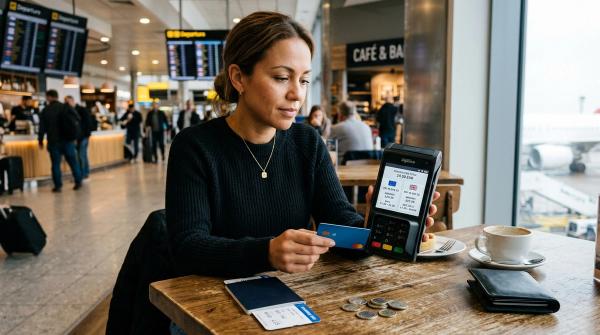
5. Dynamic Currency Conversion, or DCC
#DCC is one of the most common travel money traps.
At a foreign ATM, you may see a message like:
- “Would you like to be charged in your home currency?”
- “Accept conversion?”
- “Continue with guaranteed exchange rate?”
- “Pay in INR / USD / GBP?”
- “View amount in your card currency?”
This is called Dynamic Currency Conversion, or DCC.
It sounds helpful because you can see the amount in familiar currency. If you are from India, seeing the amount in INR may feel easier than looking at baht, yen, euros or dirhams.
But the convenience can come at a cost.
With DCC, the ATM operator or its conversion provider may set the exchange rate. That rate may be worse than the standard conversion route through your card network and issuer. There may also be extra fees built into the conversion.
So the ATM is not just “helping you understand the amount.” It may be offering you a more expensive conversion.
DCC Local Currency Rule: What Should You Choose?
#At a foreign ATM, if you are asked whether you want to be charged in your home currency or the local currency, choose the local currency.
That is the simple rule.
For example:
- In Thailand, choose Thai baht
- In Japan, choose yen
- In France, choose euros
- In the UAE, choose dirhams
- In the US, choose dollars
- In Singapore, choose Singapore dollars
Do not choose your home currency just because the number looks familiar.
For Indian travelers, this usually means avoiding INR at foreign ATMs. Choose the local currency instead. This is the practical DCC local currency rule.
Some ATMs make this confusing. They may show warnings like “exchange rate not guaranteed” if you decline conversion. That wording can make you feel like you are doing something risky.
In most cases, declining DCC simply means your card network and issuer will handle the conversion instead of the ATM operator.
So slow down, read the screen carefully, and choose local currency.
Credit Card vs Debit Card vs Forex Card vs Cash Backup
#You do not need to rely on just one payment method abroad. In fact, it is usually better not to.
Here is a simple comparison for your travel money checklist.
A good setup for many travelers is:
- One main card for purchases
- One backup card
- A debit card or forex/travel card for ATM withdrawals
- A small amount of cash for arrival and emergencies
This does not mean the same setup is perfect for everyone. Your destination, bank, card terms, travel style and comfort with cash all matter.
Safer ATM Checklist for Travel
#When you are tired after a long flight, standing in front of an unfamiliar ATM, and there is someone waiting behind you, it is easy to rush.
That is exactly when mistakes happen.
Use this checklist before and during your trip.
Before you travel
#- Check your card settingsOpen your banking app or call your issuer and check:If you do not plan to use a feature abroad, consider switching it off.
- Read your issuer’s MITC or fee scheduleLook specifically for:It may take 10 minutes, but it is better than being surprised later.
- Carry more than one payment optionDo not travel with only one card.Cards can get blocked. ATMs can reject them. Networks can fail. Wallets can get lost. A backup card can save you a lot of stress.A debit card, forex/travel card and small cash backup can give you more flexibility.
- Set transaction alertsEnable SMS, email or app alerts for:Alerts help you catch mistakes or fraud quickly.
At the ATM
#- Use bank-attached ATMs where possibleChoose ATMs inside or attached to known bank branches when you can.Be more cautious with standalone machines in tourist-heavy areas, bars, convenience stores, nightlife streets or poorly lit places.
- Look at the machine before inserting your cardCheck for anything unusual, such as:If something feels wrong, cancel and leave.
- Cover the keypadAlways cover your PIN with your hand. It is simple, but it still matters.
- Choose local currencyDecline Dynamic Currency Conversion. Choose the local currency, not your home currency.
- Read every screen slowlySome ATMs ask about DCC more than once. Some make the “decline conversion” button less obvious. Some use wording that sounds scary.Do not rush. Read before tapping.
- Keep the receipt or take note of the details
If the ATM gives a receipt, keep it until the transaction is settled correctly.
If there is no receipt, note:
- Date and time
- ATM location
- Amount withdrawn
- Currency
- Any ATM fee shown
- Transaction reference if available
After the withdrawal
#- Check your alert immediately
Make sure the amount, card and location look right.
- Track the final posted amount
International transactions can first appear as pending and later settle at a final amount. The final amount may differ because of exchange rates, fees and settlement timing.
- Switch off ATM access if you no longer need it
If your banking app allows it, disable international ATM withdrawals after you are done. This is especially useful if you only needed cash once or twice.
- Report suspicious activity through official channels
If something looks wrong, contact your bank through:
- The official banking app
- The official website
- The number printed on the back of your card
- Verified customer support channels
Avoid calling random helpline numbers found through search ads, social media posts or forwarded messages. Those can be scams too.
When Does a Credit Card Cash Withdrawal Abroad Make Sense?
#A credit card cash withdrawal abroad can make sense in an emergency.
For example:
- Your debit card is blocked
- Your forex card is not working
- The place you are in accepts only cash
- You cannot find another safe way to get money
- You need cash urgently for transport, food or accommodation
In that situation, using your credit card at an ATM may be better than being stuck.
But treat it like an emergency loan, not normal travel money.
If you must use it:
- Withdraw only what you truly need
- Choose local currency
- Avoid repeated small withdrawals that trigger multiple fees
- Repay as soon as possible according to your issuer’s rules
- Check your statement to confirm fees and interest
- Keep the receipt or transaction details
Also, do not assume that repaying immediately will remove every charge. The cash advance fee may still apply, and interest may already have started.
Quick Decision Guide
#Here is the simple version:
- For hotels, bookings, dining and shopping: a credit card can be convenient, depending on your card’s forex markup and benefits.
- For ATM cash: a debit card or forex/travel card is usually better.
- For emergencies: a credit card cash withdrawal can be a last resort.
- At every foreign ATM: choose local currency and decline DCC.
- Before you travel: read the official MITC or fee schedule, not just the card brochure.
Bottom Line
#A credit card can be very useful abroad. It is just usually not the best tool for routine ATM cash.
A credit card cash withdrawal abroad can combine a cash advance fee, immediate interest, forex markup, ATM operator charges and DCC costs. That is why a simple withdrawal can become much more expensive than expected.
For most travelers, the safer habit is straightforward:
Use a debit card or forex/travel card for ATM cash, carry a small cash backup, choose local currency at foreign ATMs, and check your issuer’s official fee schedule before you fly.
Disclaimer: This article is for general educational purposes only and is not personalized financial advice. Fees, interest rates, limits, exchange rates, billing rules and dispute processes vary by issuer, card type and country. Always check your bank or card issuer’s official MITC, cardholder agreement or schedule of charges before traveling.