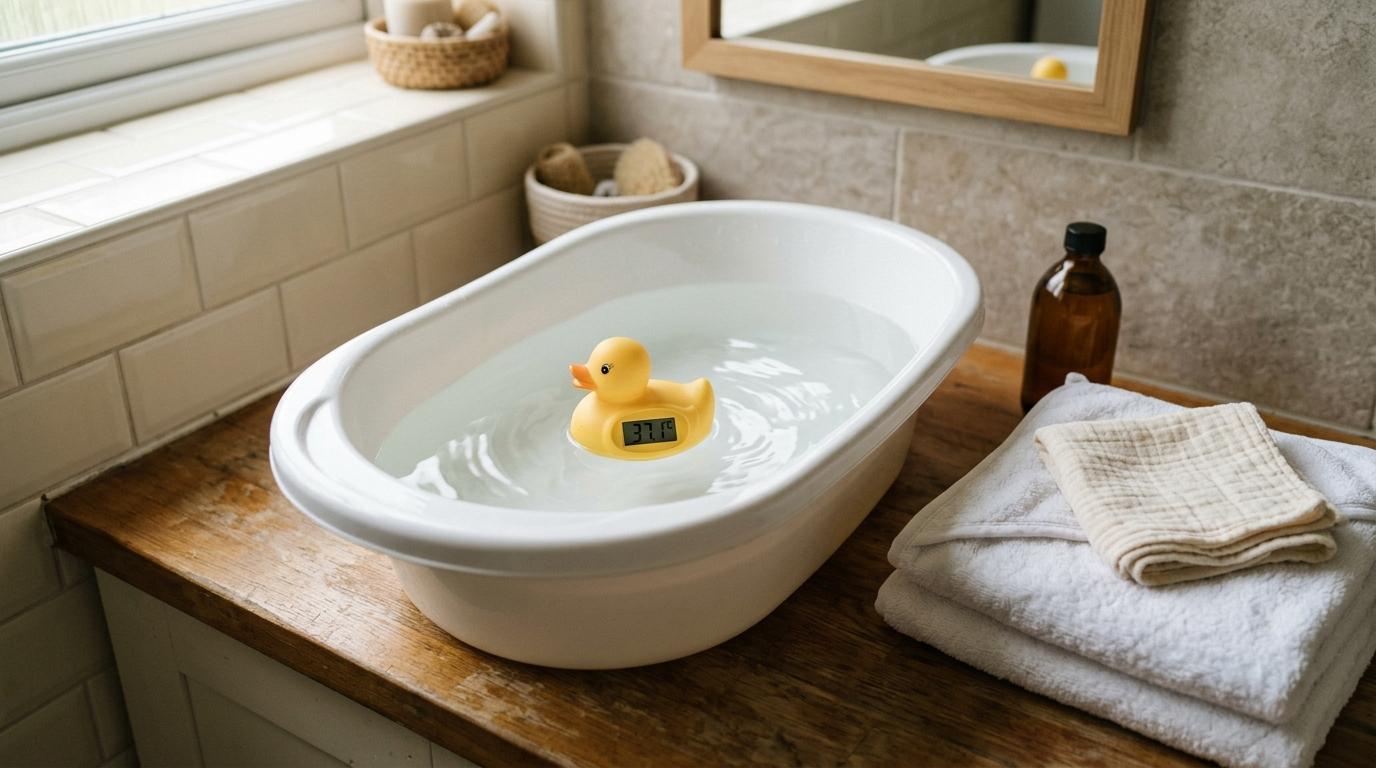
Quick answer: Use both if you can. A baby bath thermometer helps you get the water close to the commonly recommended range, around 37–38°C / 98.6–100°F. Then use your elbow or inner wrist as a final comfort check before your baby goes in. The water should feel warm and comfortable, never hot.
Bath time can feel surprisingly nerve-wracking at first. You have a tiny, slippery baby, the towel somehow ends up across the room, and the water feels “maybe fine” until you start second-guessing it.
You do not need a bathroom full of gadgets to bathe your baby safely. What helps most is a simple routine: get everything ready first, check the water properly, keep one hand on your baby, and never leave them alone in the bath.
A baby bath thermometer can be a useful tool, especially in the newborn stage. But it should not replace your own sense check. The safest, easiest habit is usually: thermometer first, elbow or wrist check second.
What Is a Safe Baby Bath Temperature?
#A commonly recommended safe bath temperature for baby is around 37–38°C / 98.6–100°F. That is close to body temperature, so the bath should feel gently warm, not hot.
Babies have delicate skin and can react to temperature differently than adults. Water that feels pleasantly warm to you may be too hot for a baby. At the same time, newborns can get cold quickly, so water that is too cool can make bath time uncomfortable fast.
A few simple safety habits make a big difference:
- Mix the bath water well before testing it.
- Always check the water before putting your baby in.
- Do not run hot water while your baby is in the bath.
- Never leave your baby unattended, even for a moment.
- If possible, keep your water heater or faucet maximum around 120°F / 49°C to reduce the risk of scalding.
The thermometer gives you the number. Your elbow or wrist tells you how the water actually feels.
Baby Bath Thermometer vs. Elbow or Wrist Test
#This does not need to be a competition. A baby bath thermometer is helpful because it gives you a clear reading. The elbow or wrist test is helpful because it is quick, free and always available. Used together, they remove much of the guesswork from bath time.
The Elbow or Wrist Test
#Your hands are not always the best way to test baby bath water. Adult hands are used to hot mugs, dishwater, cooking, cleaning and everyday temperature changes.
The inside of your wrist or your elbow is more sensitive, which makes it a better place to judge whether bath water is safe for a baby.
How to do the elbow test for baby bath water:
- Swirl the bath water well so there are no hot spots.
- Dip your elbow or inner wrist into the water.
- The water should feel warm or neutral.
- It should not feel hot.
- If you are unsure, cool the water slightly, mix again and retest.
This is a good habit for every caregiver to know, including grandparents, babysitters and anyone else who may help with bath time.
The Baby Bath Thermometer
#A baby bath thermometer gives you a clear temperature reading, which can be reassuring when you are tired, nervous or still learning what “warm but not hot” actually feels like.
Most baby bath thermometers are simple to use. Some float in the tub, some look like bath toys, and others have digital screens or color warnings. You place the thermometer in the water, wait for the reading, and adjust the temperature until it is around 37–38°C / 98.6–100°F.
But a thermometer is not foolproof. Batteries can die. Displays can be misread. Some models take time to settle. And if the water has not been mixed properly, one part of the bath may be warmer than another.
So yes, use the thermometer. But still do the elbow or wrist test before your baby goes in.
Baby Bath Thermometer vs. Elbow/Wrist Test: Quick Comparison
#Do You Really Need a Baby Bath Thermometer?
#Strictly speaking, no. You can bathe a baby safely using the elbow or wrist test if you are careful, consistent and confident.
But for many new parents, a baby bath thermometer is worth having. It is usually small, affordable and reassuring, especially during the early weeks when everything feels new.
It can be especially useful if:
- You are bathing a newborn.
- More than one person handles bath time.
- You feel anxious about getting the temperature right.
- Your tap water changes temperature quickly.
- You are sleep deprived and want a clear number.
- Your home has water that runs hot and cold unpredictably.
The simplest routine is: use the thermometer to set the bath water, then use your elbow or wrist to double-check before baby goes in.
Safe Baby Bath Setup Checklist
#Once your baby is in the water, you should not step away for soap, a towel, a diaper, your phone or anything else.
Use this baby bath checklist before every bath:
- Warm the room if needed. Babies can get cold quickly after a bath, especially newborns.
- Gather baby wash, washcloth, towel, diaper and clean clothes within reach.
- Use a safe bathing space that lets you support your baby securely.
- Fill the tub before baby goes in. Do not place your baby in the bath while the water is still running.
- Use shallow water. Young babies only need a small amount.
- Mix the water well to prevent hot spots.
- Check with a baby bath thermometer if you have one.
- Do the elbow or wrist test. The water should feel warm, not hot.
- Keep one hand on your baby. Babies are slippery, even in shallow water.
- Never leave baby alone, even briefly.
- Take baby out if the water cools before adjusting the water.
This routine matters more than any single product you buy.
Buying Checklist for Baby Bath Thermometers
#If you decide to buy a bath thermometer for baby, choose one that makes life easier, not more complicated.
- Clear temperature display: Large numbers are easier to read in bathroom lighting.
- Fast reading time: A thermometer that updates quickly is more useful when adjusting water.
- Hot and cold indicators: Some models flash, change color or show a warning.
- Waterproof design: It should be made for bath water, not adapted from another thermometer.
- Smooth edges: Floating models should not have sharp corners or rough seams.
- Easy cleaning: Avoid deep grooves or tiny openings where water can sit.
- Secure battery compartment: If it uses batteries, make sure the compartment closes tightly.
- Simple storage: This matters in small bathrooms and apartments.
- Auto shut-off: Useful for digital models so the battery lasts longer.
You do not need the fanciest option. A basic, easy-to-read thermometer is usually enough.
What to Skip or Avoid
#Some baby bath products look helpful but add clutter or create a false sense of security. Simple is usually better.
Skip glass thermometers
#Do not use glass household, cooking or old medical thermometers in the bath. A slippery tub and breakable glass are not a safe mix.
Do not rely only on color-changing products
#Color-changing plugs, mats or strips can be useful as an extra cue, but they should not be your only temperature check. Use a thermometer or the elbow/wrist test too.
Be careful with squeeze toys
#Bath toys with small holes can trap water inside. If they do not dry properly, they can become unpleasant and hard to clean. Choose toys and bath items that are easy to rinse and dry.
Do not treat bath seats as supervision
#A bath seat is not a safety device. If you use a bath support or seat, your baby still needs constant, hands-on supervision.
Skip complicated bath gear if it makes cleaning harder
#Some smart tubs and bulky gadgets are harder to clean, store or maintain. A simple baby tub with a separate thermometer often works better for everyday use.
Never run hot water while baby is in the bath
#If the water gets cold, take your baby out first. Wrap them in a towel, adjust the water, mix it well and check the temperature again before continuing.
How to Use a Baby Bath Thermometer Safely
#A thermometer only helps if you use it properly.
- Fill the bath before placing your baby in it.
- Swirl the water well.
- Put the thermometer in the water.
- Wait for the reading to settle.
- Adjust the water if needed while your baby is not in the tub.
- Mix the water again.
- Recheck the temperature.
- Do the elbow or wrist test.
- Put your baby in only when the water feels warm, not hot.
If the thermometer reading seems strange or does not match how the water feels, do not guess. Cool the water a little, mix again and test once more.
When the Elbow or Wrist Test Is Enough
#The elbow or wrist test may be enough when:
- You are experienced and confident.
- The water clearly feels warm, not hot.
- Your tap temperature is predictable.
- You are not rushing.
- You do not have reduced sensation in your hands, wrists or arms.
- You always mix the water well before testing.
Even then, a thermometer can still be helpful during the newborn stage or when another caregiver is helping.
If you feel unsure, use the safer routine: thermometer first, elbow or wrist check second.
Newborn Bath Safety Basics
#Temperature matters, but newborn bath safety is about the whole routine.
Keep these basics in mind:
- Sponge baths may be used in the early newborn period until regular tub baths are right for your baby.
- Babies do not need long baths.
- Use gentle baby wash only as needed.
- Clean skin folds, the neck area and diaper area gently.
- Dry your baby well after the bath, especially in skin folds.
- Keep the towel close so your baby does not get chilled.
- Stay focused on your baby the entire time.
Bath time does not have to be perfect. It just needs to be calm, prepared and supervised.
General Education Note
#This article is for general education only. It is not medical advice and does not replace guidance from your pediatrician or qualified healthcare professional. If you have questions about your baby’s health, skin, development or bathing needs, speak with your child’s doctor.