If you visit an Italian grocery store or trattoria in Bologna and ask for "spaghetti bolognese," you will receive polite amusement or quiet irritation. In the gastronomic capital of Emilia-Romagna, that dish simply does not exist. What the English-speaking world calls "bolognese" is almost universally an American-style red tomato sauce loaded with garlic, dried oregano, heaps of canned crushed tomatoes, and ground beef cooked in thirty minutes.
Authentic Italian ragù alla bolognese is the exact opposite of that dish. It is not a tomato sauce with meat; it is a slow-cooked meat braise that contains barely enough tomato paste to tint the liquid reddish-brown. It contains zero garlic, zero oregano, zero basil, and zero heavy tomato purée. More surprisingly to outsiders, authentic Bolognese requires simmering minced meat in whole cow's milk and dry white wine for hours until the meat fibers dissolve into a luxurious, velvet-like emulsion.
On October 17, 1982, the Bolognese delegation of the Accademia Italiana della Cucina officially deposited and notarized the authentic recipe for classic Bolognese ragù at the Bologna Chamber of Commerce. This legal recording was created specifically to protect one of Italy's greatest culinary treasures from international dilution.
Making authentic traditional Bolognese ragù at home requires no exotic equipment—only an enameled cast-iron Dutch oven, disciplined knife work for your soffritto, and three to four hours of patient low-temperature braising.
The Bologna Philosophy: A Meat Braise, Not a Tomato Sauce
#To cook authentic ragù, you have to retrain your mental model of pasta sauce.
When preparing a Neapolitan marinara or Roman arrabbiata, tomatoes are the star. The goal is bright, sharp, acidic tomato flavor cooked quickly over lively heat. In Emilia-Romagna, however, the star of the kitchen is livestock: pasture-raised cattle, rich heritage pork, and cured salumi like prosciutto and pancetta.
Bolognese ragù was invented not as a bright summer sauce, but as a comforting winter braise designed to coat rich, homemade fresh egg pasta. The liquid in the pot is not tomato juice; it is a rich broth of rendered animal fat, white wine aromatics, meat juices, and reduced dairy solids. Tomato paste is added strictly as an aromatic seasoning—a background note of savory glutamates and subtle acidity that cuts through the intense richness of the beef and pork.
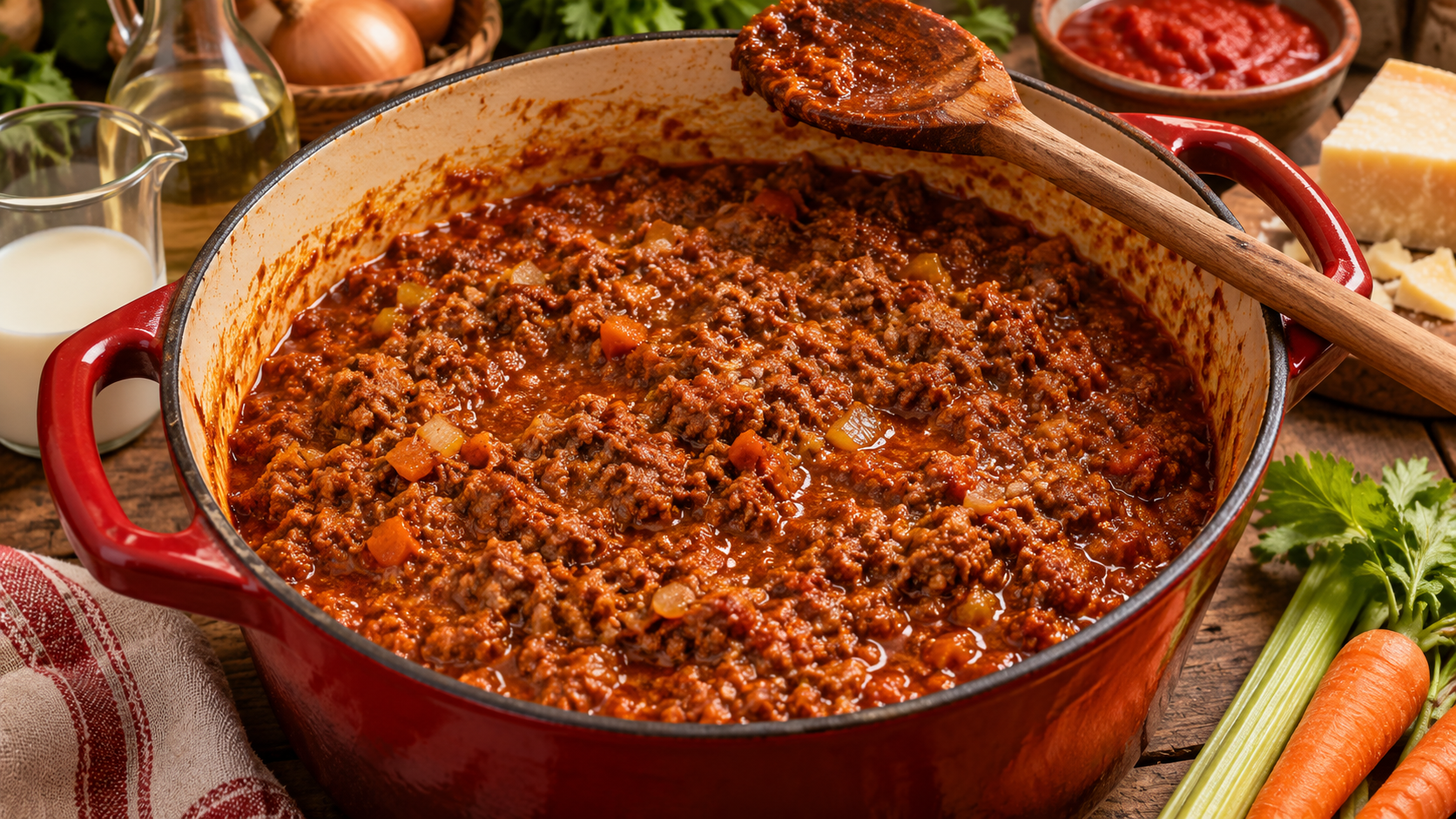
If your finished sauce looks bright red like pizza sauce, you have added too much tomato. An authentic Bolognese ragù is a deep, glistening, russet-brown sauce studded with tender, finely textured pebbles of meat suspended in a glossy emulsion.
The Forbidden Ingredients: What Never Goes into the Pot
#Before looking at what goes into traditional ragù, you must understand what is strictly excluded in Bologna:
- Garlic (Forbidden): Garlic is a foundational aromatic in southern Italian cooking, but classic Bolognese culinary tradition rejects it completely. Garlic's sharp, pungent allicin overpowers the delicate, buttery sweetness of the soffritto and the gentle dairy undertones of the milk.
- Dried Oregano and Basil (Forbidden): Dried Mediterranean herbs like oregano, marjoram, and thyme belong in Sicilian or Neapolitan cooking. Adding dried oregano immediately turns an elegant Emilia-Romagnan meat braise into a pizza parlor sauce. A single fresh bay leaf or a tiny grating of fresh nutmeg is the only permissible aromatic enhancement.
- Canned Crushed Tomatoes or Marinara Jars (Forbidden): Dumping two cans of crushed or pureed tomatoes floods the pot with excess water and aggressive citric acid, turning the braise into boiled hamburger soup. Traditional Bolognese uses only two to three tablespoons of double-concentrated Italian tomato paste (doppio concentrato di pomodoro), dissolved in warm meat broth.
- Spaghetti (Forbidden): Round dried spaghetti from southern Italy is too slick and narrow to hold heavy meat ragù. When tossed together, the meat slides off and pools at the bottom of the bowl. True ragù is paired exclusively with wide, porous fresh egg tagliatelle or baked into classic green spinach lasagna alla bolognese.
The Meat Chemistry: Beef Cut, Pork Ratio, and Pancetta
#The foundation of authentic ragù relies on a specific balance of collagen-rich beef and flavorful pork fat:
- The Beef Selection (Cartella): The official 1982 notarized recipe specifies cartella di manzo (beef skirt or flank steak), a thin muscle from the diaphragm of the cow. Cartella is packed with connective tissue and rich myoglobin. When ground coarsely and braised slowly, the tough collagen fibers break down into gelatin, creating an unctuous, silky mouthfeel that coats your tongue. If cartella is unavailable at your butcher, use well-marbled beef chuck roast or brisket. Avoid ultra-lean 90/10 ground sirloin, which dries out into chalky, rubbery pebbles during a four-hour braise.
- The Pork Component: The notarized recipe calls for fresh pork pancetta (unsmoked cured pork belly). You must finely dice the pancetta into tiny cubes and render it slowly in your Dutch oven until the fat liquefies into a golden pool and the meat bits become lightly crisped. Many modern Bolognese trattorias also incorporate a 70/30 ratio of coarse ground beef to ground pork shoulder for balanced sweetness and fat.
- The Grind Size: Always ask your butcher for a coarse, single-pass grind, or grind the meat at home using the 8mm plate on a meat grinder. Supermarket ground beef is often ground through fine 3mm plates into a paste-like texture that turns mushy during a long simmer. You want distinct, toothsome bits of meat that retain their individual texture.
The Soffritto Precision: The Holy 1:1:1 Ratio
#Every great Italian braise begins with a soffritto—the holy trinity of finely minced aromatic vegetables sweated in fat. In Bologna, soffritto precision is taken seriously:
- The Ratios: Use equal weights of sweet yellow onion, crisp celery stalks, and sweet carrots. A standard batch uses approximately 100 grams of each vegetable.
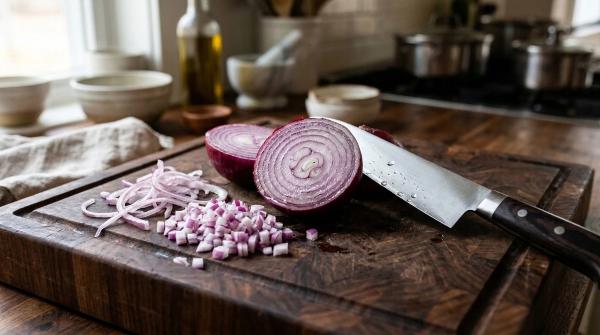
- The Knife Work: Do not blitz your vegetables in a food processor, which crushes cell walls and releases puddles of bitter water. Take ten minutes to chop each vegetable by hand into a microscopic brunoise (cubes measuring 1/8-inch across). The pieces should be significantly smaller than your minced meat so they melt invisibly into the sauce during the long simmer, leaving behind their sweet aromatics without crunchy chunks.
- The Sweating Phase: Melt two tablespoons of unsalted butter alongside your rendered pancetta fat over medium-low heat. Add the minced soffritto vegetables and sweat them gently for 10 to 12 minutes.
- Zero Browning: The vegetables must turn completely soft, translucent, and glossy without taking on any brown, caramelized edges. Browning caramelizes sugars, creating bitter notes that clash with the sweet milk reduction.
The Cooking Sequence: Staged Emulsification
#Making authentic Bolognese ragù follows an exact chronological sequence. You cannot dump all ingredients into the pot simultaneously; each liquid must perform its chemical task and evaporate before the next is introduced.
1. Searing the Meat
#Once your soffritto is soft and fragrant, increase the burner heat to medium-high. Add your coarse ground beef and pork to the Dutch oven.
Using a sturdy wooden spoon, break the meat apart into small clusters. Cook the meat, stirring continuously, until it loses its raw pink color and turns a uniform pale grey-brown.
Do not brown the meat into dark, crunchy, crusty caramelized nuggets. While deep browning (the Maillard reaction) is desirable for a French beef bourguignon or pot roast, hard crispy meat crusts remain tough and gritty in a delicate ragù. You want the meat to cook gently through, releasing its natural juices into the rendered pancetta and vegetable fat.
2. The Sfumatura (Wine Deglazing)
#Once the meat has lost its pinkness and its released juices have evaporated, pour in one cup (240ml) of dry, un-oaked white wine (such as Trebbiano, Pinot Grigio, or Verdicchio).
While some Italian households use dry red wine (like Sangiovese), the official Accademia recipe explicitly mandates dry white wine. White wine provides clean, vibrant fruit acidity that cuts through heavy animal fats without masking the delicate flavor of the pork and milk.
Stir continuously over medium-high heat until the wine has evaporated completely and the bottom of the pot is dry. You will know the alcohol is gone when the sharp, boozy steam disappears, replaced by a sweet, savory aroma.
3. The Dairy Secret: The Whole Milk Simmer
#Now comes the defining technique that separates authentic Bolognese from all pretenders: the milk addition.
Pour one cup (240ml) of cold whole milk (minimum 3.5% milk fat) directly over the hot meat. Reduce the heat to low.
- The Protein Science: Why add milk to a meat sauce? Dairy contains lactic acid and natural milk fats. As the milk simmers gently around the meat, the lactic acid acts as a mild tenderizer, penetrating the muscle fibers and breaking down tough protein bonds. Simultaneously, milk fats coat the meat particles, preventing the lean proteins from drying out and seizing into hard pebbles during the hours of cooking ahead.
- Evaporating the Milk: Simmer the milk uncovered over gentle heat, stirring occasionally, until it has reduced and evaporated almost completely—usually 15 to 20 minutes.
- The Visual Indicator: As the water in the milk evaporates, the milk solids will break down into delicate, pale golden curds that coat the meat. The bottom of the pot should once again show clear rendered fat rather than pools of white liquid before you proceed to the next step.
4. The Tomato and Broth Integration
#Only after the milk has evaporated do you introduce the tomato element.
Add two to three tablespoons of double-concentrated Italian tomato paste (doppio concentrato). Stir the paste into the glistening meat and fat for two minutes over medium heat, allowing the tomato sugars to toast lightly in the hot fat.
Pour in two cups of warm, lightly seasoned beef or chicken broth, along with one fresh bay leaf and a light grating of fresh nutmeg. Stir thoroughly, scraping up any delicious browned bits sticking to the bottom of the enameled cast iron.
| Ingredient | Classical Amount | Function / Food Chemistry | Common Home Cook Error |
|---|---|---|---|
| Coarse Ground Beef (Cartella/Chuck) | 500g (1.1 lbs) | Connective tissue breaks into gelatin | Using ultra-lean ground sirloin that dries out |
| Fresh Pancetta (Pork Belly) | 150g (minced fine) | Provides rendered cooking fat and savory cure | Using heavily smoked bacon that overpowers taste |
| Soffritto (Onion, Celery, Carrot) | 100g each (equal parts) | Natural aromatic sugar foundation | Chopping in food processor creates watery mush |
| Dry White Wine (Trebbiano/Pinot) | 1 cup (240ml) | Tartaric acid cuts rich animal lipids | Using sweet cooking wine or heavy oaky chardonnay |
| Whole Cow's Milk (3.5% fat) | 1 cup (240ml) | Lactic tenderization of beef fibers | Skipping milk entirely or using skim/low-fat |
| Double Tomato Paste (Doppio) | 2-3 tablespoons (45g) | Subtle savory glutamate seasoning | Dumping two cans of crushed acidic tomatoes |
| Fresh Bay Leaf | 1 leaf | Herbal aromatic depth | Dumping dried oregano, rosemary, or dried basil |
| Gentle Simmer Time | 3 to 4 hours | Complete collagen-to-gelatin conversion | Boiling aggressively for 30 minutes |
The 3-Hour Gentle Braise: The Magic of Time
#Turn the burner to the lowest possible setting. The surface of the ragù should not be violently boiling; it should display only a lazy, intermittent bubble breaking through the surface every few seconds—a pace the Italians call il sobbollire (the gentle murmur).
- Partially Cover the Pot: Place the Dutch oven lid slightly ajar, leaving a half-inch crescent gap. This allows steam to escape slowly, concentrating the flavors and thickening the liquid, while retaining enough ambient humidity to prevent the meat from drying out.
- Stirring and Broth Management: Check the pot every 20 to 30 minutes. Give the ragù a gentle stir across the bottom to ensure nothing sticks or scorches. If you notice the sauce becoming too thick and dry before the two-hour mark, ladle in half a cup of warm broth or whole milk.
- The Gelatin Transformation: Between the two-hour and three-hour mark, tough connective collagen converts into soft, melt-in-your-mouth gelatin. The rendered fats, meat proteins, and reduced tomato paste lock together into a thick, glistening, homogenous sauce.
- The Final Texture: After three to four hours, remove the lid completely and let the ragù simmer for a final 15 minutes. The finished sauce should be thick, glossy, and spoonable. If you tilt your spoon, the sauce should not release a runny watery liquid; it should cling to the meat in a rich, velvety suspension.
Pasta Pairing: Tagliatelle al Ragù, Never Spaghetti
#In Emilia-Romagna, the law of pasta pairing is absolute: ragù alla bolognese belongs with fresh egg tagliatelle.
Fresh egg tagliatelle is made by rolling durum wheat flour (or Italian Tipo 00) with fresh whole egg yolks into thin sheets, which are then cut into flat ribbons measuring approximately 7 to 8 millimeters wide.
- Why Tagliatelle Works: Fresh egg pasta has a naturally rough, porous, matte surface texture (rugosità). When tossed with hot ragù, this porous surface drinks in the rich, gelatin-laden sauce, while the broad flat ribbons provide ample physical surface area for the coarse meat pebbles to cling to.
- The Marriage in the Pan (Il Salto): Never plate plain boiled pasta and plop a ladle of cold meat sauce on top. Cook your fresh tagliatelle in vigorously boiling salted water for just two to three minutes until al dente. Using tongs, lift the pasta directly from the boiling water into a wide skillet containing your warm Bolognese ragù along with two tablespoons of starchy pasta cooking water.
- Tossing: Toss and swirl the pasta vigorously in the sauce over medium heat for 60 seconds. The starch in the pasta water emulsifies the rendered meat fats, locking the ragù permanently onto every single ribbon.
- The Garnish: Transfer to warm plates and finish with a generous snowfall of freshly grated Parmigiano-Reggiano (aged 24 months). Serve immediately.
Troubleshooting Common Bolognese Mistakes
#- The Sauce Looks Greasy with a Thick Yellow Oil Slick: This happens when you simmer the sauce too fast over high heat, breaking the delicate fat emulsion, or when your meat has excessive fat. Fix it by taking the pot off the heat, letting it sit for five minutes, and skimming off excess surface oil with a shallow ladle. Then stir in two tablespoons of hot pasta cooking water off the heat to re-bind the sauce.
- The Meat Tastes Dry and Chalky Despite 3 Hours of Cooking: You used lean supermarket ground beef (like 90/10 sirloin) lacking connective tissue, or you boiled the sauce vigorously instead of maintaining a gentle low simmer. Always use marbled chuck or flank, and keep the burner on its lowest flame.
- The Ragù Tastes Sour and Acidic: You added canned tomatoes or pureed tomato passata instead of tomato paste, or you failed to evaporate the wine completely before adding milk. Correct excess acidity by stirring in a quarter cup of warm whole milk or heavy cream and simmering gently for another 15 minutes to buffer the acid.
- The Vegetables Are Crunchy and Distracting: You diced the soffritto too coarsely or cooked the sauce for too short a time. Next time, take the extra minutes to cut the vegetables into tiny 1/8-inch dice so they dissolve seamlessly into the meat.
Making authentic Bolognese ragù is an act of culinary patience. Once you taste the delicate, tender richness of slow-braised meat, sweet soffritto, and reduced whole milk clinging to fresh egg tagliatelle, you will understand why this timeless Italian masterpiece has endured for centuries.