Processed food is a broad term, and it does not mean that every food in a packet is a poor choice. Ultra-processed food usually refers to a narrower group of industrial formulations within a framework called NOVA, but that category still needs to be read alongside nutrition, dietary needs and the rest of the meal.
The practical starting point is to check what the food contains and what job it serves. A bag of plain oats, a bottle of oil, a loaf of bread and a flavoured snack have all been made or handled in some way. Putting them under one warning label does not help you compare them.
Processing is a broad word
#Processing can make food safer, easier to prepare or longer-lasting. Pasteurising milk, freezing vegetables and milling grain all change food before you buy it. Those changes are quite different from assembling a ready-to-eat product from extracted ingredients, flavours and other components.
The NHS describes processed food broadly as food or drink changed during preparation or production. Under that everyday meaning, much of what we eat is processed. So “avoid all processing” is neither a precise description of food nor a useful shopping instruction.
Ask a more specific question. Was the food cleaned and frozen? Was salt added to preserve it? Was it formulated from several processed ingredients to create a particular ready-to-eat product? The answers tell you more than whether it came from a factory or a kitchen.
Home cooking also changes food. That does not mean a homemade soup should automatically be assigned the same category as an industrial instant soup powder. Classification systems have particular definitions, and their technical use may differ from ordinary conversation.
This is why it helps to name the framework when discussing ultra-processed foods. Otherwise, two people can use the same phrase while classifying the same product differently.
The four NOVA groups in everyday terms
#NOVA was developed by researchers at the University of São Paulo. It groups food by the nature and purpose of processing, rather than simply sorting it by calories or individual nutrients. It is widely used in research, but it is not a universal legal definition for every market.
Unprocessed or minimally processed foods
#This group includes foods close to their original form and foods altered through processes such as freezing, drying, grinding or pasteurisation without additions that change their category. Plain grain, simple frozen vegetables and plain milk help illustrate the idea.
The important point is that a useful change can still be minimal processing within the framework. Frozen vegetables do not become ultra-processed merely because they were chilled in industrial equipment and sealed in a plastic bag.
Processed culinary ingredients
#These are ingredients used to cook or season other foods, such as oil, sugar and salt. They can require substantial extraction or refining, yet they serve a different role from a ready-to-eat formulated snack.
The group is not a recommendation to eat those ingredients freely. Salt being a culinary ingredient does not make the amount you use irrelevant. It means the framework distinguishes a cooking component from a finished food.
Processed foods
#These commonly combine a basic food with culinary ingredients, for example vegetables preserved with salt or a simple bread made from familiar baking ingredients. The method and formulation matter more than whether the product looks traditional.
A canned food therefore needs a closer look. Beans with water and salt are a different formulation from a ready meal with a much longer set of components. The can itself does not decide the classification.
Ultra-processed foods
#NOVA's fourth group concerns industrial formulations, often involving substances and additives used to produce particular flavours, textures or other sensory qualities. Examples frequently discussed include many packaged snacks, soft drinks and reconstituted convenience products.
That description is broader than “contains a chemical-sounding word,” and it is more specific than “made in a factory.” The formulation and the purpose of ingredients matter. Some products are straightforward to place; others require more information or careful interpretation.
Compare formulations, not food names
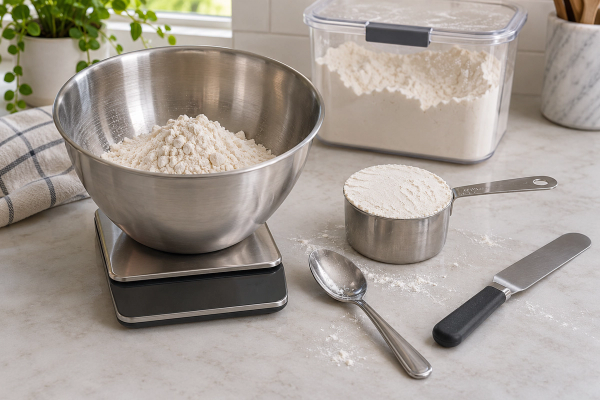
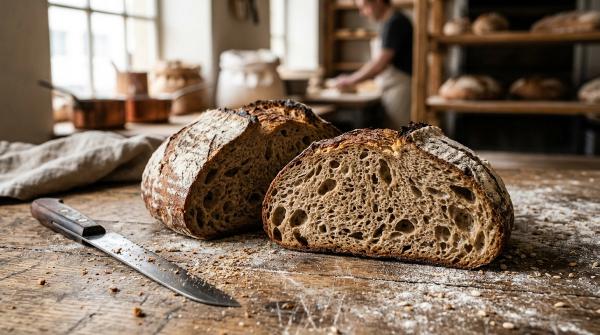
#Bread is a useful example because the name covers a wide range of products. Flour, water, yeast and salt describe one kind of formulation. A product with additional industrial ingredients serving particular texture or flavour functions may be classified differently under NOVA.
That difference does not tell you everything about the bread's nutritional value. Wholegrain content, fibre, salt and the portion you eat still matter. Two questions are being asked: how was this food formulated, and what does it contribute to the meal?
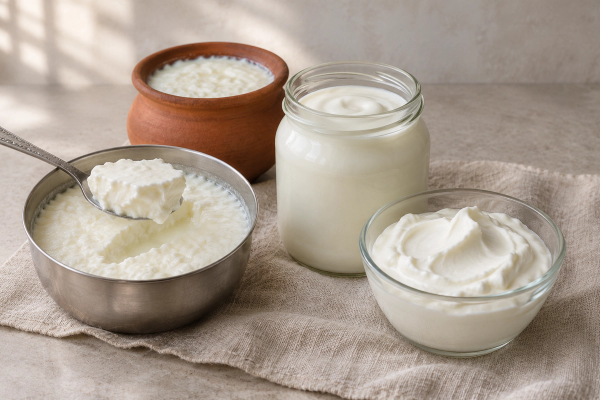
Yogurt gives another example. Plain yogurt and a sweetened dessert-style dairy product are not interchangeable descriptions. Check the actual ingredients rather than assuming every small pot in the chilled aisle belongs to one processing group.
Even “fruit yogurt” needs detail. Fruit, added sugar, sweeteners, flavourings and thickeners can appear in different combinations. If the label does not let you confidently classify the product, say that the classification is uncertain instead of inventing certainty from the name.
The same care applies to beans. Plain cooked beans, beans preserved with salt, and a heavily formulated bean-based snack serve different uses and can sit differently within a processing framework. Calling all of them “packaged beans” hides the useful distinction.
| What you see | What it tells you | What it does not settle |
|---|---|---|
| A sealed packet | The food has packaging | Its NOVA group or nutritional quality |
| A familiar food name | Its broad identity | The exact formulation |
| An ingredient list | Declared components | Every detail of industrial processing |
| Nutrition information | Specified nutrient amounts | The whole dietary context |
| A processing score | A result under that system | Individual suitability or a medical verdict |
Use these clues together. Do not ask one label or score to answer questions it was not designed to settle.
What the ingredient list can tell you
#Read the ingredients before the marketing claim. They can help you distinguish a plain product from one with added flavourings, sweeteners, extracted proteins or ingredients serving texture functions. That is a better start than judging the colour of the package.
Look for the role of an ingredient rather than deciding from whether you can pronounce it. A technical name is not a toxicity test. Equally, a familiar ingredient name does not tell you that its amount is small or that the whole product is nutritionally balanced.
Do not use a fixed ingredient-count rule as a shortcut. A homemade-style spice mixture can have a long list. A product with only a few components can still be high in sugar or salt. Counting entries without understanding them answers very little.
Additives need context too. They can serve different functions, and a processing classification is not the same assessment as whether a permitted ingredient is safe for a particular use. Avoid treating the mere presence of an additive as proof that the food is harmful.
The list also has limits. You may not be able to reconstruct every production step from it. If a research-style category depends on information you do not have, an honest “not clear from this label” is more useful than a confident guess.
Scanner apps can help organise information, but their result depends on the database, the classification rules and the product entry. A reformulation or a different market version can change what is in the packet. Check the physical label rather than letting an app's colour replace it.
What nutrition labels tell you separately
#Nutrition information helps compare the quantities of nutrients declared for a product. It is a different lens from processing. You can use both without pretending they are interchangeable.
When comparing similar foods, put them on the same basis. A small suggested serving for one and a much larger serving for another can make a quick comparison misleading. Where both labels provide values per 100 grams or per 100 millilitres, that shared basis can make the first comparison easier.
Then return to the portion you will actually eat. A food can look favourable on a standard comparison yet contribute a different amount when the real portion is much larger. Serving size is part of the decision, not a detail to leave until after the comparison.
Look at the nutrients relevant to the comparison, such as fibre, saturated fat, salt or sodium and sugars. Labelling conventions vary by country, including whether added sugars are listed separately. Do not assume that two international labels use identical terms or thresholds.
Also consider the food's role. A condiment used in a small amount is not the same purchase as a main meal. A cooking ingredient is not designed to provide a balanced meal by itself. Compare reasonable alternatives for the same use.
The British Nutrition Foundation points out that some foods classified as ultra-processed can still contribute useful nutrients. That does not make every product in the group a good everyday choice. It means the processing category should not erase the actual composition.
What the research does and does not settle
#Research linking higher ultra-processed-food consumption with poorer health outcomes deserves attention. But a broad association is not a way to diagnose the effect of one packet, one ingredient or one meal on an individual person.
The UK's Scientific Advisory Committee on Nutrition reviewed the evidence and published a rapid update in 2025. It noted concerns about the associations and limitations around classification and interpretation. Nutrition, processing and other aspects of people's diets and lives can be difficult to separate cleanly.
Different study designs answer different questions. Observing what people usually eat is not the same as assigning controlled diets in a trial. Even a controlled study needs to be read in terms of its participants, duration and the specific foods compared.
For an everyday grocery decision, avoid turning that uncertainty into either extreme. It does not follow that processing never matters. It also does not follow that every product given the same classification has the same effect or deserves the same treatment.
Definitions remain an active issue. US regulators have been working on a uniform definition, and an August 2026 government announcement referred to a proposed definition under review. A proposal is not a finalized worldwide rule, and it should not be quietly substituted for NOVA in a discussion using that framework.
The practical response is to keep the food description, the evidence and the recommendation aligned. You can explain what a processing category means without claiming that a particular additive causes disease or prescribing a restrictive diet.
Make a useful grocery choice without a purity test
#Start with the meal you need to make. Consider time, budget, cooking equipment, storage and what the people eating it can use. A theoretically less processed option is not helpful if it leaves you without a workable meal.
Then compare realistic alternatives. Plain canned beans may be a useful option when there is no time to cook dried beans. Frozen vegetables may fit a small household better than fresh produce that will go unused. Convenience alone is not evidence that a food is unsuitable.
Where two products do the same job, read both ingredients and nutrition information. You may find a version that better fits what you want to eat without changing the whole meal. Choose the improvement you can explain, rather than chasing a lower score for its own sake.
If a snack or drink regularly supplies a lot of sugar or salt without much else you want from it, consider how often you buy it and what alternative would actually be satisfying. That is a concrete change. Declaring the entire kitchen “clean” is a much less useful plan.
Keep affordability in the comparison. A more expensive product with fashionable packaging is not automatically a better nutritional choice. Nor does a homemade version remove the need to consider ingredients, portions and how often it is eaten.
A worked shopping comparison
#Imagine choosing a breakfast from three options: plain oats, a sweetened flavoured cereal and a wholegrain bread. This is an illustrative decision, not a classification of specific branded products.
For the oats, check whether the packet contains plain grain or a flavoured mixture. For the cereal, read the formulation and compare the declared sugars, fibre and the portion you would eat. For the bread, check both the ingredient list and nutritional information rather than assigning a verdict from “wholegrain” alone.
Now consider the rest of breakfast. What will you add, how much will you eat and which option will you realistically prepare? A classification of the main packet cannot describe the whole meal. The answer can change when the same food is eaten in a different combination.
Suppose the bread makes a practical breakfast while the oats would remain unused because you dislike them. A processing label does not settle that tradeoff. Look for a suitable bread and a reasonable meal around it instead of treating the alternative as a moral test.
You can use the same approach with a quick dinner. Compare the actual ready meal with an alternative you could make using available ingredients, time and equipment. An imaginary elaborate dinner is not a fair substitute for the meal you need tonight.
Keep special dietary needs separate
#Food allergies, coeliac disease and prescribed nutrition needs require checks beyond processing categories. A minimally processed food can still be an allergen, and a product classified as ultra-processed may have a specific role in someone's care.
Do not stop a prescribed product or make a major restrictive change because a general-purpose scanner or article gives it an unfavourable score. Ask the clinician or dietitian responsible for your care how that product fits your needs. A broad classification cannot replace that decision.
For ordinary shopping, keep the process manageable: identify the food, read its formulation, compare useful nutrition information and consider the meal. If a classification remains uncertain, you can still make a sensible choice using what the label does establish.
The aim is a clearer understanding of food. Once a label makes the decision more confusing than the ingredient list and meal itself, step back and ask what you actually need to know before buying it.